
-
Our new ticketing site is now live! Using either this or the original site (both powered by TrainSplit) helps support the running of the forum with every ticket purchase! Find out more and ask any questions/give us feedback in this thread!
You are using an out of date browser. It may not display this or other websites correctly.
You should upgrade or use an alternative browser.
You should upgrade or use an alternative browser.
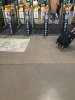
Gambling advertisements...on ticket barriers!
- Thread starter johntea
- Start date
- Status
- Not open for further replies.
Sponsor Post - registered members do not see these adverts; click here to register, or click here to log in
R
RailUK Forums

dilbertphil
Member
- Joined
- 28 Jan 2018
- Messages
- 165
Cant see the problem. Personal responsibility is something that is sadly lacking in today's world.

dk1
Veteran Member
Looks fine to me. It's all a business after all.

I agree. It's completely irresponsible that we all permit high-stakes gambling businesses to exist.Cant see the problem. Personal responsibility is something that is sadly lacking in today's world.


LOL The Irony
Established Member
People who feel the need to advertise on ticket barriers are desperate.I’m not sure if this is breaking any rules, but who on earth has come up with the idea to plaster ticket barriers with gambling advertisements?!
Bishopstone
Established Member
If there’s a public outcry, then 10/1 these adverts will be gone by month end.

dk1
Veteran Member
Love itIf there’s a public outcry, then 10/1 these adverts will be gone by month end.


Islineclear3_1
Established Member
Out of interest, I wonder how much the firm paid to display its advertisements
I'm on the fence with this. Like smoking, drugs, alcohol and shoplifting, gambling is an addiction and shouldn't be promoted. On the other hand, yes it's down to personal responsibility which sadly, seems to be lacking these days...
I'm on the fence with this. Like smoking, drugs, alcohol and shoplifting, gambling is an addiction and shouldn't be promoted. On the other hand, yes it's down to personal responsibility which sadly, seems to be lacking these days...
Bletchleyite
Veteran Member
I’m not sure if this is breaking any rules, but who on earth has come up with the idea to plaster ticket barriers with gambling advertisements?!
Ever tried using an even vaguely obscure ticket at a staffed VTWC barrier at Euston? That's proper gambling...

Love the really minuscule text that's virtually on the floor for BeGambleAware.org, the website for the National Gambling Helpline charity. Naughty ad agency!
If there’s a public outcry, then 10/1 these adverts will be gone by month end.
I wouldn't bet on it.
It does not seem the case that these adverts break anything fron the ASA's Code for Non-Broadcast Advertising:
The adverts are then merely distasteful, which isn't a crime or contrary to best practice.
Complaining about 'personal responsibility' is utterly disengenous, however. I take the view that people have the right not to be deliberately misled; suggesting that it's everyone's individual responsibility to stop that fron happening to themselves when there's plenty we can do to help is bananas. There's a firm consensus that the gambling industry should be properly taxed and clearly regulated and advertising should be kept appropriate. It seems that these adverts are, though.
http://www.gamblingcommission.gov.u...ertising-marketing-rules-and-regulations.aspxFor the purposes of this section, "children" are people of 15 and under and "young persons" are people of 16 or 17.
Rules
16.1
Marketing communications for gambling must be socially responsible, with particular regard to the need to protect children, young persons and other vulnerable persons from being harmed or exploited.
16.2
In line with rule 1.2, the spirit as well as the letter of the rules in this section apply whether or not a gambling product is shown or referred to.
16.3
Marketing communications must not:
16.3.1
portray, condone or encourage gambling behaviour that is socially irresponsible or could lead to financial, social or emotional harm
16.3.2
exploit the susceptibilities, aspirations, credulity, inexperience or lack of knowledge of children, young persons or other vulnerable persons
16.3.3
suggest that gambling can provide an escape from personal, professional or educational problems such as loneliness or depression
16.3.4
suggest that gambling can be a solution to financial concerns, an alternative to employment or a way to achieve financial security
16.3.5
portray gambling as indispensable or as taking priority in life; for example, over family, friends or professional or educational commitments
16.3.6
suggest that gambling can enhance personal qualities, for example, that it can improve self-image or self-esteem, or is a way to gain control, superiority, recognition or admiration
16.3.7
suggest peer pressure to gamble nor disparage abstention
16.3.8
link gambling to seduction, sexual success or enhanced attractiveness
16.3.9
portray gambling in a context of toughness or link it to resilience or recklessness
16.3.10
suggest gambling is a rite of passage
16.3.11
suggest that solitary gambling is preferable to social gambling
16.3.12
be likely to be of particular appeal to children or young persons, especially by reflecting or being associated with youth culture
16.3.13
be directed at those aged below 18 years (or 16 years for football pools, equal-chance gaming [under a prize gaming permit or at a licensed family entertainment centre], prize gaming [at a non-licensed family entertainment centre or at a travelling fair] or Category D gaming machines) through the selection of media or context in which they appear
16.3.14
include a child or a young person. No-one who is, or seems to be, under 25 years old may be featured gambling or playing a significant role. No-one may behave in an adolescent, juvenile or loutish way.
Individuals who are, or seem to be under 25 years old (18-24 years old) may be featured playing a significant role only in marketing communications that appear in a place where a bet can be placed directly through a transactional facility, for instance, a gambling operator's own website. The individual may only be used to illustrate specific betting selections where that individual is the subject of the bet offered. The image or other depiction used must show them in the context of the bet and not in a gambling context.
16.3.15
exploit cultural beliefs or traditions about gambling or luck
16.3.16
condone or encourage criminal or anti-social behaviour
16.3.17
condone or feature gambling in a working environment. An exception exists for licensed gambling premises.
16.4
Marketing communications for family entertainment centres, travelling fairs, horse racecourses and dog race tracks, and for non-gambling leisure facilities that incidentally refer to separate gambling facilities, for example, as part of a list of facilities on a cruise ship, may include children or young persons provided they are accompanied by an adult and are socialising responsibly in areas that the Gambling Act 2005 (as amended) does not restrict by age.
16.5
Marketing communications for events or facilities that can be accessed only by entering gambling premises must make that condition clear.
The adverts are then merely distasteful, which isn't a crime or contrary to best practice.
Complaining about 'personal responsibility' is utterly disengenous, however. I take the view that people have the right not to be deliberately misled; suggesting that it's everyone's individual responsibility to stop that fron happening to themselves when there's plenty we can do to help is bananas. There's a firm consensus that the gambling industry should be properly taxed and clearly regulated and advertising should be kept appropriate. It seems that these adverts are, though.
Last edited:
Consider what you're really saying. Do you think that the current regulations on the sale or advertisement of gambling services, or more profoundly on alcohol or tobacco are actually too strict? If you don't then it's probably not far wrong and there's probably just the right amount of responsibility at the individual level.I'm on the fence with this. Like smoking, drugs, alcohol and shoplifting, gambling is an addiction and shouldn't be promoted. On the other hand, yes it's down to personal responsibility which sadly, seems to be lacking these days...
Anecdotally, the majority view (and probably my view too) is that the current regulations are broadly speaking about right, except that they could do to be tightened in certain areas. The Fixed Odds Betting Machine regulations were a good example. Slightly higher taxes might be welcomed by many, as increasing the price just a little bit above inflation every year would help people leave these harmful purchases behind. Some particular products deserve more firm intervention, such as high-strength cheap cider or bargain basement spirits. The duty on cigarettes (unlike gambling the only healthy consumption level of these is zero) is annoyingly low and the rules on where people can smoke in relation to the entrances to most public buildings are annoyingly lax. Minimum pricing has had interesting results in Scotland. There is probably scope for slightly lower duties on some drinks served in pubs. Remote Gaming Duty (RGD) will apply at 21% from October this year.
Last edited:
And to think that some unhealthy food adverts are restricted on ticket gates at some London stations.
Mainline London terminal stations? That seems a bit pointless when the actual unhealthy food is sold there.

ForTheLoveOf
Established Member
- Joined
- 7 Oct 2017
- Messages
- 6,416
Well, Transport for London have a strict advertisement policy which includes, I believe, banning adverts for certain types of unhealthy food.Mainline London terminal stations? That seems a bit pointless when the actual unhealthy food is sold there.
I'm much more against the permission given to chuggers to operate on station concourses, after previously keeping them OFF Network Rail land.
It's quite easy to avoid gambling. It shouldn't be too hard to eat healthy. Some people have a real problem telling people they're not interested in giving 'a few quid' a month indefinitely, to someone working for an agency that takes a great chunk of that money before the charity sees a penny.
It's quite easy to avoid gambling. It shouldn't be too hard to eat healthy. Some people have a real problem telling people they're not interested in giving 'a few quid' a month indefinitely, to someone working for an agency that takes a great chunk of that money before the charity sees a penny.
LOL The Irony
Established Member
Should really be moved to above "play slots".Love the really minuscule text that's virtually on the floor for BeGambleAware.org, the website for the National Gambling Helpline charity. Naughty ad agency!
People who feel the need to advertise on ticket barriers are desperate.
Someone best quickly tell esayjet and and various other companies that theyre desperate then...
Don't really see what the problem is with the specific subject (not that I agree with gambling in a likely situation where you'll lose).
However, the real problem is that the warning signs become less obvious and I am less likely to take heed of their warnings if there's lots of other busyness (business?) around them.
However, the real problem is that the warning signs become less obvious and I am less likely to take heed of their warnings if there's lots of other busyness (business?) around them.
- Status
- Not open for further replies.