
• Our new ticketing site is now live! Using either this or the original site (both powered by TrainSplit) helps support the running of the forum with every ticket purchase! Find out more and ask any questions/give us feedback in this thread!

Funding issues leading to "managed decline"

Status
Not open for further replies.

CFRAIL

Member
Joined
17 May 2019
Messages
336
It's reported in the Independent that there are funding shortages ahead which is likely to impact maintenance and reliability. This is from leaked information. It suggests that this could impact reliability moving forwards.

Below is a link leading to The Independent where I encountered this story.
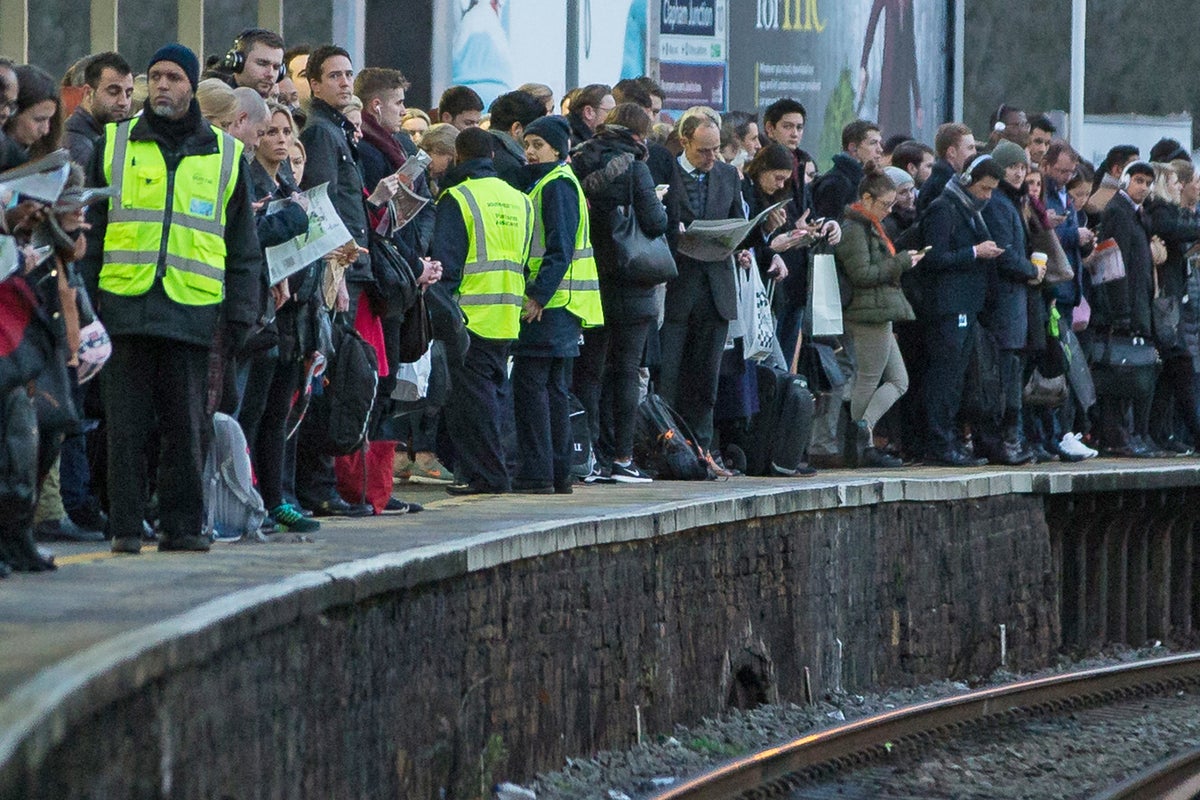
A leaked presentation obtained by The Independent says that the government’s funding plans for the next five years will not allow Network Rail to “operate, maintain and renew” the railway at its current level of reliability.

The slides, intended for rail industry bosses and marked “official-sensitive-commercial”, warn that delays caused by crumbling infrastructure – such as tracks, bridges and earthworks – are expected to worsen amid rising costs and inadequate funding.
 
Last edited by a moderator:
Sponsor Post - registered members do not see these adverts; click here to register, or click here to log in
R

RailUK Forums

matacaster

On Moderation
Joined
19 Jan 2013
Messages
1,646
Location
Huddersfield
If a more realistic view of safety were to be taken, then perhaps a lot more could be achieved with the current budget. The railway is now so risk averse I'm surprised they even feel that they can run trains at all lest someone should be injured or killed. Is there any other country and n the world that fences off as much rail corridors as UK? How on earth do other countries manage with the vast death tolls etc which our overbearing safety culture has fostered on us? Maintenance on one track whilst the other is running has all but been banned at what cost per life? Compare that to road safety? .. anyone who says we must stip all deaths etc is living in cloud couckoo land
 

yorksrob

Veteran Member
Joined
6 Aug 2009
Messages
44,313
Location
Yorks
And in spite of all the drivel about "levelling up" the regions will get screwed. This is Government policy.
 

12LDA28C

Established Member
Joined
14 Oct 2022
Messages
5,058
It's reported in the Independent that there are funding shortages ahead which is likely to impact maintenance and reliability. This is from leaked information. It suggests that this could impact reliability moving forwards.

Below is a link leading to The Independent where I encountered this story.


Hardly 'news', surely? It's been well-known for some time that the DfT are not interested in spending money to grow passenger numbers and increase revenue, all they care about is cutting costs, with predictable results.
 

Nicholas Lewis

Established Member
Joined
9 Aug 2019
Messages
8,005
Location
Surrey
Independent running this as its front page

https://www.independent.co.uk/trave...twork-rail-cancellations-misery-b2315578.html

Britain’s teetering railways face more delays and cancellations because there is not enough money to maintain them, Network Rail has privately admitted.

A leaked presentation obtained by The Independent says that the government’s funding plans for the next five years will not allow Network Rail to “operate, maintain and renew” the railway at its current level of reliability.

The slides, intended for rail industry bosses and marked “official-sensitive-commercial”, warn that delays caused by crumbling infrastructure – such as tracks, bridges and earthworks – are expected to worsen amid rising costs and inadequate funding.
Going on to say
  • Network Rail will do fewer repairs over the next five years, and will clear less of the debris that can cause delays and accidents
  • Lack of funding will lead to higher costs in the longer run, with rail bosses expected to repeatedly repair outdated infrastructure it would be cheaper to replace
  • Network Rail has cut its usual £3bn “risk fund” – used to cover events such as extreme weather and Covid – because there is “not sufficient headroom”
  • The company will have to take a “market-led” approach to maintenance, in which rail services that make the most money will be prioritised
Wonder if NR leaked it to get a bit of pressure going on the consequences of DfT aka HMT actions
 

SynthD

Established Member
Joined
4 Apr 2020
Messages
2,020
Location
UK
Does market-led maintenance suggest that rural lines will suffer first? Areas that are ‘over served’ for the social good, without devolved/local government providing extra funding, could be first.
 

thedbdiboy

Established Member
Joined
10 Sep 2011
Messages
1,208
There is something cyclical here though - huge sums have been spent of the infrastructure in the last 25 years, in part to catch up from the chronic underinvestment of the 70s,80s and early 90s particularly on rural and secondary lines. Does anyone remember 'spot resleepering' to try and eke out expired track in BR days? Yet when, for example, the Lymington branch was relaid a few years back it was with new CWR on concrete sleepers - that should be good for another 75 years or so...
 

AngusH

Member
Joined
27 Oct 2012
Messages
598
Does market-led maintenance suggest that rural lines will suffer first? Areas that are ‘over served’ for the social good, without devolved/local government providing extra funding, could be first.

Assuming for the moment the reports are true (they might not be or something might change).

I agree that we'll see reductions in quality where it can't be obviously seen.

My thought is that rural lines are probably safe from absolute closure because it's rather embarrassing to the authorities
and the absolute savings aren't that great except in odd cases where an expensive bridge repair is needed.

Cutbacks in service seem most likely.
Why have three trains per hour, instead have only one. The route is still served, there are some savings
and the service "matches the customer demand"

Then I think line speed and frequency reductions.

Why have three stretches of 125mph running along a route, just have one.
The headline speed is the same and you might be able to reduce the maintenance intensity without affecting safety.

If the speed isn't so important, reduce 125 sections to 100, 100 sections to 90, 90 to 75. etc

I'd expect fewer but longer trains to reduce the staff requirements but the UK trend in recent years has always been against this.


(Obviously I'm not in favour of this)
 

SLC001

Member
Joined
13 Jan 2022
Messages
171
Location
Northampton
Given the huge rise in construction industry costs which primarily relate to materials and their availability, I hardly think this conclusion is surprising nor should the outcome for passengers be unexpected. If the money is not there then in real terms investment has to be cut back unless passengers are prepared to pay more and that will not happen. In some ways this article is no news and when the Government(s) are faced with priorities, the failing NHS for example will top the list.
 

tbtc

Veteran Member
Joined
16 Dec 2008
Messages
18,052
Location
Reston City Centre
Gosh, once you put all decisions in the hands of the public sector you find that funding is easily cut, previous commitments can be ignored and that the people taking decisions have to assess the business cases along side the opportunity cost of spending the same money on other public sector things?

Nobody could have predicted that, could they? It’s not as if similar decline happened in the 1980s or anything..,
 

LNW-GW Joint

Veteran Member
Joined
22 Feb 2011
Messages
21,904
Location
Mold, Clwyd
The government recently published its planned budget for NR for CP7 (2024-29) in the form of the HLOS/SoFA documents - the cash budget is £44 billion.
It's now up to NR/ORR to work out what NR can deliver for that budget, so that the settlement can be agreed by the end of this year (CP7 starts on 1.4.24).
It's got nothing to do with TOC contracts and service levels, or even enhancements (which are separate budgets).
Note the £27.5 billion of Network Grant - this is the direct subsidy from DfT which should really be coming from the TOCs (ie from passengers).

NR is undoubtedly under cost pressure - what do folk think the recent industrial action over working practices was about?
No high-spending business ever gets the budget it would like while revenues are constrained, and its up to the management to live within its means.

The original intention was that GBR (NR + TOCs, in a regional structure) would be in place and the budgets and business plans would be integrated.
But delays in legislation mean that the NR HLOS/SoFA process has to do one more round while GBR is set up.
NR has also devolved its operations to its Regions, so there is now a different dynamic to how budgets are set and managed internally.


3. The table below sets out the direct grant that the Government is making available to Network Rail and the level of expenditure that the Secretary of State currently anticipates this grant will support throughout CP7, once relevant income to Network Rail is accounted for. In doing so, he recognises that it is the role of the ORR to determine the final level of income required by Network Rail through the Periodic Review.

4. In line with the HLOS, the level of expenditure is focused on and provides for the operations, maintenance, and renewal of the operational railway over CP7, as well as Network Rail support costs that are within scope, in association with the high-level objectives set out in the accompanying HLOS. Funding for enhancements to the network is excluded from this SoFA, as are objectives pertaining to enhancements excluded from the 2022 HLOS
(snip)

9. The level of expenditure set out does not take account of payments to the British Transport Police, Corporation Tax, GBR Transition Team costs, Cash Collateral obligations, Interest Payments related to either the DfT loan, legacy or Third Party Debt, or Repayments related to either the DfT Loan or Third-Party Debt. Government has noted the obligations Network Rail has in relation to these and will ensure that adequate funding is provided to meet these obligations, out-with the SoFA
 

Clarence Yard

Established Member
Joined
18 Dec 2014
Messages
3,266
The NR OM&R budget will get concentrated on the busier routes. This will lead to some interesting decisions when infrastructure goes wrong.

Take this as an imaginary example. Sluice Bridge, just north of Boston Station becomes “unsafe”. Does NR repair it or just “defer”. A “temporary” bus service is then put in to replace rail services between Boston and Skegness “until such time as funds and resources are available”. Those funds never appear.

Replicate that over the network and you will soon get into closure by stealth.
 

Mikey C

Established Member
Joined
11 Feb 2013
Messages
8,246
To be fair, COVID and the rise of working from home has led to an immediate and long term reduction in passenger numbers carried by the railway. Not evenly or across the board of course, but an unprecedented peacetime revenue drop.

I'm not saying I agree with the leaked policy here, but tough decisions will have to be made.
 

The Planner

Veteran Member
Joined
15 Apr 2008
Messages
19,663
This has been span beautifully, safety will be maintained as part of this as you would fully expect it to. On some routes it just means that renewals will get deferred and NR takes the hit on performance if the asset deteriorates.
 

frodshamfella

Established Member
Joined
25 Sep 2010
Messages
2,031
Location
Frodsham
I've just returned from an Interrail trip around France and Italy. We really are going backwards in the UK, had a superb experience on my travels, on time, comfortable, clean, electric , fast and connectivity .
 

yorksrob

Veteran Member
Joined
6 Aug 2009
Messages
44,313
Location
Yorks
To be fair, COVID and the rise of working from home has led to an immediate and long term reduction in passenger numbers carried by the railway. Not evenly or across the board of course, but an unprecedented peacetime revenue drop.

I'm not saying I agree with the leaked policy here, but tough decisions will have to be made.

Tough decisions will need to be made. On a lot of MP's careers next year.
 

jfowkes

Established Member
Joined
20 Jul 2017
Messages
1,268
To be fair, COVID and the rise of working from home has led to an immediate and long term reduction in passenger numbers carried by the railway. Not evenly or across the board of course, but an unprecedented peacetime revenue drop.

I'm not saying I agree with the leaked policy here, but tough decisions will have to be made.
Luckily there isn't a climate and environmental crisis that requires a big shift to more energy-and-space-efficient, less fossil-fuelled forms of transport. Then we might have a reason to get people and freight onto trains in a big way.

As it is, everything is fine and there's no reason to despair about decline of the railway.
 

cactustwirly

Established Member
Joined
10 Apr 2013
Messages
8,409
Location
UK
Luckily there isn't a climate and environmental crisis that requires a big shift to more energy-and-space-efficient, less fossil-fuelled forms of transport. Then we might have a reason to get people and freight onto trains in a big way.

As it is, everything is fine and there's no reason to despair about decline of the railway.

As if the current state of affairs is going to persuade people onto the railway.
For example Reading to Oxford now requires a lengthy RRB, which NRs lack of infrastructure maintenance can partially be blamed.
This sort of thing is only going to get worse.
 

BrianW

Established Member
Joined
22 Mar 2017
Messages
2,131
As if the current state of affairs is going to persuade people onto the railway.
For example Reading to Oxford now requires a lengthy RRB, which NRs lack of infrastructure maintenance can partially be blamed.
This sort of thing is only going to get worse.
As it happens, Oxford and Reading are 'interesting' politically- trains and RRBs may be factors
 

jfowkes

Established Member
Joined
20 Jul 2017
Messages
1,268
As if the current state of affairs is going to persuade people onto the railway.
For example Reading to Oxford now requires a lengthy RRB, which NRs lack of infrastructure maintenance can partially be blamed.
This sort of thing is only going to get worse.
But making it worse is a political choice, not an inevitability. It doesn't have to get worse.
 

Scott1

Member
Joined
29 Apr 2015
Messages
385
.. . On some routes it just means that renewals will get deferred and NR takes the hit on performance if the asset deteriorates.
It's the passenger that takes the hit, NR will only care about the cost/benefit, and this doesn't account for the cost to the passenger in terms of missed shifts, events etc. It also doesn't account for any lost future custom. From a business point of view it's not a very effective measure, but unfortunately NR perhaps forget their purpose primarily is to move people and goods, it's too easy to start looking at asset management and delay attribution and miss the point.
 

The Planner

Veteran Member
Joined
15 Apr 2008
Messages
19,663
It's the passenger that takes the hit, NR will only care about the cost/benefit, and this doesn't account for the cost to the passenger in terms of missed shifts, events etc. It also doesn't account for any lost future custom. From a business point of view it's not a very effective measure, but unfortunately NR perhaps forget their purpose primarily is to move people and goods, it's too easy to start looking at asset management and delay attribution and miss the point.
NR can only care about the cost if there isn't the money. Depending on the magnitude of any TSR, its covered to an extent in the timetable anyway so unless its major nothing is going to be noticeable.
 

Fleetmaster

Member
Joined
28 Feb 2023
Messages
353
Location
Hounslow
I'm not at all surprised DfT has decided managed decline (in reliability) is preferable to throwing more money at institutions who have proven to be incapable of reliability improvement and where all perceived riches are merely a trigger for industrial unrest. I suspect this is the holding pattern until GBR is fully established and calls the shots entirely regarding funding and service provision.
 

d70g

Member
Joined
12 Nov 2020
Messages
69
Location
Paisley
I’m not saying that the government are purposely running down the railways as part of some low tax, ideological circle-jerk, and I wouldn’t expect many votes for candidates in any election should they stand on such a platform.

And I’m not saying that the government are suppressing demand by reducing/eroding supply, which in turn suppresses demand even further, until whatever’s left can be sold to the highest bidder.

I am however saying that if the above was my objective – and I didn’t want my party to haemorrhage popular support – I’d being doing exactly as the government is currently doing (and there are a few public services in a similar position).
 

Annetts key

Established Member
Joined
13 Feb 2021
Messages
3,796
Location
West is best
Gosh, once you put all decisions in the hands of the public sector you find that funding is easily cut, previous commitments can be ignored and that the people taking decisions have to assess the business cases along side the opportunity cost of spending the same money on other public sector things?

Nobody could have predicted that, could they? It’s not as if similar decline happened in the 1980s or anything..,
Are you forgetting that even during the “glory’ privatisation years, a lot of TOCs received subsides for all or part of their franchise. At the time, Railtrack received the vast majority of its funding from the TOCs.

And ever since Railtrack found that the costs of disruption (speed restrictions over large parts of the high speed network) due to not carrying out proper rail grinding and the public relations disaster from that. Then the costs of extensive repair and rail replacement work meant that it holed their finances. Resulting in the Labour government “replacing” Railtrack with Network Rail.

And the article referred to concerns Network Rail.

Yet, here we are again…

As to the question about which lines this will affect, it has the potential to affect any kind, be it a high speed main line or a branch line.

The amount of scheduled routine maintenance is being cut by 50%. That’s one part of modernising maintenance. There is absolutely nothing modern about cutting maintenance. It’s been tried with varying degrees of success or failure over the years.

Instead of preventive maintenance, with the goal of not letting infrastructure degrade before it starts to become troublesome. Now we have monitor (but not maintain to previous levels) until it becomes troublesome. In the hope that the monitoring will detect a problem before the equipment or infrastructure fails and causes train delays or cancellations.

Or as the RMT says, repair on failure…

Remember, Network Rail started instigating plans for reducing maintenance over five years ago.

Another problem with this reduction in maintenance, is that when work is authorised, once work is started, often the condition of the equipment or infrastructure is found to be in a much worse condition that expected. Hence the job takes much longer.

The above also applies to equipment or infrastructure failures - rather than the immediate cause of the failure being able to be quickly fixed. Going forward, multiple problems may be found. Most of all of which will need to be fixed before the equipment or infrastructure can be returned to service. And that assumes that suitable spared can be found and enough trained and qualified staff are available…

I fully expect the average number of train delays and the average number of cancellations or part cancellations to increase over the coming years. As it takes time for equipment and infrastructure to degrade when the amount of maintenance is reduced.
 
Status
Not open for further replies.

Top
