The far future will be autonomous driverless road/rail self-loading container flats which marshall themselves into trains at various access points and travel mostly at night when passenger services aren’t running.Even the mighty DB-Cargo in Germany is struggling to make wagonload economically-viable: https://trans.info/en/db-cargo-single-wagonload-415710
It seems the future for less-than-trainload lies in the domestic intermodal network with boxes transferred between trains at key terminals such as Daventry and Mossend.

-
Our new ticketing site is now live! Using either this or the original site (both powered by TrainSplit) helps support the running of the forum with every ticket purchase! Find out more and ask any questions/give us feedback in this thread!
You are using an out of date browser. It may not display this or other websites correctly.
You should upgrade or use an alternative browser.
You should upgrade or use an alternative browser.
Freight on the Railways
- Thread starter Masbroughlad
- Start date
- Status
- Not open for further replies.
Sponsor Post - registered members do not see these adverts; click here to register, or click here to log in
R
RailUK Forums

Annetts key
Established Member
So, not having a go, but simply a question:While that may be true from a purely financial point of view, they are not "freight" trains in the
accepted sense of the word, any more than Autumn RHTT trains or movements of TOC stock are.
MARK
What is the difference between a train carrying aggregates for the railways own use (in other words an engineering train carrying ballast) and a train carrying aggregates for road or other construction works?

Not sure about the autonomous driving, but automation of the box transfer handling process to be swift, reliable, and affordable, even at small terminals is very important, such that more and smaller exchange terminals can be used. I can see demountable boxes replacing remaining vans for most traffic, perhaps some with side door access for rail platform loading while a container is wagon mounted. Niches for specialist wagons will remain for bulk trainloads of solids and liquids. The train driver would remain as the supervisor for these processes and of the train in motion, although, like some passenger trains today, freight locos could plausibly use 'ATO' tech to actually drive optimally without constant human input once dispatched from a terminal. I'd still want a well-trained operator up front, keeping an eye on all that tech and the unrolling route in front, able to intervene quickly when something goes awry in the dead of night and the middle of nowhere.The far future will be autonomous driverless road/rail self-loading container flats which marshall themselves into trains at various access points and travel mostly at night when passenger services aren’t running.
Ploughman
Established Member
Is Barnetby still busy?
Or has it been affected by traffic decline recently?
Or has it been affected by traffic decline recently?
furnessvale
Established Member
- Joined
- 14 Jul 2015
- Messages
- 4,900
New ballast from quarries to virtual quarries such as Crewe marshalling load is classified as a commercial load and is even counted by the DfT in tonnage moved or lifted by railfreight.So, not having a go, but simply a question:
What is the difference between a train carrying aggregates for the railways own use (in other words an engineering train carrying ballast) and a train carrying aggregates for road or other construction works?
However, the considerable movements from rail maintenance depots to and from work sites is not counted in tonnage figures by DfT. This has always been a bone of contention with me as equivalent movements by road haulage to road construction, and even by road to rail construction sites, ARE counted in total road haulage figures. This is one of many counting anomalies which help to inflate road haulage versus railfreight figures.
Even though the tonnage is not counted by DfT, the private railfreight companies are obviously paid for the work involved.

Freightmaster
Verified Rep
- Joined
- 7 Jul 2009
- Messages
- 4,426
Nothing!So, not having a go, but simply a question:
What is the difference between a train carrying aggregates for the railways own use (in other words an engineering train carrying ballast) and a train carrying aggregates for road or other construction works?

As furnessvale says, those are considered to be freight services, and would have come under the 'aggregates'
section of my initial reply earlier in this thread.
But most other departmental workings, especially those running to/from engineering possessions, are not.
MARK

DarloRich
Veteran Member
exactly - Bletchley has LOADS of freight - not sure that would have been the case 30 years ago where as Doncaster these days seems quite quiet.That is spot on - I have been updating the Freightmaster timetables on a daily basis for over
30 years now (longer than all the current FOCs have been in existence!), and it's sobering
to see many of the locations which used to be extremely busy freight 'hotspots' in the halcyon
days of power station coal traffic are almost dead now, especially during the daytime.
Not the only liars though, what about all the bilge from Rail Operations Group re Orion parcel services that quietly led nowhere .They were lying - they did completely abandon the railways, regardless of what they said.
Annetts key
Established Member
New ballast from quarries to virtual quarries such as Crewe marshalling load is classified as a commercial load and is even counted by the DfT in tonnage moved or lifted by railfreight.
However, the considerable movements from rail maintenance depots to and from work sites is not counted in tonnage figures by DfT. This has always been a bone of contention with me as equivalent movements by road haulage to road construction, and even by road to rail construction sites, ARE counted in total road haulage figures. This is one of many counting anomalies which help to inflate road haulage versus railfreight figures.
Even though the tonnage is not counted by DfT, the private railfreight companies are obviously paid for the work involved.
Thank you bothNothing!
As furnessvale says, those are considered to be freight services, and would have come under the 'aggregates'
section of my initial reply earlier in this thread.
But most other departmental workings, especially those running to/from engineering possessions, are not.
MARK


Masbroughlad
Established Member
Is it a National strategic error not to bring freight carriers into the public railway too?
zwk500
Veteran Member
DRS is already a publicly owned FOC for strategic purposes. No point having more than 1, IMO.Is it a National strategic error not to bring freight carriers into the public railway too?
There's a separate question about whether the railway would be in a commercially better place to have one single freight operator that would be able to use the facilities and resources of the railway network more efficiently, and not be knocking chips of each other as FOCs chase each other's business, but equally there's value in having different approaches around the table, and you could always rewrite leases or have GBR own all yards and terminals and just charge FOCs access if you wanted.
Oxfordblues
Member
- Joined
- 22 Dec 2013
- Messages
- 1,118
I remember in the 1970s the British Rail freight sales reps would visit customers to advise them of yet another rate increase. The only alternative for most was road haulage and the truckers had lorries ready and waiting to grab the traffic. It was a case of "take it or leave it" and many customers chose to leave it. As each traffic flow was lost the fixed costs passed to the remaining marginal traffic making that uneconomic also.Is it a National strategic error not to bring freight carriers into the public railway too?
Privatisation has transformed the market. Now a customer can keep their railfreight provider on their toes by threatening to take their business to another railfreight company. Competition has cut costs and improved reliability. The UK road freight industry is ruthlessly competitive and nobody is suggesting reinstating British Road Services with their overmanning and restrictive practices.
The Planner
Veteran Member
- Joined
- 15 Apr 2008
- Messages
- 19,652
I think that would be a mistake as it would remove competition. If you are an end user you have a choice of operator at is it. Make it one big GBR thing and can you guarantee the best price or will end users just walk away?Is it a National strategic error not to bring freight carriers into the public railway too?
Trainbike46
Established Member
I don't see how nationalising freight would bring any advantage, and I can see some ways in which it brings disadvantages. Therefore, it think it shouldn't be; such big changes require an idea of how they'd improve things to be worth doing.Is it a National strategic error not to bring freight carriers into the public railway too?
Annetts key
Established Member
Actually, if we want to drive freight off the roads...The UK road freight industry is ruthlessly competitive and nobody is suggesting reinstating British Road Services with their overmanning and restrictive practices.


ac6000cw
Established Member
It's exactly the opposite - why would you want a successful industry to be hobbled by Treasury investment rules and political interference (unless you want to drive freight off the railway)?Is it a National strategic error not to bring freight carriers into the public railway too?

Therefore, it think it shouldn't be; such big changes require an idea of how they'd improve things to be worth doing.
Indeed. Unfortunately that goes for the wider GBR project too. There’s no clear idea of how it will improve things, and seems to be being done simply because it’s popular with voters, with no more real thought or analysis underpinning it than that.

Plenty going back and forth through Stoke Gifford - hardly a rat run!Funny thing, freight in the 21st century. There's plenty of it but it's confined to 'rat runs'. Spend some time at Derby or Nottingham and you could be forgiven for thinking that rail freight is pretty well dead. But go to Burton or Chesterfield and it's a different story. The WCML (via the 'Trent Valley Line') is also a freight hotspot.
Annetts key
Established Member
How many freight trains have you seen moving through Stoke Gifford overnight?Plenty going back and forth through Stoke Gifford - hardly a rat run!
zwk500
Veteran Member
34 Freight trains (give or take) reported times at Bristol Parkway yesterday, including several overnight (and at the moment there's a possession on the Henbury line so some freight is diverted away). A mix of Steel, Containers, Aggregates, and Oil from what I can immediately see, and that doesn't include the Binliner from Brentford to Severnside that is running via Dr Days due to the possession.How many freight trains have you seen moving through Stoke Gifford overnight?
Realtime Trains | Departures from Bristol Parkway all day on 14/08/2025
Train information at Bristol Parkway all day on 14/08/2025. From Realtime Trains, an independent source of train running info for Great Britain.
 www.realtimetrains.co.uk
I think that @satisnek is not quite being fair to say freight is only confined to 'rat runs', but that they do have a point in that freight is now concentrated on certain corridors. Especially compared to the 70s or 80s, when a lot more trip freight was running and rail-connected business despatching smaller loads for wagonload freight were more common.
Freightmaster
Verified Rep
- Joined
- 7 Jul 2009
- Messages
- 4,426
34 Freight trains (give or take) reported times at Bristol Parkway yesterday, including several overnight (and at the moment there's a possession on the Henbury line so some freight is diverted away).
A lot of those were diversions due to the line through Lydney being closed for engineering work.
MARK
Annetts key
Established Member
That's a fair amount. Back in the late 1980s, on one night turn, the team I was with had to wait for fourteen freight trains to pass on the down line before we could have any significant time to diagnose a problem with a track circuit.34 Freight trains (give or take) reported times at Bristol Parkway yesterday, including several overnight (and at the moment there's a possession on the Henbury line so some freight is diverted away).
In the late 2010s, one year when Chipping Sodbury was flooded (again), because the GWR would not run trains on this route (due to the water level being too high), when my team had to investigate a failure (can't remember if it was flood related), we found that many freight trains were running on this line (although I can only remember up trains). We had to wait for a number to slowly "signal hop"...
zwk500
Veteran Member
If you look at next week, there's still an appreciable amount of freight through Parkway:A lot of those were diversions due to the line through Lydney being closed for engineering work.
MARK
Realtime Trains | Departures from Bristol Parkway all day on 21/08/2025
Train information at Bristol Parkway all day on 21/08/2025. From Realtime Trains, an independent source of train running info for Great Britain.
www.realtimetrains.co.uk
You'll know better than I how much of that is likely to run, but still it's a main freight route rather than a 'rat run'.
Freightmaster
Verified Rep
- Joined
- 7 Jul 2009
- Messages
- 4,426
You'll know better than I how much of that is likely to run, but still it's a main freight route rather than a 'rat run'.
I think the original "rat run" comment was referring specifically to the Midlands, where major stations
such as Nottingham, Derby, Wolverhampton, Birmingham New Street, etc see little freight as it most
of it is routed away from those areas.
In Bristol/South Wales, that isn't really possible.
MARK

LNW-GW Joint
Veteran Member
The passenger railway was always publicly owned, just franchised out periodically for private sector operation (like London buses).Is it a National strategic error not to bring freight carriers into the public railway too?
Freight, like rolling stock, was fully sold off in 1996 and operates as open access.
Governments are not at all keen to nationalise private companies as it upsets the city, and freight everywhere is in private hands.
Not even the Jeremy Corbyn proposals (2019) would have nationalised freight.
DRS is a publicly-owned freight operator, but it serves the nuclear sector which itself is largely publicly-owned as no-one will take the long-term industry risks.
In 2015, First Great Western wrote - "Live lobsters are taking the train today, as Great Western Railway teams up with local businesses to help transport Cornish produce to the capital’s restaurants in less than half the time it takes road transport. GWR has teamed up with InterCity RailFreight Ltd, WEGO Carbon Neutral Couriers and local fisherman to help get their products to market quicker, as well as enabling them to add hours to production times.
The service will see live and fresh produce traditionally carried to market by the road network taken by train. Using space in what is traditionally referred to as the Guard’s van, live shellfish will be packed in special cold crates on the daily 1739 service from Penzance, arriving London Paddington at 2344. From there it will be collected by WEG0 Carbon Neutral Couriers and taken to its destination."
A good initiative but no doubt the replacement of HSTs with IETs means that this traffic is now going by road as there's no suitable space on the IETs to carry it. Are there other similar examples?
The service will see live and fresh produce traditionally carried to market by the road network taken by train. Using space in what is traditionally referred to as the Guard’s van, live shellfish will be packed in special cold crates on the daily 1739 service from Penzance, arriving London Paddington at 2344. From there it will be collected by WEG0 Carbon Neutral Couriers and taken to its destination."
A good initiative but no doubt the replacement of HSTs with IETs means that this traffic is now going by road as there's no suitable space on the IETs to carry it. Are there other similar examples?

Skimpot flyer
Established Member
- Joined
- 16 Nov 2012
- Messages
- 1,934
For some months, Orion WERE running a parcels train for Royal Mail.Not the only liars though, what about all the bilge from Rail Operations Group re Orion parcel services that quietly led nowhere .
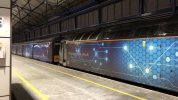
There was a departure from PRDC at 14:30 on Tuesday, Wednesday, Thursday and Friday each week during at least half of 2021, but it had a lot of reliability issues. If I remember correctly, it used to return to PRDC with an arrival time of about 12:30 (lunchtime) including on Saturday, wherein it was stabled until the Tuesday morning departure.
I actually spoke to Phil Read (Varamis Rail) on a tube train in a chance encounter just a few weeks before Royal Mail announced they were to cease using the 325s. I recall jokingly asking if he would bid for the RM contract, as the existing trains were proving increasingly prone to breakdowns. He smiled and said ‘we’re trying’, so make of that what you will.
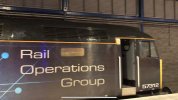
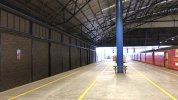
< images show the Orion train in Platform 1 at PRDC on 26 November 2021, ironically being rescued by Rail Operations Group loco 57312, whilst a 12-car Class 325 set sits in Platform 2 >
Attachments
Annetts key
Established Member
No idea. But BR before it was sliced and diced use to transport vital spare parts across various parts of the country by using "Guard’s van" or similar areas on trains. These were emergency transfers of parts needed so that faulty systems could be fixed.In 2015, First Great Western wrote - "Live lobsters are taking the train today, as Great Western Railway teams up with local businesses to help transport Cornish produce to the capital’s restaurants in less than half the time it takes road transport. GWR has teamed up with InterCity RailFreight Ltd, WEGO Carbon Neutral Couriers and local fisherman to help get their products to market quicker, as well as enabling them to add hours to production times.
The service will see live and fresh produce traditionally carried to market by the road network taken by train. Using space in what is traditionally referred to as the Guard’s van, live shellfish will be packed in special cold crates on the daily 1739 service from Penzance, arriving London Paddington at 2344. From there it will be collected by WEG0 Carbon Neutral Couriers and taken to its destination."
A good initiative but no doubt the replacement of HSTs with IETs means that this traffic is now going by road as there's no suitable space on the IETs to carry it. Are there other similar examples?
And also, at least up to the 1980s, some early morning passenger trains (typically the first train of the day), either an in-service passenger train or ECS movement, would transport Royal Mail post in the "Guard’s van" or similar area on trains. Typically this was from city stations to selected local stations that were some distance from the city. At the local station a Royal Mail van (small road van) would be ready for the arrival of the train. The sacks of mail would be transferred and it would the be taken to the local sorting (delivery) office.
I think Red Star parcels may have also used the "Guard’s van" for some items.
Trainbike46
Established Member
I've still seen references to this since the introduction of the IETs.In 2015, First Great Western wrote - "Live lobsters are taking the train today, as Great Western Railway teams up with local businesses to help transport Cornish produce to the capital’s restaurants in less than half the time it takes road transport. GWR has teamed up with InterCity RailFreight Ltd, WEGO Carbon Neutral Couriers and local fisherman to help get their products to market quicker, as well as enabling them to add hours to production times.
The service will see live and fresh produce traditionally carried to market by the road network taken by train. Using space in what is traditionally referred to as the Guard’s van, live shellfish will be packed in special cold crates on the daily 1739 service from Penzance, arriving London Paddington at 2344. From there it will be collected by WEG0 Carbon Neutral Couriers and taken to its destination."
A good initiative but no doubt the replacement of HSTs with IETs means that this traffic is now going by road as there's no suitable space on the IETs to carry it. Are there other similar examples?
ICRF was reported to have contracts for transporting goods on eight different passenger TOCs last year, I don't know for a fact that includes GWR, but it would be hard to not use IETs at all if there's that many passenger TOCs involved, so I think it is safe to assume this does happen on IETs.

Intercity Railfreight on board with eight operators
Utilising spare capacity on scheduled passenger services is the business model of Intercity Railfreight. How the company utilises that space, to the benefit of their…
In the 1980s we issued design details from the drawing office to the area teams by train using green OCS (on company service) labels. I'd go to the platform at Reading, usually No. 4 for westbound long-distance trains, and hand the package over to the guard, confirming that someone from the Area office would meet the train.No idea. But BR before it was sliced and diced use to transport vital spare parts across various parts of the country by using "Guard’s van" or similar areas on trains. These were emergency transfers of parts needed so that faulty systems could be fixed.
- Status
- Not open for further replies.