• Our new ticketing site is now live! Using either this or the original site (both powered by TrainSplit) helps support the running of the forum with every ticket purchase! Find out more and ask any questions/give us feedback in this thread!

First Group: General Discussion

TheGrandWazoo

Veteran Member
Joined
18 Feb 2013
Messages
22,855
Location
Somerset with international travel (e.g. across th
I'm musing rather than stating an opinion, but wonder if there are some parts of First that have so long been pursuing (even if unintentionally) a managed decline approach and/or delivering no more than a base product that such an attitude has become institutionalised. E.g. there are staff who joined as graduates or who have worked up the ranks and are now in more senior roles, but who've never experienced anything else.

I may very well be wrong, but some of the more progressive managers at First seem to be those who've joined from elsewhere, rather than developed internally (that is as like my impression than reality). Similarly am I correct in thinking some recent high-profile appointments (Bristol?) have been from people outside the industry, not just the group. Are there any examples of really good 'born and bread' First managers that have developed within the group?
To be honest, the bus industry (like others) has a certain fluidity with people often working for a number of the major groups. Someone like Nigel Eggleton has worked for Go Ahead, Transdev and Arriva IIRC, whilst James Freeman was an NBC graduate, joined First, went to Stagecoach and Reading and then back to First. I have friends who have worked for the major groups and minor groups all at different times, gaining experience and also knowing the reality in what can be achieved.

The issue for First is that they did have a number of good managers but many left in the later Lockhead era, frustrated by the strictures that were placed upon them. I can think of Mark Reddy being one who did survive. However, they had to go out and recruit to improve the quality of their management. It varies across the group but you can say the same of Stagecoach and Go Ahead to be fair.
 
Sponsor Post - registered members do not see these adverts; click here to register, or click here to log in
R

RailUK Forums

tbtc

Veteran Member
Joined
16 Dec 2008
Messages
18,051
Location
Reston City Centre
I thought Barbie 2 made sense. Put it this way...

1. A number of firms have tried to get around the tricky balance between "having taken on a number of local businesses with local identities at the same time as trying to have a national brand that people will recognise" (e.g. department stores that were individual operations in each town but are now under the umbrella of House Of Fraser/ John Lewis) - you don't want to throw babies out with bath water - you want to give people the continuity that their local brand hasn't been replaced by a bland national brand at the same time as trying to create a national brand to simplify marketing/adverts etc - this wasn't unique to First

2. GRT had a "common pattern of colours" rather than a national livery, Badgerline just put a cartoon badger on the side of their vehicles, so there wasn't a common livery on other "half" of the operation, but FirstBus took on a number of new operations shortly after this, so there were a lot of buses in a lot of different colour schemes/ brands - but at the same time, buses took their biggest step forward in a long time, with the introduction of low floor buses

3. It made sense to have a national livery - Arriva and Stagecoach had national liveries - you swap vehicles around the "empire" from time to time - you want a recognisable national brand for advertising - so you have a livery that is the same around the country

4. I can see that it made sense to focus this on the newest vehicles - e.g. low floor, wheelchair accessible - it showed a transformation in the type of vehicle - especially as First were also replacing the "bog standard" bus interior with their own branded moquettes, individual seating rather than "benches", that kind of thing - worth remembering that other operators were introducing a new livery/ distinct branding for "low floor" vehicles - Lothian buses had Harlequin, Mainline had a black-fronted scheme for their "Comfort Zone", I think other operators had similar distinct schemes for their "buggy bus" branding and the likes - it made sense for a potential passenger at the kerb to know whether they could board the approaching bus with their wheelchair, or parent to know whether they had to fold up a buggy and try to board the bus whilst carrying their toddler or just wheel the thing straight on board - this is something that some other companies have done elsewhere in the economy - you introduce a new brand for your "flagship" stuff and then gradually expand this to the rest of the operation - look at how British Rail had only their A-list trains branded as "InterCity" in the 1970s but then widened the brand in the 1980s and by the time of privatisation were happy to extend the "InterCity" brand to include things like 158s - look at how Stagecoach only painted the younger vehicles into "beachball" at first and kept older ones in "Stripes" - but it happens with other organisations - you create a premium brand and then slowly dilute it until it covers a lot more - "luxury" becomes "standard" (so you then need to introduce an even more "luxury" brand a few years later!)

5. So, initially, whilst introducing the new vehicles in the flagship Barbie livery, it made sense to keep the "legacy" vehicles in the "legacy" liveries - why repaint large numbers of older vehicles that were going to be scrapped in the next year or two? Maybe you decide to do any repaints of mid life buses in a simpler version of the "legacy" livery - e.g. the Mainline one saw the blue/silver bands replaced by just plain red/yellow - simpler but still recognisable

6. That's fine for a few years, people see the "flagship" vehicles as being "better" than the old buses, they see the "flagship" slowly being introduced to other corridors, they start to think of the bus company as being "pink and purple", but the old vehicles are still in a variety of older colour schemes

7. So you bring in a common livery for the older vehicles, no matter where they are in the country, something that's recognisable as being "First" (i.e. probably pink/purple) but not as good as the "flagship" brand - you wouldn't want your "secondary" buses looking better than the "flagship" ones - hence Barbie 2

8. I think it'd have been better to have done something else with the same colours (maybe a willow-leaf-less version of the "flagship" Barbie?), but I can see why they came up with the scheme that they had - by the early 2000s they'd established the pink/purple colours, but they still had a number of vehicles with at least five years of life left

9. A lot of companies have a "budget" brand for their "non-premium" products - e.g. the Value/ SmartPrice/ Economy brands in supermarkets, the way that a shop like M&S will have a "basics" range to distinguish clothes from brands like "Autograph" - the way that computer games were put in the "Platinum Collection" after a year or two on the shelves - people cope with some "secondary" products being branded as such in the wider economy

10. What was the alternative? Keeping an increasingly small number of buses in "local" liveries, and repainting them into other "local" liveries when they were cascaded around the country? Paint everything in the same "flagship" Barbie, which would have made it less exclusive?

11. Of all of the decisions made in the Moir days (e.g. investing lots of money on flagship vehicles like the artics and then scrapping them at mid life because they couldn't be cascaded onto other routes, then repeating the same mistakes with ftr a few years later...), I think that the faded pink bits on the side of buses was the least of their problems!
 

buslad1988

Member
Joined
28 Dec 2018
Messages
650
I thought Barbie 2 made sense. Put it this way...

1. A number of firms have tried to get around the tricky balance between "having taken on a number of local businesses with local identities at the same time as trying to have a national brand that people will recognise" (e.g. department stores that were individual operations in each town but are now under the umbrella of House Of Fraser/ John Lewis) - you don't want to throw babies out with bath water - you want to give people the continuity that their local brand hasn't been replaced by a bland national brand at the same time as trying to create a national brand to simplify marketing/adverts etc - this wasn't unique to First

2. GRT had a "common pattern of colours" rather than a national livery, Badgerline just put a cartoon badger on the side of their vehicles, so there wasn't a common livery on other "half" of the operation, but FirstBus took on a number of new operations shortly after this, so there were a lot of buses in a lot of different colour schemes/ brands - but at the same time, buses took their biggest step forward in a long time, with the introduction of low floor buses

3. It made sense to have a national livery - Arriva and Stagecoach had national liveries - you swap vehicles around the "empire" from time to time - you want a recognisable national brand for advertising - so you have a livery that is the same around the country

4. I can see that it made sense to focus this on the newest vehicles - e.g. low floor, wheelchair accessible - it showed a transformation in the type of vehicle - especially as First were also replacing the "bog standard" bus interior with their own branded moquettes, individual seating rather than "benches", that kind of thing - worth remembering that other operators were introducing a new livery/ distinct branding for "low floor" vehicles - Lothian buses had Harlequin, Mainline had a black-fronted scheme for their "Comfort Zone", I think other operators had similar distinct schemes for their "buggy bus" branding and the likes - it made sense for a potential passenger at the kerb to know whether they could board the approaching bus with their wheelchair, or parent to know whether they had to fold up a buggy and try to board the bus whilst carrying their toddler or just wheel the thing straight on board - this is something that some other companies have done elsewhere in the economy - you introduce a new brand for your "flagship" stuff and then gradually expand this to the rest of the operation - look at how British Rail had only their A-list trains branded as "InterCity" in the 1970s but then widened the brand in the 1980s and by the time of privatisation were happy to extend the "InterCity" brand to include things like 158s - look at how Stagecoach only painted the younger vehicles into "beachball" at first and kept older ones in "Stripes" - but it happens with other organisations - you create a premium brand and then slowly dilute it until it covers a lot more - "luxury" becomes "standard" (so you then need to introduce an even more "luxury" brand a few years later!)

5. So, initially, whilst introducing the new vehicles in the flagship Barbie livery, it made sense to keep the "legacy" vehicles in the "legacy" liveries - why repaint large numbers of older vehicles that were going to be scrapped in the next year or two? Maybe you decide to do any repaints of mid life buses in a simpler version of the "legacy" livery - e.g. the Mainline one saw the blue/silver bands replaced by just plain red/yellow - simpler but still recognisable

6. That's fine for a few years, people see the "flagship" vehicles as being "better" than the old buses, they see the "flagship" slowly being introduced to other corridors, they start to think of the bus company as being "pink and purple", but the old vehicles are still in a variety of older colour schemes

7. So you bring in a common livery for the older vehicles, no matter where they are in the country, something that's recognisable as being "First" (i.e. probably pink/purple) but not as good as the "flagship" brand - you wouldn't want your "secondary" buses looking better than the "flagship" ones - hence Barbie 2

8. I think it'd have been better to have done something else with the same colours (maybe a willow-leaf-less version of the "flagship" Barbie?), but I can see why they came up with the scheme that they had - by the early 2000s they'd established the pink/purple colours, but they still had a number of vehicles with at least five years of life left

9. A lot of companies have a "budget" brand for their "non-premium" products - e.g. the Value/ SmartPrice/ Economy brands in supermarkets, the way that a shop like M&S will have a "basics" range to distinguish clothes from brands like "Autograph" - the way that computer games were put in the "Platinum Collection" after a year or two on the shelves - people cope with some "secondary" products being branded as such in the wider economy

10. What was the alternative? Keeping an increasingly small number of buses in "local" liveries, and repainting them into other "local" liveries when they were cascaded around the country? Paint everything in the same "flagship" Barbie, which would have made it less exclusive?

11. Of all of the decisions made in the Moir days (e.g. investing lots of money on flagship vehicles like the artics and then scrapping them at mid life because they couldn't be cascaded onto other routes, then repeating the same mistakes with ftr a few years later...), I think that the faded pink bits on the side of buses was the least of their problems!
Agreed barbie 2 made sense it was just the livery and application! On paper it looks nice but didn’t suit many vehicles at all. A solid colour on the roof would have improved things too.

Then there was that messy period where the oldest low floor non corporate buses started to gain barbie instead of barbie 2. They should have been stricter. At Eastern Counties there was a mix of P reg Dart SLF’s and Scania’s that gained barbie but had old interiors - whilst step entrance Darts and B6’s were being internally refurbished to corporate standard. Seemed wasteful - especially when the tatty Scania’s soldiered on until 2011/12!


Here’s P439NEX below which was the demonstrator for the various internal options. Unfortunately never got to go on it myself! Anyone know what the other schemes were like?


TheGrandWazoo

Veteran Member
Joined
18 Feb 2013
Messages
22,855
Location
Somerset with international travel (e.g. across th
Agreed barbie 2 made sense it was just the livery and application! On paper it looks nice but didn’t suit many vehicles at all.
The issues were much more fundamental than that. Having a corporate livery that nods to the premium one made some sense.

However, the application and upkeep were not simple and so it was expensive. Moreover, such was the sprint to buy up firms to get bigger, soaking up a chunk of available capital. First left the very oldest vehicles in service as they weren't worth repainting....but those vehicles were still in service for another 5 years having been repainted some years prior to that. So that meant you had newish fleet looking good, older vehicles in barbie 2 but then a raft of older fleet that was proudly bearing the First name that was expected to be withdrawn but ended up staying, looking tattier and dragging the brand down.
 

baza585

Member
Joined
1 Aug 2010
Messages
723
The issues were much more fundamental than that. Having a corporate livery that nods to the premium one made some sense.

However, the application and upkeep were not simple and so it was expensive. Moreover, such was the sprint to buy up firms to get bigger, soaking up a chunk of available capital. First left the very oldest vehicles in service as they weren't worth repainting....but those vehicles were still in service for another 5 years having been repainted some years prior to that. So that meant you had newish fleet looking good, older vehicles in barbie 2 but then a raft of older fleet that was proudly bearing the First name that was expected to be withdrawn but ended up staying, looking tattier and dragging the brand down.
Completely agree. Good ideas poorly implemented were a feature of the Moir years ( often but not always due to tight budgets). Sadly stupid ideas eg FTR also featured.

That said, First Bus now has good managers in place in many opcos and seem to have turned a corner in most places. Awaits incoming from the usual suspects.............
 

TheGrandWazoo

Veteran Member
Joined
18 Feb 2013
Messages
22,855
Location
Somerset with international travel (e.g. across th
Completely agree. Good ideas poorly implemented were a feature of the Moir years ( often but not always due to tight budgets). Sadly stupid ideas eg FTR also featured.

That said, First Bus now has good managers in place in many opcos and seem to have turned a corner in most places. Awaits incoming from the usual suspects.............

Some of the ideas just didn't bear close examination - see FTR and Greyhound. However, much of the issue was the headlong rush into purchasing firms like Mainline and GMN that required a lot of work to sort out vehicle replacement as well as the purchase price. Another thing that I didn't mention was the diversion into rail and especially the amount of cash and management resource it took from the purchase of Great Western Holdings and the pain of dealing with North Western Trains. All this at a time when they still had a lot to sort out from the constituent GRT and Badgerline businesses.

I agree that First Bus has probably turned a corner (Covid not being factored into the argument) but as with all large businesses, you can point to the weaker firms. For First Essex (cue the usual stuff from the member of Chelmsford Without) you can rightly point to issues in relation to the management and execution of that business. However, you can say the same about Go Ahead with Go East; even in the same business, you can have Oxford Bus yet the same quality is not there with Thames/Carousel. First is moving in the right direction, whilst Stagecoach is worryingly heading the other way IMHO, and I just don't know what the point of Arriva actually is (except to flog stuff to Julian Peddle or others).

It's been a long time and perhaps more invasive surgery should've been done at the start; I understand why they didn't though.
 

Robertj21a

On Moderation
Joined
22 Sep 2013
Messages
7,691
Incredible, after all these years, that just one key person, Moir Lockhead, could impact so much of the business for so long after he departed.
 

On the Buses

Member
Joined
14 Aug 2019
Messages
562
Location
UK
I think you’ll find the premise of much of this analysis - that there is value in a national brand - would be disputed by many within the industry.
 

Beemax

Member
Joined
10 Dec 2018
Messages
162
I think you’ll find the premise of much of this analysis - that there is value in a national brand - would be disputed by many within the industry.
I think the only advantage is the flexibility of being able to move vehicles between OpCos (possibly temporarily) without needing to repaint them or without them looking out of place, but that's an issue of practicality rather than having a national brand identity.
 

jammy36

Member
Joined
28 Aug 2013
Messages
324
To be honest, the bus industry (like others) has a certain fluidity with people often working for a number of the major groups. Someone like Nigel Eggleton has worked for Go Ahead, Transdev and Arriva IIRC, whilst James Freeman was an NBC graduate, joined First, went to Stagecoach and Reading and then back to First. I have friends who have worked for the major groups and minor groups all at different times, gaining experience and also knowing the reality in what can be achieved.

The issue for First is that they did have a number of good managers but many left in the later Lockhead era, frustrated by the strictures that were placed upon them. I can think of Mark Reddy being one who did survive. However, they had to go out and recruit to improve the quality of their management. It varies across the group but you can say the same of Stagecoach and Go Ahead to be fair.

Yes, I think fluidity is to be expected and is a good thing for the reasons @richw points out. Names like James Freeman and Nigel Eggleton are respected in the industry and as you say have been around the block (and that's a good thing, no slight intended).

In terms of First I was thinking more of emerging managers (graduate or otherwise). Perhaps some groups (Go Ahead and Transdev spring to mind) are better at shouting about / praising their graduates/young managers who progress through the industry and First are doing an equally good job at developing new managerial talent, but are less inclined to publicly highlight it. There's Jade Watson at FWE, but no other names immediately spring to my mind.

I'm also not aware of First being well represented in terms of winners or even nominees in the young manager categories at industry awards.
 

TheGrandWazoo

Veteran Member
Joined
18 Feb 2013
Messages
22,855
Location
Somerset with international travel (e.g. across th
Incredible, after all these years, that just one key person, Moir Lockhead, could impact so much of the business for so long after he departed.
He was the CEO for 16 years and made those pivotal decisions to acquire GWH and then later, the purchase of Laidlaw - decisions that have cast a long shadow. Remember the share price went from under 100p to nearly 600p in about 10 years so the markets were happy enough with how things were going even if it seemed that the bus side was a cash cow and the cow wasn't being fed enough!
In terms of First I was thinking more of emerging managers (graduate or otherwise). Perhaps some groups (Go Ahead and Transdev spring to mind) are better at shouting about / praising their graduates/young managers who progress through the industry and First are doing an equally good job at developing new managerial talent, but are less inclined to publicly highlight it.
On that one, I don't know if First's newer intake are jaded by their experience considering that things are more innovative (in the main) than they were
 

M803UYA

Member
Joined
24 May 2020
Messages
703
Location
Under my stone....
The issues were much more fundamental than that. Having a corporate livery that nods to the premium one made some sense.

However, the application and upkeep were not simple and so it was expensive. Moreover, such was the sprint to buy up firms to get bigger, soaking up a chunk of available capital. First left the very oldest vehicles in service as they weren't worth repainting....but those vehicles were still in service for another 5 years having been repainted some years prior to that. So that meant you had newish fleet looking good, older vehicles in barbie 2 but then a raft of older fleet that was proudly bearing the First name that was expected to be withdrawn but ended up staying, looking tattier and dragging the brand down.
The other thing to consider here was that First's view on Barbie 1 was that it was only applied to vehicles with the standard interior. You therefore had examples of Mainline vehicles on R/S plates in Mainline livery, which were low floor and Southern National low floor Darts which were almost new at S and T reg not receiving the standard livery. Midland Red West's R/S reg Mercedes Vario fleet also wasn't operated in Barbie 1 despite having the standard interior. Had they applied it to low floor vehicles only the rollout might have been simpler, but this is First we're talking about.
I never understood the reasoning behind the fades on Barbie 2 - vehicles looked better without it applied and it would have been easier to maintain when panels got damaged. It may have been cheaper to have used white/silver gaffer tape to hold the vehicle panels together rather than a special expensive fading strip.
Stagecoach got their livery right on the second go, beachball was a lot easier to maintain and the design incorporated the adverts which are often on buses, rather than getting in the way of the old stripes. Again, when you get to lower panels, easier to replace a skirt panel with a single colour than have a panel with 4 different colours on, which will never line up after bump damage and the subsequent replacement by a depot under pressure to get the bus out on service.
One of the few Ray Stenning liveries I like is Buses of Somerset two tone green for the above reasons, easy to maintain and the dark colours go to the back of the bus hiding the road dirt which is a problem in winter months.
 

baza585

Member
Joined
1 Aug 2010
Messages
723
I think you’ll find the premise of much of this analysis - that there is value in a national brand - would be disputed by many within the industry.
And rightly so only view. Branding only adds value in my view if it makes the product seem more attractive. If service delivery isn't consistent across different depots, which is unusually hard in this industry compared to say Tesco, the national brand reputation tends to fall to the lowest level being delivered. It doesn't take many bad Tesco experiences to put folk off and they shop elsewhere, at least for a while.

Admittedly in many parts of the country there is only 1 bus service folk can travel on, but too many bad experiences with that service will encourage them to make alternative arrangements if they can afford to. In addition many customers in this industry don't pay directly for the service they receive. I guess this may make it easier to meet their expectations.

By using local names, Go-Ahead has managed to avoid tainting their brand with customers despite their financial and operational disasters in West Midlands and East Anglia.

Kernow and BoS and City Red in Southampton are obvious examples where non First branding has worked well in First. Elsewhere in First it seems to be little more than paint jobs thus far, although local liveries are appearing everywhere.I guess the thinking is that if you have a bad experience with a red bus in Southampton, many people won't associate the green bus in Cornwall as being the same nationwide provider.

Interesting that Stagecoach seem to disagree, both in terms of liveries and brands. Changing liveries on transferred vehicles does cost, but I suspect that cost is not huge in the overall running cost of the business.

Interesting debate.
 

On the Buses

Member
Joined
14 Aug 2019
Messages
562
Location
UK
And rightly so only view. Branding only adds value in my view if it makes the product seem more attractive. If service delivery isn't consistent across different depots, which is unusually hard in this industry compared to say Tesco, the national brand reputation tends to fall to the lowest level being delivered. It doesn't take many bad Tesco experiences to put folk off and they shop elsewhere, at least for a while.

Admittedly in many parts of the country there is only 1 bus service folk can travel on, but too many bad experiences with that service will encourage them to make alternative arrangements if they can afford to. In addition many customers in this industry don't pay directly for the service they receive. I guess this may make it easier to meet their expectations.

By using local names, Go-Ahead has managed to avoid tainting their brand with customers despite their financial and operational disasters in West Midlands and East Anglia.

Kernow and BoS and City Red in Southampton are obvious examples where non First branding has worked well in First. Elsewhere in First it seems to be little more than paint jobs thus far, although local liveries are appearing everywhere.I guess the thinking is that if you have a bad experience with a red bus in Southampton, many people won't associate the green bus in Cornwall as being the same nationwide provider.

Interesting that Stagecoach seem to disagree, both in terms of liveries and brands. Changing liveries on transferred vehicles does cost, but I suspect that cost is not huge in the overall running cost of the business.

Interesting debate.
I’d suggest it’s the opposite. There’s no connection between Southampton and Cornwall. Customers in Southampton don’t think ‘that was a good bus trip - we’ll go to Cornwall and use their buses as a result’. Bus businesses are local businesses operating in very local markets. The purpose of local branding is to try and maximise the number of local journeys made by bus by making it attractive, desirable and creating a sense of local loyalty and positive brand association.
 

TheGrandWazoo

Veteran Member
Joined
18 Feb 2013
Messages
22,855
Location
Somerset with international travel (e.g. across th
I’d suggest it’s the opposite. There’s no connection between Southampton and Cornwall. Customers in Southampton don’t think ‘that was a good bus trip - we’ll go to Cornwall and use their buses as a result’. Bus businesses are local businesses operating in very local markets. The purpose of local branding is to try and maximise the number of local journeys made by bus by making it attractive, desirable and creating a sense of local loyalty and positive brand association.
There are obviously different views and opinions in this particular field.

My opinion, and it's just that, has been that whilst there are some practical benefits in a national approach, such as the cost of repainting vehicles and some other minor benefits, it has been predominantly driven by a greater corporate objective; that may be for egotistical reasons or the belief that it plays to the investors. In the respect of the latter, I'm not convinced that institutional investors see much further than the financials and dividends.

Some espouse the view that you have to promote a network, and that a single image is the way in which to do that. Perhaps in a limited sense, such as in Southampton, it does warrant a single CityRed identity, especially when in competition against Go Ahead. The downsides of a corporate image are it is only as good as the weakest link so an image can be undermined by vehicles that aren't up to standard in terms of presentation or quality; in the latter case, it means some elderly vehicles being employed on routes that would not justify anything newer. That's not to say that the best routes should get all the attention and that increasing standards is an aspiration across the business. More pointedly, and I think this is what you're alluding to, is that the needs and wants of different areas, customers, markets are best served by having a local approach.

The approach that First South West and First West of England have employed is the most appropriate IMHO. There is targeted investment in those routes that will deliver the greatest return, and clever marketing to accompany that. Local management understands the requirements of the local market, as well as being able to establish the necessary local relationships, whether that's local government, educational establishments, major employers etc.

In some instances, new vehicles have been justified, whilst in others, it has been judicious refurbishment yet overall, there has been a marked improvement despite the retention or drafting in of additional vehicles for social distancing etc. Moreover, there is a recognition that routes reflect the local requirements, influencing how they are branded so that, in Bristol, there is now the Citylines brand but amended for each route or corridor. In Bath, it's now a blue brand for the City services but with clear identities for the other services whether that's the Aquae route (aimed at commuters and leisure), Discover (more a leisure approach but with a regular customer base) or the UniBus services for students. Clearly it's a network but each aimed at the specific needs of each route or corridor. Same with First Kernow, so that whether it's a Tinner or a Mousehole or even a regular green route, it is clearly a Kernow service so individual targeting for different markets whilst maintaining that network "connection".

Obviously, the subject is a lot deeper than the cursory skim above, as is the whole field of brand positioning and marketing; one of the reasons why it seems odd that some firms get so much flak for their marketing and the role of Best Impressions with them; @PhilStockley gave an illuminating explanation of the process with BI some months/years back. Some suggest that having a clean bus, on time, and in a smart livery is what is required; really, that's the bare minimum.
 

Bletchleyite

Veteran Member
Joined
20 Oct 2014
Messages
113,002
Location
"Marston Vale mafia"
I think on the point above I'd suggest that the situation in most cases is that you don't have a choice between bus companies any more than you mostly do between TOCs. So what you're trying to do is attract people to choose the bus rather than driving (or to a lesser extent walking, cycling, a taxi, whatever). That probably means that in most cases a national corporate image is neither a positive nor a negative thing, as such decisions are made locally - you live in X, do you use the bus for your journey or not?

By contrast, a bad corporate image is a very negative thing, e.g. if you thought First buses were rubbish in Manchester, say, you might not even try them if you went on holiday to Cornwall, because if they're rubbish at home they might be rubbish there, too. Which I think is one reason First abandoned its branding on the railway.
 

overthewater

Established Member
Joined
16 Apr 2012
Messages
9,092
Do the passengers care? The main benefits of having everything in one colour, is it made it easier for the passengers; IE Dayrider etc in the old days you had Fife Scottish, Strathtay, Stagecoach Perth, Now its one ticket. However I do believer there needs to be some middle ground and it would be nice IF each local area could have a spin on the national livery.
 

TheGrandWazoo

Veteran Member
Joined
18 Feb 2013
Messages
22,855
Location
Somerset with international travel (e.g. across th
Do the passengers care? The main benefits of having everything in one colour, is it made it easier for the passengers; IE Dayrider etc in the old days you had Fife Scottish, Strathtay, Stagecoach Perth, Now its one ticket. However I do believer there needs to be some middle ground and it would be nice IF each local area could have a spin on the national livery.
Interavailability of tickets is one thing but a standard window sticker should suffice!
 
Joined
25 Jan 2021
Messages
281
Location
Bristol
In the broader timescale the balance between local identities and national brands looks distinctly cyclical. There was the NBC, where you could have any colour bus you liked as long as it was leaf green or poppy red. Deregulation/privatisation led to an explosion in different liveries and brands, sometimes confusingly so. This was followed by amalgamations and buy-outs leading to consolidation into the situation we largely have today, with the spread of national branding and liveries, though this seems to be reversing again with the recent activities of some of the more forward-looking First OpCos. Certainly Bristol is an absolute riot of colour, even more so than in the days of Cityline/City Rider. Personally I think it’s a good development to allow local management and staff to adapt the nationally specified product to local markets.
 

TheGrandWazoo

Veteran Member
Joined
18 Feb 2013
Messages
22,855
Location
Somerset with international travel (e.g. across th
In the broader timescale the balance between local identities and national brands looks distinctly cyclical. There was the NBC, where you could have any colour bus you liked as long as it was leaf green or poppy red.
Half of those were a consequence of being ex Tilling Green/Red, which had more than a degree of centralised control!
 

buslad1988

Member
Joined
28 Dec 2018
Messages
650
Interavailability of tickets is one thing but a standard window sticker should suffice!
Indeed. Probably carrying on their original approach of simply having ‘Welcome to First Bus’ side and ‘First Bus’ rear stickers was all they needed to do. Makes you aware of the parent company but the rest of the bus stays local.

I’m sure many enthusiasts were up in arms when Stagecoach stripes removed many long standing local identities upon takeover; Devon General, Cambus etc.
 

Goldfish62

Veteran Member
Joined
14 Feb 2010
Messages
13,127
I’m sure many enthusiasts were up in arms when Stagecoach stripes removed many long standing local identities upon takeover; Devon General, Cambus etc.
Yes, back then Stagecoach stripes were the work of the Devil for the enthusiast fraternity.

Move ahead several decades and Stagecoach is replacing a pleasant and serviceable livery and sub-brands with something completely hideous.
 

tbtc

Veteran Member
Joined
16 Dec 2008
Messages
18,051
Location
Reston City Centre
I don't think we'll ever reach consensus over the merits of "national livery" vs "local liveries" in the same way that we'll never reach consensus over things like route branding (vs keeping everything unbranded) - there's merits to both - I can certainly see why people at HQ want to impose their stamp across the whole "empire", rather than just having a sticker in the window

But then, people on the Forum dislike the idea of trains being repainted every ten years when a franchise changes but do want buses to be repainted every time they are cascaded from one depot to another area of the same group company

The First plan made sense in (about) 1997 - a new brand, exclusive to high quality vehicles (at a time when the difference between a brand new bus and a five year old one would make a big difference to potential passengers, given the new era of "low floor") whilst keeping older vehicles in local liveries - so people had continuity whilst seeing the investment in newer vehicles (a lot more than if the brand new ones were painted in the same livery as the fifteen/twenty year old ones being kept for school runs)

The question is what you do five/ten years later when the number of non-Barbie vehicles becomes smaller and smaller - I think that a standard livery for "second class" vehicles made sense - it's just a case of whether you think that First went for the right livery for it (maybe without the fading pink, maybe a bit simpler, I guess)

Agreed barbie 2 made sense it was just the livery and application! On paper it looks nice but didn’t suit many vehicles at all. A solid colour on the roof would have improved things too.

Then there was that messy period where the oldest low floor non corporate buses started to gain barbie instead of barbie 2. They should have been stricter. At Eastern Counties there was a mix of P reg Dart SLF’s and Scania’s that gained barbie but had old interiors - whilst step entrance Darts and B6’s were being internally refurbished to corporate standard. Seemed wasteful - especially when the tatty Scania’s soldiered on until 2011/12!

The other thing to consider here was that First's view on Barbie 1 was that it was only applied to vehicles with the standard interior. You therefore had examples of Mainline vehicles on R/S plates in Mainline livery, which were low floor and Southern National low floor Darts which were almost new at S and T reg not receiving the standard livery. Midland Red West's R/S reg Mercedes Vario fleet also wasn't operated in Barbie 1 despite having the standard interior. Had they applied it to low floor vehicles only the rollout might have been simpler, but this is First we're talking about.

I agree with the above two posters - there was a lot of confusion over what warranted (original) Barbie - I remember being impressed with the swanky Royales that First had in Leeds (in the days when Yorkshire Rider was part of the First empire but Mainline wasn't) - but then putting the willow-leafs on high floor double deckers went completely against the apparently simple idea of the livery - trying to explain to passengers with wheelchairs/ buggies etc that the new livery was really "low floor, or double deckers that are high floor but fairly modern high floor double deckers"...

...the same with the "modern low floor single deckers that First inherited" (like the R/S reg B10BLEs mentioned above) - refusing to paint them into the modern livery because the seating moquette and grab rails weren't corporate livery was going to confuse people (e.g. if you know that the pink/purple buses are low floor, but a red/yellow one comes along the road, so you reluctantly fold up your buggy and prepare to climb the steps but then, as the doors open, you find that it is actually low floor and you could have pushed the buggy straight on (but it's in an "old" livery because only vehicles with corporate seats/ grab rails were deemed important enough to merit the "new" livery)...

..passengers don't care about this kind of stuff enough to pay too much attention - they want a simple service that they can rely on without doing homework beforehand

The issues were much more fundamental than that. Having a corporate livery that nods to the premium one made some sense.

However, the application and upkeep were not simple and so it was expensive. Moreover, such was the sprint to buy up firms to get bigger, soaking up a chunk of available capital. First left the very oldest vehicles in service as they weren't worth repainting....but those vehicles were still in service for another 5 years having been repainted some years prior to that. So that meant you had newish fleet looking good, older vehicles in barbie 2 but then a raft of older fleet that was proudly bearing the First name that was expected to be withdrawn but ended up staying, looking tattier and dragging the brand down.

I get the point that you are making but I think it's always going to be hard to change liveries, given the fact that buses only get painted every few years, so there's going to be a long period between starting to paint vehicles into your new livery and there still being the dregs of vehicles still in the older one - complicated by the fact that the decisions on fleet replacement taken a few years later can then mean the old livery hanging around bit longer (I get why companies are reluctant to repaint buses that are expected to be scrapped in six months time but the Accountants decide that there's no money for new buses/ you win some tenders or school contracts, so the old vehicles get their Indian Summer) - but I think that these things are probably unpredictable when the decision is taken to change the livery

Stagecoach got their livery right on the second go, beachball was a lot easier to maintain and the design incorporated the adverts which are often on buses, rather than getting in the way of the old stripes. Again, when you get to lower panels, easier to replace a skirt panel with a single colour than have a panel with 4 different colours on, which will never line up after bump damage and the subsequent replacement by a depot under pressure to get the bus out on service.

I agree with the brilliance of beachball - its only when I see alternative liveries (the three new Stagecoach ones, Olympia and the other First ones, pretty much all Arriva ones) that I appreciate how good Beachball is - designed around the shape of a bus, designed around the practicalities of buses (accident damage, dirt sprayed up by puddles, space for adverts like you mention), easy to have different versions for specialised liveries (e.g. the "green" version for hybrid buses, the same "swoops" on the Gold/ Megabus/ Magicbus schemes)

Too many other liveries look nice on paper but get ruined by big windows that spoil the "clever" patterns/ lines/ swooshes, they look fine on a pristine bus but look grubby after going through the first pot hole or messy from a replacement panel that spoils the complicated pattern of colours that the designers came up with
 

Volvodart

Established Member
Joined
12 Jun 2010
Messages
2,936
Electric busmaker Arrival schedules first UK road trial

https://www.theguardian.com/busines...usmaker-arrival-schedules-first-uk-road-trial

Pilot for First Group this autumn part of EV maker’s rapid expansion ahead of New York IPO
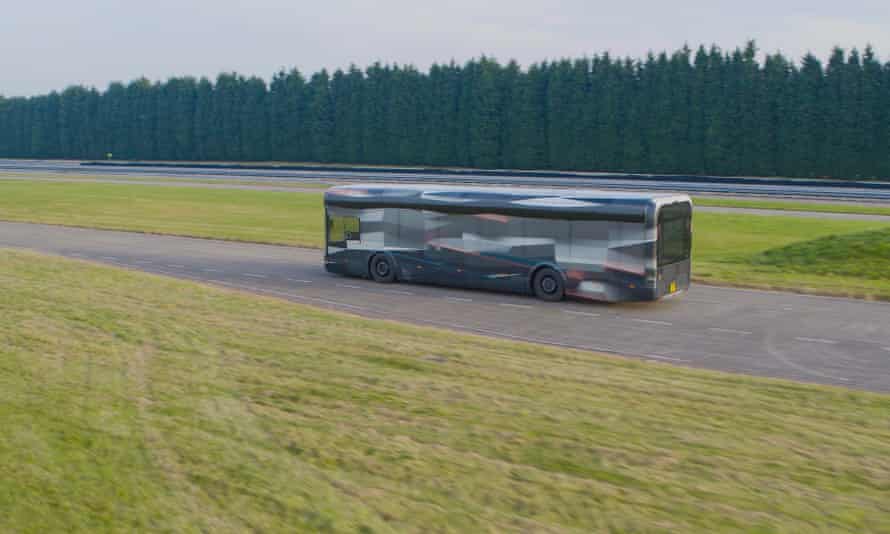
An Arrival bus and van.

A prototype Arrival bus and van. Photograph: Arrival

Jasper Jolly
@jjpjolly
Sun 21 Feb 2021 15.07 GMT


Electric buses built by Arrival, the UK-based manufacturer, will be tested on British roads for the first time later this year in a trial with the transport company First Group.
The tests will begin in the autumn of this year, starting with four of the first production vehicles produced at Arrival’s research and development facility in Banbury, Oxfordshire. Discussions are under way about further trials with other companies.

The trials are the latest step in the rapid expansion of Arrival, which has attracted investment worth hundreds of millions of pounds to build battery-powered vans and buses with zero exhaust emissions. The company, still yet to start full production, hopes that by 2024 it will make revenues of about $3.1bn (£2.2bn) from bus sales, along with about $10.9bn from vans.
Arrival is also looking at an undisclosed number of new sites for factories within the UK, a signal of its intent to ramp up output as it prepares a reverse listing on the Nasdaq stock exchange in New York at a valuation of $5.4bn (£3.9bn). The company’s main operations will remain in the UK.
Bus companies are hurrying to cut carbon emissions to meet clean air regulations in cities. First Group will not buy diesel buses after 2022, and it plans to eliminate exhaust emissions by 2035.
First Group is also running separate trials of electric buses made by the rival manufacturers BYD ADL, Optare and Yutong, as well as a trial of hydrogen fuel cell buses in Aberdeen, its home city.
An Arrival bus.

An Arrival bus. Photograph: Arrival
Arrival hopes to roll out bus production quickly to target big cities around the world. It aims to produce 1,000 buses in 2022 and 11,000 in 2024. As well as a facility at Bicester, also in Oxfordshire, Arrival has started work on a factory in Rock Hill, South Carolina.
Advertisement

Arrival, which now employs more than 1,400 people, was founded in secret in 2014 by Denis Sverdlov, a Russian telecoms entrepreneur. The company is using “microfactory” facilities that break with the traditional logic of making cars on big production lines, instead using robots to assemble vehicles in “cells”.
Arrival’s first publicly announced product, an electric van for “last-mile” delivery in cities, will begin trials with United Parcel Service, a US courier, at the end of February. UPS last year ordered 10,000 vans in a deal worth €400m (£350m).
Avinash Rugoobur, Arrival’s president, said built-in tracking, information screens and internet connections could allow the buses to connect better with other modes of transport and provide better user experiences. The flat floor also makes accessibility easier.
“We’re really at the start of what’s possible just within the bus platform,” Rugoobur said. Buses in use today “definitely do the job, but similar to the van market we’re talking about technology that hasn’t moved to where the world is today.”

The electric buses will be priced much like diesel buses, although Arrival estimates that the total cost of ownership will be significantly less because of lower fuel and maintenance costs. It has not disclosed the buses’ range, but Rugoobur said they should be able to handle most urban routes.
Arrival buys its batteries from Korea’s LG Chem, but Rugoobur said the company would be glad to source batteries in the future from a UK-based factory, if one could be successfully launched.
The company is also working on driverless operations for controlled situations such as within company depots, although Rugoobur cautioned that driverless buses on roads were some way off.
“For driverless buses to be a reality you need true, fault-tolerant road-going autonomy,” he said. We’re not there.”


Arrival and First Bus confirm the start of zero-emission bus trials​

Victoria Tomlinson

Press Release09:00
Posted by: Victoria Tomlinson
abe13fae-be79-4d11-8ac0-af165ebc72c4_desktop-downscaled.png

SHARE
DOWNLOAD AS .PDF
Release as document
LONDON, Feb 22, 2021 — Arrival, the company creating electric vehicles using its radical new technologies, today announced that it will begin trials of its zero-emission Bus with First Bus, one of the UK’s largest transport operators. The trials, which will see Arrival buses navigating existing First Bus routes in the UK, will begin this Autumn. The new partnership comes just seven months after First Bus announced their commitment to purchase no diesel buses after 2022 and to operate a fully zero- emission fleet by 2035.
First Bus already plays a leading role in the operation of low or zero-emission vehicles, with electric buses in Leeds, Glasgow, the country’s biggest electric Park&Ride fleet in York and a 99 strong fleet of biomethane buses in Bristol. Last month, the company also introduced the world’s first hydrogen powered double decker fleet in Aberdeen. Arrival unveiled its electric bus last June, creating a new and improved public transportation experience for all users – from the drivers and passengers to the engineers, cleaners and fleet owners – and reducing operating costs for operators, making the transition to electric vehicles more economically viable. The initial trial vehicle configurations will be a combination of familiar requirements and new innovative features, which will be activated throughout the trial and made possible by Arrival’s smart connected hardware and end-to-end fleet management solutions.
The single-deck Arrival Bus features a single front door with a passenger seating capacity of 36 across the entire flat floor, allowing greater accessibility, as well as more usable standing space and ability for passengers to travel more comfortably. It is equipped with up to 310.8 kWh of energy storage capacity with the option of both an AC and DC charge. The Arrival Bus has been developed to not only have common suspension front and rear, but common wheels and tyres – estimating the bus to be up to 40% lighter than other battery-electric buses in the market today.
Arrival’s vertically integrated approach allows it to develop innovation at pace without the constraints of waiting for technology progression in the supply chain. This enables a best-in-class product, with a superior Total Cost of Ownership (TCO) than both fossil fuel and electric vehicles currently on the market.
Janette Bell, Managing Director of First Bus said: “As leaders in sustainable mobility, we’re excited to announce our partnership with Arrival, helping us bring some of the most innovative zero emission vehicles on the market onto the UK’s streets for our customers and partners. We’re proud to be the first operator in the UK to trial Arrival’s electric buses and look forward to working together to accelerate the transition to zero emissions in our sector. Their ground-breaking technology is also expected to allow for improved customer service, and we’re looking forward to seeing how customers react to the new buses when they’re trialled later this year.”
“Today is an important day in the transition to a more sustainable, user focused transportation ecosystem and we are thrilled to be partnering with First Bus on this trial and for people to experience the Arrival Bus on public roads,” said Avinash Rugoobur, President of Arrival. “Cities around the world are pledging their commitment to a zero- emission transportation future and Arrival is providing them with the ideal product to help them achieve that in the Arrival Bus. We are working in partnership with operators and cities globally to support improvements to public transportation networks whilst creating vehicles that can be tailored to local needs.”
The announcement comes in the year UN Climate Change conference COP26 will be hosted in Glasgow.
 
Last edited:

Jordan Adam

Established Member
Joined
12 Sep 2017
Messages
5,654
Location
Aberdeen
With the imminent sale of the US ops the domain name for the first website has been changed to www.firstbus.co.uk

Presumably the FirstGroup name will be getting phased out (at least where marketing is concerned) over time.
 

Non Multi

Member
Joined
11 Dec 2017
Messages
1,190
With the imminent sale of the US ops the domain name for the first website has been changed to www.firstbus.co.uk

Presumably the FirstGroup name will be getting phased out (at least where marketing is concerned) over time.
I'm surprised it's not redirecting to the firstgroupplc.com corporate site, then again I've often been left baffled by First Group's web efforts.
 

overthewater

Established Member
Joined
16 Apr 2012
Messages
9,092
You have to wonder if they would consider renaming the company to give it a fresh start to the UK/EU operations only.
 

TheGrandWazoo

Veteran Member
Joined
18 Feb 2013
Messages
22,855
Location
Somerset with international travel (e.g. across th
Most operations have lost all evidence of the First name now in their branding.
Not quite.

There are still plenty of operations that are still using First (e.g. Scotland, Essex, West Yorkshire) as one of the primary bits of branding.

Elsewhere, it is fair to say that it is reduced to a very discreet "from First" as shown on this recently repainted Streetlite (credit to snappers)

https://www.flickr.com/photos/neilj...rVuah-2kqTrYH-2kE5zNq-2kszSgX-2gidSyn-2g31dQb

Or on this Eclipse
 

markymark2000

On Moderation
Joined
11 May 2015
Messages
5,091
Location
Great Britain
Not quite.

There are still plenty of operations that are still using First (e.g. Scotland, Essex, West Yorkshire) as one of the primary bits of branding.

Elsewhere, it is fair to say that it is reduced to a very discreet "from First" as shown on this recently repainted Streetlite (credit to snappers)

https://www.flickr.com/photos/neilj...rVuah-2kqTrYH-2kE5zNq-2kszSgX-2gidSyn-2g31dQb

Or on this Eclipse
It's very much like GoAhead isn't it. Each bus has a limited amount of branding for the main group but generally, the PLC isn't given much promotion, it's all the local logos.
 

Top