
There's DCC sound for the class 18 'DHP1' for modellers, so there may be some audio knocking about.I bet that’s a loco that has no surviving audio!

-
Our new ticketing site is now live! Using either this or the original site (both powered by TrainSplit) helps support the running of the forum with every ticket purchase! Find out more and ask any questions/give us feedback in this thread!
You are using an out of date browser. It may not display this or other websites correctly.
You should upgrade or use an alternative browser.
You should upgrade or use an alternative browser.
Extinct engine audio
- Thread starter norbitonflyer
- Start date
Sponsor Post - registered members do not see these adverts; click here to register, or click here to log in
R
RailUK Forums

Strathclyder
Established Member
Yep, giving it a relisten and that is mostly turbo I can hear. Didn't realize they were Napier turbos though, or I had forgotten.Assume implying sounds like a Valenta engined HST? Not surprising given that the MAN engines had Napier turbos, as did Valenta engine. I believe the MAN engine had just one larger turbocharger as did the Valenta engine before someone points out all English Electric engines also had Napier turbochargers.
I'm fairly certain it's why 56s sound like they do, despite being an uprated EE 16 cylinder engine, the engine has 2 larger turbos as opposed to the 4 used in the class 50s.
Yep, the Napier turbo in the 56s was very closely related to the one installed in Valenta HSTs (56s had/have the Napier SA-085, the Valenta HSTs the SA-084, both of these being custom variants of the NA-250), hence why both 'scream' under power despite the engines, their raw sounds and family history (as it were) being completely different.
I suspect it's a similar case to the 20s and 40s whistling at idle despite there being a clear difference in the raw engine sounds between them; closely related Napier turbos I mean.
== Doublepost prevention - post automatically merged: ==
On the topic of HSTs, here is a rare recording of one of the Mirrlees MB190 fitted power cars (43168 to be precise) at Neath in 1989 (copyright of YT's Robert Masterman). Constrast and compare the sound and smoke outputs with the Valenta at the back!
Last edited:
- Joined
- 13 Dec 2018
- Messages
- 4,588
That is rare, it's still the only video I've seen of a Mirrlees engined power car. A number of people thought I was making it up when said about Mirrlees engines in HSTs as couldn't find a video of one!On the topic of HSTs, here is a rare recording of one of the Mirrlees MB190 fitted power cars (43168 to be precise) at Neath in 1989 (copyright of YT's Robert Masterman). Constrast and compare the sound and smoke outputs with the Valenta at the back!
Strathclyder
Established Member
Ooh, very interesting. Sounding like my favourite electric locos is another reason to like the APT-P (well, it's reason enough for me lol).My memory recollects their 4000hp power cars sounded like class 86/1 and 87.
Interesting, thanks for the tip-off, though who knows if it's still out there in the recesses of YT.Years ago I found on youtube a film of the test train lashup of experimental HST power car + 2x APT-P power cars + dyno and other test coaches leaving Preston. If you can find that (I've not been able to again) I'm fairly sure it had sound

Ashley Hill
Established Member
The Mirrlees HSTs were very bassey and sounded great. It’s a shame that none survived.Yep, giving it a relisten and that is mostly turbo I can hear. Didn't realize they were Napier turbos though, or I had forgotten.
Yep, the Napier turbo in the 56s was very closely related to the one installed in Valenta HSTs (56s had/have the Napier SA-085, the Valenta HSTs the SA-084, both of these being custom variants of the NA-250), hence why both 'scream' under power despite the engines, their raw sounds and family history (as it were) being completely different.
I suspect it's a similar case to the 20s and 40s whistling at idle despite there being a clear difference in the raw engine sounds between them; closely related Napier turbos I mean.
== Doublepost prevention - post automatically merged: ==
On the topic of HSTs, here is a rare recording of one of the Mirrlees MB190 fitted power cars (43168 to be precise) at Neath in 1989 (copyright of YT's Robert Masterman). Constrast and compare the sound and smoke outputs with the Valenta at the back!
Strathclyder
Established Member
It's certainly the only one I'm aware of that's online, but who's to say someone doesn't have a recording of one squirrelled away in their loft somewhere. At any rate, let's hope Robert doesn't delete/unlist that video anytime soon!That is rare, it's still the only video I've seen of a Mirrlees engined power car. A number of people thought I was making it up when said about Mirrlees engines in HSTs as couldn't find a video of one!
Indeed. Didn't notice it before, but I've been playing that departure sequence on repeat since I found the video again to link it here, and it does have a deep rough bass to it as it starts getting into it's stride that I somehow haven't picked up before and that I like the more I listen to it. Almost sounds like a louder/rougher MTU.The Mirrlees HSTs were very bassey and sounded great. It’s a shame that none survived.
EYFanatic
Member
On the wonderful Internet Archive, there are a number of documentaries and audio recordings - normally from the 1980s period though not always - of locos and units that are a joy to listen to if you know what to search for and filter out. Can't remember now what it was, but one of the audio files was a Class 50 hauling sleepers out of Euston before the refurbs
Its an interesting thing to use to hunt around and find stuff as, for example, I've found the entire Train Now Departing series there as well as Great Railway Journeys of The World and more
Its an interesting thing to use to hunt around and find stuff as, for example, I've found the entire Train Now Departing series there as well as Great Railway Journeys of The World and more
Mirlees power cars were originally paired together on the WR but an investigation into a substantial station over-shoot at Chippenham deemed it too risky to keep them together as their higher performance had caused the driver’s usual HST braking point to become inadequate.On the topic of HSTs, here is a rare recording of one of the Mirrlees MB190 fitted power cars (43168 to be precise) at Neath in 1989 (copyright of YT's Robert Masterman). Constrast and compare the sound and smoke outputs with the Valenta at the back!
Last edited:
Ashley Hill
Established Member
Wasn’t there four ,43167,168,169 and 170?The two Mirlees power cars were
Good question and don’t know! I just remember that investigation.Wasn’t there four ,43167,168,169 and 170?
- Joined
- 13 Dec 2018
- Messages
- 4,588
Yes, there were. 167 and 170 were stored first and then 169, leaving 168 in its own, if I remember correctly. Think all 4 ended up with VP185s then various other engines, with 167 regaining a Valenta at some stage?Wasn’t there four ,43167,168,169 and 170?
Strathclyder
Established Member
The MB190 did perform rather well during the trial period from what I can gleam from a few sources (having a dedicated Mirrlees engineer/technician on hand no doubt helped with any faults that arose along with concentrating them at St. Philip's Marsh in Bristol), but once that trial period ended, reliabilty in turn dropped through the floor. They were hated by the staff who worked on them at St. Philip's, being considered utter pigs maintenance-wise. Being a completely different beast to the Valenta coupled with there only being 4 of them and spares availablity leaving a lot to be desired, it's not a surprise this became the prevailing view. And even less of a surprise that they ended having their upper power notches locked out of use to keep them going a bit longer, then put into store as they suffered major failures.
It's a shame all things considered, as they did sound really rather good.
167 did regain a Valenta after it was transferred from FGW to GNER as the Veep was non-standard in the latter's HST fleet. This particular Veep ended up being fitted to FGW's 43165, becoming the 7th* Great Western power car so fitted. All of FGW's 185s made redundant by the MTUs were later transferred to the Midland fleet soon after Stagecoach took over, to replace the remaining Valentas there (7 total when Stagey got the keys iirc; can't remember which one of these lasted the longest in traffic before being converted).
So 167/367's engine type history is summed up thusly: Valenta > MB190 > VP185 > Valenta > MTU
*: 8th if one includes 43173 which had only recently gained it's VP185 when it was destroyed at Southall; there is a image out there somewhere in the ethers of the internet of the power car post-collision with it's side ripped away and the nearly-new engine clearly visible inside. The engine itself wasn't too badly damaged and was able to be salvaged and repaired. It became a fleet spare for FGW before moving to EMT/Porterbrook when the FGW fleet was MTU-ed.
(this info gleamed from posts across previous threads on this topic by @43096; apologies for plagiarising it!)
It's a shame all things considered, as they did sound really rather good.
Aye, that is correct; as far as I can recall, they were among the first recipients of the VP185, if not the very first.all 4 ended up with VP185s then various other engines, with 167 regaining a Valenta at some stage?
167 did regain a Valenta after it was transferred from FGW to GNER as the Veep was non-standard in the latter's HST fleet. This particular Veep ended up being fitted to FGW's 43165, becoming the 7th* Great Western power car so fitted. All of FGW's 185s made redundant by the MTUs were later transferred to the Midland fleet soon after Stagecoach took over, to replace the remaining Valentas there (7 total when Stagey got the keys iirc; can't remember which one of these lasted the longest in traffic before being converted).
So 167/367's engine type history is summed up thusly: Valenta > MB190 > VP185 > Valenta > MTU
*: 8th if one includes 43173 which had only recently gained it's VP185 when it was destroyed at Southall; there is a image out there somewhere in the ethers of the internet of the power car post-collision with it's side ripped away and the nearly-new engine clearly visible inside. The engine itself wasn't too badly damaged and was able to be salvaged and repaired. It became a fleet spare for FGW before moving to EMT/Porterbrook when the FGW fleet was MTU-ed.
(this info gleamed from posts across previous threads on this topic by @43096; apologies for plagiarising it!)
Last edited:

DerekC
Established Member
It was a very clever way of achieving high torque at low speed and high power at high speed out of internal combustion engines without the need for a mechanical gearbox or an electric or hydraulic transmission but I agree, its complexity and therefore inherent unreliability would have been its downfall if anyone had tried to productionise it.Well it was a very oddball loco, with 4 x 500hp Paxman 12RPH V12 'Hi-Dyne' main engines plus two auxiliary 150hp AEC engines driving superchargers (Roots blowers) supplying the intake air to the main engines. The way the transmission system worked meant that the loco used just one engine from rest, then progressively ran up more engines as speed increased until all four were supplying power into the transmission.
It was quite clever in its own way, but IMHO the overall complexity meant it would have been very unlikely to have become a production loco.
Harlequinuk
On Moderation
Best one i found was D 16/2 - 10203 heading down Shap followed by the LMS 10001 heading up Shap from a standing start
https://soundcloud.com/neil-ferguson-lee/10001-at-shap
https://soundcloud.com/neil-ferguson-lee/10001-at-shap

WesternLancer
Veteran Member
- Joined
- 12 Apr 2019
- Messages
- 15,453
Some great sound recordings there. Thanks for linking. V interesting selection of first generation diesels.They are also featured in the D for Diesel audio tape recording compliation by Peter Handford. The specific recording featured is of them powering away from an adverse signal at Greenholme while working the 'down' Royal Scot in August 1958.
== Doublepost prevention - post automatically merged: ==
A Fell Mk2 was proposed iirc or at least got as far as the drawing board, which would've simpilifed the design by incorporating a torque converter and getting rid of the hideously noisy pair of AEC auxiliaries & their blowers. Even in that revised form though, I highly doubt it would've entered volume production even if that stray bolt hadn't gotten into 10100's gearbox and wreaked utter havoc.
Ironic to think that it wasn't the hideously complex drivetrain that was the immediate catalyst for 10100's withdrawal in 1958, but a train-heating boiler fire, a problem that bedeviled even the favoured diesel-electric classes. Though I think it would've been withdrawn by the early 60s at the latest anyways, the fire merely expedited matters.
== Doublepost prevention - post automatically merged: ==
The D for Diesel audio recording compliation by Peter Handford I embedded above has a Blue Pullman recording at Princes Risborough of the Birmingham Pullman dating from October 1960. The leading vehicle's engine sound is unfortunately drowned out by the horn, but the rear one is quite audible. Does it sound at all familar to you?
(timestamped video link)
I know Peter Handford issued a lot of Argo railway recordings as I’ve bought a few on vinyl from preserved railway shops but I’m not sure if very many have been digitised.
I believe the National Railway Museum hold his archive but I don’t think they make much available commercially. Eg I would think they could have (at least in the past) issued a selection on CD. Less demand for CDs now of course.
BBC radio 3 used a decent number of his clips to good effect on there all day broadcast from the Highland Cheiftain marking Railway 200 last year.
Unless more of it is on line than I’m aware of.
The Mirrlees fitted HST power cars 43167 - 170 were amongst my favourites. They provided quite an aural contrast to the customary Paxman high-pitched hysteria.
I'm not sure that 43167 spent any length of time on the Western as a Mirrlees power car - I thought it spent most of its time on the Eastern. That's counter-intuitive, because why would you split a prototype group with 3 on the Western and 1 on the Eastern, but I think that is what happened. Can anybody confirm?
Trawling through the archives, I can confirm that on at least one occasion there was a Mirrlees (43168) + VP185 (43169) combination working a train. Such opportunities were rare, because the re-engineing programme took place surprisingly quickly.
I'm not sure that 43167 spent any length of time on the Western as a Mirrlees power car - I thought it spent most of its time on the Eastern. That's counter-intuitive, because why would you split a prototype group with 3 on the Western and 1 on the Eastern, but I think that is what happened. Can anybody confirm?
Trawling through the archives, I can confirm that on at least one occasion there was a Mirrlees (43168) + VP185 (43169) combination working a train. Such opportunities were rare, because the re-engineing programme took place surprisingly quickly.
See my (corrected!) post #53Trawling through the archives, I can confirm that on at least one occasion there was a Mirrlees (43168) + VP185 (43169) combination working a train. Such opportunities were rare, because the re-engineing programme took place surprisingly quickly.

Sun Chariot
Established Member
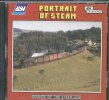
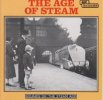
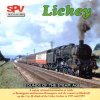
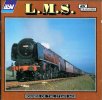
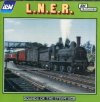
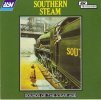
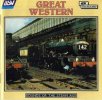
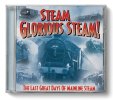
Here's the list of Steam Audio CDs I have. Stereo unless stated. Stock images of Peter Handford audio albums.I know Peter Handford issued a lot of Argo railway recordings as I’ve bought a few on vinyl from preserved railway shops but I’m not sure if very many have been digitised.
SPV / ASV Sounds of the Steam Age (Peter Handford):
Portrait of Steam
Impressions of Steam
The Age of Steam
Lickey Incline
Somerset & Dorset (mono)
LMS (mostly mono)
LNER (mostly mono)
Great Western (mostly mono)
Southern Steam (some mono)
Memory Lane (Peter Handford):
Steam Glorious Steam
HSA Heritage Steam Archive:
Freight and Shunting in the Real Days (mono)
Mixed Traffic in the Real Days (mono)
Express Passenger in the Real Days (mono)
PSOV Preserved Steam On Video:
Sound and Imagination
Sound and Imagination 2
(high quality stereo main line UK steam)
Attachments
-
 61IfnV0Dx6L._UF894,1000_QL80_.jpg87.4 KB · Views: 3
 -
 71upKWUWMPL._UF894,1000_QL80_.jpg97.6 KB · Views: 2
 -
 R-6803722-1439028805-7131.jpg59.2 KB · Views: 1
 -
 R-14250306-1570734132-2128.jpg11.2 KB · Views: 1
 -
 images (1).jpeg35.9 KB · Views: 1
 -
 images.jpeg33.5 KB · Views: 1
 -
 images (2).jpeg35.5 KB · Views: 1
 -
 images (3).jpeg15.7 KB · Views: 2
 -
 steamglorioussteam_0bfeaae4-1bc9-4654-bea6-ecb838cbbc4d_1200x1200.jpg238.2 KB · Views: 3
Yes, I understand the point you were making.See my (corrected!) post #53
The pairing I referred to took place in 1996, after the fleet re-engineing to VP185 had commenced.
The time window between VP185s entering service and Mirrlees being stored / re-engined was actually quite short, so the chance of getting a mixed pair was very small.
As you state, it was unusual to have a Mirrlees pair - although I wasn't aware of the reason for this (i.e. the station overrun you referenced).
- Joined
- 13 Dec 2018
- Messages
- 4,588
43167 definitely spent entire time on Western when fitted with Mirrlees engine. It was stored along with 43170 until VP185 re-engineering program came along. When 43167 went to Eastern believe they fitted it with a Valenta as VP185 was non-standard as far as they were concerned. Ultimately it received an MTU engine.I'm not sure that 43167 spent any length of time on the Western as a Mirrlees power car - I thought it spent most of its time on the Eastern. That's counter-intuitive, because why would you split a prototype group with 3 on the Western and 1 on the Eastern, but I think that is what happened. Can anybody confirm?

ac6000cw
Established Member
Assume implying sounds like a Valenta engined HST? Not surprising given that the MAN engines had Napier turbos, as did Valenta engine. I believe the MAN engine had just one larger turbocharger as did the Valenta engine before someone points out all English Electric engines also had Napier turbochargers.
I'm fairly certain it's why 56s sound like they do, despite being an uprated EE 16 cylinder engine, the engine has 2 larger turbos as opposed to the 4 used in the class 50s.
Yep, giving it a relisten and that is mostly turbo I can hear. Didn't realize they were Napier turbos though, or I had forgotten.
Yep, the Napier turbo in the 56s was very closely related to the one installed in Valenta HSTs (56s had/have the Napier SA-085, the Valenta HSTs the SA-084, both of these being custom variants of the NA-250), hence why both 'scream' under power despite the engines, their raw sounds and family history (as it were) being completely different.
I suspect it's a similar case to the 20s and 40s whistling at idle despite there being a clear difference in the raw engine sounds between them; closely related Napier turbos I mean.
I think one reason why the EE-heritage quad-turbo and twin-turbo V16s sound different is because of the exhaust plumbing differences. Each turbo in the quad-turbo version is fed from the four cylinders of the nearest half cylinder bank (with an exhaust outlet per turbo in the roof), in the twin-turbo version it's AFAIK the eight cylinders of a whole bank.
The one turbo/one roof outlet per four cylinders arrangement combined with the firing order (see below) I think creates the characteristic 'bark' of the quad-turbo V16. When the exhaust of a whole bank is combined before the turbo (as in the cl. 56), it loses the 'bark' - it's like having two 8-inline engines with individual exhaust outlets.
(Extract from a Western Region 16CSVT engine manual showing bank/cylinder designations and firing order):

Thanks for the clarification. I was puzzled because I only had 3 runs with 43167 on the Western with Mirrlees power, whereas I had 30 runs with 43168, 11 runs with 43169, and only 3 with 43170. I guess that ties in with the statement that 43167 and 43170 were the first of the Mirrlees powered locos to have been stored.43167 definitely spent entire time on Western when fitted with Mirrlees engine. It was stored along with 43170 until VP185 re-engineering program came along. When 43167 went to Eastern believe they fitted it with a Valenta as VP185 was non-standard as far as they were concerned. Ultimately it received an MTU engine.
Back on the original topic, we mostly used to ignore HSTs because "they would be around forever", but now it is a treat to hear an original Paxman powered HST. Personally I still prefer the Mirrlees low-frequency rumble over the manic howling of the Valenta.
try thisDoes any audio of DP1 exist? I've been told it sounds a bit different from the production models.
Sun Chariot
Established Member
An audio CD produced about 35 years ago, with the late great Peter Handford's stereo (mostly) recordings of diesels. The album, by Videoscene, was titled Diesels Thorugh the Decades - it's track listing is attached.
== Doublepost prevention - post automatically merged: ==
A lot of 8mm cine film recordings (no audio mic) have later had "fake" sound overdubbed.
== Doublepost prevention - post automatically merged: ==
That is overdubbed. Listen to the carriages' wheels over track joints and compare them to how fast the carriages move on the cine.try this
A lot of 8mm cine film recordings (no audio mic) have later had "fake" sound overdubbed.
Attachments
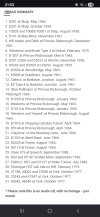
Last edited:
WesternLancer
Veteran Member
- Joined
- 12 Apr 2019
- Messages
- 15,453
Many thanks for this @Sun ChariotHere's the list of Steam Audio CDs I have. Stereo unless stated. Stock images of Peter Handford audio albums.
SPV / ASV Sounds of the Steam Age (Peter Handford):
Portrait of Steam
Impressions of Steam
The Age of Steam
Lickey Incline
Somerset & Dorset (mono)
LMS (mostly mono)
LNER (mostly mono)
Great Western (mostly mono)
Southern Steam (some mono)
Memory Lane (Peter Handford):
Steam Glorious Steam
HSA Heritage Steam Archive:
Freight and Shunting in the Real Days (mono)
Mixed Traffic in the Real Days (mono)
Express Passenger in the Real Days (mono)
PSOV Preserved Steam On Video:
Sound and Imagination
Sound and Imagination 2
(high quality stereo main line UK steam)
I had no idea about those CDs as editiions of Hanford’s work so very pleased to learn about them and see the covers.
Very much appreciate your efforts to put that list together.
I’ll probably start looking some out via e bay type vendors.

43096
On Moderation
- Joined
- 23 Nov 2015
- Messages
- 18,900
Not quite. 43167 went to the Eastern as soon as it was converted to VP185 in early 1996 - it was planned as part of the test programme to evaluate it on a different duty cycle. GNER reverted it to Valenta in July 2001 because it was non-standard. So it had five years on the East Coast as a VP185.43167 definitely spent entire time on Western when fitted with Mirrlees engine. It was stored along with 43170 until VP185 re-engineering program came along. When 43167 went to Eastern believe they fitted it with a Valenta as VP185 was non-standard as far as they were concerned. Ultimately it received an MTU engine.
Harlequinuk
On Moderation
How does DP2 differ from a Class 50 ; anyone have any audio?
ac6000cw
Established Member
For anyone interested in (older) diesel sounds from outside the UK, Rolf Stumpf in Germany produced a series of CDs in the 1990s under his 'RailMedia' brand, digitally recorded and mastered.
I've got a few of them - originally bought from SPV years ago - covering Portugal, Alco's in Greece, Luxemburg CFL 1800s, 'Diesel Rarities' in the US (including a Baldwin, old GE 'U-boats' and old Alcos) and 'Ore to the St. Lawrence' covering some iron ore railroads in eastern Canada (mostly MLW/Alco power).
They turn up occasionally secondhand e.g. https://www.ebay.co.uk/itm/157442768409
Peter Handford's "Sounds of Railways and Their Recording" book is worth a read if you're interested in the trials and tribulations of actually doing on-location sound recording back in the 1950s with the bulky, heavy equipment of the time (his day job was recording sound for film productions).
I've got a few of them - originally bought from SPV years ago - covering Portugal, Alco's in Greece, Luxemburg CFL 1800s, 'Diesel Rarities' in the US (including a Baldwin, old GE 'U-boats' and old Alcos) and 'Ore to the St. Lawrence' covering some iron ore railroads in eastern Canada (mostly MLW/Alco power).
They turn up occasionally secondhand e.g. https://www.ebay.co.uk/itm/157442768409
Peter Handford's "Sounds of Railways and Their Recording" book is worth a read if you're interested in the trials and tribulations of actually doing on-location sound recording back in the 1950s with the bulky, heavy equipment of the time (his day job was recording sound for film productions).
Last edited:
Sun Chariot
Established Member
Glad it's of some help.Many thanks for this @Sun Chariot
I had no idea about those CDs as editiions of Hanford’s work so very pleased to learn about them and see the covers.
Very much appreciate your efforts to put that list together.
I’ll probably start looking some out via e bay type vendors.
 Tracking them down, these days, might be harder than tracking down an Edward VIII wall box.
My "most-played" of these over tne past 25 years, have been:
- Portrait of Steam
- Impressions of Steam
- The Age of Steam
- Lickey Incline
- Sound and Imagination 1 and 2
Those, for me, have the most evocarive and most technically-exvellent recordings. I love 'em!
On Steam Glorious Steam, all bar one audio track appear on those Peter Handford albums I've mentioned in this post. It goes without saying that those four albums have many more recordings on them, also.