Our new ticketing site is now live! Using either this or the original site (both powered by TrainSplit) helps support the running of the forum with every ticket purchase! Find out more and ask any questions/give us feedback in this thread!
There is a 4mm scale model of the Fell available. Unfortunately, it's very inaccurate bodily, not to mention a crap runner out of the box (I have one). The second batch are apparently better runners, but the body shell is still wrong.
There is a 4mm scale model of the Fell available. Unfortunately, it's very inaccurate bodily, not to mention a crap runner out of the box (I have one). The second batch are apparently better runners, but the body shell is still wrong.
This may be being a bit cheeky, but is it reasonable (or accurate) to expect a model of an experimental prototype to be any more reliable than the original? I bet the model has a much simpler drive train than the real thing though!
Mark 3 experiments
A number of Mark 3 vehicles were fitted with different bogies in the 1980s, including variants of the BT10. One, however, given a more radical trial was 12140 that was fitted with SIG bogies as eventually used on the Mark 4s. It retained these into Virgin Trains days but its non-standard nature meant it was an early withdrawal (and scrapped) once the Pendolinos came online.
Is this correct. I think 12140 was fitted with DVT 125 bogies (T4?)
The "Fell" loco really was an innovative design. The aim of matching diesel engines to the torque/power/speed requirements of of fast and heavy trains without resorting to expensive electric transmission was logical one and the idea of using multiple engines linked by differentials, with high levels of supercharging at low speeds to deliver constant power was clever too. It would be very interesting to see any reports that were written at the time into the locomotive's performance in service.
The "Fell" loco really was an innovative design. The aim of matching diesel engines to the torque/power/speed requirements of of fast and heavy trains without resorting to expensive electric transmission was logical one and the idea of using multiple engines linked by differentials, with high levels of supercharging at low speeds to deliver constant power was clever too. It would be very interesting to see any reports that were written at the time into the locomotive's performance in service.
Yes it was extremely clever, I’ll give it that. There’s a model of it stored in the NRM somewhere, but I’m yet to find it despite trawling the archives as it’s never where it’s supposed to be!
A theme we have not yet covered is the use of alternative fuels. There were numerous experiments over the years converting steam locos to burn oil. The Southern and its constituents tried this a number of times for various reasons, mainly due to problems with the supply of coal. The LBSC even tried drilling for oil in Sussex. The SR also tried pulverised coal in 1929. IIRC only one loco (A629) was converted for this. It did run in normal traffic, but not for very long. Pulverised coal is pretty volatile stuff and this experiment came to an end after the fuel hopper at Eastbourne exploded in 1932. A629 (renumbered as 1629) led an exciting life and went on to be converted to burn oil for a short period in 1947.
Has anyone mentioned the LMS Turbomotive? That certainly saw everyday use.
One fascinating machine that died a death was the NBL/Parsons experimental coal-burning gas turbine locomotive.
An order was placed by the Ministry of Fuel & Power with North British in July 1952 for the design and construction of a prototype, to be ready for trial running by the end of 1954. The major sub-contractor was C.A. Parsons & Co. Ltd of Newcastle. Total cost of the project ~ £150k.
Testing of the gas turbine unit and auxiliaries, mounted on the loco frame and connected to a dynamometer (with no power bogies), was carried out at Parsons' Heaton Works, Newcastle, between December 1955 and December 1958. After many difficulties, chiefly with the combustion equipment, the project was formally suspended in March 1959. The loco did not turn a wheel (it never had any); whilst the power bogies were built, they never left the NBL works in Glasgow. If it had been finished, the loco would've been numbered 18200.
Your links are very interesting. Rocket obviously achieved everyday use, but so it seems did Sans Pareil, both on the L&M, at least initially. The modifications to Rocket following the success of Northumbrian are well-known, but the unsuccessful experiments with Lord Dundonald's rotary engines rather less so.
Going back in time, but Churchward did a whole range of one-off (or small batch) experimental locos, some survived to form first examples of a class after a few years, others didn't. Possibly the 4-6-2 Great Bear is the best known, but there were all sorts of others; Saints built as 4-4-2 instead of 4-6-0, and even three built in France and shipped over. They were all done very thoroughly, with engineers assigned to run substantial comparison tests between classes. Churchward must have really got the ear of the directors to spend so much on building experiments. A number of the failures were rebuilt to be (sort of) compliant with more established types.
I think the most 'successful' of all was the first loco, No 1490, built in 1898 when Churchward was still No 2 to Dean (but Dean was in poor health and Churchward was effectively running the show) with this odd arrangement called a 'Pannier Tank' .
Back in the late 1980s / early 1990s a fair number of Wimbledon based class 455s could be seen carrying experiment plates located close to the cab doors - usually referring to some modification or another on some obscure technical part.
Going back in time, but Churchward did a whole range of one-off (or small batch) experimental locos, some survived to form first examples of a class after a few years, others didn't. Possibly the 4-6-2 Great Bear is the best known, but there were all sorts of others; Saints built as 4-4-2 instead of 4-6-0, and even three built in France and shipped over. They were all done very thoroughly, with engineers assigned to run substantial comparison tests between classes. Churchward must have really got the ear of the directors to spend so much on building experiments. A number of the failures were rebuilt to be (sort of) compliant with more established types.
I think the most 'successful' of all was the first loco, No 1490, built in 1898 when Churchward was still No 2 to Dean (but Dean was in poor health and Churchward was effectively running the show) with this odd arrangement called a 'Pannier Tank' .
Some of the "unsuccessful" experiments nevertheless proved a point or two. IIRC the de Glehn compounds demonstrated that 4 cylinders were a good idea, but compounding wasn't worth it. Didn't these compounds also provide useful information about higher boiler pressures and the benefits of splitting the drive between two driving axles.
I don't know, and the gentlemen involved are, alas, where all such questions are no longer relevant. Tuplin thought the reason the de Glehn locos (the three French 4-4-2s) were compounds was not that this aspect was under research, just that most French main line locos of the era were built so as standard.
I don't know, and the gentlemen involved are, alas, where all such questions are no longer relevant. Tuplin thought the reason the de Glehn locos (the three French 4-4-2s) were compounds was not that this aspect was under research, just that most French main line locos of the era were built so as standard.
Tuplin should know his stuff, but Holcroft implies that the compound vs simple question was a matter of general interest and was one of a number of issues investigated during the trials between the French imports and the Swindon locos. It may well be that this was a convenient way of investigating this matter, especially if 4 cylinder simple engines were out of favour with French manufacturers at that time.
== Doublepost prevention - post automatically merged: ==
Another, more mainstream, area of steam experimentation concerned the development of smoke deflectors. There were numerous examples of different types tried under normal service conditions. Others will know which classes had the most variants.
Another, more mainstream, area of steam experimentation concerned the development of smoke deflectors. There were numerous examples of different types tried under normal service conditions. Others will know which classes had the most variants.
The A3s had three variants, the large deflectors fitted to ‘Humorist’, the ineffective small smokebox deflectors fitted to four other locos, and the very successful German-type fitted to the majority of the class. There is an excellent BR released photograph in the March 1962 issue of Modern Railways, showing an unidentified A3 heading north in arctic conditions near Hatfield on New Year’s Day 1962. The draught created from the German-type deflectors is lifting the thick exhaust, highlighted in the freezing conditions, well above the engine and coaches, an excellent example of their effectiveness. This photograph has appeared in many publications over the years!
Some of the "unsuccessful" experiments nevertheless proved a point or two. IIRC the de Glehn compounds demonstrated that 4 cylinders were a good idea, but compounding wasn't worth it. Didn't these compounds also provide useful information about higher boiler pressures and the benefits of splitting the drive between two driving axles.
Even these GWR French 4-4-2s had their own initial experiment, the first one coming in 1903, the other pair two years later. One wonders why further such locos were required. They then lasted more than 20 years, mainly running from Oxford on various second-line passenger services, so can't have been that unsuccessful - although one notes their time was ended shortly after Churchward finally retired and Collett took over.
Surprised no-one seems to have mentioned the fibreglass-bodied Mark 1 compartment coach, S1000S, used in public service on the Hayling Island branch and the Clapham Jct/Kensington Olympia unadvertised service. Built on an underframe salvaged from the Lewisham disaster, I believe.
And now on the East Somerset Railway. The donor of the underframe was S4378 - the third coach in the Ramsgate train - which was directly under the Lewisham flyover when it collapsed, having been brought down by the derailment of the tender and leading coach.
== Doublepost prevention - post automatically merged: ==
150001 and 150002 the "Scuds" two off prototype 3 car Sprinters still in service. Both had sliding crew doors which the rest if the /0 fleet didn't have, each had different engines and 150002 spent time as a test bed for the class 158 and was numbered as a class 154 before reverting back to 150002
Also the only 150s to have intermediate (cabless) cars. Although several 3 car units have been formed more recently, this has always been by adding a driving car to an existing 2 car set, thus leaving a redundant cab in the middle.
== Doublepost prevention - post automatically merged: ==
I don't think they have. Not sure they were strictly speaking an experiment - simply different gearing intended for freight use. Later renumbered E3096/8/9 when regeared as a standard AL1 and two standard AL3s. The second AL1 never carried E3302 but entered service as E3097. And what would have been E3305 became E3100 and the subject of a completely different experiment!
== Doublepost prevention - post automatically merged: ==
Unlike 67301 though, it always kept its original rainstrips, which were not the same as those on a standard 455/9. (The 455/9's rainstrips were continuous along the length of the vehicle, whereas the other sublasses (and the 210s) had individual rainstrips over each door opening)
== Doublepost prevention - post automatically merged: ==
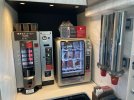
One that came to mind earlier was 150137 (if I remember rightly) which had a vending machine for hot drinks installed - I remember using it on the way to Etruria for the garden festival in 1986. One for the “health and safety would have a fit” box.
Surprised no-one seems to have mentioned the fibreglass-bodied Mark 1 compartment coach, S1000S, used in public service on the Hayling Island branch and the Clapham Jct/Kensington Olympia unadvertised service. Built on an underframe salvaged from the Lewisham disaster, I believe.
An oddity about it is that B.R. Standard non-gangwayed stock had screw couplings and standard buffers but the gangway stock had buckeye, Pullman gangways and retractable buffers. The donor for this coach was the under frame from one of the latter and so presumably it had buckeye and a buffing plate when converted. However, looking at it at the E.S.R. it seemed to have an ersatz (I'm being polite!) screw coupling.
One that came to mind earlier was 150137 (if I remember rightly) which had a vending machine for hot drinks installed - I remember using it on the way to Etruria for the garden festival in 1986. One for the “health and safety would have a fit” box.
Not for the first time - one was done way back in 1962, fashioned out of one compartment of a Mk1 SK. It was used on the Cambrian Coast Express from Aberystwyth to Shrewsbury in the morning, and the return in the afternoon, the part of the journey from Paddington which didn't have a restaurant car. A bank of vending machines for hot drinks, cold drinks, various foods, cigarettes (this is 1962), etc. They were apparently just normal commercial vending machines of the era which didn't take to well too rail travel - it didn't last long. Conversion done at Swindon, who painted it chocolate and cream after an edict had gone out for no more vehicles in that scheme, which caused an upset.
Even these GWR French 4-4-2s had their own initial experiment, the first one coming in 1903, the other pair two years later. One wonders why further such locos were required. They then lasted more than 20 years, mainly running from Oxford on various second-line passenger services, so can't have been that unsuccessful - although one notes their time was ended shortly after Churchward finally retired and Collett took over.
According to Holcroft, who I think was at Swindon at the time, this was an extended trial to compare long term fuel consumption, running and maintenance costs between the French and Swindon locos, comparing compounding vs simple, 4-4-2 vs 4-6-0, etc. Views on valve gear valve travel, boiler pressure, balancing/split drive and other matters appear to have been refined at the same time. More than one compound was needed to do all of this. The second pair were more powerful than La France (the first one), which perhaps equated better with the twenty home-grown trial engines. The outcomes from all of this set the parameters for much of the standardisation which followed.
As to why the compounds lasted so long, who knows? Perhaps Churchward had a sentimental attachment to his trial engines, or maybe they were just good locos and it would have been profligate to have scrapped them before they were life expired.
And now on the East Somerset Railway. The donor of the underframe was S4378 - the third coach in the Ramsgate train - which was directly under the Lewisham flyover when it collapsed, having been brought down by the derailment of the tender and leading coach.
== Doublepost prevention - post automatically merged: ==
Also the only 150s to have intermediate (cabless) cars. Although several 3 car units have been formed more recently, this has always been by adding a driving car to an existing 2 car set, thus leaving a redundant cab in the middle.
== Doublepost prevention - post automatically merged: ==
I don't think they have. Not sure they were strictly speaking an experiment - simply different gearing intended for freight use. Later renumbered E3096/8/9 when regeared as a standard AL1 and two standard AL3s. The second AL1 never carried E3302 but entered service as E3097. And what would have been E3305 became E3100 and the subject of a completely different experiment!
== Doublepost prevention - post automatically merged: ==
Unlike 67301 though, it always kept its original rainstrips, which were not the same as those on a standard 455/9. (The 455/9's rainstrips were continuous along the length of the vehicle, whereas the other sublasses (and the 210s) had individual rainstrips over each door opening)
== Doublepost prevention - post automatically merged: ==
Not necessarily a problem. The Sudostbahn units operating the local services on the Gotthard Line have vending machines - and make very nice tea too!
Last April in Japan I travelled from Nagoya to Osaka on one of the Kintetsu Railway's Hinotori trains which have vending machines for coffee that also dispense free hot water:
Further to the Fell/10100, here is a video of her rolling out of Derby Works to undertake her first trial run in late 1951. Just as loud as I thought she'd be!
314203 also had an experimental interior on the replaced driving motor No. 64588, I believe there was the proposed refurbishment which fell through.
Around the same time, a Class 156 unit, 156450, had the prototype interior: http://dysgraphyk.madasafish.com/156/class156450.htm
An attempt was made to revert to standard configuration in 2002, but diffused lighting, transparent luggage racks and a non-standard toilet was retained. I think the tables are SPT green instead of the usual ScotRail colours when reverted.
What nobody rang the bell in this thread is the 1986 Tube Stock. The 1986TS comprised of Red (Metro-Cammell), Blue (BREL) and Green (Metro-Cammell, Brown-Boveri traction motors) four-car trains. After trials on different lines they were deployed on the Jubilee Line as a six-car train until August 1989, which meant that two vehicles would differ from the other four! In the end the ‘Blue’ train was favoured for the development of 1992 Tube Stock, though the body would be that of the ‘Green’ one.
The only major differences in the 'new' 64588 was the door partitions, grabpoles, luggage racks and floor trim; everything else was standard with the rest of the 314 fleet. There is a mockup out there of a proposed 314 interior refurbishment; contrast and compare that with the real thing pre-Saltire refurb:
What nobody rang the bell in this thread is the 1986 Tube Stock. The 1986TS comprised of Red (Metro-Cammell), Blue (BREL) and Green (Metro-Cammell, Brown-Boveri traction motors) four-car trains. After trials on different lines they were deployed on the Jubilee Line as a six-car train until August 1989, which meant that two vehicles would differ from the other four! In the end the ‘Blue’ train was favoured for the development of 1992 Tube Stock, though the body would be that of the ‘Green’ one.
Very interesting film of the "Fell"; not seen that before. Trying to figure out the locations.
Think 0:48 is approaching Derby North Jn on the up goods - the fence of Derby Nottm Road station is on right.
0:52 - looks LMS location but not Midland
1:02 Down main heading north towards Trent Jn
1:20 Up main over R Trent
1:27 Looks Scottish
1:42 Emerging from Redhill Tunnel (near Trent) heading south
All 174 of the Modernisation Plan diesel locomotives were originally intended as one big experiment!
D5507 (temporarily 1450hp in 1958), D5545 (1600hp) and D5835 (2000hp) were all Brush Type 2 power unit experiments with the Mirrlees power unit. But the most significant was D5677, the prototype for the EE power unit.
D6123 is similarly significant as the prototype NBL Type 2 with a Paxman power unit.
Another significant Brush Type 4 experiment was D1960 and D1961 as the prototypes for the dual wound alternator providing both ETH and auxiliary power, subsequently being retrofitted in various class 47s, class 45s and class 31s.
Another experiment on standard steam was Caprotti valve gear fitted to 71000 Duke of Gloucester and 30 Standard 5s.
Experimental EMUs include the retractioned and refurbished 317722, and 365524, which was the prototype for in cab aircon but with an ugly square box on the front not a smiley face.
I wonder if burning anthracite rather than steam coal would have resolved that? Hotter flame, and less sulphur.
Though I suppose you'd then have to redesign the firebox and grate........
yes it would, though it may burn slower simply due to the hardness of the coal
You'd need to use pulverised anthracite, and redesign the firebox - possibly as a fluid bed, or as a gas producer system
We are aware of an issue with emails from the Forum to Microsoft-based email accounts (hotmail/outlook/live.com email addresses). This is being looked into currently, thanks for your patience meanwhile.



 .
.