This is the kind of stuff I find fascinating! I hope disused railway stations .org do an article about this - it's spellbinding!
So am I right in thinking that this would still have been used up till the late 90s Euston Throat modernisation? I presume the electrification was for the class 81/82/85 electric station pilots?
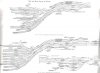
I'm attaching a track diagram taken from a book by O S Nock titled "
Britain's New Railway." It was published in 1966. It is about the electrification of the WCML from Liverpool & Manchester to Euston. The titles on the diagram stating "Old" and "New" refer to pre 1966 and post 1966.
I'm also including the text of a message I sent, in 2006, to the creator of the "Thames Mersey Route" for the Microsoft Train Simulator package .
Quote""I was born in 1950 in Harrow and every year for the 1st. 11 years of my life my family would spend 2 weeks summer holidays with my maternal grandparents in Rhyl. We would travel into Euston on the Watford dc electrics from Harrow and Wealdstone station to catch the Welshman train, which departed around about 11:00am. I was always fascinated by the way the tracks seemed to weave under and over each other between Primrose Hill tunnel eastern portal and Euston.
Euston and the lines up Camden Bank lie roughly North-South. Primrose Hill Tunnel lies on a roughly East West axis.
In the steam age long distance arrivals would run into Platforms 1,2 or 3.There was a taxi rank running almost the full length of the space between 2 and 3.
Platforms 4,5 and 7 were electrified for the Watford dc electrics. They also received and dispatched outer suburban steam trains.
Platform 6 could accommodate long distance arrivals but because of its remoteness from the taxis was used as a last resort.
Platforms 8,9,10 and 11 were mainly for parcels traffic.
Platforms 12,13,14 and 15 were used for long distance departures.
In October1952 a new signal box replaced boxes Euston 1,2 and 3. Euston 4 was renamed Carriage Sidings box. The new box was sited to the East of the lines and had a sign on it which read "EUSTON 300 yards" Between the ends of the platforms and the new signal box the lines from the platforms merged into 6 lines.
From West to East these were
1. Up Engine line 1
2. Down Fast
3. Down Slow
4. Up Slow
5. Up Fast
6. Down Empty Carriage line.
Just north of the new signal box the Down Empty Carriage line branches to the East to form the line to the Up Carriage shed and to the West to form the Up Engine line 2.
Up Engine line 2 and Down Empty Carriage Line then fly under the main running lines and emerge between Up Engine line 1 and the Down Fast.
Up Engine line 1 converges with the Up Engine line 2 to form the Up Engine line which together with the Down Empty Carriage line form 2 lines for empty stock movements and light engine movements between Euston and Camden MPD (1B). Just beyond the convergence of these lines there is a south-facing branch to the West to allow access to the Backing Out lines and the Down Carriage shed. The Carriage Sidings box was situated here.
The Up carriage shed dealt with outer suburban rolling stock and Watford dc electrics.
The Up and Down Slow lines and the line leading to the Up Carriage shed were electrified to deal with this requirement. Long distance rolling stock was dealt with either in the Down Carriage shed or at Willesden.
The Backing Out lines were 4 lines between Up Engine line 1 and the Down Carriage shed. They were a holding point rolling stock forming long distance departures. Station pilot locos would bring the stock from here to platforms 12 15 and the train engine would then back down onto the train from Up Engine line 1.
Just north of the Carriage Sidings box a north-facing branch diverged to the west from the Up Engine line . This was the Up Empty Carriage line. This line then tunnelled under the running lines, and presumably under the Regents Canal, to finally emerge on the North side of the Up line leading to Broad Street and the North London Lines with which it converged.
It was known as the "rat ole" The purpose of this line was to allow empty coaching stock from Willesden, which travelled on the Up Slow line, to cross to the Backing Out lines with out fouling train movements on the main running lines.
From this point to the top of Camden Bank there were 6 lines arranged from West to East as follows:-
1. Up Engine line
2. Down Empty Carriage line.
3. Down Fast
4. Down Slow
5. Up Slow
6. Up Fast
The Up Engine line and Down Empty Carriage line lead into Camden MPD. The other lines curved around Camden MPD to the West. The 2 Slow lines started to drop down to fly under the Up Fast, which crossed over them to run next to the Down Fast before entering the Southern most portal of Primrose Hill Tunnel. At the lowest point just under the Up Fast line the Down Slow branched to become the Down Watford dc electric and Down Slow. There was a similar convergence of the Up Watford dc electric and the Up Slow. The Up and Down Slow the climbed back up to a junction with the Up and Down lines from Broad Street before entering the Northern most portal of Primrose Hill Tunnel.
The Watford dc electric lines formed an underground junction with the dc electric lines from Broad Street. At the Western end of Primrose Hill Tunnel there were 3 portals.
2 books that have detailed track layout diagrams are:- The Great British Railway Station EUSTON isbn 1-871608-28-7. published 1994 by Irwell press and Britain's New Railway by O S Nock. Published 1966 by Ian Allen. Unfortunately both are out of print.""
End Quote
The foundations of the "New signal box" are still visible on the East side of the tracks just before the bridge carrying the A400 Hampstead Road.