• Our new ticketing site is now live! Using either this or the original site (both powered by TrainSplit) helps support the running of the forum with every ticket purchase! Find out more and ask any questions/give us feedback in this thread!

European border controls - Entry Exit System - finger prints

Status
Not open for further replies.

Seehof

Member
Joined
1 Sep 2019
Messages
574
Location
Yorkshire
I believe this is to be introduced sometime in the future.

Does this still mean you have to apply for a visa?

I also have a friend who I regularly travel with abroad who is a dual national although born and lived here all his life (he is now 66!); he has both a full unrestricted British passport as well as a German one.

Can he travel into and out of Europe on his German one and back into the UK on his British one?

Am I the only one confused by all this?!
 
Sponsor Post - registered members do not see these adverts; click here to register, or click here to log in
R

RailUK Forums

LNW-GW Joint

Veteran Member
Joined
22 Feb 2011
Messages
21,917
Location
Mold, Clwyd
I believe this is to be introduced sometime in the future.
Does this still mean you have to apply for a visa?
I also have a friend who I regularly travel with abroad who is a dual national although born and lived here all his life (he is now 66!); he has both a full unrestricted British passport as well as a German one.
Can he travel nto and out of Europe on his German one and back into the UK on his British one?
Am I the only one confused by all this?!
EES is likely to start in October I believe.
EU nationals should have no problem using their EU passports at the EU border as they do now, with no finger-printing/scans.
UK passport holders will have to register biometric data with EES to enter the EU.
What you ask seems OK to me, but some borders (eg Eurostar, Dover-Calais) are juxtaposed so you will need to rapidly switch passports between the gates

I don't think the full details of the rules are yet public, although Eurostar has reconfigured its check-in ready for the new system.
Once done, the biometrics last for 3 years I think, so after the first burst of checks it should smooth over.
No visa needed for up to 90 days either way (none needed for Ireland either).
Next year ETIAS comes in, which is pre-approval for travel to the EU (and also lasts 3 years, with a fee of €7).

The UK is also introducing its own version of ETIAS (ETA) in the next few years, which will affect people with EU passports.
In fact some Gulf state nationals are already subject to the UK ETA, which is being rolled out globally.
 

Chester1

Established Member
Joined
25 Aug 2014
Messages
4,440
I believe this is to be introduced sometime in the future.

Does this still mean you have to apply for a visa?

I also have a friend who I regularly travel with abroad who is a dual national although born and lived here all his life (he is now 66!); he has both a full unrestricted British passport as well as a German one.

Can he travel into and out of Europe on his German one and back into the UK on his British one?

Am I the only one confused by all this?!

UK ETA will require entry into UK by dual nationals using their British passport. I would guess the EU will probably do the same, so yes he will probably need to travel out on his German passport and back on his British in the near future.

The initial launch of EES, is slated for October but already delayed 5 times. It has been seperated from the pre authorisation system ETIAS which will launch next Spring. All it means this year for British Citizens is that we will need to be finger printed and photographed on first entry into Schengen from October. The data is being kept for 3 years from last entry. Semi regular visitors to the EU will only need to be fingerprinted again when they have a new pasport. Once on the system passport control will be quicker with no stamps.

When ETIAS launches next spring we will need to pay €7 for 3 years pre authorisation to enter Schengen. Its been labeled as a visa by some people that hate brexit but its a short form that does little more than allow the EU to check your not a criminal or a terrorist. Its same if you want to travel to US, Canada or Australia. In vast majority of cases people will have an automated decision in a few minutes.

The UK is doing its UK ETA a bit different. Unlike Schengen there is no split between biometric enrollment (EES) and pre authorisation (ETIAS). However, its phasing the roll out by nationalities to ease problems at the border. Its already being used by citizens of the gulf states and is being rolled out to most nationalities that don't require visas late this year. EU and EEA citizens are being put onto it a few months afterwards.

I think a deal between a Labour government and the EU over exempting each others citizens from pre authorisation might be possible. Finger printing and photographing of arrivals will be useful to law enforcement so I doubt either side will be interested in exemptions.
 

LNW-GW Joint

Veteran Member
Joined
22 Feb 2011
Messages
21,917
Location
Mold, Clwyd
I have yet to detect any "softening" of the border control position between Tory and Labour.
Theresa May's "hostile environment" of 100% checks is still very much the norm, reinforced by Brexit changes.
A lot of things might change after July 5, but it may take some time to improve the third-country border controls.
The "free movement" border seems a long way away now.
 

Howardh

Established Member
Joined
17 May 2011
Messages
9,779
I think a deal between a Labour government and the EU over exempting each others citizens from pre authorisation might be possible. Finger printing and photographing of arrivals will be useful to law enforcement so I doubt either side will be interested in exemptions.
Much as I hope this will be discontinued between the UK and EU; I feel there's been so much time/money/infrastructure involved so far that the EU would be unlikely to allow that,

However; if all these machines can identify that you have a UK passport so the second security function isn't required, yet your date of arrival/departure is logged as you swipe, then stamping wouldn't be necessary so time would be saved.

In the end though I think they want to make biometrics compulsory to actually remove the need for passports at port of entry. But IMO the best way to remove the need for passports, profiling, biometrics and ETIAS is to join Schengen!!
 

Chester1

Established Member
Joined
25 Aug 2014
Messages
4,440
Much as I hope this will be discontinued between the UK and EU; I feel there's been so much time/money/infrastructure involved so far that the EU would be unlikely to allow that,

However; if all these machines can identify that you have a UK passport so the second security function isn't required, yet your date of arrival/departure is logged as you swipe, then stamping wouldn't be necessary so time would be saved.

In the end though I think they want to make biometrics compulsory to actually remove the need for passports at port of entry. But IMO the best way to remove the need for passports, profiling, biometrics and ETIAS is to join Schengen!!

I want a smooth border, not no border. The security benefits of being an island are too big to throw away to cut a few minutes off international journeys. EES but not ETIAS would be a good compromise. The logistics for such a deal would be on our side because we would have to split UK ETA to mirror the EU split. Pre authorisation will mostly effect criminals and people who don’t plan or ignore operator instructions. The people whinging in the Guardian about passport expiry requirements and blaming brexit have ignored Eurostar / EasyJet / other operator warnings when asked to re-input their passport details.

I don’t think using fingerprints to replace passports entirely is remotely feasible. The biggest problem is damage to ends of fingers through age and manual work. Children under age of 6 won't be scanned under either system because of reliability issues.
 

Howardh

Established Member
Joined
17 May 2011
Messages
9,779
I want a smooth border, not no border. The security benefits of being an island are too big to throw away to cut a few minutes off international journeys. EES but not ETIAS would be a good compromise. The logistics for such a deal would be on our side because we would have to split UK ETA to mirror the EU split. Pre authorisation will mostly effect criminals and people who don’t plan or ignore operator instructions. The people whinging in the Guardian about passport expiry requirements and blaming brexit have ignored Eurostar / EasyJet / other operator warnings when asked to re-input their passport details.

I don’t think using fingerprints to replace passports entirely is remotely feasible. The biggest problem is damage to ends of fingers through age and manual work. Children under age of 6 won't be scanned under either system because of reliability issues.
I agree with you mostly, anything without the visa waiver that makes a journey smoother. However for UK security and our own EES system for EU's, again I point out that these can be avoided by anyone with an EU ID card if they travel to the Republic of Ireland first and then cross over to GB; so however strong our security is, all becomes a bit pointless when there's a wide open back door!!

I did read on Schengen Information that the biometrics will remove the worry of "losing your passport" so the actual passport wouldn't be required at, say, airports, but would come in handy for ID (hotels, banks, hire cars, if stopped by the police) but if lost, they already have your biometrics to prove you are you so you can get home without worry. Assuming you don't lose the tip of your fingers whilst on holiday of course!!
 

Chester1

Established Member
Joined
25 Aug 2014
Messages
4,440
I agree with you mostly, anything without the visa waiver that makes a journey smoother. However for UK security and our own EES system for EU's, again I point out that these can be avoided by anyone with an EU ID card if they travel to the Republic of Ireland first and then cross over to GB; so however strong our security is, all becomes a bit pointless when there's a wide open back door!!

I did read on Schengen Information that the biometrics will remove the worry of "losing your passport" so the actual passport wouldn't be required at, say, airports, but would come in handy for ID (hotels, banks, hire cars, if stopped by the police) but if lost, they already have your biometrics to prove you are you so you can get home without worry. Assuming you don't lose the tip of your fingers whilst on holiday of course!!

Its unlikely that many law abiding EU citizens will use Ireland as a back door to GB. They would need to go back via Ireland to avoid being picked up on Airport Passenger Information as an illegal entrant. If they were stopped by police in GB for any reason they would end up in a detention centre and then be deported. Illegal entry would flag on systems of any country the UK shares data with making it difficult for them to leave the Schengen zone. Criminals will already be on the radar of law enforcement in Ireland, Northern Ireland and GB. Ireland can and does reject entry of EU citizens if they believe they are seeking to enter Ireland to go to the UK. This is overwhelmingly likely to be people under police investigation. My view is that the UK should make its border systems on basis that Northern Ireland will leave the UK and that there will then be passport controls with a united Ireland. The two governments can deal with the border problems on a case by case basis until then. The Americans have had ESTA for 17 years already. UK ETA could easily be used for a generation or more and its likely Northern Ireland will leave the UK within that time frame.

I wasn’t aware that Schengen will be allowing fingerprints to be used in emergencies. That will be very useful to most people but its no use for young children and some adults. I can't see it becoming the normal method of crossing borders.
 

Howardh

Established Member
Joined
17 May 2011
Messages
9,779
Its unlikely that many law abiding EU citizens will use Ireland as a back door to GB. They would need to go back via Ireland to avoid being picked up on Airport Passenger Information as an illegal entrant. If they were stopped by police in GB for any reason they would end up in a detention centre and then be deported. Illegal entry would flag on systems of any country the UK shares data with making it difficult for them to leave the Schengen zone. Criminals will already be on the radar of law enforcement in Ireland, Northern Ireland and GB. Ireland can and does reject entry of EU citizens if they believe they are seeking to enter Ireland to go to the UK. This is overwhelmingly likely to be people under police investigation. My view is that the UK should make its border systems on basis that Northern Ireland will leave the UK and that there will then be passport controls with a united Ireland. The two governments can deal with the border problems on a case by case basis until then. The Americans have had ESTA for 17 years already. UK ETA could easily be used for a generation or more and its likely Northern Ireland will leave the UK within that time frame.

I wasn’t aware that Schengen will be allowing fingerprints to be used in emergencie
s. That will be very useful to most people but its no use for young children and some adults. I can't see it becoming the normal method of crossing borders.
That's the point I'm trying to make, those we wouldn't let in may well use that route. With freedom of movement into Ireland, even if "flagged up" on entry there, there's little the authorities can do, unless it's an extreme case and someone is "wanted". Those with nothing to fear (apart from the cost of a passport) will obviously enter by standard ports.

Anyone entering Ireland does not have to say they intend to go to the UK< all they need say is "I'm over here for a day" or something.

The Unionists may have something to say about that!

There's no "back door" entry into the USA so there's no comparison.

I think the general idea is to eventually phase out passports, basically your iris scan and fingerprints become your passport; once you are on "the system". can't see that happening for at least a generation though, but it is possible and within the bounds of technology. Mind you, do identical twins have the same iris and fingerprint structure?
 

Mikw

Member
Joined
20 Apr 2022
Messages
547
Location
Leicester
It's more online forms to fill, and more expense to the traveller. Not in favour, but what can you do?
It's been known about for a long time now, Britain was one of the driving forces behind this when it was in the EU.
 

Chester1

Established Member
Joined
25 Aug 2014
Messages
4,440
That's the point I'm trying to make, those we wouldn't let in may well use that route. With freedom of movement into Ireland, even if "flagged up" on entry there, there's little the authorities can do, unless it's an extreme case and someone is "wanted". Those with nothing to fear (apart from the cost of a passport) will obviously enter by standard ports.

Anyone entering Ireland does not have to say they intend to go to the UK< all they need say is "I'm over here for a day" or something.

The Unionists may have something to say about that!

There's no "back door" entry into the USA so there's no comparison.

I think the general idea is to eventually phase out passports, basically your iris scan and fingerprints become your passport; once you are on "the system". can't see that happening for at least a generation though, but it is possible and within the bounds of technology. Mind you, do identical twins have the same iris and fingerprint structure?

The current processes for monitoring traffic across the Irish sea works well enough that the UK government has no interest in arrivals from the republic going through passport controls. The Republic does this because they don’t really have an domestic flight network that CTA flights could piggy back off. The UK government could if necessary copy their procedure very quickly but it treats arrivals from Dublin as the same as from Edinburgh. Passport controls at Fishguard and Holyhead would shrink the hole in the border too. Both measures would leave the hole in the border as the Irish land border for NI and for GB just limited number of flights and ferries within the UK that would be easier to monitor.

I have posted in a few threads that the CTA doesn't work in theory but it works in reality. Its not a reason to either join Schengen or not bother with new border systems.
 

Howardh

Established Member
Joined
17 May 2011
Messages
9,779
The current processes for monitoring traffic across the Irish sea works well enough that the UK government has no interest in arrivals from the republic going through passport controls. The Republic does this because they don’t really have an domestic flight network that CTA flights could piggy back off. The UK government could if necessary copy their procedure very quickly but it treats arrivals from Dublin as the same as from Edinburgh. Passport controls at Fishguard and Holyhead would shrink the hole in the border too. Both measures would leave the hole in the border as the Irish land border for NI and for GB just limited number of flights and ferries within the UK that would be easier to monitor.

I have posted in a few threads that the CTA doesn't work in theory but it works in reality. Its not a reason to either join Schengen or not bother with new border systems.

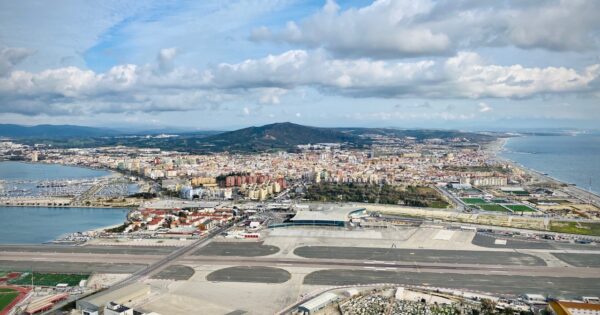
It has come to something when Gibraltar joins Schengen, so one of our UK overseas territories is not in the EU yet everyone in the EU/EEA will have legal passport-free access yet the British will have to have (a) passport (b) Biometrics and (c) ETIAS in order to fly from the UK to our territiory. And no right of abode, we have 90 days in 180.

Admits - "negotiations" are still taking place, but that's the way it's looking right now, the only question is will Frontex (EU) or the Spanish officials/police be guarding the UK/Gibraltar border at the airport?? And it must be said that those Spanish police are routinely armed, so armed police on our land.


BY BRIAN REYES
23rd May 2024

The Spanish Government has explained in stark detail how it believes Schengen controls in Gibraltar should operate if a treaty is agreed, putting a spotlight on one of the gaps that still needs to be bridged if a deal is to be reached.
In response to a question from the Partido Popular in the Spanish senate, the Spanish Government said it expected armed uniformed officers of the Policia Nacional to play a direct role in implementing Schengen immigration controls at Gibraltar’s airport and maritime entry points.
The UK and Gibraltar governments have from the outset ruled out the presence of uniformed Spanish officers on the ground in Gibraltar as part of any treaty.

Although the parliamentary response does not make this clear, the details it sets out are, in effect, Spain’s negotiating position, the Chronicle understands.
The level of detail in the Spanish Government’s response to the PP question has raised eyebrows given the tight lid kept on the substance of discussions to date.
“This is not agreed,” a spokesperson for the Gibraltar Government told the Chronicle.
Publication of the parliamentary response came just days after the second high-level meeting in Brussels between the Foreign Ministers of Spain and the UK, José Manuel Albares and Lord David Cameron, along with the Vice President of the European Commission Maros Sefcovic and Chief Minister Fabian Picardo.
In a joint communique after the seven-hour meeting, all four parties confirmed “important breakthroughs” but no agreement yet. They said they were committed to sealing a deal.
Negotiators have repeatedly refused to disclose details of any remaining areas of disagreement but the response in the Spanish senate this week points to ‘boots on the ground’ still being an issue.
The New Year’s Eve framework agreement on which the treaty negotiation is based envisaged the creation of a common travel area between Gibraltar and the Schengen zone.
In order to achieve that, Schengen immigration controls would be carried out at Gibraltar Airport and the port, effectively eliminating the need for subsequent checks at the border with Spain.
Once inside Gibraltar, people would be able to enter Spain and the Schengen zone freely, and vice versa.
But putting that idea into practice has proved difficult, particularly against the backdrop of Spain’s longstanding sovereignty aspirations over the Rock.
The solution was to enlist the assistance of Frontex, the EU’s immigration force.
The New Year’s Eve framework agreement envisaged that Spain, as the neighbouring country, would take responsibility on behalf of the EU for Schengen immigration checks in Gibraltar, but that Frontex officers would carry out the actual physical controls on the ground, at least for the first four years after which the arrangement would be reviewed.
The parliamentary response, which was made public on May 22, suggests the Spanish Government is still seeking a direct role inside Gibraltar for its uniformed police officers.
The PP had asked the Spanish Government for information as to how Schengen controls would work in practice if an agreement was reached between the UK and the EU.
It asked whether Spanish officers, supported by Frontex, would be involved in immigration checks from the outset of any agreement, whether they would be uniformed and armed, and whether their rules of engagement in the event of any incident would be the same as at existing entry points to Spain.
In its response, the Spanish Government said Schengen entry and exit checks “must” be carried out by officers of Spain’s Policia Nacional.
“The Policia Nacional must carry out border controls,” the response said.
“If Frontex agents are present, their role should be to support and complement the Policia Nacional.”
“Therefore, the responsibility for conducting border inspections lies with the Policia Nacional, with Frontex serving an auxiliary function.”
The response said there should also be arrangements where officers could conduct more thorough checks away from main passenger areas should these be needed, adding the Policia Nacional must be “able to move freely throughout the entire border area” in carrying out their duties.
It referred too to Policia Nacional officers conducting Schengen immigration checks having additional immigration powers including being able to refuse entry and deal with international protection orders, among others.
“Both at the airport and at the port and marina (both outside the isthmus), the Policia Nacional must serve in uniform,” the response said.
“Policia Nacional officers carry weapons while performing their duties.”
In setting out its position, Spain referred to its obligations to fellow EU member states within the Schengen area.
“Spain is required to comply with the Schengen acquis, so border inspections will be conducted in accordance with the Schengen Borders Code and must be carried out under identical conditions at land borders, airports, and ports,” the response said.
“The upcoming implementation of the Entry Exit System (EES) across the entire EU aims to register and store the entry and exit of nationals from third countries crossing the borders of the Schengen Area. This includes citizens of the United Kingdom.”
For now, negotiators continue with technical discussions, which will not be stalled by elections in the EU early June and the July 4 UK General Election called by Prime Minister Rishi Sunak on Wednesday.
The Chief Minister told Parliament on Thursday that given electoral demands on key political figures – a reference to Mr Sefcovic and Lord Cameron – sealing a political agreement before July 4 was “unlikely”, though “not impossible”.
Earlier this week, in evidence to the European Scrutiny Committee in the House of Commons ahead of the UK election being announced, Lord Cameron said protecting British sovereignty was “paramount” in any agreement.
He said both he and the Chief Minister were “incredibly tough” negotiators who would “not give up one inch of sovereignty” in negotiating the treaty.
And while he underlined the progress to date and a shared commitment among all parties to reach agreement in the interests of communities on either side of the border, he was clear too there were some things the UK and Gibraltar would not agree to.
“There are some very clear lines that we can't cross,” Lord Cameron said, without adding any detail.
“And if a deal isn't possible, then we won't agree a deal.”
“But we're hopeful. We think that there's been some good movement in the last few rounds of talks.”
“But we're very clear. If a deal isn't right, we won't sign it.”
In the Gibraltar Parliament on Thursday, the Chief Minister echoed Lord Cameron’s sentiments on recent progress after the two quadrilateral high-level meetings in Brussels, but acknowledged “difficult issues” remained on the negotiating table.
“As a result of these two meetings, important progress has been made in relation to the issues that remain outstanding between the parties,” Mr Picardo said.
“These are difficult issues and the parties remain fully committed to finding solution solutions to each one of them.”
The Chief Minister was asked by Keith Azopardi, the Leader of the Opposition, for his reaction to concerns raised by the European Scrutiny Committee that proposed immigration arrangements would undermine British sovereignty.
Mr Picardo had earlier described that suggestion as “abhorrent” and, like Lord Cameron, had underscored that the Gibraltar Government would never agree to a treaty that diminished Gibraltar’s British sovereignty in any way.
While acknowledging the UK’s support for Gibraltar, he reminded Parliament that Conservative governments had on occasion in the past been “less stalwart” defenders of British sovereignty than the Gibraltarians, citing the 1984 Brussels Agreement and 1987 airport agreement as examples.
He said too that Brexiteers in the UK would likely have different views, within the context of Gibraltar’s relationship with the EU, of what might represent a threat to British sovereignty.
“96% of the people of Gibraltar voted to remain in the European Union,” Mr Picardo said.
“Nobody can pretend to me to be a stauncher guardian of the sovereignty of Gibraltar than the people of Gibraltar themselves.”

 

zero

Established Member
Joined
3 Apr 2011
Messages
1,599
The current processes for monitoring traffic across the Irish sea works well enough that the UK government has no interest in arrivals from the republic going through passport controls. The Republic does this because they don’t really have an domestic flight network that CTA flights could piggy back off. The UK government could if necessary copy their procedure very quickly but it treats arrivals from Dublin as the same as from Edinburgh. Passport controls at Fishguard and Holyhead would shrink the hole in the border too. Both measures would leave the hole in the border as the Irish land border for NI and for GB just limited number of flights and ferries within the UK that would be easier to monitor.

There are ad-hoc police checks at the ferry ports, including on Scotland to NI ferries (obviously any people caught on these would have already been in the UK illegally for some time).

In my experience these checks are done on a racially profiled basis.
 

Chester1

Established Member
Joined
25 Aug 2014
Messages
4,440
It has come to something when Gibraltar joins Schengen, so one of our UK overseas territories is not in the EU yet everyone in the EU/EEA will have legal passport-free access yet the British will have to have (a) passport (b) Biometrics and (c) ETIAS in order to fly from the UK to our territiory. And no right of abode, we have 90 days in 180.

Admits - "negotiations" are still taking place, but that's the way it's looking right now, the only question is will Frontex (EU) or the Spanish officials/police be guarding the UK/Gibraltar border at the airport?? And it must be said that those Spanish police are routinely armed, so armed police on our land.


TLDR:

If an agreement is made it will be very bespoke and not be like any of the current Schengen borders.

Full version:

I have personal links with Gibraltar and have been following it very closely. The way much of the negoiations have been portrayed in UK media has been grossly misleading. Essentially its either selling out sovereignty (Telegraph and Mail) or its some kind of humiliation for the government and brexit (Guardian and Independent). In reality its neither. Its very complex and Spanish governments comments are either a negoiating tactic or a decision to kill off talks and go for a no deal border arrangement.

The gist of the situation is:

- In December 2020 when the transition period was about to end the UK and EU with support from Gibraltar and Spain agreed a framework that would mean Gibraltar was associated to Schengen put not part of it. The current position of negoiations is a reflection of work by Johnson, Truss and Sunak governments. Truss was more influential as foreign secretary....

- Gibraltar government got re-elected with a manifesto pledge to put any treaty to a referendum. The opinion polls are clear that any uniformed Spanish presence, let alone an armed one would mean the treaty would fall by a landslide and there would be a harder border than now.

- The Gibraltar government position is that Frontex can operate at the air and sea border but not Spanish police / border force.

- The Framework agreement states that there will be two border checks, the first by Gibraltar Border Force and the second by Frontex for at least the first four years. Spain is pushing to takeover from Frontex after four years but it would be political suicide for Gibraltar government to agree to it.

- If the framework agreement is turned into a treaty then the land border would become open. However it would kind of be like an Irish land border situation were they are seperate jurisdictions with heavy reliance on informal border controls such as random and intelligence led police checks and right to rent and right to work checks.

The situation for British and EU entrants would be complicated:

At air and sea border:

- British citizens would in almost all cases be waived through the first line of border controls done by Gibraltar Border Force. They would then need to meet the Schengen criteria to be allowed past the second. Gibraltar government will still control right to live in Gibraltar therefore resident permit holders will be free to enter Gibraltar regardless (but not necessarily Schengen because of the 90/180 day rule).

- EU / EEA nationals would need to meet Gibraltan criteria to get past the first check but would then be waived through the Frontex check.

- If arriving from a flight within Schengen (currently there are none) the Frontex check would not take place, only the Gibraltar Border Force check.

The land border into Gibraltar would be complex:

- British Citizens would have had to been allowed into Schengen or be Gibraltan residents returning home.

- EU citizens could cross over but are only allowed to stay for 90 days. Currently Gibraltar allows EU Citizens to work without visas but this isn't part of the treaty negoiations, its a unilateral act.

- EU or third country nationals that have been rejected by Gibraltar at the airport but used the land border as a back door would be illegal entrants. If caught third country nationals would be effectively banning themselves from Schengen, the UK and everyone else Gibraltar shares data with. EU citizens caught breaking Gibraltar border laws obviously wouldn't be banned from Schengen but they would have fun trying to enter most other developed countries.

There are some misconceptions about Gibraltar's previous and intended relationship with the EU:

- While Gibraltar was a member of EU through the UK, it was never allowed to be part of the customs union or open sky agreement. However, it was part of the single market.

- The treaty would flip this around. They would effectively (sort of) join the customs union and open sky but be in the UK internal market for services.

- Gibraltar has never been in either the Common Travel Area or Schengen. It has its own full border controls.

There are ad-hoc police checks at the ferry ports, including on Scotland to NI ferries (obviously any people caught on these would have already been in the UK illegally for some time).

In my experience these checks are done on a racially profiled basis.

Unfortunately that is what I have seen. The Irish Garda has been subject of rebukes from the Irish Human Rights council for similar methods. The long term solution is a united Ireland and full passport controls between it and GB.
 

Cloud Strife

Established Member
Joined
25 Feb 2014
Messages
2,964
Admits - "negotiations" are still taking place, but that's the way it's looking right now, the only question is will Frontex (EU) or the Spanish officials/police be guarding the UK/Gibraltar border at the airport?? And it must be said that those Spanish police are routinely armed, so armed police on our land.

The negotiations are a facade. All three governments know that the proposals are unworkable, and the current situation where Gibraltarians have de facto freedom of movement is not a big deal, given the small amount of Gibraltarians compared to the total EU population.

Non-Gibraltarian (but British) citizens in Gibraltar have reluctantly accepted that they're bound by Schengen rules, and the Gibraltarians are happy because they retain de facto freedom of movement into Andalucia. The PSOE government in Spain has no real desire to change this, nor does the Government of Gibraltar, so the status quo can continue as long as the PSOE-led government is in power.

Gibraltar joining Schengen is sensible and logical, but it's unlikely to happen for a myriad of reasons.
 

Howardh

Established Member
Joined
17 May 2011
Messages
9,779
The negotiations are a facade. All three governments know that the proposals are unworkable, and the current situation where Gibraltarians have de facto freedom of movement is not a big deal, given the small amount of Gibraltarians compared to the total EU population.

Non-Gibraltarian (but British) citizens in Gibraltar have reluctantly accepted that they're bound by Schengen rules, and the Gibraltarians are happy because they retain de facto freedom of movement into Andalucia. The PSOE government in Spain has no real desire to change this, nor does the Government of Gibraltar, so the status quo can continue as long as the PSOE-led government is in power.

Gibraltar joining Schengen is sensible and logical, but it's unlikely to happen for a myriad of reasons.
We shouldn't be bound by Schengen rules in Gibraltar, that's the whole point of being sovereign! Can't understand why we couldn't have the Spain/Gibraltar border as it was but allow those with a Spanish passport, or other permits, free access to Gibraltar for work and leisure, but any UK's wanting to cross into Spain would be subject to Schengen protocol; therefore Brits arrive via air with just their passports*.
*There is the added complication that many flights get diverted to Malaga, but I understand there could be a neutral "holding area" at that airport until coach transfer can be arranged? If not then eache trevaller with a ticket for Gibraltar would need some kind of permit to cross the border into Spain then on to said coaches.

- British citizens would in almost all cases be waived through the first line of border controls done by Gibraltar Border Force. They would then need to meet the Schengen criteria to be allowed past the second. Gibraltar government will still control right to live in Gibraltar therefore resident permit holders will be free to enter Gibraltar regardless (but not necessarily Schengen because of the 90/180 day rule).

I need further explanation for this; as we get off the plane we meet GIB officials first who wave us through, then we are greeted by Frontex (or Spanish) officials who can then turn us away if we haven't completed Schengen protocol?? So the EU/EEA are effectively preventing us from travelling from one part of the UK to, basically, another unless we complete their profiling? Just imagine if we were French we'd be rioting on the streets!!
 

Cloud Strife

Established Member
Joined
25 Feb 2014
Messages
2,964
We shouldn't be bound by Schengen rules in Gibraltar, that's the whole point of being sovereign! Can't understand why we couldn't have the Spain/Gibraltar border as it was but allow those with a Spanish passport, or other permits, free access to Gibraltar for work and leisure, but any UK's wanting to cross into Spain would be subject to Schengen protocol; therefore Brits arrive via air with just their passports*.

Why not? Gibraltar is not the UK, it has its own immigration regime and imposes controls on non-Gibraltarians. Even British citizens do not have the right of residency there, something that is often missed by many people in the UK.

Can't understand why we couldn't have the Spain/Gibraltar border as it was but allow those with a Spanish passport, or other permits, free access to Gibraltar for work and leisure, but any UK's wanting to cross into Spain would be subject to Schengen protocol; therefore Brits arrive via air with just their passports*.

The simple answer is that the frontier is an incredible hinderance to Gibraltar. They are in legal limbo at the minute, as the informal deal with Spain regarding their access to Spain and the EU is not regulated in any way. If a new right wing government comes into power in Spain, they will almost certainly lose the concession that they have, transforming the Gibraltar/Spain border into a hard external border of the EU. This would be catastrophic for many Gibraltarians who have family in La Linea and the wider Campo de Gibraltar, as well as for many Spanish people who work in Gibraltar.

The idea that is floating around is that there will be dual controls upon entry to Gibraltar, one imposed by the Gibraltarian BCA, and another by Frontex officers. Gibraltar will handle compliance with Gibraltar immigration law, while Frontex will be responsible for checking the Schengen databases. There are a lot of logistical problems associated with this, but the general idea is that if someone is denied entry into Schengen but approved for entry into Gibraltar, then they will be issued with a special Gibraltar-only passport stamp which won't permit them to cross the frontier into Spain and the rest of Schengen.

*There is the added complication that many flights get diverted to Malaga, but I understand there could be a neutral "holding area" at that airport until coach transfer can be arranged? If not then eache trevaller with a ticket for Gibraltar would need some kind of permit to cross the border into Spain then on to said coaches.

Generally speaking, Schengen law allows for this scenario by giving people short term entry permission even if they don't meet the requirements for entry otherwise. This is what already happens on flights diverted to Malaga by people who don't have visas for Spain/Schengen.

I need further explanation for this; as we get off the plane we meet GIB officials first who wave us through, then we are greeted by Frontex (or Spanish) officials who can then turn us away if we haven't completed Schengen protocol?? So the EU/EEA are effectively preventing us from travelling from one part of the UK to, basically, another unless we complete their profiling?

So, to explain the concept as understood by the Gibraltarian authorities.

- The frontier between Gibraltar and Spain no longer exists for the purpose of immigration control. There is full freedom of movement between Gibraltar and the EU, with Gibraltarians and EU citizens alike being permitted to move between the two.
- Customs controls are abolished by Gibraltar aligning its taxation regime with that of the EU, i.e. excise taxes reach the EU minimum level and VAT is introduced, among other things.
- The frontier no longer exists, not for immigration nor for customs purposes.
- When someone arrives in Gibraltar from outside Schengen, they are subject to three controls.
- The first control: Gibraltar BCA checks whether the traveller meets the requirements for entering Gibraltar, including having a (Schengen or long term Gibraltarian) visa if required. If yes, they are cleared into Gibraltar. If no, they are deported.
- The second control: Frontex officers (on behalf of Spain) check whether the traveller meets the requirements for entering Schengen. If yes, they are cleared into Gibraltar. If no, they can still enter Gibraltar, but they cannot cross into Spain or the rest of Schengen.
- The third control: Gibraltar Customs control the traveller to ensure that they meet Gibraltar customs rules, which are harmonised with the EU.

But it is important to note that Gibraltar is not part of the UK. There are separate Gibraltar visas, they have separate immigration rules, and all non-Gibraltarians need permission to stay there, including British citizens from elsewhere. In fact, Gibraltar has really been tightening up in recent years by demanding evidence of work contracts and rental contracts from British citizens who are registered as living there. The only concession is that British citizens don't need work permits, but nor do EU citizens there.

Now, the problem is that Spain understands something different. They want the Frontex controls to be replaced by Spanish controls, something that is completely unacceptable to the Gibraltarian government. This is a hard red line on the part of Gibraltar, but Spain argues that they (through Frontex) cannot take responsibility for Schengen without having their officers stationed there.

The solution is quite simple: Gibraltar should be permitted by the UK to join Schengen as a member instead of relying on Spain. However, the UK refuses to allow this, although it's Gibraltar's preferred option as they would also take responsibility for Schengen and apply Schengen rules.

I would also point out that many other British territories have their own immigration rules, not just Gibraltar. Some of them, such as Pitcairn Island, require pre-clearance by their island authorities, so this is really nothing special for another British territory to impose controls on British citizens from the UK.
 

Chester1

Established Member
Joined
25 Aug 2014
Messages
4,440
Why not? Gibraltar is not the UK, it has its own immigration regime and imposes controls on non-Gibraltarians. Even British citizens do not have the right of residency there, something that is often missed by many people in the UK.


The simple answer is that the frontier is an incredible hinderance to Gibraltar. They are in legal limbo at the minute, as the informal deal with Spain regarding their access to Spain and the EU is not regulated in any way. If a new right wing government comes into power in Spain, they will almost certainly lose the concession that they have, transforming the Gibraltar/Spain border into a hard external border of the EU. This would be catastrophic for many Gibraltarians who have family in La Linea and the wider Campo de Gibraltar, as well as for many Spanish people who work in Gibraltar.

The idea that is floating around is that there will be dual controls upon entry to Gibraltar, one imposed by the Gibraltarian BCA, and another by Frontex officers. Gibraltar will handle compliance with Gibraltar immigration law, while Frontex will be responsible for checking the Schengen databases. There are a lot of logistical problems associated with this, but the general idea is that if someone is denied entry into Schengen but approved for entry into Gibraltar, then they will be issued with a special Gibraltar-only passport stamp which won't permit them to cross the frontier into Spain and the rest of Schengen.


Generally speaking, Schengen law allows for this scenario by giving people short term entry permission even if they don't meet the requirements for entry otherwise. This is what already happens on flights diverted to Malaga by people who don't have visas for Spain/Schengen.


So, to explain the concept as understood by the Gibraltarian authorities.

- The frontier between Gibraltar and Spain no longer exists for the purpose of immigration control. There is full freedom of movement between Gibraltar and the EU, with Gibraltarians and EU citizens alike being permitted to move between the two.
- Customs controls are abolished by Gibraltar aligning its taxation regime with that of the EU, i.e. excise taxes reach the EU minimum level and VAT is introduced, among other things.
- The frontier no longer exists, not for immigration nor for customs purposes.
- When someone arrives in Gibraltar from outside Schengen, they are subject to three controls.
- The first control: Gibraltar BCA checks whether the traveller meets the requirements for entering Gibraltar, including having a (Schengen or long term Gibraltarian) visa if required. If yes, they are cleared into Gibraltar. If no, they are deported.
- The second control: Frontex officers (on behalf of Spain) check whether the traveller meets the requirements for entering Schengen. If yes, they are cleared into Gibraltar. If no, they can still enter Gibraltar, but they cannot cross into Spain or the rest of Schengen.
- The third control: Gibraltar Customs control the traveller to ensure that they meet Gibraltar customs rules, which are harmonised with the EU.

But it is important to note that Gibraltar is not part of the UK. There are separate Gibraltar visas, they have separate immigration rules, and all non-Gibraltarians need permission to stay there, including British citizens from elsewhere. In fact, Gibraltar has really been tightening up in recent years by demanding evidence of work contracts and rental contracts from British citizens who are registered as living there. The only concession is that British citizens don't need work permits, but nor do EU citizens there.

Now, the problem is that Spain understands something different. They want the Frontex controls to be replaced by Spanish controls, something that is completely unacceptable to the Gibraltarian government. This is a hard red line on the part of Gibraltar, but Spain argues that they (through Frontex) cannot take responsibility for Schengen without having their officers stationed there.

The solution is quite simple: Gibraltar should be permitted by the UK to join Schengen as a member instead of relying on Spain. However, the UK refuses to allow this, although it's Gibraltar's preferred option as they would also take responsibility for Schengen and apply Schengen rules.

I would also point out that many other British territories have their own immigration rules, not just Gibraltar. Some of them, such as Pitcairn Island, require pre-clearance by their island authorities, so this is really nothing special for another British territory to impose controls on British citizens from the UK.

There is a misunderstanding that Gibraltar is in the Common Travel Area or that Brits have an automatic right of entry into Gibraltar. In 99.9% of entries British Citizens just have their passport scanned and passed back to them but ultimately it is at discretion of Gibraltar Border Force. I said "waived through" because this is essentially what happens but its not a right.

My understanding is that its not just the UK government that opposes Gibraltar membership of Schengen but the Spanish government too, leading to the messy association proposal.

There an element of political theatre but last year there was definitely some worry amongst residents about what would happen with the border. I think the talks will eventually collaspe due to a change of administration in either the EU or Spain and there will be a harder border than now. If Spain budges on replacing Frontex and excluding British armed forces from entry controls then a deal is doable.

The border is an economic drag but it does have advantages. As one person explained to me, currently they might not know where their kids are but they are in Gibraltar. Many parents of teenagers would love a situation where their sons and daughters cannot go more than a couple of miles from home without their passports!
 

Howardh

Established Member
Joined
17 May 2011
Messages
9,779
Gibraltar is still a military base (I think) so could the Spanish/Schengen officials prevent our forces from entering if each person doesn't have the right paperwork - including Schengen working visas as they are working and not on vacation?

Also anyone in the forces with a criminal record behind them (if that's possible) may not be allowed entry to Schengen.

So if Gib joins Schengen, at least in spirit, we are losing the right to defend our territory, at least in theory.

Hope this is far fetched and in the end all UK citizens and services can enter Gib with the absolute minimum authorisation.
 

AlbertBeale

Established Member
Joined
16 Jun 2019
Messages
3,188
Location
London
Gibraltar is still a military base (I think) so could the Spanish/Schengen officials prevent our forces from entering if each person doesn't have the right paperwork - including Schengen working visas as they are working and not on vacation?

Also anyone in the forces with a criminal record behind them (if that's possible) may not be allowed entry to Schengen.

So if Gib joins Schengen, at least in spirit, we are losing the right to defend our territory, at least in theory.

Hope this is far fetched and in the end all UK citizens and services can enter Gib with the absolute minimum authorisation.

Members of the military having a criminal record is far from rare...
 

Howardh

Established Member
Joined
17 May 2011
Messages
9,779
Members of the military having a criminal record is far from rare...
In that case, depending on severity and time scale, there could be issues getting them back to base, not only in Gibraltar but out bases in Cyprus, especially if they are "on leave" and returning by civilian routes!
 

Trainbike46

Established Member
Joined
18 Sep 2021
Messages
4,374
Location
belfast
I agree with you mostly, anything without the visa waiver that makes a journey smoother. However for UK security and our own EES system for EU's, again I point out that these can be avoided by anyone with an EU ID card if they travel to the Republic of Ireland first and then cross over to GB; so however strong our security is, all becomes a bit pointless when there's a wide open back door!!

I did read on Schengen Information that the biometrics will remove the worry of "losing your passport" so the actual passport wouldn't be required at, say, airports, but would come in handy for ID (hotels, banks, hire cars, if stopped by the police) but if lost, they already have your biometrics to prove you are you so you can get home without worry. Assuming you don't lose the tip of your fingers whilst on holiday of course!!
It's not particularly wide-open while the merseyside police does "random" checks on everyone arriving by ferry from Belfast, so travelling within the UK. There's no obligation to have a passport or other ID on you, but they can use it to keep people out of Britain, and I'm assuming that's why they do it
There are ad-hoc police checks at the ferry ports, including on Scotland to NI ferries (obviously any people caught on these would have already been in the UK illegally for some time).

In my experience these checks are done on a racially profiled basis.
This exactly; They also appear to rely a lot on people volunteering their passports or other IDs even when they don't have to provide them

== Doublepost prevention - post automatically merged: ==

In that case, depending on severity and time scale, there could be issues getting them back to base, not only in Gibraltar but out bases in Cyprus, especially if they are "on leave" and returning by civilian routes!
No sensible countries ban everyone with a criminal record - it is always decided on things like what the crime was, how long ago it was committed, and whether there are any good reason to let them in regardless of the criminal record.

I would assume people in the military would be admitted under that final section
 

Chester1

Established Member
Joined
25 Aug 2014
Messages
4,440
Gibraltar is still a military base (I think) so could the Spanish/Schengen officials prevent our forces from entering if each person doesn't have the right paperwork - including Schengen working visas as they are working and not on vacation?

Also anyone in the forces with a criminal record behind them (if that's possible) may not be allowed entry to Schengen.

So if Gib joins Schengen, at least in spirit, we are losing the right to defend our territory, at least in theory.

Hope this is far fetched and in the end all UK citizens and services can enter Gib with the absolute minimum authorisation.

In that case, depending on severity and time scale, there could be issues getting them back to base, not only in Gibraltar but out bases in Cyprus, especially if they are "on leave" and returning by civilian routes!

UK ministers have stated that uncontrolled entry and exit of British military personnel is a non negotiable part of any treaty and the Gibraltar government supports this because they understand how important it is. Put simply, if the UK armed forces don't have freedom to move people and equipment in and out of Gibraltar then the base and therefore Gibraltar itself will become less important.

Border controls are not black and white, despite a strong desire by many people to see them in this way. Its reasonable for the UK to expect British military personnel to be trusted to stay within Gibraltar unless they have permission to enter Schengen. Gibraltar is seeking to be associated to Schengen, not join it. In addition to criminal charges from Spain for illegal entry the offenders would be facing a court marshal too!

There is a perception amongst pro EU sections of the British media that Gibraltar is desperate to have a deal and are kind of embarrassed to be British since brexit. Sure, brexit is unpopular there but it isn't an identity issue. They are secure being British and Gibraltan, like I am secure being British and English. They will only sign a treaty if the UK and Gibraltar red lines are kept to. That means there is a 50:50 chance of a hard border when the Spanish government changes next.
 

stuu

Established Member
Joined
2 Sep 2011
Messages
3,766
So if Gib joins Schengen, at least in spirit, we are losing the right to defend our territory, at least in theory.
How many members of the armed forces would arrive for their tour of duty from Spain? I would assume that armed forces arriving directly from the UK would not be processed via the normal channels in the airport
 

Cloud Strife

Established Member
Joined
25 Feb 2014
Messages
2,964
Gibraltar is still a military base (I think) so could the Spanish/Schengen officials prevent our forces from entering if each person doesn't have the right paperwork - including Schengen working visas as they are working and not on vacation?

No, as national visas (including work permits/etc) is a matter for each individual Schengen country. Generally speaking, if someone arrives without the right paperwork, then the Schengen state of entry will liaise directly with the state of residence to establish whether that person is legally resident or not. They don't take decisions by themselves, so if Frontex said that someone was inadmissible to Schengen, they would liaise directly with the Gibraltarian BCA to decide on the next step. However, if Gibraltar says 'yes' and Frontex say 'no', then they would likely be admitted to Gibraltar only.

There is already precedent for this: Moroccans living in border areas have visa-free access to Ceuta and Melilla without being permitted to travel to mainland Spain.

So if Gib joins Schengen, at least in spirit, we are losing the right to defend our territory, at least in theory.
No, not really. If such a situation was to arise, Gibraltar would immediately suspend Schengen and the Frontex officers would be asked to leave. In practice, the British military (and their allies) will simply be issued with papers that they have to show on arrival, same as happens today. They wouldn't be conducting criminal checks or anything on military members.

I said "waived through" because this is essentially what happens but its not a right.

Yes, although in practice, Gibraltar already somewhat works to Schengen norms. That is, Gibraltar has several devices for checking the length of stay by a British citizen, including requiring them to obtain work permits, as well as carrying out checks on landlords and so on. As a result, they don't need to really control people at the frontier itself, although they can (and do) ask a lot of questions at the airport.
 

Chester1

Established Member
Joined
25 Aug 2014
Messages
4,440
Yes, although in practice, Gibraltar already somewhat works to Schengen norms. That is, Gibraltar has several devices for checking the length of stay by a British citizen, including requiring them to obtain work permits, as well as carrying out checks on landlords and so on. As a result, they don't need to really control people at the frontier itself, although they can (and do) ask a lot of questions at the airport.

"Landlord checks" are the norm in the UK too. There is a segment of people who hate them because they were introduced by the Tories but its the European norm for employers, landlords and universities to have to check people have the right to live in the country. A lot of the discussion about the UK, Ireland and Schengen works on the assumption that checks at a physical border post are everything.

I have visited Gibraltar probably around ten times in recent years and I have never had more than the most cursory border check. The last time I travelled with my partner and they were only interested in checking her UK visa. They didn't ask to see proof of accommodation or funds (although we had them prepared).
 

Belperpete

Established Member
Joined
17 Aug 2018
Messages
3,626
I also have a friend who I regularly travel with abroad who is a dual national although born and lived here all his life (he is now 66!); he has both a full unrestricted British passport as well as a German one.

Can he travel into and out of Europe on his German one and back into the UK on his British one?
I seem to recall reading somewhere that you can have issues if you regularly use one passport one way and another passport the other way? Doesn't apply to me, so didn't pay too much attention.
 
Status
Not open for further replies.

Top