• Our new ticketing site is now live! Using either this or the original site (both powered by TrainSplit) helps support the running of the forum with every ticket purchase! Find out more and ask any questions/give us feedback in this thread!

Enquiry about the Beeching report

Status
Not open for further replies.

Metrolink

Member
Joined
20 Jan 2021
Messages
202
Location
Manchester
Evening all,

I’m currently undertaking an EPQ report alongside my college work - this consists of an 5000 word academic report or an artefact of any degree, accompanied by a 1000+ word written statement, and is worth half an A-level

I have chosen the latter which will be to film and edit a documentary on the social and economic impacts on the Beeching report and ultimately whether it was justified, and thus am looking to conduct several interviews with enthusiasts or ‘experts’ to inform my idea and contribute to the documentary.

If anyone would be interested feel free to drop me a private message and we can talk further on the topic. However I do have some starting criteria that would be necessary to be involved:

  • Willingness to be on camera and/or quoted on your opinion
  • Within 3 hours of Manchester/North West England
  • Some level of either: experience in the railway industry; lived experience of the beeching cuts; credible railway history knowledge
  • A visual stimulus: can be local area / old stations or routes / pictures
  • The ability to explain what effect the Beeching cuts (or some level of disinvestment) has had on your local/chosen area
I know it’s a big ask, but I wouldn’t want to miss out on the wealth of knowledge within the forum and it’s members. If you have any questions let me know via private message or in the thread. Thanks in advance.

[Note to mods that permission was requested from Forum Staff prior to making this thread, thanks to @ainsworth74]
 
Sponsor Post - registered members do not see these adverts; click here to register, or click here to log in
R

RailUK Forums

DerekC

Established Member
Joined
26 Oct 2015
Messages
2,438
Location
Hampshire (nearly a Hog)
I am afraid I am too far from Manchester, otherwise I would have been glad to help. There is loads of existing written material out there for you to research for background, facts and opinion. Good luck, although I think you are taking on a big task! It's got to be worth a PhD rather than half an A level.
 

Iskra

Established Member
Joined
11 Jun 2014
Messages
10,696
Location
West Riding
That sounds a really interesting topic, I wish you luck with your project.

It could be worth using the Forum Search Tool, I'm sure that would bring up lots of interesting recollections from Forum Members and if any are of particular interest you could Personal Message the member in question?

I hope the excellent RailUK community can assist you with this :)
 

Taunton

Veteran Member
Joined
1 Aug 2013
Messages
12,278
Good luck with your studies.

The general media attitude to Beeching is overall negative. The more informed approach differs, including commentators on here, and is that it was overall very correct. Some key railway managers of the era referred to Beeching in their biographies as the best leader that British Railways had.

Bear in mind that there was more than one report. The first, "Reshaping of British Railways", is the one the media focus on. Broadly, it was letting go of what had been effectively redundant since the motor vehicle became practical and widespread by 1930. The second, "Development of Major Railway Trunk Routes", is actually the more significant, focusing on fast, frequent express passenger trains between major demand points, concentrating freight services on bulk operations, and general modern investment. I see you included the terms "cuts" and "disinvestment" in your opening. That's a questionable pre-conclusion.

There's been a lot of continuing discussion on here about Beeching's approach, a search just on his name may give you various useful perspectives. Bear in mind that Beeching, as Chairman of British Railways, was a top management organiser, he did not have practical railway experience, but selected key management staff who did to put together the reports within his overall framework.

For academic reading, which will appeal to your examiners, one can recommend two books as references:

"I Tried to Run a Railway", by Gerry Fiennes, one of Beeching's key managers of the era.

"The Train that Ran Away" by Stewart Joy, Beeching's Chief Economist.

Both published late 1960s, long out of print but readily available secondhand.
 
Last edited:

yoyothehobo

Member
Joined
21 Aug 2015
Messages
853
Be aware that Beeching is simultaneously both Satan himself and worthy of sainthood. Its an emotive topic certainly.

As this is academic in nature, be very wary about going in with preconceived notions one way or the other and let your research do the bulk of the work and representation.
 

swt_passenger

Veteran Member
Joined
7 Apr 2010
Messages
34,274
Beeching also seems to get used as a ‘catch all’ reason for closure, many lines had closed to passengers in the 30s as they were already deemed unnecessary well before he came along. But he still ‘carries the can‘ for them too, at least in some of the public‘s ill informed memories. There were also late 60s closures usually blamed on Beeching that were not actually shown in his first report.
 

Sir Felix Pole

Established Member
Joined
21 Oct 2012
Messages
2,173
Location
Wilmslow
Dick Hardy's book 'Beeching : Champion of the Railway?' gives a good account of being a railway manager in that era - as Traffic Manger at Lincoln he had to deal with lots of closures and stormy public meetings!

Clearly there were lots of hopeless lines that should have closed years earlier when BR was created - as SNCF did in France when formed in 1938 - but there were strategic routes that should have not. (Yes, Exeter to Plymouth via Okehampton!). The major criticism was that the decisions were based on flawed data - a random week in April - and no account of the contributory revenue the branch lines made to the main-line. In the days of carefree motoring with little traffic congestion, if the whole journey could not be made by rail then it would not be made at all. One example is Okehampton, which was spared the axe, but having lost all its connecting lines quickly succumbed to closure itself. (Happily now reopened!).

== Doublepost prevention - post automatically merged: ==

The other big mistake was having a Beeching Report at all, launched with a fanfare - his rather arrogant and abrasive style quickly made him a bogey man. It gave the general public the impression that the railways were doomed and that they had better make alternative arrangements even if their particular station was not threatened. It would have better as an internal report with closures quietly implemented -as in fact the WR and ScR had been doing throughout the '50s. This was SNCF's approach - it had (and arguably still does!) a notorious 'funeral list' of lines it wished to close.
 
Last edited:

Taunton

Veteran Member
Joined
1 Aug 2013
Messages
12,278
The above is an interesting example of different views. There was already a mainstream rail route between Exeter and Plymouth, which took 90% of the traffic. The Okehampton line, a long way round, had a few trains a day, which each carried a few passengers. On the odd occasion when the main line was blocked, most commonly by sea inundation at Dawlish, it did give a second route to Plymouth, although operationally extremely inconvenient, but that is hardly justification for keeping an expensive to maintain line. I also think over the years that line was probably closed more often by snow over Dartmoor than the coastal route was by the sea.

I was in Taunton right through the Beeching Plan's closure of all the local train services, both the branches and along the main lines. I really don't think outside the railway diaspora anyone we knew noticed.

An interesting sidebar to all this is, if the Hixon level crossing accident had not happened (due to appalling stupidity by supposedly professional heavy road freight specialists), would automatic crossings have gone ahead. One of the books I described above pointed out that traditional manned level crossing staff commonly took more cost than the entire revenue of a number of rural lines.
 
Last edited:

mike57

Established Member
Joined
13 Mar 2015
Messages
2,394
Location
East coast of Yorkshire
Lots of material for this out there, and its a huge topic which is going to be way beyond the scope of one project, to cover the topic in detail would require multiple documentaries, so maybe try and select a few examples to look at in detail.

Some ideas:

Concentrate on a couple of lines, may be one that was slated for closure and survived, and one that closed and look at the differences in economic activity and growth in the two areas, and try and determine if access to rail services is a factor or has had any impact. Use that to reach a conclusion on the imapct beyond the railway.

A good example from near your home turf, the Hope Valley route was slated for closure, but stayed open, Woodhead and routes via Buxton and Matlock closed (after Beeching) but were to be retained in the original report.

Consider the impact of the report and its legacy to the modern railway, lack of diversionary routes or the 'full circle' where earlier cuts have resulted in a situation where proposing any further cuts are pretty much political suicide for example.

Would earlier adoption of simplified working for some branches have resulted in a different outcome.

Earlier closure of the hopeless cases, would this have made any difference.
 

Grumpy

Established Member
Joined
8 Nov 2010
Messages
1,318
"The Train that Ran Away" by Stewart Joy, Beeching's Chief Economist.
Minor point, but I think Stewart Joy only joined BR after Beeching had returned to ICI.
Not disagreeing with the recommendation that the book should be read.
You might want to consider the need for another book "The Train that continued to run away" illustrating that the lessons still haven't been learnt
 

Metrolink

Member
Joined
20 Jan 2021
Messages
202
Location
Manchester
Thanks all for your responses. I'm currently sat in my support session so I'm going to take it all into account now whilst doing some further planning.
 

Taunton

Veteran Member
Joined
1 Aug 2013
Messages
12,278
This was SNCF's approach - it had (and arguably still does!) a notorious 'funeral list' of lines it wished to close.
The big French approach was they closed half the stations and lines in the country on their first day of nationalisation, in 1938. Curiously exactly the same was done by the USA government-organised Amtrak organisation as well, who absorbed almost all the longer distance USA passenger rail services in 1971, and closed half of them down on the first day. It was as if British Railways had closed all the useless branch lines and wayside stations in January 1948.
 

Titfield

Established Member
Joined
26 Jun 2013
Messages
3,225
Worthing reading British Railways the First Twenty Five Years by Michael Bonavia and British Railways a Business History by Gourvish.

One much under appreciated point was that the business and economic factors which negatively impacted the railways prior to the Beeching Report continued unabated. For example the growth of private car ownership just kept on growing further undermining lines which were retained by Beeching. The growth of gas for domestic heating inexorably are into the domestic coal market which had been the backbone of many branch lines.
 

anothertyke

Member
Joined
23 Jun 2023
Messages
380
Location
Leeds
As well as the good points made above, I think it is important to bear in mind the following.

The Beeching Report as a whole tried to orientate the railway towards the functions where it had comparative advantage. It did the groundwork for Freightliner and Inter city passenger, neither of which are that easy to assess in social terms but have had a significant effect on economic geography and logistics.

Another essential point is that BR was operating within a financial framework set down by Govt, the 1962 Transport Act, within which the railway as a whole was required to break even. BR was an agent, not the principal. If the framework had been changed earlier to the 68 or 74 Act framework, Beeching's remit would have been different. Hence the interest in what GBR's remit will be today.

Re closures, my opinion is 90% right 10% wrong. The argument is in the territory of which 10%. And whether some lines of route should have been protected against development and what the opportunity cost was.

Terry Gourvish's book BR 1948-73 A Business History is the place to start.
 

RT4038

Established Member
Joined
22 Feb 2014
Messages
5,456
The big French approach was they closed half the stations and lines in the country on their first day of nationalisation, in 1938. Curiously exactly the same was done by the USA government-organised Amtrak organisation as well, who absorbed almost all the longer distance USA passenger rail services in 1971, and closed half of them down on the first day. It was as if British Railways had closed all the useless branch lines and wayside stations in January 1948.
Most countries have closed down passenger services and lines, to a greater or lesser degree than the UK, depending on all sorts of economic, geographic and demographic reasons of the country concerned. Some countries have done virtually none, and some have got rid of most of their entire extensive networks (other than suburban lines, or tourist orientated operations). The UK is certainly no outlier in this regard.
 

Taunton

Veteran Member
Joined
1 Aug 2013
Messages
12,278
Re closures, my opinion is 90% right 10% wrong. The argument is in the territory of which 10%.
That's a pretty good outcome of any significant project, it's difficult to beat those values.

One of the issues for the railway is their network is essentially that fixed in early Victorian times, and in fact the bulk of what remains was built in the narrow period 1830-60. That's nearly 200 years ago. Meanwhile the urban fabric and journey demands have changed immensely. The ability to revise the infrastructure has long been seen only in terms of contraction. Only in very recent times have projects like HS1/2 or the Liz Line been actually built.
 

eldomtom2

On Moderation
Joined
6 Oct 2018
Messages
2,385
For academic reading, which will appeal to your examiners, one can recommend two books as references:

"I Tried to Run a Railway", by Gerry Fiennes, one of Beeching's key managers of the era.

"The Train that Ran Away" by Stewart Joy, Beeching's Chief Economist.

Both published late 1960s, long out of print but readily available secondhand.
I Tried to Run a Railway is also available in ebook form.
There were also late 60s closures usually blamed on Beeching that were not actually shown in his first report.
Where there any examples of that expect for the Varsity Line (excluding cases of "Beeching recommended keeping Line A and closing Line B, but for various reasons what actually happened was Line A was closed and Line B was kept", e.g. Blackpool North/Blackpool Central)? I can't think of any off the top of my head.
A good example from near your home turf, the Hope Valley route was slated for closure, but stayed open, Woodhead and routes via Buxton and Matlock closed (after Beeching) but were to be retained in the original report.
Well in both cases while Beeching proposed retaining the through routes he also proposed station closures that did not happen; for Woodhead he proposed closing all intermediate stations except for Penistone, Dunford Bridge, Woodhead, Hadfield, and Guide Bridge, while Peak Forest would lose all stations between Derby and Chinley except for Matlock.
Would earlier adoption of simplified working for some branches have resulted in a different outcome.
Well Beeching considered simplified working and dismissed it out of hand as the savings provided wouldn't have made the routes in question profitable...
Curiously exactly the same was done by the USA government-organised Amtrak organisation as well, who absorbed almost all the longer distance USA passenger rail services in 1971, and closed half of them down on the first day. It was as if British Railways had closed all the useless branch lines and wayside stations in January 1948.
Well that wasn't exactly Amtrak's choice - what precisely happened was that they were told "run service between these city pairs" with the expectation that where there were multiple services between these endpoints Amtrak would select one; the decisions on which routes to keep were made by a team of McKinsey consultants. Indeed, the stick for not joining Amtrak was that any railroad that didn't had to retain its current passenger services in full until 1975.
And of course, by 1971 American passenger rail had deteriorated to the point where there weren't really any "useless branch lines" left.
One of the issues for the railway is their network is essentially that fixed in early Victorian times, and in fact the bulk of what remains was built in the narrow period 1830-60. That's nearly 200 years ago.
But surely that's true of most rail systems, that most of the network was built decades or even centuries ago when railway construction first took off? There's no point in building new alignments when in most cases the existing ones are perfectly fine.
 

Bevan Price

Established Member
Joined
22 Apr 2010
Messages
8,331
You have chosen a difficult, complicated topic on which I suspect there will never be full agreement. These are just my personal comments as a rail user then and now.

1. Many lines were financial basket cases from the start and probably should never been built.
2. LInes had been closed to passengers steadily for many years before Beeching - but usully just one or two at a time, rather than a "big bang" of closures as proposed by Beeching.
3. Dr Beeching got the blame. but he was only doing what he had been told by his employer - the Conservative government.
4. Transport Minister Ernest Marples - who appointed Beeching - was himself controversial, and perhaps not entirely good -- his family business included building roads nd motorways. When he was appointed as a minister, he was supposed to separate himself from any business interests that might clash with impartiality as a minister - so he sold the business to his wife.....
5. As an outsider, it seemed that "closure" was always the preferred option, when perhaps more effort could have been made to make operating economies that might have saved some lines.
6. The Tresaury gets a lot of revenue from vehicle tax and fuel duty. Anything that increases use of road vehicles - and maybe prompted by rail closures - might have been a factor at that time in encouraging "anti-rail" policies.

The social impacts:
Well, some people , unable to get to workplaces, would have lost their jobs.
Plenty of rail staff lost their jobs and had to find other jobs.
Some workers, if they could afford, would have bought cars -- and that would have a knock-on effect that in future, they deserted rail completely, rather than use rail for both work and holiday journeys.
For a few, alternative bus services might be available, but many journey times were much slower than the previous rail journeys.
Some shopping habits and destinations would have changed - some large towns becoming almost inacccessible from places that had lost their rail services.

Good Luck
 

Titfield

Established Member
Joined
26 Jun 2013
Messages
3,225
Some workers, if they could afford, would have bought cars -- and that would have a knock-on effect that in future, they deserted rail completely, rather than use rail for both work and holiday journeys.
Worth mentioning that the number of motorcycles and scooters grew very considerably both before and during Beeching.

Plenty of rail staff lost their jobs and had to find other jobs.

British Railways were struggling to recruit workers due to the relatively lower pay and working conditions.


Beeching is a very complex subject because there are so many many factors and assessing their impact is very challenging.
 

RT4038

Established Member
Joined
22 Feb 2014
Messages
5,456
The social impacts:
Well, some people , unable to get to workplaces, would have lost their jobs.
I doubt there were that many affected like this - in those days people would have simply moved house closer or more convenient to their employment. Some might have changed jobs (this was in a time of pretty much full employment), but commuting any distance in the provinces was just not done that much anyway (only railway staff could afford the fares!!).

== Doublepost prevention - post automatically merged: ==

For a few, alternative bus services might be available, but many journey times were much slower than the previous rail journeys.
Some shopping habits and destinations would have changed - some large towns becoming almost inacccessible from places that had lost their rail services.
This sounds all rather dramatic and hyperbolic - the train service cannot have been very well patronised if there was no alternative bus service after closure, rendering 'inaccessible' rather moot.
 

Taunton

Veteran Member
Joined
1 Aug 2013
Messages
12,278
I think there were very few people who were commuting to work who were using the services which were withdrawn and had no effective alternative. Almost all services with measurable commuter numbers were retained.

Stewart Joy describes a service in Scotland, retained after investigation as an "Essential Service". He noticed that almost all tickets were sold at cheap rates, and questioned why such essential users were not paying standard fares, only to be told if that was done they would go by bus instead ...
 

MadMac

Established Member
Joined
13 Jun 2008
Messages
1,497
Location
Moorpark, CA
Something I recall reading (possibly in Gerry Fiennes’ book?) in the dim and distant past was that during the 1964 General Election campaign, Harold Wilson pledged during a meeting in Scarborough that he would stop the closure of the line to Whitby. Upon taking office, he discovered that even as Prime Minister, he had no authority to do so.
 

sh24

Established Member
Joined
28 Sep 2023
Messages
1,496
Location
London
There is a credible argument the 1955 Modernisation Plan was the real villain. Huge amounts of money spent to modernise what existed, rather than thinking about what the future needed to be.
 

mike57

Established Member
Joined
13 Mar 2015
Messages
2,394
Location
East coast of Yorkshire
Where there any examples of that expect for the Varsity Line (excluding cases of "Beeching recommended keeping Line A and closing Line B, but for various reasons what actually happened was Line A was closed and Line B was kept", e.g. Blackpool North/Blackpool Central)? I can't think of any off the top of my head.
Our local line (Hull - Scarbourough) was shown as being retained in the original report, but got very close to complete closure in 1968 with closure notices being issued and put up at stations. End result was closure of the least used stations and Filey Holiday Camp Branch. Originally full closure was to be 7th Oct 1968. This would have left East Yorkshire away from the Humber as a rail desert.

Another one which did close was the Kings Lynn - Hunstanton line, and the direct(ish) line from Kings Lynn towards Norwich.

For reference this is my source map
1746605935120.png1746605769546.png
 

Western Lord

Member
Joined
17 Mar 2014
Messages
1,062
Bear in mind that Beeching did not close an inch of railway, Government did. Most of the "Beeching cuts" were implemented by a Labour Government that had campaigned against them.
 

jadmor

Member
Joined
26 Nov 2013
Messages
156
Dick Hardy's book 'Beeching : Champion of the Railway?' gives a good account of being a railway manager in that era - as Traffic Manger at Lincoln he had to deal with lots of closures and stormy public meetings!

Clearly there were lots of hopeless lines that should have closed years earlier when BR was created - as SNCF did in France when formed in 1938 - but there were strategic routes that should have not. (Yes, Exeter to Plymouth via Okehampton!). The major criticism was that the decisions were based on flawed data - a random week in April - and no account of the contributory revenue the branch lines made to the main-line. In the days of carefree motoring with little traffic congestion, if the whole journey could not be made by rail then it would not be made at all. One example is Okehampton, which was spared the axe, but having lost all its connecting lines quickly succumbed to closure itself. (Happily now reopened!).

== Doublepost prevention - post automatically merged: ==

The other big mistake was having a Beeching Report at all, launched with a fanfare - his rather arrogant and abrasive style quickly made him a bogey man. It gave the general public the impression that the railways were doomed and that they had better make alternative arrangements even if their particular station was not threatened. It would have better as an internal report with closures quietly implemented -as in fact the WR and ScR had been doing throughout the '50s. This was SNCF's approach - it had (and arguably still does!) a notorious 'funeral list' of lines it wished to close.
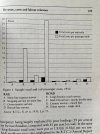
That "random week in April" gets mentioned a lot in threads like these, but I suspect that these traffic surveys were doing little more than telling managers what they already knew. This attached plot from Gourvish (with apologies if this against forum rules) shows very starkly the problem with branch line and stopping services, even during a time of relative economic calm for the railways.
 

Attachments

  • IMG_0672.jpeg
    IMG_0672.jpeg
    4.4 MB · Views: 54

Sir Felix Pole

Established Member
Joined
21 Oct 2012
Messages
2,173
Location
Wilmslow
That "random week in April" gets mentioned a lot in threads like these, but I suspect that these traffic surveys were doing little more than telling managers what they already knew. This attached plot from Gourvish (with apologies if this against forum rules) shows very starkly the problem with branch line and stopping services, even during a time of relative economic calm for the railways.
Yes there were obvious basket cases that should have closed years earlier, but the whole process was rather mechanistic and arbitary - closing Liverpool / Southport or Exeter / Exmouth. Really? Or on the same line the station for a larger settlement closed in preference to a smaller one - happily some of these have reopened.
 

RT4038

Established Member
Joined
22 Feb 2014
Messages
5,456
Yes there were obvious basket cases that should have closed years earlier, but the whole process was rather mechanistic and arbitary - closing Liverpool / Southport or Exeter / Exmouth. Really? Or on the same line the station for a larger settlement closed in preference to a smaller one - happily some of these have reopened.
I think his remit was to deal with the Railways' dire financial issue, not to produce a comprehensive transport Policy. Those lines lost money (principally due to high working expenses and low fares) Dr. Beeching specifically discussed the issue of the financing of the urban/suburban railways and this thinking eventually resulted in the establishment of the Passenger Transport Executives a few years later, to take on the funding of such services.
 

etr221

Established Member
Joined
10 Mar 2018
Messages
1,596
Another reference for the reading list is the work of Dr Charles Loft (Beeching was essentially the subject of his PhD, AIUI): 'Last Trains: Dr Beeching and the Death of Rural England' (popular) and/or 'Government, the Railways and the Modernization of Britain: Beeching's Last Trains (British Politics and Society)' (academic). Both (IIRC) consider various closures as sample cases.

And - diving deeper, much further than half an A-level warrants - there is overall railway question, 200 years (more or less) old this year, and still nowhere near answer - are they a public service, to be provided even at a loss, or commercial enterprise, only worth doing for profit? How are these aims to be balanced?
 
Status
Not open for further replies.

Top