Of the 170/5s I think nearly 11 of the 23 sets are done so basically just about half. The rest are all up in the air at the minute as to what exactly will be done with them.Yes, on my travels on EMR there is a definitely an increased probability of travel in a refurbished 170 or 158 as time goes on (it was just on the last trip I took the refurbished 2 car unit in the 5 car 170 train I was on was locked out of use)

-
Our new ticketing site is now live! Using either this or the original site (both powered by TrainSplit) helps support the running of the forum with every ticket purchase! Find out more and ask any questions/give us feedback in this thread!
You are using an out of date browser. It may not display this or other websites correctly.
You should upgrade or use an alternative browser.
You should upgrade or use an alternative browser.
EMR Regional and Connect refurbishments
- Thread starter londonmidland
- Start date
Sponsor Post - registered members do not see these adverts; click here to register, or click here to log in
R
RailUK Forums
tram21
Established Member
And the future of the 170s at EMR aren't absolutely certain at the minute either.
EMR have realised that the 170s aren't particularly well suited to the stop-start routes they operate
EMR have realised that the 170s aren't particularly well suited to the stop-start routes they operate

WesternLancer
Veteran Member
- Joined
- 12 Apr 2019
- Messages
- 15,422
Maybe they could operate the Inter City services with them instead?And the future of the 170s at EMR aren't absolutely certain at the minute either.
EMR have realised that the 170s aren't particularly well suited to the stop-start routes they operate

Merle Haggard
Established Member
'MML' tried that - the reason given at the time was 'HSTs aren't suited to stop-start routes', i.e. calling at stations South of Leicester.Maybe they could operate the Inter City services with them instead?
Plus ca change
WesternLancer
Veteran Member
- Joined
- 12 Apr 2019
- Messages
- 15,422
just what I was thinking of'MML' tried that - the reason given at the time was 'HSTs aren't suited to stop-start routes', i.e. calling at stations South of Leicester.
Plus ca change


43096
On Moderation
- Joined
- 23 Nov 2015
- Messages
- 18,895
I think you have made that up. The HSTs had been covering the intermediate stops since 1983 so hardly a case of “aren’t suited”. The reality was MML were undertaking a big timetable change/uplift and there were no spare HSTs available.'MML' tried that - the reason given at the time was 'HSTs aren't suited to stop-start routes', i.e. calling at stations South of Leicester.
Plus ca change

Amos390
Member
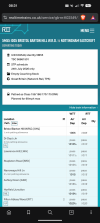
I think there’s been nothing moving in or out of Bristol Barton lately, still the one unit in there (158852 according to my notes) and has been since 18th April, the big one was 158813 returning after being the first unit to be completely done (ins and outs) at Eastcroft, but other than that not much for the 158s.

QSK19
Member
I’m guessing it was probably a case that the 170s were what was available at the time. Like you say, putting what are effectively regional express trains on Regional routes isn’t ideal.And the future of the 170s at EMR aren't absolutely certain at the minute either.
EMR have realised that the 170s aren't particularly well suited to the stop-start routes they operate
Amos390
Member
Does anyone know which 158 is being done at Eastcroft now?
158810Does anyone know which 158 is being done at Eastcroft now?
Merle Haggard
Established Member
Absolutely not!I think you have made that up. The HSTs had been covering the intermediate stops since 1983 so hardly a case of “aren’t suited”. The reality was MML were undertaking a big timetable change/uplift and there were no spare HSTs available.
I commuted into St Pancras from Wellingborough late 1980s to 2000. In Summers, the (then Paxman-engined) HSTs ran on One Power Car Only so often that commuters used the acronym 'OPCO' in conversation. Occasionally, the number of power cars serviceable dropped to a point where the timetable was abandoned for a few days while Neville Hill got some working again. I personally have arrived at St Pancras at around 1730 and found the station empty of trains and the next inward service (not 'cancelled') a booked arrival of 1800 and running late. I have also been on trains that have ground to a halt after the leading power car has emitted smoke so dense that visibility outside is nil; when the entire contents of the engine sump have been ejected skywards; and ,while waiting time, dense smoke and then flames from the exhaust. Entertaining days...
During those times, MML management on posters used the reason I have stated (amongst others) to explain unreliability and verbally by staff. It was also the case that articles in Modern Railways about the introduction of. Cl 170 ("Turbostars') gave this as the reason or HSTs not calling South of Leicester.
More recently, it was given as the reason for the HSTs being confined to the fast Nottinghams in their dotage, with the resultant poor diagrammed utilisation.
Cancellations because of poor availability of trains (Cl 360, as well as Cl 222 and Cl 810) is happening at the moment hence my remark 'the more things change the more they stay the same'. But the reason is always outwith MML/EMT/EMR managements' control, apparently.

And the future of the 170s at EMR aren't absolutely certain at the minute either.
EMR have realised that the 170s aren't particularly well suited to the stop-start routes they operate
Short of piggy backing on the Northern order for new units, there isn't really much alternative than 170s currently.
Boston Poacher
Member
tram21
Established Member
TfW (and eventually Northern) 158s have been mentioned before.Short of piggy backing on the Northern order for new units, there isn't really much alternative than 170s currently.
TfW (and eventually Northern) 158s have been mentioned before.
TFW's May be available sooner but if waiting for Northern 158's were talking 5 years at the very least if they place an order today, so I'm not sure if that is a reason to pause a refurb that is needed now.
Ben Anslow
Member
Class 170s will be available from northern too they are due to go off lease from northern when new trains enter service unless there is other plans for themTFW's May be available sooner but if waiting for Northern 158's were talking 5 years at the very least if they place an order today, so I'm not sure if that is a reason to pause a refurb that is needed now.
Class 170s will be available from northern too they are due to go off lease from northern when new trains enter service unless there is other plans for them
Yeah but my post was in response to the suggestion that EMR potentially want an alternative to the 170s.
Not sure replacing 170s with 170s is what they have in mind.
Failed Unit
Established Member
I have heard this view that 170s are not very good at start stop work. But they have really done it since new. Some of the later builds of Scotrials 170s were specifically ordered for start stop work. Likewise WMR (which ultimately have moved to EMR) were mainly on stop / start work.
I can't remember when they were new if CT used them on Nottingham - Worksop or if they were mainly 150/1s back then, but even the first batch for MML was stop / start (although they did used to be able to get a decent run South of Bedford)
I can't remember when they were new if CT used them on Nottingham - Worksop or if they were mainly 150/1s back then, but even the first batch for MML was stop / start (although they did used to be able to get a decent run South of Bedford)

170s are geared for high speed running, as they change gear at a high speed. Northern's 170s struggled with this on the Harrogate Loop as it runs at low speed (and I believe the Robin Hood line also has this issue). I'd assume it's similar to cars where carbon would build up in the engine and exhaust and puts stress on other componentsI have heard this view that 170s are not very good at start stop work. But they have really done it since new. Some of the later builds of Scotrials 170s were specifically ordered for start stop work. Likewise WMR (which ultimately have moved to EMR) were mainly on stop / start work.
I can't remember when they were new if CT used them on Nottingham - Worksop or if they were mainly 150/1s back then, but even the first batch for MML was stop / start (although they did used to be able to get a decent run South of Bedford)
Ben Anslow
Member
Apologies I should have stated it as a potential for capacity increases and maybe off lease some 2 car units and replace with 3 carsYeah but my post was in response to the suggestion that EMR potentially want an alternative to the 170s.
Not sure replacing 170s with 170s is what they have in mind.
that is a part of the issues but not the whole story because of their design it also creates other stresses on engine components. fuel dilution in the engines oil putting stresses on piston rings and rod bearings. Strict maintenance procedures are supposed to be in place with rigorous oil lab testing to help prevent failures EMR is one of the operators that are carrying out this level of maintenance170s are geared for high speed running, as they change gear at a high speed. Northern's 170s struggled with this on the Harrogate Loop as it runs at low speed (and I believe the Robin Hood line also has this issue). I'd assume it's similar to cars where carbon would build up in the engine and exhaust and puts stress on other components
Boston Poacher
Member
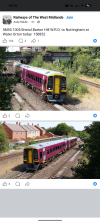
Has this ever left Bedford? Not seen it on RTT for some time.Saw 360107 this afternoon at Bedford, running ecs but dead in tow with another 360 with its pantograph down. Heading to Bedford Cauldwell depot.

MCR247
Established Member
- Joined
- 7 Nov 2008
- Messages
- 10,296
I have heard this view that 170s are not very good at start stop work. But they have really done it since new. Some of the later builds of Scotrials 170s were specifically ordered for start stop work. Likewise WMR (which ultimately have moved to EMR) were mainly on stop / start work.
I can't remember when they were new if CT used them on Nottingham - Worksop or if they were mainly 150/1s back then, but even the first batch for MML was stop / start (although they did used to be able to get a decent run South of Bedford)
With the Central Trains random unit generator you could have 170s on Robin Hood Line and Matlocks while 156s and 150s were on longer distance workings!
Is it possible that rather than just not liking/ being suited to stop/start work at all, perhaps it’s the days on end consistently doing such work that isn’t helping them? Most original operator's of them had a good mix of work they’d use them on from stop start suburban to more inter regional work where they’d get to stretch their legs a bit. EMR on paper do have a good mix of wotk for them - however the first thing EMR did when it got its first 170s was pretty much confine them to the Robin Hood and Skegness routes. And this was while 156s were still semi regularly on Liverpool - Norwich! I know there were some reasons for this such as the 158s and 170s not working in multiple but it did still seem a bit short sighted to me
Purple Train
Established Member
I'm currently on 170505 and, I have to say, as someone whose childhood was mostly spent on ageing 156s and 158s on these routes, it feels like being on a brand-new train, except the PIS is deafening. Not that the Sprinters are bad, or that EMT (as was) treated them poorly, but it just feels so incongruous for a Lincoln stopper to feel so new!
py_megapixel
Established Member
Personally I think the 170s work excellently (even better than the 158s, which were already decent enough) for Liverpool-Norwich, and EMR should aim to have them on all LIV-NRW diagrams.
In fairness they are quite common on there now.
In fairness they are quite common on there now.
Everything at EMR looks like a s**tshow at the moment.
I was so disappointed riding the Robin Hood line last year at no point did the guard leave the back cab compared to Central trains and EMT where they would religiously do tickets after every stop. CX 170 routes are the same and with the free exit at Nottingham the fare evaders must be loving it.
This is before we even start on connect refurbs and the intercity routes.
Hopefully now the man in charge has gone we may now see some improvement.
I was so disappointed riding the Robin Hood line last year at no point did the guard leave the back cab compared to Central trains and EMT where they would religiously do tickets after every stop. CX 170 routes are the same and with the free exit at Nottingham the fare evaders must be loving it.
This is before we even start on connect refurbs and the intercity routes.
Hopefully now the man in charge has gone we may now see some improvement.
Look to the societal problems in the UK for dealing with that one, and when you find a solution do let us know. Post industrial areas with nothing to aspire to and trouble wherever you look. The guard on the train isn't going to fix that one and I can assure you they'll be sick of being exposed to the consequences. The Robin Hood line was converted to a penalty fare route in the mid 2010s but revenue protection is largely left to the guards with their assistant ticket examiners having been removed as a consequence of the introduction of vending machines.Everything at EMR looks like a s**tshow at the moment.
I was so disappointed riding the Robin Hood line last year at no point did the guard leave the back cab compared to Central trains and EMT where they would religiously do tickets after every stop. CX 170 routes are the same and with the free exit at Nottingham the fare evaders must be loving it.
This is before we even start on connect refurbs and the intercity routes.
Hopefully now the man in charge has gone we may now see some improvement.
That and if you drop on one of the regular 3 car 170/2 sets the guard is stuck to the middle coach or the back cab owing to the lack of door panels - there was a plan to standardise them and install door panels in each coach per the rest of the 170s but it was binned on cost grounds.