Transilien
Member
From riding many types of both Turbostar and Electrostar trains I see that they have many random differences; like the PIS being a different model and the lighting fixtures being different. Why is this?

It’s not the differences between the different models of Electrostar/Turbostar but the differences between all models of Electrostar and Turbostar, no matter what TOC or time they were ordered. They have many differences beyond just being diesel and electric variants of the same basic design.Just evolution and different TOC's ordering different specifications?
It’s not the differences between the different models of Electrostar/Turbostar but the differences between all models of Electrostar/Turbostar, no matter what TOC or time they were ordered.
But a 2000 class 170 is even more different from a 2000 class 375.A 2000 Class 170 will be very different to a 2010 172.
Do you have a specific example of what you are referring to?
It's the same general shape, but the interiors are wildly different. It's like wondering why the 150s and 769s are different when they are both Mk3-based MUs.But a 2000 class 170 is even more different from a 2000 class 375.
== Doublepost prevention - post automatically merged: ==
But a 2000 class 170 is even more different from a 2000 class 375.
== Doublepost prevention - post automatically merged: ==
== Doublepost prevention - post automatically merged: ==
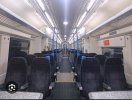
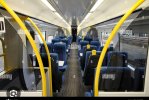
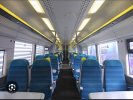
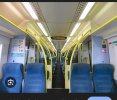
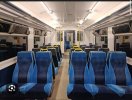
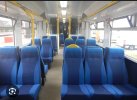
As seen in the photos above, despite being built by the same manufacturer, at the same they are not very similar with different seat designs, PIS and light fixtures.
What about the class 377 and 171, both ordered by Southern and running on similar services?Again, different TOC's specify different interiors...
Same way we could both order a sandwich, I could order cheese, you could order tuna...
What about the class 377 and 171, both ordered by Southern and running on similar services?
The 150s and 769s are actually more similar than the Turbostars to the Electrostars despite being built for different purposes initially and at different times.It's the same general shape, but the interiors are wildly different. It's like wondering why the 150s and 769s are different when they are both Mk3-based MUs.
The 150s and 769s are actually more similar than the Turbostars to the Electrostars despite being built for different purposes initially and at different times.

From riding many types of both Turbostar and Electrostar trains I see that they have many random differences; like the PIS being a different model and the lighting fixtures being different. Why is this?
Connex ordered and specified 377301-377328 (delivered as 375311-375338) and 377101-377139 for what is now Southern.Remember that the Southern Electrostars and Turbostars were something of an afterthought - the original Connex South Central franchise didn’t include fleet replacement, and by the time this was on the agenda there Connex were gone.
Yes, described at the time as having a 'first class' specification throughout.Although much maligned, Connex seemed to have opted for a very high interior specification.
The 375/3, 375/6 and 375/7 fleets were a separate order from the 375/8 and 375/9 batches. Some time elapsed between those orders, and indeed the 376s to displace 465s to replace Veps on the 'Weald' routes.The class 375 I think was quite heavily specified by Connex and was a large order for their complete South Eastern mainline fleet replacement.

Both 2000 170s and 2010 172s have the same PIS, which differs to the PIS in both 2000 357s and 2009 377/5s...Yeah, as I said, it's just evolution and different specs, they were built over a period of about 15 years.
A 2000 Class 170 will be very different to a 2010 172.
Do you have a specific example of what you are referring to?
Later Turbostars, and I mean much later as well, received the same PIS though.Could it just be that the Turbostars design was developed first, and by the time the Electrostar was in development there was scope for some improvements? In the same way the LU’s 95 stock benefited from quite a number of improvements over the earlier 96 stock.

The Electrostars were all procured for London commuter service where the infrastructure was already set up for 20m car Mk1 EMUs. Turbostars were predominately deployed on regional and rural services where little specialisation in platform length, signal location and siding length was a constraint on using 23m cars based on Mk3 IC experiences.The turbostat was a development/evolution of the class165/166 product
While the 357/375/377 was a completely new product.
A turbostat and electrostar have different length carriages... why?, probably the whole evolution thing.
The exhausts on the turbostars.Another thing i wonder is why there is a much bigger gap between carriages within the same unit on a Turbostar unit compared to an Electrostar unit. When walking between carriages on a Turbostar you notice the gangway corridor is much longer than on an Electrostar unit. I have wondered why they need a bigger gap between carriages.

...plus the Turbostar 23m body length means more throw-over on curves, so may need more clearance between the vehicle ends to allow for that?The exhausts on the turbostars.
Electrostars don't have them, so don't need the extra space/clearance
I was going to raise that point, - does anybody here know how the additional length has affected the bogie centres? Was it:...plus the Turbostar 23m body length means more throw-over on curves, so may need more clearance between the vehicle ends to allow for that?
The taper angle is greater on the composite moulded non-driving vehicle ends ends of the turbostars, so the end mouldings at the body start narrower and taper even narrower to the vehicle end....plus the Turbostar 23m body length means more throw-over on curves, so may need more clearance between the vehicle ends to allow for that?
20m stock including 37x has tended to have 14.17m bogie centres.I was going to raise that point, - does anybody here know how the additional length has affected the bogie centres? Was it:
a) the same on the 23m cars as on the 20m types > giving a greater curve outswing and greater yaw on reverse curves?
b) approximately 3m more with a slightly greater inswing and outswing?
c) some intermediate difference as a compromise with expected infrastructure?
The 23m car bodies are also 0.11m narrower to mitigate - particularly the inswing interfering with curved platforms.
Thanks for that info. You've mentioned HVAC, - can you say what proportion of Electrostars normally run making a regen. return, (I suspect different on ac & DC)The taper angle is greater on the composite moulded non-driving vehicle ends ends of the turbostars, so the end mouldings at the body start narrower and taper even narrower to the vehicle end.
20m stock including 37x has tended to have 14.17m bogie centres.
23-24m stock has tended to be in the 16.1m to 16.6m range for bogie centres so just over half the extra length tend to get added between the bogie pivots centres.
Turbostars are 23.6m.
Electrostars use resistive elements and HVAC for heating (normal for EMU).
Turboostars use waste engine heat and HVAC for heating.
All should do. AC from the factory, all the early DC and DV were modified 15-17 years ago for regen to 3rd rail (not just rheostatic to resistors and aux load including heating), the newer DC and DV were delivered Regen capable.Thanks for that info. You've mentioned HVAC, - can you say what proportion of Electrostars normally run making a regen. return, (I suspect different on ac & DC)
I was thinking more about running over lines that could (and do) receive regenerated energy, - doesn't that require actively controlling the surge dumping loads at substations, especially during quiet times?All should do. AC from the factory, all the early DC and DV were modified 15-17 years ago for regen to 3rd rail (not just rheostatic to resistors and aux load including heating), the newer DC and DV were delivered Regen capable.
In the Southern Region DC area it’s all normally connected in parallel, so any voltage increase due to regen is expended over a wide area. Previous discussions have noted there’s no ‘dumping’ on the supply side, if the supply is not receptive the unit reverts to onboard resistors.I was thinking more about running over lines that could (and do) receive regenerated energy, - doesn't that require actively controlling the surge dumping loads at substations, especially during quiet times?
I was thinking more about running over lines that could (and do) receive regenerated energy, - doesn't that require actively controlling the surge dumping loads at substations, especially during quiet times?
Anything that can't be returned or would cause voltage spike or safety issues is sent to the onboard resistors* (and to supply aux loads) instead.In the Southern Region DC area it’s all normally connected in parallel, so any voltage increase due to regen is expended over a wide area. Previous discussions have noted there’s no ‘dumping’ on the supply side, if the supply is not receptive the unit reverts to onboard resistors.

In the Southern Region DC area it’s all normally connected in parallel, so any voltage increase due to regen is expended over a wide area. Previous discussions have noted there’s no ‘dumping’ on the supply side, if the supply is not receptive the unit reverts to onboard resistors.

The higher spec by Connex also being a reason they got rid of First Class.