• Our new ticketing site is now live! Using either this or the original site (both powered by TrainSplit) helps support the running of the forum with every ticket purchase! Find out more and ask any questions/give us feedback in this thread!

Electrical Arcing OLE

Status
Not open for further replies.

MrTrainMan2001

New Member
Joined
6 Mar 2025
Messages
2
Location
Bristol
Hi all,

I need help from a professional please!

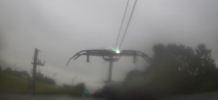
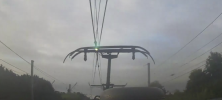
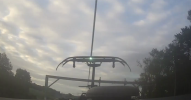
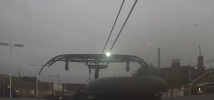
I need to know if these images are examples of electrical arcing or sparking? Are they something to be concerned about? Will repeated events cause damage to the OLE equipment?

Thanks for your help in advance.
 

Attachments

  • Screenshot 2025-03-06 at 14.44.53.png
    Screenshot 2025-03-06 at 14.44.53.png
    1.6 MB · Views: 125
  • Screenshot 2025-03-06 at 14.45.33.png
    Screenshot 2025-03-06 at 14.45.33.png
    706.9 KB · Views: 124
  • Screenshot 2025-03-06 at 14.45.54.png
    Screenshot 2025-03-06 at 14.45.54.png
    1,005.1 KB · Views: 117
  • Screenshot 2025-03-06 at 14.46.15.png
    Screenshot 2025-03-06 at 14.46.15.png
    1.2 MB · Views: 118
Sponsor Post - registered members do not see these adverts; click here to register, or click here to log in
R

RailUK Forums

800301

Member
Joined
29 Dec 2022
Messages
525
Location
Essex
That is perfectly normal and nothing to be concerned about, you should see what it’s like when it’s -10 outside
 

N1

Member
Joined
10 Aug 2022
Messages
385
These would typically be examples of electrical arcing between the pantograph and the catenary. An electrical arc is a continuous spark, a spark is only momentary, so from a photograph it could be either. As above it is not uncommon and not something that is an immediate cause for concern from a safety perspective. Repeated events will cause damage to the OLE equipment, and will increase wear in the contact surfaces of both catenary wire and pantograph. Excessive arcing can also damage electrical equipment as it creates large voltage spikes and transients beyond the supply voltage range. Modern OLE and pantograph designs try and reduce arcs by increasing physical pressure between pantograph and catenary wire, increasing pantograph surface area. Stagger is also adopted (Zig-Zag of catenary wire on straight sections) to create even wear on the pantograph.
 

MrTrainMan2001

New Member
Joined
6 Mar 2025
Messages
2
Location
Bristol
These would typically be examples of electrical arcing between the pantograph and the catenary. An electrical arc is a continuous spark, a spark is only momentary, so from a photograph it could be either. As above it is not uncommon and not something that is an immediate cause for concern from a safety perspective. Repeated events will cause damage to the OLE equipment, and will increase wear in the contact surfaces of both catenary wire and pantograph. Excessive arcing can also damage electrical equipment as it creates large voltage spikes and transients beyond the supply voltage range. Modern OLE and pantograph designs try and reduce arcs by increasing physical pressure between pantograph and catenary wire, increasing pantograph surface area. Stagger is also adopted (Zig-Zag of catenary wire on straight sections) to create even wear on the pantograph.
That is perfectly normal and nothing to be concerned about, you should see what it’s like when it’s -10 outside
Okay guys, thank you very much for your help. However...

Would there be any area for concern if this particular stretch of track consistently experiences sparking? For example every day the same locations create sparking, maybe due to lack of tension in contact wire or some other problem. Despite sparking causing less damage and releasing less heat than arcing, would repeated events cause some cumulative damage?

Thanks again.
 

TreacleMiller

Member
Joined
22 Feb 2020
Messages
534
Location
-
Okay guys, thank you very much for your help. However...

Would there be any area for concern if this particular stretch of track consistently experiences sparking? For example every day the same locations create sparking, maybe due to lack of tension in contact wire or some other problem. Despite sparking causing less damage and releasing less heat than arcing, would repeated events cause some cumulative damage?

Thanks again.

Not really, no.

You see it every few seconds on a cold night. In a tunnel it can look like a proper light show.

The thing to look for is any chipping to the carbon or an orange glow like sparks - that's usually the sign of damage taking place.
 

AM9

Veteran Member
Joined
13 May 2014
Messages
16,021
Location
St Albans
Okay guys, thank you very much for your help. However...

Would there be any area for concern if this particular stretch of track consistently experiences sparking? For example every day the same locations create sparking, maybe due to lack of tension in contact wire or some other problem. Despite sparking causing less damage and releasing less heat than arcing, would repeated events cause some cumulative damage?

Thanks again.
Depending on where these locations are the reason might just be where the trains are accelerating, therefore drawing higher currents. Where trains are coasting there is much less current demand, e.g. from auxiliary and hotel facilities.
 
Last edited:

AlfaPendular

Member
Joined
29 Jul 2019
Messages
13
Location
West Yorkshire
Okay guys, thank you very much for your help. However...

Would there be any area for concern if this particular stretch of track consistently experiences sparking? For example every day the same locations create sparking, maybe due to lack of tension in contact wire or some other problem. Despite sparking causing less damage and releasing less heat than arcing, would repeated events cause some cumulative damage?

Thanks again.
Hi, welcome to the forum. We have some experience on the subject and always trying to learn more. I will try to send you a PM so we can share experiences.
 

GRALISTAIR

Established Member
Joined
11 Apr 2012
Messages
10,479
Location
Preston Lancs
Okay guys, thank you very much for your help. However...

Would there be any area for concern if this particular stretch of track consistently experiences sparking? For example every day the same locations create sparking, maybe due to lack of tension in contact wire or some other problem. Despite sparking causing less damage and releasing less heat than arcing, would repeated events cause some cumulative damage?

Thanks again.
Welcome to the forum. This is an interesting thread.
 

contrex

Established Member
Joined
19 May 2009
Messages
1,658
Location
St Werburghs, Bristol
That is perfectly normal and nothing to be concerned about, you should see what it’s like when it’s -10 outside
In the 1970s I read in a railway magazine an account of a ride in the cab of a WCML electric loco (class 8x) during heavy snow. The people in the cab noticed a lot of flashing and one stuck his head out to see the panto weighed down with snow and drawing quite a long arc.
 

Sun Chariot

Established Member
Joined
16 Mar 2009
Messages
6,547
Location
2 miles and 50 years away from the Longmoor Milita
Hi all,

I need help from a professional please!

I need to know if these images are examples of electrical arcing or sparking? Are they something to be concerned about? Will repeated events cause damage to the OLE equipment?

Thanks for your help in advance.
Hello

I concur with what TreacleMiller and AM9 have explained. The normal usage that I witnessed along the WCML wires during the 1980s, was exactly as per your photos.

I've sat inside a class 315 EMU when its pantograph tangled with loosened OHLE wire - the resulting arcing, was like New Year's Eve fireworks...
 

AM9

Veteran Member
Joined
13 May 2014
Messages
16,021
Location
St Albans
Hello

I concur with what TreacleMiller and AM9 have explained. The normal usage that I witnessed along the WCML wires during the 1980s, was exactly as per your photos.
The degree of arcing is proportional to the current being drawn from ther supply. A modern EMU or ac loco might have a hotel/auxiliary power draw of (say) 100kW, which from a 25kV supply is 4A, - unlikely to provoke arcing in any conditions exscept very heavy icing. When that unit accelerates hard, it's traction equipment might need as much as 5MW, which means that the pantograph/contact wire interface is then passing 200A, which could cause arcing in favourable weather conditions just through the dynamics of a lively OLE. A similar situation exists with low voltage DC 3rd rail except that the contact shoes and rail interface has a much greater surface area under multiple shoes to accommodate the muhc higher currents. For the same power draw as the 25kV example above, the hotel only current would be 133A and full traction power would be a massive 6666A! This shows the major weakness of low voltage 3rd rail power delivery, especially in icy conditions, (but that is an aspect for another thread).
 

Western 52

Established Member
Joined
19 Jun 2020
Messages
1,672
Location
Burry Port
Indeed that always makes for a nice show when taking full power in a 10 car that’s heavily loaded
Indeed, I always sit in coach A on the 800s in the tunnel, right under the pantograph. Free fireworks show! I was watching it from an 802 this morning.
 
Status
Not open for further replies.

Top