• Our new ticketing site is now live! Using either this or the original site (both powered by TrainSplit) helps support the running of the forum with every ticket purchase! Find out more and ask any questions/give us feedback in this thread!

Double-Deck trains in UK

Status
Not open for further replies.

zwk500

Veteran Member
Joined
20 Jan 2020
Messages
18,460
Location
Northampton
Even with a width reduction below platform-height to (say) 2+1 abreast, and with standing capacity minimally compromised, 3 abreast upstairs with sunken side aisles needn't pose too modest a gain to be worth the investment. Ideally the lower deck would be slope-accessed from end doors and step-accessed from a centre door whereas the split upper saloon/s would be reached via short stairs.
The length you'd lose suggests you'd be gaining a very marginal number of seats against going to a 2+3 single-deck configuration.
 
Sponsor Post - registered members do not see these adverts; click here to register, or click here to log in
R

RailUK Forums

Dennyboy

On Moderation
Joined
29 Jan 2016
Messages
67
Location
Denny, Falkirk District
Double deck trains have been discussed on this forum several times, but I can't see any answers to my question, which is simply to ask whether any routes have actually been costed for providing double deck trains?

People on this forum (unlike some journalists and many members of the public) will know that this would be no easy task as tunnels are too small, platforms too high, tracks too close together etc. However, focusing on just one route at a time (as we do when considering electrification), I wonder if any routes (eg. HS1, WCML, MML, ECML, sections of XC, or "just" some suburban routes), have been approximately costed for providing double deck trains? It would be interesting to know how such costs might compare per mile, against the cost of electrification (for example).

As a starter I would guess that London to Bristol might be cheaper due to the tracks having already been set apart when providing for HSTs in the 1970s, and some routes would cost less due to having fewer tunnels. So have actual costs per route or per route mile already been discussed?
All Rolling Stock has to be capable of being cascaded to other regions (Electric Stock v Unelectrified Routes aside) otherwise no train operator would buy or lease the fleet. That said, Double Deck Trains need only be Full-Electrification away from being admitted to any of the UK Rail Infrastructure. How? Because I reckon that the Overhead Line Clearances (from train roofs) is sufficiently surplus to allow minimally taller trains in the future. Diesel-Only Routes are the culprit in restricting the Loading Gauge/Structure Gauge of all stock (which may require to be diverted during track maintainance or emergencies). Upgrades to Containerised Freight like-supports the demand for taller passenger stock.
 

zwk500

Veteran Member
Joined
20 Jan 2020
Messages
18,460
Location
Northampton
All Rolling Stock has to be capable of being cascaded to other regions (Electric Stock v Unelectrified Routes aside) otherwise no train operator would buy or lease the fleet.
I'm not sure this tracks. There are many fleets that have never successfully cascaded.
That said, Double Deck Trains need only be Full-Electrification away from being admitted to any of the UK Rail Infrastructure. How? Because I reckon that the Overhead Line Clearances (from train roofs) is sufficiently surplus to allow minimally taller trains in the future. Diesel-Only Routes are the culprit in restricting the Loading Gauge/Structure Gauge of all stock (which may require to be diverted during track maintainance or emergencies).
Although the standard wire height of 4.7m is higher than the typical double deck stock height of 4.6m, that would be very close to the train. And the UK OLE wire height can reduce to a minimum of 4.165m though, which is shorter than even a TGV Duplex (4.3m). So OLE on it's own doesn't clear Double-Deck trains.
Upgrades to Containerised Freight like-supports the demand for taller passenger stock.
There is no difference between the centreline height of W12 vs W6. Freight gauging is all in the 'shoulders' of the gauge.
 

stevieinselby

Established Member
Joined
6 Jan 2013
Messages
1,668
Location
Selby
Because all stock, irresp' of propulsion, must be capable of being hauled on 101% of UK's infrastructure inc' non-electrified track with its neat fitting arch bridges & tunnels.
Is that actually the case? We've heard elsewhere on the forums a number of times that class 158s can't be used on the West Highland Line because of clearance issues, and I had understood that Pacers couldn't run on any electrified line with a third rail.
 

The exile

Established Member
Joined
31 Mar 2010
Messages
9,335
Location
Somerset
No, absolutely not

TGV Duplex are used no issues, and basically nobody misses stops because of boarding slowness (I would expect that to make news), with stops at extremely major intermediaries like Lyon, Marseille, Rennes with sometimes up to half-trainload passenger volume to exchange.

Termini are very different as everyone disembarks so you have a airplaine-like bottleneck.

Stop times are modulated accordingly, as long as you stand up a few minutes early, you'll have no issues.
ISTR that the Munich S-Bahn briefly experimented with double deck stock as a solution to overcrowding through the City tunnel and thought better of it. DD stock is not suited for services with frequent stops and high levels of churn at those stops. Munich is of course now building a second s-bahn tunnel at a cost which must surely indicate how unsuitable DD stock would have been.
 

signed

Established Member
Joined
13 May 2024
Messages
2,376
Location
ROI
DD stock is not suited for services with frequent stops and high levels of churn at those stops.
I don't know Munich S-bahn enough, but 2-level MI2N and other variants have ran on every RER line bar B for 20+ years. It is indeed a tougher sale on those kind of lines, but I would argue they work, as they do on the busiest RER A. Of course, a second tunnel is the long-term solution.
 

Jim the Jim

Member
Joined
18 Dec 2020
Messages
274
Location
Cambridge
Double-deckers have all sorts of passenger disadvantages. It takes longer to get on and off, it's harder to travel with luggage, it's restrictive for anyone who struggles with stairs, it's harder to move between coaches looking for seats or the toilet ...

Extra capacity is the only benefit and I'm not sure I'd trade that for everything else.
 

Falcon1200

Established Member
Joined
14 Jun 2021
Messages
6,524
Location
Neilston, East Renfrewshire
We've heard elsewhere on the forums a number of times that class 158s can't be used on the West Highland Line because of clearance issues

I doubt that is a major problem however. At one time Class 158 was barred from the Glasgow Central/Edinburgh via Shotts route. When we (Control) enquired why, it transpired that if the air suspension bags were deflated, at a couple of stations the opening doors might scrape the platform. The issue was obviously resolved as the route was later cleared, and 158s worked on the route before electrification. It might be a similar problem on the West Highland.
 

Shrop

Established Member
Joined
6 Aug 2019
Messages
1,350
Double-deckers have all sorts of passenger disadvantages. It takes longer to get on and off, it's harder to travel with luggage, it's restrictive for anyone who struggles with stairs, it's harder to move between coaches looking for seats or the toilet ...

Extra capacity is the only benefit and I'm not sure I'd trade that for everything else.
This comment raises an interesting point about the manner in which trains in the UK operate.

I remember well the days when you could travel from London to Glasgow stopping only at Preston and Carlisle, or from Birmingham to Plymouth stopping only at Bristol TM and Exeter (and there are many more examples).

These days, modern thinking is that trains should stop much more frequently because they can do so while losing less time thanks to better acceleration, and also because running them long distances non-stop simply means they're more likely to catch up to other trains.

What this means is that the disadvantages such as taking longer to get on and off, stairs etc, are exaggerated as a direct result of more frequent stops, and thus the chances of ever getting double-deck trains considered seriously in the UK are even less.

For what it's worth though, I recently travelled XC from Southampton to Birmingham, and at every one of the nine intermediate stops in the journey of less than 150 miles, there was a huge amount of shuffling of passengers, changing of seats as the reserved sections refreshed and seated passengers were turfed out by those claiming the seats, luggage being moved in an out of the storage areas to retrieve trapped cases.

There really is merit in having fewer stops on some services, if only the rail planners could see it!

 
Last edited by a moderator:

zwk500

Veteran Member
Joined
20 Jan 2020
Messages
18,460
Location
Northampton
For what it's worth though, I recently travelled XC from Southampton to Birmingham, and at every one of the NINE intermediate stops in the journey of less than 150 miles, there was a huge amount of shuffling of passengers, changing of seats as the reserved sections refreshed and seated passengers were turfed out by those claiming the seats, luggage being moved in an out of the storage areas to retrieve trapped cases. There really is merit in having fewer stops on some services if only the rail planners could see it!
Doesn't this suggest that there's not a lot of demand for end-to-end journeys but rather lots of people are doing overlapping journeys facilitated by the intermediate stops?
 

Lewisham2221

Established Member
Joined
23 Jun 2005
Messages
2,750
Location
Staffordshire
This comment raises an interesting point about the manner in which trains in the UK operate. I remember well the days when you could travel from London to Glasgow stopping only at Preston and Carlisle, or from Birmingham to Plymouth stopping only at Bristol TM and Exeter (and there are many more examples). These days, modern thinking is that trains should stop much more frequently because they can do so while losing less time thanks to better acceleration, and also because running them long distances non-stop simply means they're more likely to catch up other trains.
What this means is that the disadvantages such as taking longer to get on and off, stairs etc, are exaggerated as a direct result of more frequent stops, and thus the chances of ever getting double deck trains considered seriously in the UK are even less.
For what it's worth though, I recently travelled XC from Southampton to Birmingham, and at every one of the NINE intermediate stops in the journey of less than 150 miles, there was a huge amount of shuffling of passengers, changing of seats as the reserved sections refreshed and seated passengers were turfed out by those claiming the seats, luggage being moved in an out of the storage areas to retrieve trapped cases. There really is merit in having fewer stops on some services if only the rail planners could see it!
Is there merit though? Let's say you have a route A-B with 6 intermediate stops. The current situation gives an hourly service to/from A-B and all six intermediate stations. Introduce fast running and all of a sudden each intermediate station now only gets a service to/from A/B every 3 hours - and no direct service at all connecting the intermediate stations.
 

Bald Rick

Veteran Member
Joined
28 Sep 2010
Messages
35,677
For what it's worth though, I recently travelled XC from Southampton to Birmingham, and at every one of the NINE intermediate stops in the journey of less than 150 miles, there was a huge amount of shuffling of passengers, changing of seats as the reserved sections refreshed and seated passengers were turfed out by those claiming the seats, luggage being moved in an out of the storage areas to retrieve trapped cases.

It seems all the intermediate stops were popular.

There really is merit in having fewer stops on some services if only the rail planners could see it!

To run much emptier trains?
 

Falcon1200

Established Member
Joined
14 Jun 2021
Messages
6,524
Location
Neilston, East Renfrewshire
There really is merit in having fewer stops on some services if only the rail planners could see it!

Which would mean either some stations receiving fewer services, as already mentioned, or having to run more trains, to serve essentially the same number of passengers but at greater cost.

Regarding the highlighted Southampton/Birmingham route, the XC trains already serve only the principal stations; Which ones should they miss out?!!
 

The Planner

Veteran Member
Joined
15 Apr 2008
Messages
19,655
This comment raises an interesting point about the manner in which trains in the UK operate. I remember well the days when you could travel from London to Glasgow stopping only at Preston and Carlisle, or from Birmingham to Plymouth stopping only at Bristol TM and Exeter (and there are many more examples). These days, modern thinking is that trains should stop much more frequently because they can do so while losing less time thanks to better acceleration, and also because running them long distances non-stop simply means they're more likely to catch up other trains.
What this means is that the disadvantages such as taking longer to get on and off, stairs etc, are exaggerated as a direct result of more frequent stops, and thus the chances of ever getting double deck trains considered seriously in the UK are even less.
For what it's worth though, I recently travelled XC from Southampton to Birmingham, and at every one of the NINE intermediate stops in the journey of less than 150 miles, there was a huge amount of shuffling of passengers, changing of seats as the reserved sections refreshed and seated passengers were turfed out by those claiming the seats, luggage being moved in an out of the storage areas to retrieve trapped cases. There really is merit in having fewer stops on some services if only the rail planners could see it!
Which of those stops would you remove and how do you replace/solve the detriment to those who lose a service?
 

Wolfie

Established Member
Joined
17 Aug 2010
Messages
7,397
Which of those stops would you remove and how do you replace/solve the detriment to those who lose a service?
Those who make such proposals almost inevitably always suggest stops that they never use in order to speed up their personal journeys
 

MarkyT

Established Member
Joined
20 May 2012
Messages
7,553
Location
Torbay
Very interesting report. What's notable is that it only looks at Europe, whereas Japan for instance runs double-deckers on outer-suburban routes that manage to squeeze in two decks at just over 4 metres tall. I presume they do this by compromising a bit on headroom, which raises the question - why did the report insist on at least 1920mm headroom and not consider the possibility of reducing it, when, as the report notes, vehicles such as the top deck of double-decker buses have less than 1920mm headroom?
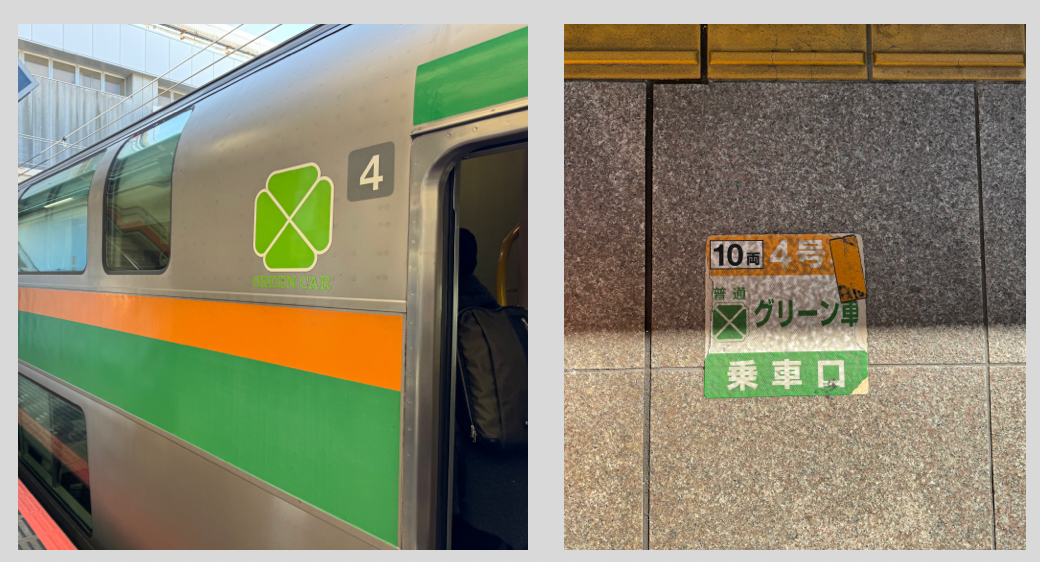
The double-deck cars are all premium reserved 'green car' accommodation, and there are only a small number per train. The other cars are single-level standard class. With the lower density of green car, the two decks can carry no more passengers than a single-deck standard car under heavy load, so doors and stairs don't extend loading time too much.
This video features a ride on a very modern example of these trains and explores the vehicles:
 

Tester

Established Member
Joined
5 Jul 2020
Messages
1,664
Location
Watford
The double-deck cars are all premium reserved 'green car' accommodation, and there are only a small number per train. The other cars are single-level standard class. With the lower density of green car, the two decks can carry no more passengers than a single-deck standard car under heavy load, so doors and stairs don't extend loading time too much.
This video features a ride on a very modern example of these trains and explores the vehicles:
Pedant alert!

Whilst premium, they are not reserved.
 

MarkyT

Established Member
Joined
20 May 2012
Messages
7,553
Location
Torbay
Pedant alert!

Whilst premium, they are not reserved.
Thanks. I investigated and found this description. It appears on the video that the presenter paid the supplement by beeping their phone on a sensor for a vacant seat using a special app. I guess if you can't find a seat, you don't beep, keep on walking through to standard accommodation, and thus don't pay. I wonder if they control numbers issued by traditional means at an adjustment kiosk near the platform. It appears these are 'local train green cars' and there are other green cars on limited expresses that are reservable.
How to pay for Local Train Green Car with Mobile Suica

The Local Train Green Car tickets can be purchased conveniently using the Mobile Suica app without needing to queue or issue tickets at the ticketing kiosks.

Background
The Local Train Green Car is a JR service where certain local train lines come attached with Green car carriages. This is not the same as reserved green car seats that we’d usually find in Limited Express trains, and there’s no option to make a prior seat selection.

Only certain train lines have these Green car seats: Tokaido line, Yokosuka-Sobu Rapid Line, Utsunomiya Line, Takasaki Line, Shonan-Shinjuku Line, Ueno-Tokyo Line, Joban Line.
 

Wolfie

Established Member
Joined
17 Aug 2010
Messages
7,397
Very interesting report. What's notable is that it only looks at Europe, whereas Japan for instance runs double-deckers on outer-suburban routes that manage to squeeze in two decks at just over 4 metres tall. I presume they do this by compromising a bit on headroom, which raises the question - why did the report insist on at least 1920mm headroom and not consider the possibility of reducing it, when, as the report notes, vehicles such as the top deck of double-decker buses have less than 1920mm headroom?
There is an obvious comment, namely that Japanese people tend to be smaller in all respects - height, width, weight...
 

Peter Wilde

Member
Joined
14 Oct 2019
Messages
147
Location
Surrey
No, absolutely not

TGV Duplex are used no issues, and basically nobody misses stops because of boarding slowness (I would expect that to make news), with stops at extremely major intermediaries like Lyon, Marseille, Rennes with sometimes up to half-trainload passenger volume to exchange.

Termini are very different as everyone disembarks so you have a airplaine-like bottleneck.

Stop times are modulated accordingly, as long as you stand up a few minutes early, you'll have no issues.
The last point is not the whole story. I side with those who point out disadvantages of double-deckers (if accommodation is cramped as it must be for the UK loading gauge).

Standing up early works for commuter services, where over 90% of passengers know the routine. It works much less well for trains like TGVs where a high proportion of passengers can be tourists with luggage and children, including folk with little experience of rail travel.

Long distance European services get over that issue by their tendency to have very long station stops - rather infuriating at intermediate points, for those not getting on or off. This pattern of service would not import well to the UK.
 

TheGrew

Member
Joined
31 Jul 2012
Messages
511
Surely the immediate priority should be to increase train lengths to the maximum. Having traveled on the VIRMs in the Netherlands, I think Double Decker (DD) stock in the UK would be best suited to fast and semi-fast services. The trouble with these is that the distances typically travelled would require a lot of infrastructure to be modified.
 

signed

Established Member
Joined
13 May 2024
Messages
2,376
Location
ROI
Long distance European services get over that issue by their tendency to have very long station stops
TGV have a average of 3min stops at intermediates, longer stops mostly only happen when manouvers are need
It works much less well for trains like TGVs where a high proportion of passengers can be tourists with luggage and children, including folk with little experience of rail travel.
This hasn't been my experience, the doorway area and stairs are always packed with people. And at the termini, half of the carriage is up 5min before arrival, even on single level (like in a taxiing airplane).

I don't claim that duplex are the best for every task, but they do work where they are used.
 

Peter Wilde

Member
Joined
14 Oct 2019
Messages
147
Location
Surrey
But if “the doorway area and stairs are always packed with people”, how are people further back in the carriage supposed to cope? Getting up 5 mins early is no help if there is nowhere to move once once has stood up; and no chance to move towards the luggage stack until others have been able to get off.

Only recent experience was dire - mounds of luggage in the aisle, and people anxiously shoving/pushing to get to theirs. Lower deck also felt extremely claustrophobic. (Admittedly this was the middle of winter on a dull day).

Agree duplex is sometimes workable if only used appropriately and if carriages are well designed. The German 2-deck outer suburban stock can be OK; shame about the cancellations and lateness, but that is another story.
 

4SubAsociation

Verified Rep
Joined
4 Dec 2020
Messages
300
Location
Ashford, Kent
I saw this thread the other day, funny enough i found a proposal from 1969 for a Bi Level car in a book. It was proposed by BAC for an abortive Heathrow link. It is very close in terms of loading gauge we have in the UK being 13ft 1inch tall.

I have been inside one of the 4DD carriages, in the summer it is like a oven (parked up at private site). I can only imagine what it was like in service.
 

Attachments

  • IMG_20250413_145430259.jpg
    IMG_20250413_145430259.jpg
    3.1 MB · Views: 50

zwk500

Veteran Member
Joined
20 Jan 2020
Messages
18,460
Location
Northampton
Could the central sections of the Elizabeth Line take double-decker trains?
AIUI the tunnels would in theory be clear for UIC Gauge (not sure if UIC-GA or UIC-GB/GB+) but the platform profile is not (the platform is the standard UK offset from the rail, but higher (1,100mm) than the normal UK platform height, (915mm) so in theory the absolute height would be sufficient but the lower deck would need to be rather narrow.

I am welcome to be corrected on any of those points, as I may well be wrong on some or all of it!
 

stuu

Established Member
Joined
2 Sep 2011
Messages
3,763
Yes, there was a FOI some point in the last decade where TfL/DfT said the tunnels could fit an RER sized DD train (I think the requestor had given the dimensions) apart from the platforms
 

JKF

Established Member
Joined
29 May 2019
Messages
1,286
To reduce dwell times you need purpose built stations with platforms on either side of a single line at different heights (for lower and upper deck) .

Alternatively, limit double deck carriages to pre-booked travel to the terminating station only.
 

zwk500

Veteran Member
Joined
20 Jan 2020
Messages
18,460
Location
Northampton
Yes, there was a FOI some point in the last decade where TfL/DfT said the tunnels could fit an RER sized DD train (I think the requestor had given the dimensions) apart from the platforms
Found it: https://www.whatdotheyknow.com/requ...ut Crossrail technical specification.doc.html
... the Department has evaluated the opportunities for passing double deck trains through the tunnel as designed and has concluded that the continental "GB" gauge trains would physically fit in through the tunnels as designed, albeit with the need for alterations to the overhead power supply and platforms. The areas around the tunnel wall that could affect the introduction of double deck trains would also need to be kept clear of significant cables and signals so as to facilitate future conversion.
 

Haywain

Veteran Member
Joined
3 Feb 2013
Messages
24,565
Because all stock, irresp' of propulsion, must be capable of being hauled on 101% of UK's infrastructure inc' non-electrified track with its neat fitting arch bridges & tunnels.
Is that really true? I am sure there must be routes that are not accessible to 26m long IET stock due to platform curvature clearances.
 
Status
Not open for further replies.

Top