• Our new ticketing site is now live! Using either this or the original site (both powered by TrainSplit) helps support the running of the forum with every ticket purchase! Find out more and ask any questions/give us feedback in this thread!

DMU "Paytrain" Operated Routes now closed?

Chrius56000

Member
Joined
18 Aug 2010
Messages
262
Location
Walsall
. . .Just out of curiosity, I would be interested to know how many now–closed routes/lines were operated by "Paytrain" DMUs (even before Corporate–Era British Rail advertised them as such!) prior to withdrawal of Passenger Services from 1954 onwards – I suspect it would be quite a surprising number!

. . .Can anyone give a definitive list?
 
Sponsor Post - registered members do not see these adverts; click here to register, or click here to log in
R

RailUK Forums

Spartacus

Established Member
Joined
25 Aug 2009
Messages
3,831
I was going to say Clayton West but I think it might have closed just before the closure of most ticket offices in the area.
 

EyeKay

Member
Joined
16 Mar 2024
Messages
89
Location
UK
I was going to say Clayton West but I think it might have closed just before the closure of most ticket offices in the area.
I seem to remember the guard with his ticket machine when I visited just before closure. Then again my memory is dubious at best!
 
Joined
23 Nov 2023
Messages
764
Location
Grimsby
The residual passenger service on the Great Central main line between Rugby and Nottingham was operated by "Pay train" DMU's from 1966 until closure in 1969.
I was going to say Clayton West but I think it might have closed just before the closure of most ticket offices in the area.
The excellent Disused Stations website states that Skelmanthorpe was unstaffed from 1966 and Clayton West from May 1970, so yes it would have been "Pay train" operated.
 

nw1

Established Member
Joined
9 Aug 2013
Messages
9,430
Not sure when Pay Trains were introduced, but I am fairly sure that many now-closed lines in the West Country were operated by DMUs before closure.
 

Djgr

Established Member
Joined
30 Jul 2018
Messages
3,384
Presumably the Norfolk ones:

Lynn to Hunstanton
Lynn to Norwich
Yarmouth to Lowestoft

As an aside, how daft was the top one's closure?
 
Last edited:

Taunton

Veteran Member
Joined
1 Aug 2013
Messages
12,301
I think Paytrains were an Eastern Region feature, certainly at first. The Western Region meanwhile was hamstrung by their large number of dmus which did not have gangway connections.
 

Pigeon

Member
Joined
8 Apr 2015
Messages
1,123
I think they were introduced, or at least heavily plugged, by Gerry Fiennes for keeping East Anglian branch lines going.
 

izvor

Member
Joined
11 Jun 2014
Messages
594
Location
on the SER
Presumably the Norfolk ones:

Lynn to Hunstanton
Lynn to Norwich
Yarmouth to Lowestoft

As an aside, how daft was the top one's closure?
so therefore also the Aldeburgh branch (Suffolk) presumably?
 

Chrius56000

Member
Joined
18 Aug 2010
Messages
262
Location
Walsall
. . .Would the post–privatisation closures (routes/stations now part of "Tramlink" and Manchester Metrolink and the Silvertown/North Woolwich closure (2007) have been covered by today's "buy before you board" bylaws/regulations rather than tickets being sold on–board?
 

Magdalia

Established Member
Joined
1 Jan 2022
Messages
7,397
Location
The Fens
I would be interested to know how many now–closed routes/lines were operated by "Paytrain" DMUs (even before Corporate–Era British Rail advertised them as such!)
You are right that Paytrain as a method of revenue collection and Paytrain as an advertising strapline are two different things. On the latter "It pays to travel by Anglia Paytrain" is probably the first railway advertising to seep into my childhood brain. But I'm not sure that was introduced before the closures finished.

I travelled on the Cambridge-St Ives line once before closure in October 1970. My child single Cambridge-Histon was 8 pence in old money with the ticket sold on the train from a Setright ticket machine that I was much more familiar with on Eastern Counties buses.

Presumably the Norfolk ones:

Lynn to Hunstanton
Lynn to Norwich
Yarmouth to Lowestoft

Cambridge-St Ives was the last Anglian closure, going backwards from there are:

05/70 Lowestoft-Yarmouth South Town
09/69 Wymondham-Dereham
05/69 Kings Lynn-Hunstanton
09/68 Kings Lynn-Dereham, Magdalen Road-March

I think the September 1968 closures are the marginal cases where I'm not sure whether Paytrain was ever introduced. So Wymondham-Dereham could have been Paytrain but Kings Lynn-Dereham not.

so therefore also the Aldeburgh branch (Suffolk) presumably?
Saxmundham-Aldeburgh closed in September 1966, so presumably not. Similarly for these closures:

01/68 Cambridge-Bedford
03/67 Shelford-Marks Tey, St Ives-March

 

The exile

Established Member
Joined
31 Mar 2010
Messages
9,436
Location
Somerset
What about the rump Snow Hill to Wolverhampton LL service? I remember reading that at closure Snow Hill was the largest “unstaffed halt” in the country so I guess the other stations were unstaffed by then as well.
 

RT4038

Established Member
Joined
22 Feb 2014
Messages
5,457
You are right that Paytrain as a method of revenue collection and Paytrain as an advertising strapline are two different things. On the latter "It pays to travel by Anglia Paytrain" is probably the first railway advertising to seep into my childhood brain. But I'm not sure that was introduced before the closures finished.

I travelled on the Cambridge-St Ives line once before closure in October 1970. My child single Cambridge-Histon was 8 pence in old money with the ticket sold on the train from a Setright ticket machine that I was much more familiar with on Eastern Counties buses.


Cambridge-St Ives was the last Anglian closure, going backwards from there are:

05/70 Lowestoft-Yarmouth South Town
09/69 Wymondham-Dereham
05/69 Kings Lynn-Hunstanton
09/68 Kings Lynn-Dereham, Magdalen Road-March

I think the September 1968 closures are the marginal cases where I'm not sure whether Paytrain was ever introduced. So Wymondham-Dereham could have been Paytrain but Kings Lynn-Dereham not.


Saxmundham-Aldeburgh closed in September 1966, so presumably not. Similarly for these closures:

01/68 Cambridge-Bedford
03/67 Shelford-Marks Tey, St Ives-March

Cambridge-Bedford (-Bletchley-Oxford) was definitely not PayTrain at the time of closure. Bedford-Bletchley went PayTrain on closure of the rest of the line. However, I think it is more nuanced than that - Guards issued tickets to passengers from various halts (many closed earlier) along that section long before. I doubt the Shelford-Sudbury and St Ives-March sections were PayTrain - I expect that concept was introduced to the remaining section upon truncation.

The Gloucester-Chalford auto trains had tickets sold by Guards from the halts - I expect more lines had this too. Bridgend-Treherbert was Paytrain. Were the East Lincolnshire lines (Lincoln-Firsby/Mablethorpe etc) converted to PayTrain before closure?
 

Sprinter107

Member
Joined
26 Mar 2019
Messages
1,097
What about the rump Snow Hill to Wolverhampton LL service? I remember reading that at closure Snow Hill was the largest “unstaffed halt” in the country so I guess the other stations were unstaffed by then as well.
Yes, ive seen a picture of the entrance to Hockley station taken after it became unstaffed in 1969, and there is a PayTrain notice on the wall there. Im sure ive seen a picture of a similar notice at Soho & Winson Green.
Ive just checked, and both of those pictures are on the disused stations site.
 
Last edited:

Taunton

Veteran Member
Joined
1 Aug 2013
Messages
12,301
What about the rump Snow Hill to Wolverhampton LL service? I remember reading that at closure Snow Hill was the largest “unstaffed halt” in the country so I guess the other stations were unstaffed by then as well.
I believe that these Snow Hill services were so "residual" that they were operated by single car "bubble cars", necessary for such a Paytrain operation as the ex-Western Region lines around Birmingham had brought with them a large WR fleet of Derby-built suburban dmus with no corridor connections.
 

The exile

Established Member
Joined
31 Mar 2010
Messages
9,436
Location
Somerset
I believe that these Snow Hill services were so "residual" that they were operated by single car "bubble cars", necessary for such a Paytrain operation as the ex-Western Region lines around Birmingham had brought with them a large WR fleet of Derby-built suburban dmus with no corridor connections.
I should imagine that they were sufficient in capacity terms as well!
 

30907

Veteran Member
Joined
30 Sep 2012
Messages
21,969
Location
Airedale
What about the rump Snow Hill to Wolverhampton LL service? I remember reading that at closure Snow Hill was the largest “unstaffed halt” in the country so I guess the other stations were unstaffed by then as well.
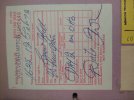
The ticket I have was issued on an excess pad.

Edit: Yeoford to Okehampton (exclusive) was, I imagine, another case. Now reopened of course. I can't recall the situation on Alton-Winchester at the end; C9rfe Castle was still staffed and I imagine Swanage too.
 

Attachments

  • IMG_20260509_122249254.jpg
    IMG_20260509_122249254.jpg
    3.3 MB · Views: 53

Djgr

Established Member
Joined
30 Jul 2018
Messages
3,384
You are right that Paytrain as a method of revenue collection and Paytrain as an advertising strapline are two different things. On the latter "It pays to travel by Anglia Paytrain" is probably the first railway advertising to seep into my childhood brain. But I'm not sure that was introduced before the closures finished.
Yes Paytrain was a very effective brand.

It was ironic that the railway moved to Payanywherebutonthetrain.
 

Taunton

Veteran Member
Joined
1 Aug 2013
Messages
12,301
The Gloucester-Chalford auto trains had tickets sold by Guards from the halts.
This was the case from back in steam train days (this service closed before dieselisation). The GWR had built a number of wooden small halts about a mile or less apart, where the line runs through a narrow, semi-urbanised valley, handled by 0-4-2T tank locos and Auto Trailers. I think the guards' ticket machines were the same as the local buses used. Major stations like Stroud continued with ticket offices and ticket inspection in/out.
 

Sprinter107

Member
Joined
26 Mar 2019
Messages
1,097
I believe that these Snow Hill services were so "residual" that they were operated by single car "bubble cars", necessary for such a Paytrain operation as the ex-Western Region lines around Birmingham had brought with them a large WR fleet of Derby-built suburban dmus with no corridor connections.
The bubble cars came while the stations were still staffed. The service was reduced from an hourly all day service with peak extras to just 6 each way per day on 4th March 1968. But class 116s were still used. Then from the 5th August 1968 the 116s were replaced by 122s. Then from the 5th May 1969 all the stations including Snow Hill and Low Level became unstaffed. Thats when the PayTrain service started.
The Redditch to Birmingham New Street service had all intermediate stations Alvechurch to Selly Oak inclusive unstaffed in 1967 I think it was, but im not sure if PayTrain notices appeared at those stations. 122s did work some of the Redditch services.
 

MarlowDonkey

Established Member
Joined
4 Apr 2013
Messages
1,871
This was the case from back in steam train days (this service closed before dieselisation). The GWR had built a number of wooden small halts about a mile or less apart, where the line runs through a narrow, semi-urbanised valley, handled by 0-4-2T tank locos and Auto Trailers.
It was noteworthy that the GWR design of Auto Trailer had just the one door each side. That was a design feature also of the Hawksworth design coaches that partly replaced then in the 1950s as well as the original GWR railcar design. It wasn't a feature of the Bubble car 121/122 design.

London area 117s were refitted with inter unit corridor connections in the late 1960s, early 1970s. The Bubble car and trailer two car set up didn't allow this, so sometimes the trailer was locked out of use.

You could still pay on the train on the Marlow to Maidenhead branch on 165s until relatively recently. That's an assumption though, since even unstaffed Marlow has gained a ticket machine and contactless reader in recent years along with Penalty Fare signage. There's still a Guard who sometimes checks tickets.
 

Chrius56000

Member
Joined
18 Aug 2010
Messages
262
Location
Walsall
The Redditch to Birmingham New Street service had all intermediate stations Alvechurch to Selly Oak inclusive unstaffed in 1967 I think it was, but im not sure if PayTrain notices appeared at those stations. 122s did work some of the Redditch services.

. . .I seem to recall Barnt Green–Alvechurch–Redditch was on Beeching's hlt–list, wasn't it? – would it have been still under threat when the stations all became unstaffed in 1969?

. . .Were Five Ways – Barnt Green – Redditch stations all re–staffed when the Cross–City Improvements opened in 1978?
 

BeeBus

Member
Joined
19 Mar 2024
Messages
68
Location
Oldham
Probably not quite what was meant, but a notable more recent one would be the Oldham Loop to Rochdale, converted to Metrolink.

Another one I believe was the Bridgend to Treherbert service, latterly cut back to Cymmer Afan due to the state of Blaenrhondda tunnel. I recall waiting for a train on Caerau station the first Monday after the service finished, confused by the closure notice because there were still some school journeys.

Arguably also Stockport to Staybridge, as it's only possible to go the other way at the moment (I believe!) and then only one day a week.

Two possibles, but I'm not sure if they were Paytrains, were to Hayfield before the service was cut back to New Mills Central and also the continuation from Rose Hill Marple to Macclesfield.

Another suggestion would be the current East Lancs Railway to Rawtenstall and Bacup, at least in its final form just to Rawtenstall, which closed in 1972.
 

steamybrian

Established Member
Joined
26 Nov 2010
Messages
2,002
Location
Kent
Cambridge- St. Ives
Alton- Winchester (except Alresford was staffed)
Callington- Gunnislake?
Ilfracombe- Barnstaple?
 

Sprinter107

Member
Joined
26 Mar 2019
Messages
1,097
. . .I seem to recall Barnt Green–Alvechurch–Redditch was on Beeching's hlt–list, wasn't it? – would it have been still under threat when the stations all became unstaffed in 1969?

. . .Were Five Ways – Barnt Green – Redditch stations all re–staffed when the Cross–City Improvements opened in 1978?
I think the stations from Alvechurch to Selly Oak all went unstaffed in 1967 definitely earlier than the Low Level - Snow Hill stations. Yes they were on the closure list. I think it was Barbara Castle that reprieved those. Five Ways had already been closed in 1944. I think Redditch retained staff during that time however.
All the stations were re-staffed upon the opening of the Cross City Service in May 1978. But not Barnt Green or Alvechurch. They remain unstaffed.
Ive just checked, and it was May 1967 that staff were withdrawn from all stations Alvechurch to Selly Oak. I believe Redditch retained staff.
 
Last edited:

Springs Branch

Established Member
Joined
7 Nov 2013
Messages
1,683
Location
Where my keyboard has no £ key
Bolton - Bury (Knowsley St) - Rochdale was another line which went over to Paytrain operation ahead of its closure in October 1970.


Passengers detrain at Bury Knowsley Street on 23 August 1970

Image source: Nigel, in the Harvey Scowcroft Collection on Flickr.

In this photo, there seemed to be quite a bit of mixed patronage considering it was supposed to be a dying service on its last legs! By this time, BR had removed the platform canopies, all shelter, seating and even the platform lighting at Knowsley St - just to be sure those pesky passengers got the hint.

The presence of a handful of old office chairs (one without a back?) on the platform for the convenience of waiting passengers is 'another story for another thread' - relating to demolition of the local signalbox by a runaway goods train a couple of months earlier.

Another suggestion would be the current East Lancs Railway to Rawtenstall and Bacup, at least in its final form just to Rawtenstall, which closed in 1972.
I'm not sure whether or not the section from Rawtenstall to Bacup was ever a Paytrain, even though that was one of the first local lines to be fully converted to DMU operation in the mid-1950s. But the truncated Rossendale service (after 1966) between Bury Bolton St and Rawtenstall certainly was a Paytrain by 1970.

Another photo from the Harvey Scowcroft Collection on Flickr shows both 'Paytrain Guide' and 'Withdrawal of Services' posters at Stubbins station (between Ramsbottom and Rawtenstall).

Stubbins station signage 23 August 1970
by Nigel, on Flickr.

Arguably also Stockport to Staybridge, as it's only possible to go the other way at the moment (I believe!) and then only one day a week.
I have a distant memory that the Stockport - Stalybridge line, when it still had regular services each way, was a bit of a pilot trial for Paytrains in the area (i.e. the first Paytrain in the urban northwest). I'm happy to be corrected if wrong on this.
 
Last edited:

ac6000cw

Established Member
Joined
10 May 2014
Messages
3,911
Location
Cambridge, UK
I think the stations from Alvechurch to Selly Oak all went unstaffed in 1967 definitely earlier than the Low Level - Snow Hill stations. Yes they were on the closure list. I think it was Barbara Castle that reprieved those. Five Ways had already been closed in 1944. I think Redditch retained staff during that time however.
All the stations were re-staffed upon the opening of the Cross City Service in May 1978. But not Barnt Green or Alvechurch. They remain unstaffed.
Ive just checked, and it was May 1967 that staff were withdrawn from all stations Alvechurch to Selly Oak. I believe Redditch retained staff.
As a bit of trivia, IIRC BR retained a staffed booking office at the original Longbridge station (on the line from Halesowen Junction to Old Hill where it passed through the car factory) for decades after passenger services ceased on that line. It catered mostly for the large market of people who worked at the factory. I assume it closed when the new Cross City line station opened on the mainline.

I think Paytrains were an Eastern Region feature, certainly at first.
I think they were introduced, or at least heavily plugged, by Gerry Fiennes for keeping East Anglian branch lines going.
That's my understanding too - wasn't one of the early routes the East Suffolk line, which was Gerry Fiennes local line at the time?
 

Top