
-
Our new ticketing site is now live! Using either this or the original site (both powered by TrainSplit) helps support the running of the forum with every ticket purchase! Find out more and ask any questions/give us feedback in this thread!
You are using an out of date browser. It may not display this or other websites correctly.
You should upgrade or use an alternative browser.
You should upgrade or use an alternative browser.
DMU livery question.
- Thread starter Rob F
- Start date
- Status
- Not open for further replies.

Sponsor Post - registered members do not see these adverts; click here to register, or click here to log in
R
RailUK Forums

Sun Chariot
Established Member
Lined maroon ("blood and custard" before) was for express passenger stock; and is why AM9 (class 309) EMU 100mph sets were delivered maroon.
Last edited:
Clarence Yard
Established Member
- Joined
- 18 Dec 2014
- Messages
- 3,263
The original plan for the first Derby lightweight units was that they, as coaching stock, were to be painted in blood and custard livery, just like the GWR railcars were at the time.
However, they were then classed as “motive power”, so they were painted from new in green livery. Subsequent DMU deliveries followed suit.
However, they were then classed as “motive power”, so they were painted from new in green livery. Subsequent DMU deliveries followed suit.
Wyrleybart
Established Member
And presumably why the GWR railcars also got green paint thenThe original plan for the first Derby lightweight units was that they, as coaching stock, were to be painted in blood and custard livery, just like the GWR railcars were at the time.
However, they were then classed as “motive power”, so they were painted from new in green livery. Subsequent DMU deliveries followed suit.
StephenHunter
Established Member
Is that way the 309s got a grey stripe when they went blue?Maroon (and "blood and custard before") was for express passenger stock; which is why the AM9 (class 309) EMU 100mph sets were delivered maroon.
Gloster
Veteran Member
Some, at least, of the former GWR railcars appeared in blood and custard; the parcels ones were all-over maroon. I presume that these were early BR repaintings before it was decided to standardise on green.
norbitonflyer
Established Member
Green was the standard colour for all multiple units, from railbuses to express passenger 4CEPs and 6PANs. The AM9s were an exception (and the 5BELs of course)
Sun Chariot
Established Member
I have always thought British Railways' original "Multiple Unit Green" - lighter shade - more attractive, than their later use of "Locomotive Green" on DMUs / EMUs (AM9, 5BEL excepted).However, they were then classed as “motive power”, so they were painted from new in green livery. Subsequent DMU deliveries followed suit.
Last edited:
What colour were the non-gangway mark 1 suburban stock when first introduced?Maroon (and "blood and custard" before) was for express passenger stock; which is why the AM9 (class 309) EMU 100mph sets were delivered maroon.
Sun Chariot
Established Member
Plain unlined crimson. Ditto the non-gangwayed / suburban stock of LMS, LNER and GWR.What colour were the non-gangway mark 1 suburban stock when first introduced?
A number of the GWR railcars remained in crimson and cream livery to the end, into the 1960s, they were some of the last vehicles in this scheme left running on the Western Region.Some, at least, of the former GWR railcars appeared in blood and custard; the parcels ones were all-over maroon. I presume that these were early BR repaintings before it was decided to standardise on green.
This adoption of a " motive power" classification was presumably a BR innovation. Historically not only railcars, but also steam railmotors carried coaching stock livery (especially if the power unit was enclosed within the carriage body). Others will know more, but I think when the LBSC shrouded a loco in carriage profile casings to be marshalled centrally between autocoaches, these casings were painted in coaching stock livery also.The original plan for the first Derby lightweight units was that they, as coaching stock, were to be painted in blood and custard livery, just like the GWR railcars were at the time.
However, they were then classed as “motive power”, so they were painted from new in green livery. Subsequent DMU deliveries followed suit.
W20W was in crimson and cream when it arrived on the Kent & East Sussex in 1966.A number of the GWR railcars remained in crimson and cream livery to the end, into the 1960s, they were some of the last vehicles in this scheme left running on the Western Region.
== Doublepost prevention - post automatically merged: ==
The British Railways original livery scheme had all multiple units in green. In 1948 they would have been mostly electric and a majority of those would already be in some shade of Southern Railway greenA simple question to which there may be no definitive answer. In pre BR blues days, why were DMUs painted green like locos and not maroon like hauled coaching stock,?
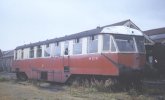
AIUI W20W spent much of 1965 sitting at Worcester Shed waiting for the K&ESR to come and collect it, I've attached a photo from Wikimedia Commons dated 5/9/65:W20W was in crimson and cream when it arrived on the Kent & East Sussex in 1966.
Attachments
Gloster
Veteran Member
AIUI W20W spent much of 1965 sitting at Worcester Shed waiting for the K&ESR to come and collect it, I've attached a photo from Wikimedia Commons dated 5/9/65:
Withdrawn in week ending 6 October 1962. As it was Worcester allocated from December 1958 it was probably dumped there well before the first report on 2 July 1963; presumed to have remained outside the closed Worcester Works until at least 28 November 1965. Moved to a store at some time; purchased by K&ESR in February 1966 and left on 9 March 1966.
Source: Harris’ Allocation History, Part 3, Self-published, 2017.
Unfortunately for BR, their stores person had sold it to the K&ESR for a price including delivery to Robertsbridge. This was a problem as the Hastings line tunnels were still less than standard width. I believe the railcar had to be hauled down from Tonbridge early one Sunday morning when there were no trains running in the other direction, and with a lot of brake blocks piled up on one side so that it tipped over enough to give enough clearance from the tunnel walls.AIUI W20W spent much of 1965 sitting at Worcester Shed waiting for the K&ESR to come and collect it, I've attached a photo from Wikimedia Commons dated 5/9/65:
The two last depots for the GWR railcars were Worcester and Southall, about 6 at each by 1962. A survey in a magazine at Southall at this time showed several parked there, some withdrawn, others still in stock, and for livery even at this late stage about 50-50 between green and red/cream.
The main reason that "local service" vehicles, both multiple unit and hauled non-corridor stock, were in a single colour in the 1950-57 scheme was that they were generally not housed in carriage sheds, nor very regularly received external cleaning. This would otherwise cause the cream paintwork to go grubby and discoloured (with the pigments of the era), whereas corridor hauled main line stock was more regularly kept in better condition.
Southall shed was right next to the works of the AEC company who built the power train and had been key in the original design of the cars, and there were probably contacts between the two. They were operated from there on the several short branches from the GW main line. Worcester's cars were used on various rural lines in the area.
The main reason that "local service" vehicles, both multiple unit and hauled non-corridor stock, were in a single colour in the 1950-57 scheme was that they were generally not housed in carriage sheds, nor very regularly received external cleaning. This would otherwise cause the cream paintwork to go grubby and discoloured (with the pigments of the era), whereas corridor hauled main line stock was more regularly kept in better condition.
Southall shed was right next to the works of the AEC company who built the power train and had been key in the original design of the cars, and there were probably contacts between the two. They were operated from there on the several short branches from the GW main line. Worcester's cars were used on various rural lines in the area.
Last edited:
- Status
- Not open for further replies.