• Our new ticketing site is now live! Using either this or the original site (both powered by TrainSplit) helps support the running of the forum with every ticket purchase! Find out more and ask any questions/give us feedback in this thread!

Disc vs. Tread Brakes after Talerddig

Status
Not open for further replies.

ChristopherJ

Repeatedly returning banned member
Joined
8 Aug 2005
Messages
494
Location
London, UK
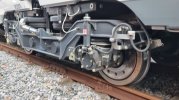
After the Talerddig collision this week, I've been wondering about lightweight units with disc brakes, such as the 158s that are infamous for poor braking performance in poor / autumn conditions.

According to driving experience, disc brakes are superior for brake retardation but do not scrub the wheel tyre of contamination that is prone to cause wheelslide.

Tread brakes are less efficient at brake retardation but are better for reducing wheelslide due to scrubbing the wheel tyre of contamination.

So, why don't trains use disc brakes as the primary braking source but have a secondary tread brake exclusively for wheel scrubbing only. Best of both worlds?

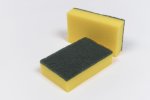
Basically, I'm suggesting we put a massive heavy duty sponge on the wheel of each unit to 'assist' the disc brakes by scrubbing the wheel tyre. :E
 

Attachments

  • ss10-scaled.jpg
    ss10-scaled.jpg
    254.3 KB · Views: 22
Sponsor Post - registered members do not see these adverts; click here to register, or click here to log in
R

RailUK Forums

hexagon789

Veteran Member
Joined
2 Sep 2016
Messages
18,306
Location
Glasgow
So, why don't trains use disc brakes as the primary braking source but have a secondary tread brake exclusively for wheel scrubbing only. Best of both worlds?
Some do, including 158/159s and HST power cars. On HST power cars, the tread braked units are set up to provide approximately 20% of the overall brake force though, not just to clean the wheel treads.
 

bahnause

Member
Joined
30 Dec 2016
Messages
1,035
Location
bülach (switzerland)
I know that the DB Class 101 and ÖBB Class 1016 used to have cleaning blocks at the beginning, but to help with accelerating, not braking. They all were removed after a few years in service, they obviously didn't do the job. SBB Re450 and Re460 have tread brakes, but they are only used at very low speeds when the dynamic brake is fading out or in short bursts, commanded by the traction control when wheelslip occurs. They are not applied when braking and probably can't be compared to a 158.

Main problem is the wheel itself. A lot of modern wheels have shrunk on wheel rims and are not designed to dissipate a lot of heat. This is why the use of tread brakes is very limited. Another problem is the noise. Rough surfaces make more noise. New tread brakes use sintered metals or synthetic material treads to keep the surface smooth and noise levels down. They don't have the same effect as treads made out of cast iron.
 

43066

Veteran Member
Joined
24 Nov 2019
Messages
12,089
Location
London
After the Talerddig collision this week, I've been wondering about lightweight units with disc brakes, such as the 158s that are infamous for poor braking performance in poor / autumn conditions.

According to driving experience, disc brakes are superior for brake retardation but do not scrub the wheel tyre of contamination that is prone to cause wheelslide.

Tread brakes are less efficient at brake retardation but are better for reducing wheelslide due to scrubbing the wheel tyre of contamination.

So, why don't trains use disc brakes as the primary braking source but have a secondary tread brake exclusively for wheel scrubbing only. Best of both worlds?

Basically, I'm suggesting we put a massive heavy duty sponge on the wheel of each unit to 'assist' the disc brakes by scrubbing the wheel tyre. :E

Class 700s have tread brakes on the driven wheels, for the reasons outlined above.
 

hwl

Established Member
Joined
5 Feb 2012
Messages
8,257
Class 700s have tread brakes on the driven wheels, for the reasons outlined above.
No the 700s have tread brakes on the motored axles because there wasn't space for disc brakes on the inside frame bogie where there were traction motors. The wheel cleaning from the tread brakes is a useful side effect not the actual reason for doing this.
 

Fincra5

Established Member
Joined
6 Jun 2009
Messages
2,636
Class 700s have tread brakes on the driven wheels, for the reasons outlined above.
Well... 700s have Thread Brakes because there isn't space for the Disc Brakes on a powered bogie. Electrostars have Disc Brakes (outerside).
 

Logger79

Member
Joined
7 Dec 2021
Messages
38
Location
Cardiff
231/756 have scrubbers fitted for this purpose.
 

Attachments

  • Screenshot_20241025_184301_Gallery.jpg
    Screenshot_20241025_184301_Gallery.jpg
    432.8 KB · Views: 181

Towers

Established Member
Joined
30 Aug 2021
Messages
2,998
Location
UK
Some do, including 158/159s and HST power cars. On HST power cars, the tread braked units are set up to provide approximately 20% of the overall brake force though, not just to clean the wheel treads.
As I understand it the dual braking system on HST power cars was an integral part of their being designed to run at 125mph on the existing infrastructure, and was necessary to enable them to brake sufficiently from maximum speed within existing signal sections (their ability to brake being just as significant as their speed capabilities, but far less celebrated!), it may or may not have had anything to do with scrubbing the wheels?
 

hexagon789

Veteran Member
Joined
2 Sep 2016
Messages
18,306
Location
Glasgow
As I understand it the dual braking system on HST power cars was an integral part of their being designed to run at 125mph on the existing infrastructure, and was necessary to enable them to brake sufficiently from maximum speed within existing signal sections (their ability to brake being just as significant as their speed capabilities, but far less celebrated!), it may or may not have had anything to do with scrubbing the wheels?
I thought it was both really - braking effort and wheel tread cleaning.
 

43066

Veteran Member
Joined
24 Nov 2019
Messages
12,089
Location
London
No the 700s have tread brakes on the motored axles because there wasn't space for disc brakes on the inside frame bogie where there were traction motors. The wheel cleaning from the tread brakes is a useful side effect not the actual reason for doing this.

Well... 700s have Thread Brakes because there isn't space for the Disc Brakes on a powered bogie. Electrostars have Disc Brakes (outerside).

I had understood it was for both reasons - presumably it was a conscious choice to include them, as they could have designed a bogy that didn’t require tread brakes otherwise!
 

Fincra5

Established Member
Joined
6 Jun 2009
Messages
2,636
I had understood it was for both reasons - presumably it was a conscious choice to include them, as they could have designed a bogy that didn’t require tread brakes otherwise!
I had no idea if Siemens designed it in such a way.

Does it have much of a benefit, well, under normal operation the Friction Brake only applies around 1~2mph, Rheo/Regen until then. Under WSP, like other units, the Friction comes in which may aid to clean the wheels.
 

Deepgreen

Established Member
Joined
12 Jun 2013
Messages
7,476
Location
Gomshall, Surrey
I know that the DB Class 101 and ÖBB Class 1016 used to have cleaning blocks at the beginning, but to help with accelerating, not braking. They all were removed after a few years in service, they obviously didn't do the job. SBB Re450 and Re460 have tread brakes, but they are only used at very low speeds when the dynamic brake is fading out or in short bursts, commanded by the traction control when wheelslip occurs. They are not applied when braking and probably can't be compared to a 158.

Main problem is the wheel itself. A lot of modern wheels have shrunk on wheel rims and are not designed to dissipate a lot of heat. This is why the use of tread brakes is very limited. Another problem is the noise. Rough surfaces make more noise. New tread brakes use sintered metals or synthetic material treads to keep the surface smooth and noise levels down. They don't have the same effect as treads made out of cast iron.
The essence of braking is friction, so smooth surfaces are less effective, by definition. I recall the original 1960s mk2 disc brakes - they produced a deep 'roar' when applied.
 

hwl

Established Member
Joined
5 Feb 2012
Messages
8,257
I had understood it was for both reasons - presumably it was a conscious choice to include them, as they could have designed a bogy that didn’t require tread brakes otherwise!
The small matter of Bombardier IP stopping both Siemens and Hitachi. Hitachi's solution was mostly to use outside frame bogies on 80x and 385s rather than tread brakes and inside frame.
 

hexagon789

Veteran Member
Joined
2 Sep 2016
Messages
18,306
Location
Glasgow
The small matter of Bombardier IP stopping both Siemens and Hitachi. Hitachi's solution was mostly to use outside frame bogies on 80x and 385s rather than tread brakes and inside frame.
The Hitachi outside framed ones are all un-motored bogies though...
 

ChristopherJ

Repeatedly returning banned member
Joined
8 Aug 2005
Messages
494
Location
London, UK
I had no idea if Siemens designed it in such a way.

Does it have much of a benefit, well, under normal operation the Friction Brake only applies around 1~2mph, Rheo/Regen until then. Under WSP, like other units, the Friction comes in which may aid to clean the whewheels

Class 700s have an 'Ice Mode' which isolates the regen brake and prioritises friction braking for use during winter months.

It's very noticeable as the screech from the tread brakes is appallingly loud.
 

scotraildriver

Established Member
Joined
15 Jun 2009
Messages
1,846
As I understand it the dual braking system on HST power cars was an integral part of their being designed to run at 125mph on the existing infrastructure, and was necessary to enable them to brake sufficiently from maximum speed within existing signal sections (their ability to brake being just as significant as their speed capabilities, but far less celebrated!), it may or may not have had anything to do with scrubbing the wheels?
And if only they'd specified sanders as well it would almost be the perfect train. A couple of ours slipped to a stand today on gradients and had to return to the previous station. The braking is generally very good, acceleration and climbing gradients not so much due to lack of sanders.
 

hwl

Established Member
Joined
5 Feb 2012
Messages
8,257
The Hitachi outside framed ones are all un-motored bogies though...
Hitachi outside framed are a mix of motored and unmotored (if high axle load) or inside frame for unmotored + low axle load
 

Lurcheroo

Established Member
Joined
21 Sep 2021
Messages
1,240
Location
Wales
As it so happens, TFW 158’s have scrubber blocks to clean the wheel treads on the powered bogies.
 

edwin_m

Veteran Member
Joined
21 Apr 2013
Messages
28,665
Location
Nottingham
The essence of braking is friction, so smooth surfaces are less effective, by definition. I recall the original 1960s mk2 disc brakes - they produced a deep 'roar' when applied.
M2s had tread brakes, except for the ones used on the Edinburgh-Glasgow push-pull. Tread brakes tend to make that sort of sound, although my main memory is of the howling on corrugated rails.
As it so happens, TFW 158’s have scrubber blocks to clean the wheel treads on the powered bogies.
Aren't these the outer end bogies, which are unpowered?
 

chuff chuff

Member
Joined
25 Sep 2018
Messages
670
And if only they'd specified sanders as well it would almost be the perfect train. A couple of ours slipped to a stand today on gradients and had to return to the previous station. The braking is generally very good, acceleration and climbing gradients not so much due to lack of sanders.
Aye their not keen on a slippy rail getting going though twice I've had the speedo drop to zero even after taking the brake off it stayed there,had to give a wee touch of power to get them rolling again.
The improved wsp hasn't been fitted yet,meant to start very soon,apparently.
 

43096

On Moderation
Joined
23 Nov 2015
Messages
18,819
And if only they'd specified sanders as well it would almost be the perfect train. A couple of ours slipped to a stand today on gradients and had to return to the previous station. The braking is generally very good, acceleration and climbing gradients not so much due to lack of sanders.
It doesn’t help that your power cars still have the 1976-vintage wheelslip system.
 
Status
Not open for further replies.

Top