• Our new ticketing site is now live! Using either this or the original site (both powered by TrainSplit) helps support the running of the forum with every ticket purchase! Find out more and ask any questions/give us feedback in this thread!

Deregulation and the passenger experience

Status
Not open for further replies.

HullRailMan

On Moderation
Joined
8 Oct 2018
Messages
442
Well someone (i.e., central government) is going to have to step in to fund peripheral journeys, or the death spiral will leave us with urban networks (generally under PTEs) and a spartan social need network elsewhere. Take a look anywhere, and the definition of peripheral services was after 11, then 10, then 9... until you suddenly find yourself with a network that doesn't even work for commutes, let alone leisure travel.
Then the question becomes who pays, how much is to be spent and what represents good value for the taxpayer? East Riding Council published a review of all their subsidised bus services pre-covid, following which the bulk of them were cut, (I’ll try to find the link) and I recall some services having subsidies equivalent to £35+ per passenger journey. Clearly someone was using that bus, but is that a good use of money? To that passenger it may have been vital, but in the grand scheme of things it’s hugely wasteful. Who should win?
 
Sponsor Post - registered members do not see these adverts; click here to register, or click here to log in
R

RailUK Forums

markymark2000

On Moderation
Joined
11 May 2015
Messages
5,100
Location
Great Britain
Amazingly Oxford is highlighted by those of a private sector persuasion as an example of strong private sector co-operation!
Since the harmonisation in Oxford, frequency is down and passengers who use multiple operators or certain offers are no longer able to. For example, the Oxford Tube Connector is no longer available for people who use the 3 routes and the Oxford Airline Flyer ticket is no longer available to passengers in Kidlington.

So, frequencies reduced, onward fare offers no longer exist. Sounds like a great idea, why don't we roll this out more? The only plus side really out of Oxfords collaboration right now is that the multi operators tickets are easily available (not smartcard/app only or tickets which no one has ever heard of).


East Riding Council published a review of all their subsidised bus services pre-covid, following which the bulk of them were cut, (I’ll try to find the link) and I recall some services having subsidies equivalent to £35+ per passenger journey.
That's nothing. Cambridgeshire & Peterborough Combined Authority has a route running at a cost of £125 per passenger.

Source: https://www.cambridge-news.co.uk/news/local-news/use-lose-it-message-future-28122423
Simplified quote. I have removed anything not necessary to the comments.
7A: Duxford - Whittlesford - Sawston - Whittlesford - Duxford Cost per passenger £124.83.
8A: Cottenham - Chatteris - March Cost per passenger £76.35.
29: Peterborough City Hospital - Hampton Cost per passenger £74.71.
 

Statto

Established Member
Joined
8 Feb 2011
Messages
4,068
Location
At home or at the pub
Nicholas Ridley's grand vision was to have competition - and lots of it. This was definitely true in the first five years of deregulation, where it was a case of survival of the fittest, but it soon became apparent that competition came at a great cost and it was therefore no surprise when truces were called and operators agreed to stick to their traditional areas.

Indeed, Ridley's utopia vision of deregulation being competition everywhere might sound good in an office, but doesn't work in the real world, were it became survival of the fittest, & those with money (Stagecoach being the most notable one) could run other operators off the road.


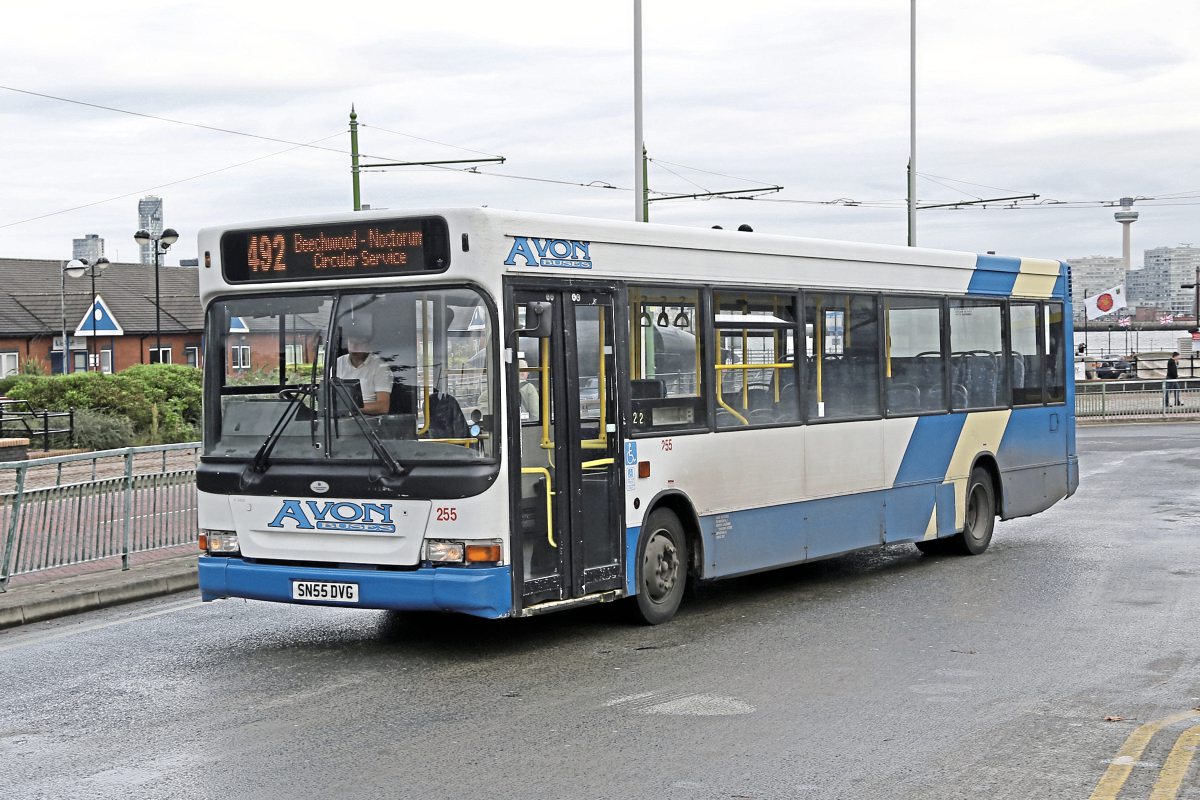
On Merseyside we've had a few spats of bus wars & competition, but that has settled to 2 main operators Arriva & Stagecoach, with a few independents who just stick to tendered services, a couple of other operators Avon buses & Halton Transport who did operate commercially went bankrupt before covid struck.
 

johncrossley

Established Member
Joined
30 Mar 2021
Messages
4,402
Location
London
The original concept of deregulation is long gone. The government has been adding more and more sticking plasters to it over the years. Having seen how deregulation has played out, if it was possible to go back in time to the 1980s the government would choose competitive tendering over a private monopoly. Ridley would be horrified with the way the government has distorted the market. With free travel for the elderly and fare capping, price has been mostly taken away as a way of choosing one company to another.
 
Joined
15 Sep 2019
Messages
734
Location
Back in Geordieland!
Timetable World is your friend. Apparently a 3 zone Travelticket was £1.50 in 1985 and it would be £4.56 today


View attachment 149209
Travel ticket and transfares are different things although I suspect I have misunderstood your answer.

I can't remember exactly but I am sure that for a while we issued transfares from a standard Almex ticket machine, you just put a letter "T" on it.
 

RT4038

Established Member
Joined
22 Feb 2014
Messages
5,454
Well someone (i.e., central government) is going to have to step in to fund peripheral journeys, or the death spiral will leave us with urban networks (generally under PTEs) and a spartan social need network elsewhere.
I would suggest that in much of the provinces this has happened already.

Indeed, Ridley's utopia vision of deregulation being competition everywhere might sound good in an office, but doesn't work in the real world, were it became survival of the fittest, & those with money (Stagecoach being the most notable one) could run other operators off the road.
As is the case in any other commercial business sector, isn't it? Why would anyone wish to retain the weak, ineffective, uneconomic operators?

I think Nicholas Ridley was seeing the unsubsidised public transport operations in some other (Far Eastern?) countries and without understanding/discounting the social, cultural and economic differences that meant that such systems would not directly translate to here.

The original concept of deregulation is long gone. The government has been adding more and more sticking plasters to it over the years. Having seen how deregulation has played out, if it was possible to go back in time to the 1980s the government would choose competitive tendering over a private monopoly. Ridley would be horrified with the way the government has distorted the market. With free travel for the elderly and fare capping, price has been mostly taken away as a way of choosing one company to another.
Maybe, but then hindsight is a wonderful thing. With hindsight, the deregulation rules may have been different, the timescales of privatisation different etc etc.
 

greenline712

Member
Joined
2 Oct 2023
Messages
380
Location
Inside the M25
  • 1986-1991 - the upheaval and the wild west
  • 1992-1998 - consolidation and maturing
  • 1998-2010 - growing up and maturity
  • 2010-2020 - reversal of the gains (mainly governmental but also the First and Arriva mismanagement)
  • 2020- the post Covid world where the asteroid style hit means you can't be a dinosaur; you have to adapt to the new world and environment
This accords pretty much with my view . . . and I had 11 years (from 1975) with NBC and LCBS. With hindsight, I had pretty much 20 years (of a 45-year career) of working in an industry which was forward-looking and not afraid to innovate . . . think of Stagecoach Gold, for just one example. Look at GoAhead in Brighton, in Oxford, in Newcastle for others. Look at the actions of almost all LTAs until the purse strings were tightened after 2010-ish.
Free travel for seniors (the Gordon Brown version) threw a curved ball, which in hindsight (again) wasn't perhaps for the best . . . witness the way that the qualifying age had to be moved upwards, and how the reimbursement from Government was never sufficient.

The difficulties are in smaller towns, where passenger numbers are simply insufficient to sustain comprehensive networks. Remember, though . . . the concept of the Transport Act 1985 was that LTAs would pick up "socially necessary" routes and journeys. How many operators have failed because they tried to pick up routes after LTAs dropped them?

The 1985 Act, and all it brought about, wasn't a "bad" act per se . . . if it has lasted for almost 40 years, it can't have been. The concept was sound . . . interference by Government, whether overt or covert, scuppered it.

Where do we go now? There's money available, but the level of mis-use (DRT, for example) is staggering . . . better for the industry to contract back to those levels which can be sustained, and re-build if possible. Maybe franchising might work, but it'll be expensive . . . perhaps it should be tried, even if the result won't be palatable.
 

DunsBus

Established Member
Joined
12 Jan 2013
Messages
1,808
Location
Duns
Indeed, Ridley's utopia vision of deregulation being competition everywhere might sound good in an office, but doesn't work in the real world, were it became survival of the fittest, & those with money (Stagecoach being the most notable one) could run other operators off the road.


On Merseyside we've had a few spats of bus wars & competition, but that has settled to 2 main operators Arriva & Stagecoach, with a few independents who just stick to tendered services, a couple of other operators Avon buses & Halton Transport who did operate commercially went bankrupt before covid struck.
Ridley often said that he could see no difference between running buses and running a sweetshop. That said it all - you didn't see sweetshops going all out to put a rival out of business, or a sweetshop operating 7am-7pm Monday to Saturday with the shutters pulled down on a Sunday.
 

RT4038

Established Member
Joined
22 Feb 2014
Messages
5,454
Ridley often said that he could see no difference between running buses and running a sweetshop. That said it all - you didn't see sweetshops going all out to put a rival out of business, or a sweetshop operating 7am-7pm Monday to Saturday with the shutters pulled down on a Sunday.
If there is only enough business for one sweetshop to operate at an acceptable profit, then one will have to go all out to ensure it is not them that goes bust. Not sure about the relevance of the times stated, but sweetshops certainly didn't open in the evenings or on Sundays at that time (and nor was it generally economic to run buses then either)
 

TheGrandWazoo

Veteran Member
Joined
18 Feb 2013
Messages
22,890
Location
Somerset with international travel (e.g. across th
That’s the equivalent of the Day Rover, not the Transfare.

Worth noting that the Day Rover has just come down to six quid due to funding from NECA. It was almost nine quid before that- so the price had doubled in real terms since 1986. Hoorah for private sector innovation :E

Travel ticket and transfares are different things although I suspect I have misunderstood your answer.

I can't remember exactly but I am sure that for a while we issued transfares from a standard Almex ticket machine, you just put a letter "T" on it.
Apologies - I was rushing on my phone. I saw Transfare and the zonal table of prices and didn't notice it was Traveltickets. Genuinely sorry for causing confusion :s

Moving on, having had a brief look through this thread I'm amazed that there's little acknowledgement of what's been going on over the past few years and how it completely changes the economic model of running bus services.

If you doubt me read that arch deregulator Julian Peddle's column in the current issue of Buses who, having acknowledged in previous columns that the deregulated model is dead, is now advocating nationalisation of bus operations in metropolitan areas.
In fairness, the fact is that Covid has changed the entire landscape overnight (and I did mention this above). @Tetchytyke enjoyed his railing against the bus barons and how much Stagecoach paid out in dividends. However, we have to accept that things have changed irrevocably - remember that TfL had to be bailed out with billions, Manchester Metrolink has had to have ongoing cash injections. The world has changed, the way in which people work and travel (and the frequency) has changed, and so too has the view of the bus industry. That's just being a realist. You can't lose 10-20% of your custom overnight in any industry and think that you're insulated from that.

It's not some Road to Damascus conversion that people are experiencing. Just an acknowledgement that we're not in Kansas anymore, and you have to get on board with your new circumstances!

However, the idea that there's some ideal world where bus services can be transformed through the erosion/removal of the bus barons profit margins and the redistribution of this saved money is really an illusion. Making buses work needs money and political will.

Indeed, Ridley's utopia vision of deregulation being competition everywhere might sound good in an office, but doesn't work in the real world, were it became survival of the fittest, & those with money (Stagecoach being the most notable one) could run other operators off the road.

Ridley often said that he could see no difference between running buses and running a sweetshop. That said it all - you didn't see sweetshops going all out to put a rival out of business, or a sweetshop operating 7am-7pm Monday to Saturday with the shutters pulled down on a Sunday.
You have to look at what the politician Ridley said vs. what the businessman Ridley knew. Yes, there would be competition but invariably, what happens is that there is a consolidation of the market as larger businesses buy up smaller outfits or simply outcompete them. This is evident in most industries. Anyone else using AltaVista or AskJeeves as a search engine these days? However, as with every industry, there will always be opportunities for smaller niche entrants and we still see that but in smaller numbers. The opportunities are smaller/less common and in most instances, the margins just aren't worth it.

ps for those also railing against the increase in bus fares and trying to apply the average inflation rate and attributing the difference to bus company profiteering, you are missing some rather large points. The average price of diesel was subject to the fuel duty escalator during much of 1997-2010. Average pence per litre was 35.6 ppl in 1986, so inflation would increase this to 128.6 ppl, and not the 159.2 ppl currently (yes, firms will be paying less but bunkering/hedging etc has always gone on so the relative increase and variance will be the same). Then you have the increase in other costs. Drivers pay and conditions has declined in real terms though much of the damage was actually done in the run up to deregulation. However, there has been increases in some on-costs like pensions and insurances.

The bigger issues are around the base costs of running vehicles. Emissions standards have meant that vehicles don't return the same mpg as they used to... Bristol VRs would return 12 mpg which you just don't get with a modern euro V or VI decker. That's before you get onto the cost of repairing modern vehicles! However, the most pernicious has been the impact of congestion.

In my ancestral home, Darlington Corporation would run an eclectic fleet of single deckers with dual doors and the Autofare exact fare system; United then came along and competed with minibuses and gave change. Nowadays, Arriva operate (I'm not a fan) but let's look at some examples
  • Darlington to Branksome (round trip) - was 32 mins, now 40 mins
  • Darlington to Red Hall (round trip) - was 17 mins, now 23 mins
    • I appreciate they'll be some extension of dwell times but I don't want a massive diatribe on the subject of off bus ticketing, exact fares and dual doors and reference to some Western European city
  • Darlington to Newton Aycliffe - was 21 mins, now 26 mins (and this was a United route so change given and single doors)
It was something I mentioned elsewhere that the Ripon to Leeds service still follows the same route as always. When I travelled on it, the timetable was largely unchanged in 1991 than it had been in 1981, and it took 80 mins to do. It now takes 98 mins so operating the half hourly headway that would've required 6 buses in 1997 now needs 7 if not a bit more (by interworking it with the short journeys). Your mileage may be no higher but staff costs and vehicle fixed costs are 15% higher.

 

johncrossley

Established Member
Joined
30 Mar 2021
Messages
4,402
Location
London
If you doubt me read that arch deregulator Julian Peddle's column in the current issue of Buses who, having acknowledged in previous columns that the deregulated model is dead, is now advocating nationalisation of bus operations in metropolitan areas.

Why does he advocate nationalisation over compulsory tendering?
 

TUC

Established Member
Joined
11 Nov 2010
Messages
5,034
Apologies - I was rushing on my phone. I saw Transfare and the zonal table of prices and didn't notice it was Traveltickets. Genuinely sorry for causing confusion :s


In fairness, the fact is that Covid has changed the entire landscape overnight (and I did mention this above). @Tetchytyke enjoyed his railing against the bus barons and how much Stagecoach paid out in dividends. However, we have to accept that things have changed irrevocably - remember that TfL had to be bailed out with billions, Manchester Metrolink has had to have ongoing cash injections. The world has changed, the way in which people work and travel (and the frequency) has changed, and so too has the view of the bus industry. That's just being a realist. You can't lose 10-20% of your custom overnight in any industry and think that you're insulated from that.

It's not some Road to Damascus conversion that people are experiencing. Just an acknowledgement that we're not in Kansas anymore, and you have to get on board with your new circumstances!

However, the idea that there's some ideal world where bus services can be transformed through the erosion/removal of the bus barons profit margins and the redistribution of this saved money is really an illusion. Making buses work needs money and political will.


You have to look at what the politician Ridley said vs. what the businessman Ridley knew. Yes, there would be competition but invariably, what happens is that there is a consolidation of the market as larger businesses buy up smaller outfits or simply outcompete them. This is evident in most industries. Anyone else using AltaVista or AskJeeves as a search engine these days? However, as with every industry, there will always be opportunities for smaller niche entrants and we still see that but in smaller numbers. The opportunities are smaller/less common and in most instances, the margins just aren't worth it.

ps for those also railing against the increase in bus fares and trying to apply the average inflation rate and attributing the difference to bus company profiteering, you are missing some rather large points. The average price of diesel was subject to the fuel duty escalator during much of 1997-2010. Average pence per litre was 35.6 ppl in 1986, so inflation would increase this to 128.6 ppl, and not the 159.2 ppl currently (yes, firms will be paying less but bunkering/hedging etc has always gone on so the relative increase and variance will be the same). Then you have the increase in other costs. Drivers pay and conditions has declined in real terms though much of the damage was actually done in the run up to deregulation. However, there has been increases in some on-costs like pensions and insurances.

The bigger issues are around the base costs of running vehicles. Emissions standards have meant that vehicles don't return the same mpg as they used to... Bristol VRs would return 12 mpg which you just don't get with a modern euro V or VI decker. That's before you get onto the cost of repairing modern vehicles! However, the most pernicious has been the impact of congestion.

In my ancestral home, Darlington Corporation would run an eclectic fleet of single deckers with dual doors and the Autofare exact fare system; United then came along and competed with minibuses and gave change. Nowadays, Arriva operate (I'm not a fan) but let's look at some examples
  • Darlington to Branksome (round trip) - was 32 mins, now 40 mins
  • Darlington to Red Hall (round trip) - was 17 mins, now 23 mins
    • I appreciate they'll be some extension of dwell times but I don't want a massive diatribe on the subject of off bus ticketing, exact fares and dual doors and reference to some Western European city
  • Darlington to Newton Aycliffe - was 21 mins, now 26 mins (and this was a United route so change given and single doors)
It was something I mentioned elsewhere that the Ripon to Leeds service still follows the same route as always. When I travelled on it, the timetable was largely unchanged in 1991 than it had been in 1981, and it took 80 mins to do. It now takes 98 mins so operating the half hourly headway that would've required 6 buses in 1997 now needs 7 if not a bit more (by interworking it with the short journeys). Your mileage may be no higher but staff costs and vehicle fixed costs are 15% higher.
Leaving aside the slight increase in journey times, which could be for multiple reasons, wasn't Darlington Corporation's Autofare exact fare system a perfect example of customer-unfriendly behaviour by a monopoly?

== Doublepost prevention - post automatically merged: ==

Ridley often said that he could see no difference between running buses and running a sweetshop. That said it all - you didn't see sweetshops going all out to put a rival out of business, or a sweetshop operating 7am-7pm Monday to Saturday with the shutters pulled down on a Sunday.
Strangely enough, if I remember rightly, the opposite argument was used at the time against deregulation-that 7am-7 pm opening hours was precisely what you did see in shops. ( Of course, the world has changed enormously in terms of shop opening hours, although ironically these have grown longer at the same time as bus operating hours have grown shorter.)
 

RT4038

Established Member
Joined
22 Feb 2014
Messages
5,454
Leavingbaside the slight increase in journey times, which could be for multiple reasons, wasn't Darlington Corporation's Autofare exact fare system a perfect example of customer-unfriendly behaviour by a monopoly?
Not sure it was as simple (or perfect) as that - it was a customer-unfriendly behaviour introduced to mitigate (thereby customer-friendly) the additional journey times caused by the customer-unfriendly conversion to one man operation forced upon the undertaking by sheer economics (because the customers didn't want to pay substantially higher fares, thereby customer friendly) and resultant staff shortages.
 

TUC

Established Member
Joined
11 Nov 2010
Messages
5,034
Not sure it was as simple (or perfect) as that - it was a customer-unfriendly behaviour introduced to mitigate (thereby customer-friendly) the additional journey times caused by the customer-unfriendly conversion to one man operation forced upon the undertaking by sheer economics (because the customers didn't want to pay substantially higher fares, thereby customer friendly) and resultant staff shortages.
Except that many other operators moved to one-person operation without the need for exact fare systems.
 

RT4038

Established Member
Joined
22 Feb 2014
Messages
5,454
Except that many other operators moved to one-person operation without the need for exact fare systems.
Yes, but with longer journey times for the passengers. (sometimes mitigated by customer-unfriendly things such as more powerful vehicles giving uncomfortable rides between the long stops). Lots of undertakings with large numbers of passengers went for exact fare buses to minimise dwell times at stops, and successful many were too.
 

TUC

Established Member
Joined
11 Nov 2010
Messages
5,034
Yes, but with longer journey times for the passengers. (sometimes mitigated by customer-unfriendly things such as more powerful vehicles giving uncomfortable rides between the long stops). Lots of undertakings with large numbers of passengers went for exact fare buses to minimise dwell times at stops, and successful many were too.
Striking though how many dropped such systems either at deregulation or later when the company was sold. That indicates how commercially unattractive it was seen.
 

RT4038

Established Member
Joined
22 Feb 2014
Messages
5,454
Striking though how many dropped such systems either at deregulation or later when the company was sold. That indicates how commercially unattractive it was seen.
So does this mean people would rather have longer journeys and not have to worry about the exact fare, or have these undertakings just suffered passenger loss with the less attractive service? Striking how many of those seen as exemplars (Lothian, Nottingham, Reading) still have them (and of course NX West Midlands too).
 

JonathanH

Veteran Member
Joined
29 May 2011
Messages
23,290
Striking how many of those seen as exemplars (Lothian, Nottingham, Reading) still have them (and of course NX West Midlands too).
Reading was a fairly late adopter of the farebox in October 2002. It just became untenable for drivers to be cash handlers.
 

TheGrandWazoo

Veteran Member
Joined
18 Feb 2013
Messages
22,890
Location
Somerset with international travel (e.g. across th
To both @TUC and @RT4038, I think we all recognise the merits of exact fare in terms of reducing dwell time. Those are well trodden paths of discussion. In Darlington, it was very much part of the overall sales pitch of the competing United minibuses though.

Congestion is a clear contributor to cost increases, and to be honest, I'd say the issue is worse than we realised as in 1986, journey times were more generously scheduled. If you're eating into that recovery margin and then adding more journey time, that is another problem.
 

Ken H

Established Member
Joined
11 Nov 2018
Messages
6,718
Location
N Yorks
It was something I mentioned elsewhere that the Ripon to Leeds service still follows the same route as always. When I travelled on it, the timetable was largely unchanged in 1991 than it had been in 1981, and it took 80 mins to do. It now takes 98 mins so operating the half hourly headway that would've required 6 buses in 1997 now needs 7 if not a bit more (by interworking it with the short journeys). Your mileage may be no higher but staff costs and vehicle fixed costs are 15% higher.
Harrogate is a nightmare. It has a horrid 1 way system that runs round the whole town centre. And the main road to Knaresborough has a busy level crossing. So most of the roads approaching the centre have long queues, especially the road from the A61/A59 roundabout to the Royal Hall/Convention Centre.

There was an attempt to speed up the 36 northbound through Harrogate by not using the bus station but having a stop by Betty's. But they reverted to looping round the town centre.

The 36 is not helped by the fact it is all stops from Leeds to Alwoodley. First don't go north of Moortown on the A61 so the 36 now does the job the 34/35 (Alwoodley circular) did in Leeds City Transport days. But it also seems to stop at all stops inwards of Moortown Corner - a route where there are frequent 2/3/3A First services. IMHO a Leeds - Ripon bus should not be trying to do 3 stop journeys. When I was a kid the 36 had separate stops and they were twice the distance apart that the Leeds City ones were. Which is how it should be IMHO
 
Last edited by a moderator:

TheGrandWazoo

Veteran Member
Joined
18 Feb 2013
Messages
22,890
Location
Somerset with international travel (e.g. across th
Harrogate is a nightmare. It has a horrid 1 way system that runs round the whole town centre. And the main road to Knaresborough has a busy level crossing. So most of the roads approaching the centre have long queues, especially the road from the A61/A59 roundabout to the Royal Hall/Convention Centre.

There was an attempt to speed up the 36 northbound through Harrogate by not using the bus station but having a stop by Betty's. But they reverted to looping round the town centre.

The 36 is not helped by the fact it is all stops from Leeds to Alwoodley. First don't go north of Moortown on the A61 so the 36 now does the job the 34/35 (Alwoodley circular) did in Leeds City Transport days. But it also seems to stop at all stops inwards of Moortown Corner - a route where there are frequent 2/3/3A First services. IMHO a Leeds - Ripon bus should not be trying to do 3 stop journeys. When I was a kid the 36 had separate stops and they were twice the distance apart that the Leeds City ones were. Which is how it should be IMHO
All of that is true but my point really was in looking at services that haven't changed route appreciably since dereg (and before tbh), you can really see the impact of congestion on journey times and resources.
 

TUC

Established Member
Joined
11 Nov 2010
Messages
5,034
So does this mean people would rather have longer journeys and not have to worry about the exact fare, or have these undertakings just suffered passenger loss with the less attractive service? Striking how many of those seen as exemplars (Lothian, Nottingham, Reading) still have them (and of course NX West Midlands too).
Exact fare is an irrelevancy in the days of contactless payments.
 

JD2168

Established Member
Joined
11 Jul 2022
Messages
1,720
Location
Sheffield
Some things may have got better since deregulation but mostly not. Improvements include Stagecoach Gold Spec.

Not so good (looking mainly at Sheffield):
Useful services cut & messed around every few months, take Sheffield to Brinsworth it was the 130 every 20 minutes, then it became the 100 via the Parkway which lasted for 6 months, then the 68/68a which mirrored the 130 then back to the original 130. Now you have an hourly 73 via Manor Top & a 208 which carries no one. When the service was every 20 minutes on 130 it was busy.

The chopping & changing just confused passengers & put them off.

First having 4 fare increases in one year.

First having a 6 week strike through summer holidays in 2004, many passengers went to their cars & didn’t come back.

Stagecoach took over Traction Group which included Yorkshire Terrier. They introduced the 83/88 & put 50p max fares on them, until this there weren’t carrying many at all. This shrank First passengers & you ended up where on competition routes there was low fares & the rest had high fares probably wondering why don’t we get the cheap fares.

Then you had the ‘partnership’ come in 2012, at first it was ok but the October 2015 changes confused everyone, changed a lot of familiar route numbers & routes. First also moved quite a large number of deckers out & replaced them with singles most of which we’re running round full & standing. Stagecoach even sent 4 hybrids to Manchester. Eventually First & Stagecoach had to bring in more deckers & send some of the singles back out.

Passengers were put off by standing room only in middle of the day, confusion over where the bus went further being put off.

But the main decline has been besides the high fares & poor reliability is the closure of Pinstone Street & Leopold Street in the City Centre which meant many routes were sent away from shopping areas & on back streets & uncovered bus stops.

All you have now is the regional mayor saying the network is broken & needs franchises but the partnership has never truly worked so this doesn’t give confidence in this area.
 

Tetchytyke

Veteran Member
Joined
12 Sep 2013
Messages
17,487
Location
Isle of Man
for those also railing against the increase in bus fares and trying to apply the average inflation rate and attributing the difference to bus company profiteering, you are missing some rather large points
Some overheads have increased at an above-inflation rate, others have increased at a below-inflation rate. It’s certainly not an exact science, but when the Tyne and Wear Day Rover price increased by more than 100% in real terms it is abundantly clear that someone is extracting the Michael. And by someone I specifically mean Huntley and Conroy.
And at those prices, anyone who has an alternative will use that alternative. Using public transport from my old house in Shiremoor to, say, the Metro Centre required a mode change. So it was nine quid to use public transport to get there, and another nine quid for Mrs Tyke to come with me. Or, instead of forking out eighteen quid, we could drive. Tough choice.

The Metro Centre is incredibly well connected on public transport, and the drive from North Tyneside around the A1 is unpleasant at the best of times, the only disincentive is the price.

Traffic congestion is getting worse in certain areas, but every single person an into a city centre in a car is someone who’s been pushed off public transport by appalling service and obscene fares.

@Tetchytyke enjoyed his railing against the bus barons and how much Stagecoach paid out in dividends. However, we have to accept that things have changed irrevocably
Things have changed. What I was railing against was the bus industry creaming off billions in the time of plenty and the expecting the taxpayer to pick up the bill in the time of famine. That’s not business, that’s privatising profit and nationalising losses. Something we see a lot of from privatised industries- look at the water industry.

In simple terms, if Stagecoach are about to go bust that should not be a taxpayer problem, that should be an Ann Gloag problem. She could always sell her castle.
 

GusB

Established Member
Joined
9 Jul 2016
Messages
8,122
Location
Elginshire
In simple terms, if Stagecoach are about to go bust that should not be a taxpayer problem, that should be an Ann Gloag problem. She could always sell her castle.
I do believe she's trying to sell one of them but, as she's no longer involved in the day-to-day management of Stagecoach, it's not really relevant.
 

Tetchytyke

Veteran Member
Joined
12 Sep 2013
Messages
17,487
Location
Isle of Man
Go further North, we have 3 massive business parks, Doxford Park on the outskirts of Sunderland, Cobalt in North Tyneside and Quorum just to the North of Newcastle, surprising all with massive car parks and absolutely no provision for buses to sensibly serve most of them
None of the business parks have enough parking for all the staff. Cobalt is very well served by public transport, and has seen the only growth in North Tyneside- there’s enough fat there for Stagecoach to run buses through the tunnel from Jarrow to serve it specifically.

It’s also nothing new- the DWP at Longbenton has been one of the biggest employers since the early 1950s. Same with the Team Valley in Gateshead.

You mention Dragonville. The main bus routes out of Durham go right past it, but there’s no effort made to actually serve it properly- the buses don’t even go into the Tesco turning circle now, IIRC. It’s a remarkably long walk to the retail park from the bus stops at the end of Dragon Lane.

I despair really at the way the bus industry seeks to blame everyone else for their failure.

== Doublepost prevention - post automatically merged: ==

as she's no longer involved in the day-to-day management of Stagecoach, it's not really relevant
In fairness she and her brother have been bought out- she and he received 20% or so of the £500M the private equity fund paid to buy the company. And if the private equity lot can find that much money to buy the business, perhaps we shouldn’t pay quite so much heed to the bus industry complaining it needs more money.

I could just as easily pick on any other shareholder of a bus company. DB play some interesting tricks at Arriva.
 
Last edited:

markymark2000

On Moderation
Joined
11 May 2015
Messages
5,100
Location
Great Britain
The original concept of deregulation is long gone. The government has been adding more and more sticking plasters to it over the years. Having seen how deregulation has played out, if it was possible to go back in time to the 1980s the government would choose competitive tendering over a private monopoly. Ridley would be horrified with the way the government has distorted the market. With free travel for the elderly and fare capping, price has been mostly taken away as a way of choosing one company to another.
If it wasn't for the concessionary passes, I believe that there would be significantly more buses on the road today. That's one of the major issues with viability of rural and 'older people' routes because the pass reimbursement is so poor. Or if you are going to throw out free/cheap travel, companies have to be reimbursed appropriately for this. Avon Buses and Halton Transport both had issues in Merseyside due to Merseytravel not reimbursing them properly for the cheap MyTicket (links below). Sadly every bus operator in the country knows that concessionary reimbursement isn't where it needs to be. It's a great thing when a bus fare of £7.50 is only reimbursed at £1.56 (source below this pargraph). Is that the commercial bus operators who are broken or the free travel system is broken which in turn breaks the bus network? If the government threw all of their BSIP money into concessionary reimbursement, it would have a far bigger impact than the waste of time routes that councils are currently putting on because they have a bit of extra money.

Source for the concessionary reimbursement claim: https://www.bbc.co.uk/news/uk-england-york-north-yorkshire-63243763
He said concessionary passes have also hit the company's finances, as Connexions gets £1.56 for a return journey between York and Wetherby from a bus pass user, compared to £7.50 for a full fare.

Source for Avon Buses & Halton Transport blaming MyTicket for their closure:
MerseyTravel’s MyTicket scheme had lost Halton Transport another £250,000 as teenage passengers were reclassified from adults to children.
A statement from the defunct operator appearing online and in local newspapers identified the introduction of Merseytravel’s MyTicket as the main reason behind the decision to cease operations.

interference by Government, whether overt or covert, scuppered it.
A lot of interreference by government and also councils. Especially in more modern times, councils working against operators and so operators good will is dropping.

Where do we go now? There's money available, but the level of mis-use (DRT, for example) is staggering . . . better for the industry to contract back to those levels which can be sustained, and re-build if possible. Maybe franchising might work, but it'll be expensive . . . perhaps it should be tried, even if the result won't be palatable.
But sadly a lot of people are blinded to the amount of waste going on in councils and you can easily see it. People refuse to acknowledge the absolute shambles of the tendered bus networks in many places (which the councils have full control over) but will happily claim that public control is the way forward. If anyone actually heard some of the drivel that comes out of councils and councillors regarding buses, the evidence there shows that public control will be a shambles. The best example I have is a Stockport Councillor, David Mellor who blamed deregulation and 'fat cat bus companies' for Transport for Greater Manchester cutting the disused bus in his area. Dare we look as well at the amount of councils who can't manage their books now and are going into basically administration. If there was full public control, where would that leave buses as they aren't a statutory spend and so really that would mean all buses in the county would cease?

None of the business parks have enough parking for all the staff. Cobalt is very well served by public transport, and has seen the only growth in North Tyneside- there’s enough fat there for Stagecoach to run buses through the tunnel from Jarrow to serve it specifically.

It’s also nothing new- the DWP at Longbenton has been one of the biggest employers since the early 1950s. Same with the Team Valley in Gateshead.

You mention Dragonville. The main bus routes out of Durham go right past it, but there’s no effort made to actually serve it properly- the buses don’t even go into the Tesco turning circle now, IIRC. It’s a remarkably long walk to the retail park from the bus stops at the end of Dragon Lane.

I despair really at the way the bus industry seeks to blame everyone else for their failure.
The bus industry is shocking at serving anything out of town. You could tell Stagecoach, 'put a bus from here, to here, we will guarantee you 70 paying passengers' and they will happily turn it down. The only time anyone wants to serve out of town employers is if the trips are fully funded, they want the business to fund the trips and then they want the revenue too. Out of town retail I've seen a number of cuts 'to improve reliability' which is funny as it's such backwards logic. Buses get delayed serving a large retail park the best option is to remove the buses, not to get more people onto those buses! I know councils and the retail parks don't help this at all but it's such backwards logic.
That said, I know there was a situation in St Helens though when I spoke to the operator and the land owner (Langtree) demanded Merseytravel and the bus operator to pay "extortionate fees" to have a bus stop on their land which is also just as backwards and so to this day, the large Tesco Extra in St Helens, has no bus (Source for this claim is in my emails, not an online source)
 

Dai Corner

Established Member
Joined
20 Jul 2015
Messages
6,990
If it wasn't for the concessionary passes, I believe that there would be significantly more buses on the road today. That's one of the major issues with viability of rural and 'older people' routes because the pass reimbursement is so poor.
I thought reimbursement rates were supposed to be set such that operators were no better or worse off than they would be if the scheme didn't exist?
 

johncrossley

Established Member
Joined
30 Mar 2021
Messages
4,402
Location
London
But sadly a lot of people are blinded to the amount of waste going on in councils and you can easily see it. People refuse to acknowledge the absolute shambles of the tendered bus networks in many places (which the councils have full control over) but will happily claim that public control is the way forward. If anyone actually heard some of the drivel that comes out of councils and councillors regarding buses, the evidence there shows that public control will be a shambles. The best example I have is a Stockport Councillor, David Mellor who blamed deregulation and 'fat cat bus companies' for Transport for Greater Manchester cutting the disused bus in his area. Dare we look as well at the amount of councils who can't manage their books now and are going into basically administration. If there was full public control, where would that leave buses as they aren't a statutory spend and so really that would mean all buses in the county would cease?

That may be the case in the smaller unitary authorities and shire counties but the big city transport authorities with mayors impose a levy on each of the component district based on population. Birmingham has gone "bust" but is still going to pay what is expected of them in terms of TfWM funding. Wolverhampton and Coventry shouldn't suffer because of mismanagement in Birmingham. Capital investment relies almost entirely on central government. Greater Manchester bus franchising wouldn't have happened without it.

Central government now knows it has to fund buses more directly and fare capping is a clear indication of that.
 
Status
Not open for further replies.

Top