
-
Our new ticketing site is now live! Using either this or the original site (both powered by TrainSplit) helps support the running of the forum with every ticket purchase! Find out more and ask any questions/give us feedback in this thread!
You are using an out of date browser. It may not display this or other websites correctly.
You should upgrade or use an alternative browser.
You should upgrade or use an alternative browser.
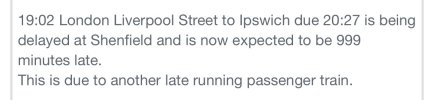
Delay Minutes
- Thread starter HChip
- Start date
- Status
- Not open for further replies.
Sponsor Post - registered members do not see these adverts; click here to register, or click here to log in
R
RailUK Forums

1D53
Established Member
- Joined
- 2 Apr 2006
- Messages
- 2,884
In most CIS etc software manually adding a train as 999 minutes delayed usually just shows as 'Delayed' rather than a time/ETA. This is an odd bug I suspect!
Adrian1980uk
Member
- Joined
- 24 May 2016
- Messages
- 839
I have no clue as to the largest delay but I suspect not as long as you may think as in today's operations playbook the service is likely to terminate short or be totally cancelled.

ruaival
Member
I have no clue as to the largest delay but I suspect not as long as you may think as in today's operations playbook the service is likely to terminate short or be totally cancelled.
Back in 2006/7 after a trackside incident in the Lakes, I recall waking up in Preston on the Southbound Lowland sleeper service (as we picked up the breakfast trolleys) and arriving into Euston 3.5h later than 7am booked time.
I'm sure I've seen some LNER and Caledonian Sleeper services push over 300 minutes before now and still running to destination. I think you've got to be looking at long distance operators like that for long delays really.
Purple Train
Established Member
I recall a South West Trains (as was) Class 444 ending up around 1200 minutes late after getting stuck in snow in the New Forest a few years ago.
 www.railforums.co.uk
This is said train as mentioned in a discussion on this subject from three years ago. (The specific post is a screenshot so a direct quote wouldn't be appropriate, and the other posts may be of interest to the OP.) It ended up 1286 minutes late (21 hours and 26 minutes according to my mental arithmetic), which surely must come close in modern times.
Michael Williams in his excellent book On The Slow Train mentions a snowstorm on the Settle and Carlisle in the 1960s in which an Edinburgh to London express was stranded in the snow for five days, and "passengers lived off tea and biscuits until they were rescued"! I dearly hope this story is true, and, if it is true, does it count?
(Mods: I've never tried mentioning a non-external source before and I hope all relevant rules have been followed.)
What's the longest record of a late running train in recent years?
Today's 09:00 departure from King's Cross, arrived at Edinburgh Waverley at 18:25. This was 5 hours and 5 minutes late. I was wondering if there was a known record for a late running in service train for whatever reason?
www.railforums.co.uk
This is said train as mentioned in a discussion on this subject from three years ago. (The specific post is a screenshot so a direct quote wouldn't be appropriate, and the other posts may be of interest to the OP.) It ended up 1286 minutes late (21 hours and 26 minutes according to my mental arithmetic), which surely must come close in modern times.
Michael Williams in his excellent book On The Slow Train mentions a snowstorm on the Settle and Carlisle in the 1960s in which an Edinburgh to London express was stranded in the snow for five days, and "passengers lived off tea and biscuits until they were rescued"! I dearly hope this story is true, and, if it is true, does it count?
(Mods: I've never tried mentioning a non-external source before and I hope all relevant rules have been followed.)
webbfan
Member
Due to leave Euston at 1800, actually left at 1900. Arrived Nuneaton 0300. Not bad 9 hours instead of one.I'm sure I've seen some LNER and Caledonian Sleeper services push over 300 minutes before now and still running to destination. I think you've got to be looking at long distance operators like that for long delays really.

Intercity_225
Member
Just time to bring up 2 of my favourite services ever..
Two Intercity services arriving into Edinburgh around 6.45-7am the next morning, with one leaving at 6.30 and another leaving at 10.30 the previous evening. This was due to a fire near the line at Stevenage and a failed tamper at Doncaster..
I think the best part of that is that 801226 spent almost thirteen hours reaching Edinburgh and then was turned around sent straight back south again as the 0800 back to Kings Cross. I'm told there was a certain amount of consternation in Hitachi when the plan to turn it straight around and go back south was hatched by LNER seeing as the unit should have gone on depot if it had reached Edinburgh on timeJust time to bring up 2 of my favourite services ever..

How about the one that got stuck in snow near Aviemore in 2010? Forsinard 1978? Or the one stuck at Bleath Gill, though it was freight? I saw a short film of it being feed many years ago, it was spectacular!
But if looking for the most delayed, should the timetabled journey length be taken into account? So my recent journey to Cornwall was just over 2 hours late on a 10 1/2 hour journey, is that better than 2 hours late on (say) Edinburgh to London?
But if looking for the most delayed, should the timetabled journey length be taken into account? So my recent journey to Cornwall was just over 2 hours late on a 10 1/2 hour journey, is that better than 2 hours late on (say) Edinburgh to London?

Spartacus
Established Member
- Joined
- 25 Aug 2009
- Messages
- 3,806
I recall a freight being booked through an engineering possession up Chinley way one Friday night. It sat at New Mills all weekend! Normally one would be cancelled off and rescheduled, but this one wasn't 
PLY2AYS
Member
Great question.
I’d also like, once full renationalisation has occurred, for someone to produce the metric of just how many minutes/days of delay each TOC has incurred over each respective franchise period. I suppose in theory that may already exist, but unaware of the data
This would be for my own amusement than to ‘prove anything’ about the privatisation model, before anyone chimes in as to ‘why’!
I’d also like, once full renationalisation has occurred, for someone to produce the metric of just how many minutes/days of delay each TOC has incurred over each respective franchise period. I suppose in theory that may already exist, but unaware of the data
This would be for my own amusement than to ‘prove anything’ about the privatisation model, before anyone chimes in as to ‘why’!
airantraigh
Member
Just time to bring up 2 of my favourite services ever..
I was on a very early train south the next morning and had a hearty chuckle watching it go past near Berwick
bb21
Emeritus Moderator
- Joined
- 4 Feb 2010
- Messages
- 24,445
It won't "prove" anything as they are affected by many different factors, some totally unrelated to privatisation.Great question.
I’d also like, once full renationalisation has occurred, for someone to produce the metric of just how many minutes/days of delay each TOC has incurred over each respective franchise period. I suppose in theory that may already exist, but unaware of the data
This would be for my own amusement than to ‘prove anything’ about the privatisation model, before anyone chimes in as to ‘why’!
You can always FoI Network Rail for the figures, and historic PPM/OT-3 figures will all be very close approximates if you want to deepdive into general network performance.
PLY2AYS
Member
I know… but I’ve been shunned before for somehow being critical of the privatisation model for simply asking pertinent questions.It won't "prove" anything as they are affected by many different factors, some totally unrelated to privatisation.
You can always FoI Network Rail for the figures, and historic PPM/OT-3 figures will all be very close approximates if you want to deepdive into general network performance.
But it would be interesting to see.
I’ll formulate an FoI very soon then, see if they can provide some good data.

Tezza1978
Member
There must have been some examples of very long delays on the WCML pre the route upgrade/switch to Pendolinos.
I recall in my student days in the very early 00s being well over 3 hours late once ...getting to Liverpool from Euston travelling from my parents home in Essex after Xmas - due to snow and freezing conditions.
To show how long ago that was I was sat in the smoking carriage on the Virgin train I caught that day (!!)
I recall in my student days in the very early 00s being well over 3 hours late once ...getting to Liverpool from Euston travelling from my parents home in Essex after Xmas - due to snow and freezing conditions.
To show how long ago that was I was sat in the smoking carriage on the Virgin train I caught that day (!!)

DarloRich
Veteran Member
But is the enjoyment not answering the why question?Great question.
I’d also like, once full renationalisation has occurred, for someone to produce the metric of just how many minutes/days of delay each TOC has incurred over each respective franchise period. I suppose in theory that may already exist, but unaware of the data
This would be for my own amusement than to ‘prove anything’ about the privatisation model, before anyone chimes in as to ‘why’!
PLY2AYS
Member
Fair point, well presentedBut is the enjoyment not answering the why question?

_toommm_
Established Member
Just time to bring up 2 of my favourite services ever..
Do you have a screenshot of the delay out of curiosity as I don't have a RTT+ subscription.

Sf9k
Member
Do you have a screenshot of the delay out of curiosity as I don't have a RTT+ subscription.
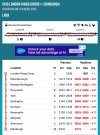
Speaking of delays, trespassers near Durham on the ECML this evening caused quite a few triple digit delays once again on LNER - I had to hop on a rail replacement bus from Darlington that took forever to get to Newcastle

Attachments
Intercity_225
Member
Do you have a screenshot of the delay out of curiosity as I don't have a RTT+ subscription.
Attachments

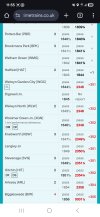


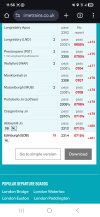
I have a couple of long delays in my gallery, nothing to the order of 500min though.
However I do have a DR 'reciept', owing to a questionable validity containing a 120+ minute delay between two London terminii NR stations where you can walk it in 15 minutes max!
However I do have a DR 'reciept', owing to a questionable validity containing a 120+ minute delay between two London terminii NR stations where you can walk it in 15 minutes max!
_toommm_
Established Member
Thank you @Intercity_225 - is that the one where an OTM/OTP failed just north of Doncaster which is why it was sat there for a while?
Intercity_225
Member
Indeed, aswell as a fire near the line at Stevenage.Thank you @Intercity_225 - is that the one where an OTM/OTP failed just north of Doncaster which is why it was sat there for a while?

QueensCurve
Established Member
- Joined
- 22 Dec 2014
- Messages
- 2,195
Archived links for those who can't access those pages:-Just time to bring up 2 of my favourite services ever..
https://web.archive.org/web/2025041...e/gb-nr:C71586/2025-04-17/detailed#allox_id=0
Realtime Trains | 1S99 2027 London Kings Cross to Edinburgh | 17/04/2025
Real-time train running information for 1S99 2027 departure from London Kings Cross to Edinburgh on 17/04/2025. From Realtime Trains, an independent source of train running info for Great Britain.
 web.archive.org

Wasn’t the last train to/from one of the Tavistock stuck on Dartmoor for ages?How about the one that got stuck in snow near Aviemore in 2010? Forsinard 1978? Or the one stuck at Bleath Gill, though it was freight? I saw a short film of it being feed many years ago, it was spectacular!
Purple Train
Established Member
Indeed, the line to/from Tavistock South and Launceston, closed at the very end of 1962. Michael Williams in On The Slow Train suggests that it "prevent[ed] the closure of the line", although apparently* the last day of passenger services was 29 December and the line was officially closed on New Year's Eve, so unless it was stranded for days in the blizzard I'm not sure if this is actually true.Wasn’t the last train to/from one of the Tavistock stuck on Dartmoor for ages?
*Julian Holland, Exploring Britain's Lost Railways. Unless any members of the forum know differently, I assume he's a more authoritative source, as Williams is an excellent writer but of a rather more romantic style!
Believe that in those days “closure date” was the first day on which no services ran. New Year’s Eve 1952 was a Monday - presumably there was no Sunday service, so the last train would /should have been on Saturday 29th.Indeed, the line to/from Tavistock South and Launceston, closed at the very end of 1962. Michael Williams in On The Slow Train suggests that it "prevent[ed] the closure of the line", although apparently* the last day of passenger services was 29 December and the line was officially closed on New Year's Eve, so unless it was stranded for days in the blizzard I'm not sure if this is actually true.
*Julian Holland, Exploring Britain's Lost Railways. Unless any members of the forum know differently, I assume he's a more authoritative source, as Williams is an excellent writer but of a rather more romantic style!

- Status
- Not open for further replies.