Station announcements do mention every stop currently I believe. Not on-train.They don't announce every stop currently? It's normally "This is the TfL Rail service to XXX. The next station is YYY".

-
Our new ticketing site is now live! Using either this or the original site (both powered by TrainSplit) helps support the running of the forum with every ticket purchase! Find out more and ask any questions/give us feedback in this thread!
You are using an out of date browser. It may not display this or other websites correctly.
You should upgrade or use an alternative browser.
You should upgrade or use an alternative browser.
Crossrail - Construction updates and progress towards opening (now expected 24 May 2022)
- Thread starter Taunton
- Start date
- Status
- Not open for further replies.
Sponsor Post - registered members do not see these adverts; click here to register, or click here to log in
R
RailUK Forums
Out west it can be useful to have this, because stopping patterns are somewhat ‘irregular’. Heathrow services call at Acton Main Line, Hanwell and West Ealing whereas Reading services do not. Hayes and Harlington services (I think) call at Hanwell and West Ealing but NOT Acton Main Line. In the morning and evening peak, some Reading-Paddington services also skip Southall and Hayes and Harlington.
My suggestion would be either to announce all stops until the calling pattern becomes regular (e.g. “calling at Bond Street, Paddington, Ealing Broadway, Southall and all stations to Reading”) or to use all stations, semi-fast and fast in the same way as the Metropolitan line, with on-train route diagrams showing ‘passing loops’ for the peak services. After Paddington, it would probably make sense to show the route to Heathrow a separate branch from that to Reading, with connector blobs at Ealing Broadway, Southall and Hayes and Harlington. This way, it is clear that Reading trains never call at Acton, West Ealing, Hanwell.
My suggestion would be either to announce all stops until the calling pattern becomes regular (e.g. “calling at Bond Street, Paddington, Ealing Broadway, Southall and all stations to Reading”) or to use all stations, semi-fast and fast in the same way as the Metropolitan line, with on-train route diagrams showing ‘passing loops’ for the peak services. After Paddington, it would probably make sense to show the route to Heathrow a separate branch from that to Reading, with connector blobs at Ealing Broadway, Southall and Hayes and Harlington. This way, it is clear that Reading trains never call at Acton, West Ealing, Hanwell.

DynamicSpirit
Established Member
My fiver is on a very quiet soft launch, with a more public one a few weeks later.
Is a very quiet soft launch possible? I'd have thought that, even if they just tried opening it without announcing anything, in these days of social media the news would spread like wildfire within hours.

kevin_roche
Member
- Joined
- 26 Feb 2019
- Messages
- 997
Out west it can be useful to have this, because stopping patterns are somewhat ‘irregular’. Heathrow services call at Acton Main Line, Hanwell and West Ealing whereas Reading services do not. Hayes and Harlington services (I think) call at Hanwell and West Ealing but NOT Acton Main Line. In the morning and evening peak, some Reading-Paddington services also skip Southall and Hayes and Harlington.
My suggestion would be either to announce all stops until the calling pattern becomes regular (e.g. “calling at Bond Street, Paddington, Ealing Broadway, Southall and all stations to Reading”) or to use all stations, semi-fast and fast in the same way as the Metropolitan line, with on-train route diagrams showing ‘passing loops’ for the peak services. After Paddington, it would probably make sense to show the route to Heathrow a separate branch from that to Reading, with connector blobs at Ealing Broadway, Southall and Hayes and Harlington. This way, it is clear that Reading trains never call at Acton, West Ealing, Hanwell.
Sounds sensible to me. I was about to write something very similar myself. I wonder though if the Transport secretary's edict about reducing announcements will apply, or perhaps it doesn't on TfL.

rd749249
Member
- Joined
- 15 Sep 2015
- Messages
- 187
Was taught never to announce stopping patterns using the word ‘Fast’, as it invariably ends up being anything other than that.

Was taught never to announce stopping patterns using the word ‘Fast’, as it invariably ends up being anything other than that.
Yes "non-stop" is generally better.
davetheguard
Established Member
- Joined
- 10 Apr 2013
- Messages
- 1,939

Yindee8191
Member
- Joined
- 16 Mar 2019
- Messages
- 181
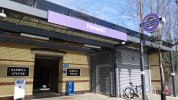
I’ve been out and about in London today and noticed a lot of uncovered roundels.I got off at the rather attractive Hanwell station two days ago and noticed the uncovered roundel is in position already.
It might have been noted already but it also looked like the advertising boards at Abbey Wood had ads on them - surely a good sign that opening is near as no company would pay for ads that nobody is seeing.
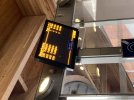
Finally, the CrossRail departures board at Abbey Wood was showing the departures towards Paddington, with just a small plaque to inform customers that the line isn’t yet in service.
Attachments
Peter Sarf
Established Member
Interesting service frequency ?. And a blip on the new screen where the sixth service would be !.I’ve been out and about in London today and noticed a lot of uncovered roundels.
It might have been noted already but it also looked like the advertising boards at Abbey Wood had ads on them - surely a good sign that opening is near as no company would pay for ads that nobody is seeing.
Finally, the CrossRail departures board at Abbey Wood was showing the departures towards Paddington, with just a small plaque to inform customers that the line isn’t yet in service.

I’m a little surprised it’s using the now considered ‘old’ tech of an LED based screen than a newer LCD one to be honest!Interesting service frequency ?. And a blip on the new screen where the sixth service would be !.
Peter Sarf
Established Member
Oh yes, I had not thought of that.I’m a little surprised it’s using the now considered ‘old’ tech of an LED based screen than a newer LCD one to be honest!
Were they current tech in December 2018 though?I’m a little surprised it’s using the now considered ‘old’ tech of an LED based screen than a newer LCD one to be honest!

That had crossed my mind that they could have been installed then. But, quite possibly - when did Greater Anglia start installing theirs? Pretty sure they had them in January 2019?Were they current tech in December 2018 though?
kevin_roche
Member
- Joined
- 26 Feb 2019
- Messages
- 997
Another video about one of the recent evacuation events
I'd much rather a nice clear, bright and easily readable LED screen than the ANIMATION EVERYWHERE confused fanciness of the GA screens.
We moved away from computer monitors as platform displays to LED because they were better. I'm yet to see any of the new batch of computer monitors improving things.
We moved away from computer monitors as platform displays to LED because they were better. I'm yet to see any of the new batch of computer monitors improving things.
Article in the Guardian on the Liz Line from an "architecture critic"

 www.theguardian.com
The longest medieval cathedral in the world, Winchester, is 170 metres (558ft) from end to end. The new stations on the Elizabeth line are 240 metres (788ft) or more long, and sometimes nine or 10 storeys underground. And these are only the most visible manifestations of the vast volumes hollowed out of the London soil to achieve an underground railway bigger and faster than any before, of what was at one point the largest transport engineering project in Europe, decades and billions of pounds in the making, a system more technologically complex, says its chief executive, than any outside China.
A megalopolis of engineering: the verdict on London’s £18bn new Elizabeth line
Brexit, Covid, Ukraine… the world has changed dramatically since work began on the Crossrail project. With its opening imminent, our architecture critic takes a ride
www.theguardian.com

joshy.fre_2003
Member
- Joined
- 25 Mar 2016
- Messages
- 140
There’s some sort of event on at Paddington today with all sorts of press and other social media Railway folk. Is this another evacuation or something more?
- Edited -
Just found this on twitter which seems to have answered my own question!
- Edited -
Just found this on twitter which seems to have answered my own question!
Attachments

swt_passenger
Veteran Member
- Joined
- 7 Apr 2010
- Messages
- 34,282
Hope he realises “240m“ platforms are already commonplace all over the country, yes they’re much bigger than the typical “tube” platforms but they’re not exactly unusual in a wider context…Article in the Guardian on the Liz Line from an "architecture critic"
kevin_roche
Member
- Joined
- 26 Feb 2019
- Messages
- 997
There’s some sort of event on at Paddington today with all sorts of press and other social media Railway folk. Is this another evacuation or something more?
- Edited -
Just found this on twitter which seems to have answered my own question!
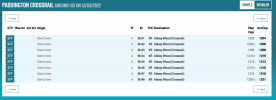
Yes, the timetable involves 8 trains in 20 minutes.
Attachments

DelW
Established Member
- Joined
- 15 Jan 2015
- Messages
- 6,012
How many of those are enclosed over their full length though? Most overall roofs don't extend over the full length of the platforms. Unfortunately I can't think of any reference sources that would tell me the answer to that!Hope he realises “240m“ platforms are already commonplace all over the country, yes they’re much bigger than the typical “tube” platforms but they’re not exactly unusual in a wider context…

CapitalStar378
Member
- Joined
- 22 Jun 2013
- Messages
- 603
There are also ads in the Crossrail passageways behind the barriers at TCRI’ve been out and about in London today and noticed a lot of uncovered roundels.
It might have been noted already but it also looked like the advertising boards at Abbey Wood had ads on them - surely a good sign that opening is near as no company would pay for ads that nobody is seeing.
Finally, the CrossRail departures board at Abbey Wood was showing the departures towards Paddington, with just a small plaque to inform customers that the line isn’t yet in service.
Don't quite understand the "" around architecture critic. Rowan Moore is the architecture critic of the Guardian. Or are only 'railway experts' allowed to have a view on how the stations look and feel ?Article in the Guardian on the Liz Line from an "architecture critic"
As for the article itself, (a) why shouldn't an architecture critic review the architecture of the stations - it is much more than 'engineering' and in many places it is fairly stunning, (b) Rowan Moore makes no comment on the S&C, rail bed, electrification standards, platform information screens, timetable frequency or anything more railway engineering that seems to exercise some of this forum and (c) from reading the article, it's a pretty positive review of the scheme itself, its financing and background, notwithstanding the griping of non-Londoners/those with professional axes to grind (in fact the only personal peice of snark appears to be about Will Alsop's North Greenwich station on the Jubilee Line which I've not visited so have no comment on). The questions it raises about future use - both around London itself and the commuter market are fair ones to ask, and well-handled.
It's amazing how the fact that it will take less than 30 minutes from Woolwich/Canary Wharf to Heathrow when the alternative is double the time on the Central/Jubilee & Piccadilly Lines or HEL with at least one change is forgotten. Go and read Mark Paul's article in the Irish Times about parking charges for drop-offs at Dublin Airport to see how users believe that infrastructure fails to function properly and fairly without the drive and determination to do long term planning and invest.
Although tbh, I'm far more interested in what Diamond Geezer's review will be.
Well there's City Thameslink, fully enclosed which has a capability of 24 trains per hour in each direction, with current train lengths of up to 242m long the platforms are 299m northbound and 296m southbound. If the Crossrail platforms were only 240m long a 12-car class 700 wouldn't even fit there. I was under the impression that the core platform bores were long enough to accept 11-car (249m) trains in the future should passenger traffic make that necessary.How many of those are enclosed over their full length though? Most overall roofs don't extend over the full length of the platforms. Unfortunately I can't think of any reference sources that would tell me the answer to that!
Not him, but I have strong opinions on the subject of architects and architecture critics, of which "incestuous" is probably the kindest.Don't quite understand the "" around architecture critic. Rowan Moore is the architecture critic of the Guardian. Or are only 'railway experts' allowed to have a view on how the stations look and feel ?

Nottingham59
Established Member
Is that in the timetables now?City Thameslink, fully enclosed which has a capability of 24 trains per hour in each direction
I said "a capability of 24 trains per hour". That includes power supplies, signalling and passenger handling for that number, plus an excess if needed to recover from disruption.Is that in the timetables now?
However, there are 14 & 15 trains timetabled to pass through St Pancras International Platforms A & B respectively tomorrow between 07:30 and 08:29. Similarly, there are 14 scheduled to pass through each way between 17:00 and 17:59. Both these are under what must be an abbreviated timetable. It will change when the true post-pandemic service is finally introduced.
Nottingham59
Established Member
I know that 24tph was always the claimed target. I was asking if they have ever demonstrated that it will be achievable in real life. Personally I doubt it: the rail industry has a history of promising capabilities that turn out to be impossible to deliver.I said "a capability of 24 trains per hour". That includes power supplies, signalling and passenger handling for that number, plus an excess if needed to recover from disruption.
However, there are 14 & 15 trains timetabled to pass through St Pancras International Platforms A & B respectively tomorrow between 07:30 and 08:29. Similarly, there are 14 scheduled to pass through each way between 17:00 and 17:59. Both these are under what must be an abbreviated timetable. It will change when the true post-pandemic service is finally introduced.
- Status
- Not open for further replies.