• Our new ticketing site is now live! Using either this or the original site (both powered by TrainSplit) helps support the running of the forum with every ticket purchase! Find out more and ask any questions/give us feedback in this thread!

Could compatible EMUs and DMUs in theory run in multiple?

Status
Not open for further replies.

Dai Corner

Established Member
Joined
20 Jul 2015
Messages
6,995
The spec for the BR Class 210 DMU included the ability to work in multiple with EMUs. Two prototype units were built but I don't know whether they actually included or demonstrated that functionality.
 
Sponsor Post - registered members do not see these adverts; click here to register, or click here to log in
R

RailUK Forums

Grumpy

Established Member
Joined
8 Nov 2010
Messages
1,322
This thread would have been more relevant in the days before bi-modes, but I'm just interested. Could compatible EMUs and DMUs have run in multiple?
Well there's a video on YouTube of a Pendolino and Voyager running in multiple .
 

O L Leigh

Established Member
Joined
20 Jan 2006
Messages
5,609
Location
In the cab with the paper
The spec for the BR Class 210 DMU included the ability to work in multiple with EMUs. Two prototype units were built but I don't know whether they actually included or demonstrated that functionality.

Im unsure if the truth of this. Given that the Cl210 was basically a Cl317 with a generator set it would appear that it might have been possible, but not specifically by design.
 

Dai Corner

Established Member
Joined
20 Jul 2015
Messages
6,995
Im unsure if the truth of this. Given that the Cl210 was basically a Cl317 with a generator set it would appear that it might have been possible, but not specifically by design.
I forgot to add the caveat 'according to Wikipedia' to my earlier post. Unless somebody who knows for sure comes forward we'll remain unsure.
 

edwin_m

Veteran Member
Joined
21 Apr 2013
Messages
28,707
Location
Nottingham
Im unsure if the truth of this. Given that the Cl210 was basically a Cl317 with a generator set it would appear that it might have been possible, but not specifically by design.
I forgot to add the caveat 'according to Wikipedia' to my earlier post. Unless somebody who knows for sure comes forward we'll remain unsure.
I do remember reading it at the time, probably in Modern Railways. It was specifically mentioned as allowing a DMU and EMU to run in multiple out of London*, and then split for the DMU to continue to some non-electrified destination.

*Other cities are available. Whether BR or the PTEs would have considered the 210 affordable beyond the London commuter market is however questionable.
 

XAM2175

Established Member
Joined
8 Jun 2016
Messages
3,471
Location
Glasgow
Im unsure if the truth of this. Given that the Cl210 was basically a Cl317 with a generator set it would appear that it might have been possible, but not specifically by design.
I forgot to add the caveat 'according to Wikipedia' to my earlier post. Unless somebody who knows for sure comes forward we'll remain unsure.

The claim in the Wikipedia article cites a 1987 paper in the Proceedings of the Institute of Mechanical Engineers, Volume 201 Number D2, "British Rail diesel multiple unit replacement programme" by A. G. L. Shore of the Railway Technical Centre.

The paper is available here: https://citeseerx.ist.psu.edu/viewdoc/download?doi=10.1.1.1008.3291&rep=rep1&type=pdf

The relevant quote:
It was clearly recognized that a market existed for a diesel multiple unit with a better environment than that offered by lightweight, thus making it suitable for longer distances. The class 210, however, suffered from being initially overspecified in business terms. The specification called for:
- 90 mile/h top speed (145 km/h)
- Acceleration compatible with EMU
- Multipling and coupling with EMU
- Through passenger access
- Pressure ventilation
- Three- or four-car consist
- Ability to assist another dead unit
Three- and four-car prototypes were produced having two combinations of power equipment:
- Unit 1 - four-car Paxman engine, Brush electrical equipment
- Unit 2 - three-car MTU engine, GEC electrical equipment
The layout was similar in both cases but the specification took its toll on costs ...

So I think it's fairly safe to claim that the functionality was requested, but indeed there's still a question open in whether or not it was actually provided or demonstrated.
 

Neptune

Established Member
Joined
29 May 2018
Messages
2,626
Location
Yorkshire
I do remember reading it at the time, probably in Modern Railways. It was specifically mentioned as allowing a DMU and EMU to run in multiple out of London*, and then split for the DMU to continue to some non-electrified destination.

*Other cities are available. Whether BR or the PTEs would have considered the 210 affordable beyond the London commuter market is however questionable.
I’m sure at the time that the idea was for a 210+317 to work as far as Bedford with the 210 carrying on to Leicester. 40 years may have dimmed the memory somewhat however.
 

Vespa

Established Member
Joined
20 Dec 2019
Messages
1,733
Location
Merseyside
I remembered in the 90s riding at the East Lancashire Railway a pair of Class 504s with a loco in the middle on one of special events.

I thought that was quite unique and did wonder how it worked, I can only assume there was some power linkage so it can be driven at either end as you would need to see the signals and points.

It's not been repeated since and one of the 504 have since been scrapped.
 

SargeNpton

Established Member
Joined
19 Nov 2018
Messages
1,744
I’m sure at the time that the idea was for a 210+317 to work as far as Bedford with the 210 carrying on to Leicester. 40 years may have dimmed the memory somewhat however.
Wasn't this also an idea when the (never built) theme park was proposed for Corby; with the DMU going forward from Bedford to serve the theme park visitors.
 

edwin_m

Veteran Member
Joined
21 Apr 2013
Messages
28,707
Location
Nottingham
I’m sure at the time that the idea was for a 210+317 to work as far as Bedford with the 210 carrying on to Leicester. 40 years may have dimmed the memory somewhat however.
As the 317s worked that route at the time and the 210 probably couldn't multiple with anything else, it would be an obvious choice for a first application. But Leicester seems a bit far to go in something that might have been better than a Pacer but was the same interior as a 317 but noisier. I can't remember if the idea of serving Corby was on or off at the time.
 

Irascible

Established Member
Joined
21 Apr 2020
Messages
2,233
Location
Dyfneint
I remembered in the 90s riding at the East Lancashire Railway a pair of Class 504s with a loco in the middle on one of special events.

I thought that was quite unique and did wonder how it worked, I can only assume there was some power linkage so it can be driven at either end as you would need to see the signals and points.

It's not been repeated since and one of the 504 have since been scrapped.

The Southern EMU control system would let you stick a suitable locomotive in the middle ( 33s & 73s mostly ) & not have to get in it at any point to drive it ( once it's all attached properly anyway ). Not sure it was used in anger with actual EMUs rather than the TC trailer units but the system would let you.
 

jfollows

Established Member
Joined
26 Feb 2011
Messages
10,138
Location
Wilmslow
The Southern EMU control system would let you stick a suitable locomotive in the middle ( 33s & 73s mostly ) & not have to get in it at any point to drive it ( once it's all attached properly anyway ). Not sure it was used in anger with actual EMUs rather than the TC trailer units but the system would let you.
Definitely used in anger, if you search the forum for "EML" you will find discussion about this, primarily related to Salisbury (33+TC) and Southampton (VEP) services which combined at Basingstoke, or vice-versa.
For example (https://www.railforums.co.uk/thread...rical-patterns-1967-2003.220711/#post-5252982)
The EML (Vep-TC-33) workings in 1978-9 was 0645 Salisbury/0758 Basingstoke, after Farnborough calling only Woking.
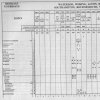
EDIT See attached from 16/5/88 to 14/5/89 working timetable; 2B69 23:45 Waterloo to Bournemouth and Salisbury. Front portion EMU (4-VEP) I think, then 33+4-TC. Split at Basingstoke with 2L49 leaving shortly after the Bournemouth portion to Salisbury.
 

Attachments

  • 2B69 1.jpeg
    2B69 1.jpeg
    517.2 KB · Views: 10
Last edited:

MattRat

On Moderation
Joined
26 May 2021
Messages
2,128
Location
Liverpool
It would surely depend entirely on the wiring, and whether or not the trains were designed to work together? The main issue would be the appropriate adjustment of performance so that the EMU was accelerating at a similar rate to the slower DMU. I'm told the Southern Region had worked out how to do this, and so you could have a diesel 33 attached to a train of MK1 EMUs and the whole lot powering together smoothly.

The Southern Region of course were particularly savvy in ensuring that their stock was compatible, something that the fragmented modern railway could learn an awful lot from.
I definitely think working it around locos would be best. Maybe even just turn the diesel off over electrified sections since the dead weight wouldn't be too great compared to a DMU.
 

GRALISTAIR

Established Member
Joined
11 Apr 2012
Messages
10,534
Location
Preston Lancs
Sadly in my younger days it seems most things on the railway were made compatible. I thought about starting a thread like this a while ago. Couple a DMU and EMU together and when an unelectrified bit comes drop the pan on the EMU and run from the DMU or similar. Technology is surely there but just needs some joined up thinking.
 

edwin_m

Veteran Member
Joined
21 Apr 2013
Messages
28,707
Location
Nottingham
I definitely think working it around locos would be best. Maybe even just turn the diesel off over electrified sections since the dead weight wouldn't be too great compared to a DMU.
A loco would be quite literally that, dead weight, equivalent to 2-3 coaches of a DMU. So it would probably get removed at the station where electrification started, as used to happen with the Weymouth push-pulls (unpowered 4TC unit coupled to a powered 4REP east of Bournemouth and to a Class 33 further west). A DMU would add weight but also increase the passenger capacity.
 

Irascible

Established Member
Joined
21 Apr 2020
Messages
2,233
Location
Dyfneint
I definitely think working it around locos would be best. Maybe even just turn the diesel off over electrified sections since the dead weight wouldn't be too great compared to a DMU.
MUs just make more sense for passenger service - you can use the entire length of the train for accomodation. If the DMU is built with a modular powertrain then there's no advantage from the flexibility of being able to replace a diesel locomotive with an electric, as per speccing the old Bournemouth/Weymouth service.
 

MattRat

On Moderation
Joined
26 May 2021
Messages
2,128
Location
Liverpool
A loco would be quite literally that, dead weight, equivalent to 2-3 coaches of a DMU. So it would probably get removed at the station where electrification started, as used to happen with the Weymouth push-pulls (unpowered 4TC unit coupled to a powered 4REP east of Bournemouth and to a Class 33 further west). A DMU would add weight but also increase the passenger capacity.
I suppose that's sort of a half and half solution. Have EMU stock capable of being loco pulled, and then attach and detach the diesel loco when required.
 

DerekC

Established Member
Joined
26 Oct 2015
Messages
2,442
Location
Hampshire (nearly a Hog)
As far as I'm aware there has never been a coupler (automatic or manual) that can be coupled and uncoupled in service but can also carry the voltage and current needed for traction purposes.
I am sure I recall a grey day at Lille Europe, waiting for the Eurostar back to London and seeing through the fence a pair of TGV units coupled together with what looked like a 25kV connector at roof level between the power cars. Or was I dreaming? Possible, because I was thinking how nice it would be to just get on the TGV to Avignon or somewhere!
 

Tester

Established Member
Joined
5 Jul 2020
Messages
1,725
Location
Watford
I am sure I recall a grey day at Lille Europe, waiting for the Eurostar back to London and seeing through the fence a pair of TGV units coupled together with what looked like a 25kV connector at roof level between the power cars. Or was I dreaming? Possible, because I was thinking how nice it would be to just get on the TGV to Avignon or somewhere!
Between carriages within a unit, but most certainly not between units!
 

Alfie1014

Established Member
Joined
27 Jun 2012
Messages
1,205
Location
Essex
They run under their own power (noting that they need to run their engines for 'hotel' power regardless).
This is a really good video showing a IR4 and IC3 combo leaving Odense in both electric and diesel.
 

XAM2175

Established Member
Joined
8 Jun 2016
Messages
3,471
Location
Glasgow
Couple a DMU and EMU together and when an unelectrified bit comes drop the pan on the EMU and run from the DMU or similar. Technology is surely there but just needs some joined up thinking.
Technology still hasn't delivered a way of sending traction power through a non-permanent coupling, so the closest available method of operation to what you suggest would be to use the DMU to supply ETS to an otherwise-dead EMU... and that's not very far from how LNER already drag/push their electric-only Azumas around with their bi-mode ones (they just use a diesel generator on the 'pure' EMU to generate ETS).

This is a really good video showing a IR4 and IC3 combo leaving Odense in both electric and diesel.
It's a bit odd the first few times you hear the obvious traction motors followed by the burst of exhaust noise - but much less now that you can also get it from a diesel FLIRT :p
 

AM9

Veteran Member
Joined
13 May 2014
Messages
16,060
Location
St Albans
Technology still hasn't delivered a way of sending traction power through a non-permanent coupling, so the closest available method of operation to what you suggest would be to use the DMU to supply ETS to an otherwise-dead EMU... and that's not very far from how LNER already drag/push their electric-only Azumas around with their bi-mode ones (they just use a diesel generator on the 'pure' EMU to generate ETS).


It's a bit odd the first few times you hear the obvious traction motors followed by the burst of exhaust noise - but much less now that you can also get it from a diesel FLIRT :p

... And 769s, as has been commented by almost everybody who has travelled on them. I know they are an integrated unit, but the effective audible and visual contradiction is similar.
 
Status
Not open for further replies.

Top