• Our new ticketing site is now live! Using either this or the original site (both powered by TrainSplit) helps support the running of the forum with every ticket purchase! Find out more and ask any questions/give us feedback in this thread!

Construction progress: TPE 350/4

Status
Not open for further replies.
Sponsor Post - registered members do not see these adverts; click here to register, or click here to log in
R

RailUK Forums

Goatboy

Established Member
Joined
23 Jun 2011
Messages
2,274
I agree completely. I also agree with your timescale: this isn't just something that's come along with privatisation, it started with BR, which thought 150s, and later 156s and 158s, were adequate replacements for stock with seats around tables on trans-pennine routes.

On the contrary I think a refurbished 158 (For the benchmark in quality, see South West Trains) is very much a standard to which TOC's should aspire. They are comfortable for long journeys, the seating is comfortable, they are carpetted both floor and walls which not only makes the train feel a bit more luxurious is also good for acoustics.

By contrast things like the 350's just seem totally plastic and sparse inside. They look, inside and out, a bit like a budget train, if that makes sense. Everything about them appears simple and ordinary - from the shape of the bodyshell, down the interior. Just LOOK at that 'First Class' section. Vinyl floors. Plastic walls. Bare tables with a white plastic light. Whats First Class about that? This is a standard of accomodation for which you'll be charged £140 to £255 for a return ticket from Manchester to Edinburgh in!


It must be possible to still make units nice inside. The 158 refurbs are not 'old' they are 'new' - they are a product of todays railway and todays refurbishment programmes, so we ARE still capable of doing it right. Why don't we on brand new units?
 
Last edited:

Rhydgaled

Established Member
Joined
25 Nov 2010
Messages
4,856
On the contrary I think a refurbished 158 (For the benchmark in quality, see South West Trains) is very much a standard to which TOC's should aspire. They are comfortable for long journeys, the seating is comfortable
Not been on many SWT 158s, but the only problem with the one or two I have been on is the (lack of) legroom. On the other hand, a class 175 has ample legroom but the seats are too hard, and the cab design is insufficently useful (no corridor connection) and very dull to look at. Can't we have something that combines the best features of both?

By contrast things like the 350's just seem totally plastic and sparse inside. They look, inside and out, a bit like a budget train, if that makes sense. Everything about them appears simple and ordinary - from the shape of the bodyshell, down the interior.
They are nicer than pacers and 150s, although the bodyshell shape of a 377 is better looking than a Desiro in my opinion.

It must be possible to still make units nice inside. The 158 refurbs are not 'old' they are 'new' - they are a product of todays railway and todays refurbishment programmes, so we ARE still capable of doing it right. Why don't we on brand new units?
Well, not quite right (owing to the lack of legroom on SWT 158s) but close to right. One problem which probably does stem back to BR days but has got worse since privatisation, is the mix of stock types isn't right. We don't have the right ratio of long(and longish)-distance regional-express stock to suburban stock. With BR it was probably too many Pacers/150s and not enough 156s/155s and too many 166s/165s and not enough 158s/159s. Post-privatisation we have too many Turbostars, Electrostars and Desiros (other than 444s) and not enough 444s/175s (I think these are the only post-privatisation regional-express stock, unless you count 180s and Voyagers as regional express rather than intercity). When you think there are far less 175s than 158s you see the problem is getting worse.

 

jimm

Established Member
Joined
6 Apr 2012
Messages
5,276
Not been on many SWT 158s, but the only problem with the one or two I have been on is the (lack of) legroom. On the other hand, a class 175 has ample legroom but the seats are too hard, and the cab design is insufficently useful (no corridor connection) and very dull to look at. Can't we have something that combines the best features of both?

They are nicer than pacers and 150s, although the bodyshell shape of a 377 is better looking than a Desiro in my opinion.

Well, not quite right (owing to the lack of legroom on SWT 158s) but close to right. One problem which probably does stem back to BR days but has got worse since privatisation, is the mix of stock types isn't right. We don't have the right ratio of long(and longish)-distance regional-express stock to suburban stock. With BR it was probably too many Pacers/150s and not enough 156s/155s and too many 166s/165s and not enough 158s/159s. Post-privatisation we have too many Turbostars, Electrostars and Desiros (other than 444s) and not enough 444s/175s (I think these are the only post-privatisation regional-express stock, unless you count 180s and Voyagers as regional express rather than intercity). When you think there are far less 175s than 158s you see the problem is getting worse.

And off you go with your 'opinions' again. You don't live in the Thames Valley, so why do you think you are qualified to write stuff like there are "too many 166s/165s"? On the contrary, given the overcrowding that has been commonplace on peak services out of Paddington for many years now, it's not to hard to argue that many more should have been built.

They were designed with specific jobs in mind on the GWML and the Chiltern route - not because of where they might be sent 20-plus years after they were first introduced when displaced by the long-overdue electrification. If BR had tried to use 158/159-type stock in the Thames Valley instead, it would have been a disaster.

Just in case you hadn't noticed, the 175/180 family was an unmitigated disaster in terms of reliability when first introduced and the only viable alternative option for dmus was the Turbostar, so no wonder lots of them got built.
 

LNW-GW Joint

Veteran Member
Joined
22 Feb 2011
Messages
21,902
Location
Mold, Clwyd
On the contrary I think a refurbished 158 (For the benchmark in quality, see South West Trains) is very much a standard to which TOC's should aspire. They are comfortable for long journeys, the seating is comfortable, they are carpetted both floor and walls which not only makes the train feel a bit more luxurious is also good for acoustics.

EMT/ATW did a decent job refurbishing their 158s, but forgot to upgrade the aircon and they still have dump toilets.
They are still noisy, cramped units, now with poor sightlines because of the high seatbacks. Coffins, somebody called them.

350/1s are actually very nice trains to ride in, and if the 350/4s are similar they will be fine.
The big difference will be no engine noise (compared to 185s).
Birmingham-Liverpool is quite pleasant in a 350/1 (but not a 350/2 which has cramped 3+2 seating and no tray tables for your coffee).
 

Rhydgaled

Established Member
Joined
25 Nov 2010
Messages
4,856
And off you go with your 'opinions' again. You don't live in the Thames Valley, so why do you think you are qualified to write stuff like there are "too many 166s/165s"? On the contrary, given the overcrowding that has been commonplace on peak services out of Paddington for many years now, it's not to hard to argue that many more should have been built.
I was thinking about the Cotswolds line rather than the Thames Valley services in general. Hereford/Worcester - PAD sounds like rather a long way to go on 166s/165s, and the 180s seem to have been welcomed there. Maybe the number of 166s/165s built was actually correct but they shoud have been joined by stock suitable for the longer distance runs too?

Just in case you hadn't noticed, the 175/180 family was an unmitigated disaster in terms of reliability when first introduced and the only viable alternative option for dmus was the Turbostar, so no wonder lots of them got built.
Could the Turbostar design not have been adapted to include a 158-like regional express varient?
 

jopsuk

Veteran Member
Joined
13 May 2008
Messages
12,774
Probably could have been- the *star platform is modular, as with most modern stock. I'd guess that the only reason there weren't any such units built was no-one ordered them.
 

Rhydgaled

Established Member
Joined
25 Nov 2010
Messages
4,856
EMT/ATW did a decent job refurbishing their 158s, but forgot to upgrade the aircon and they still have dump toilets.
They are still noisy, cramped units, now with poor sightlines because of the high seatbacks. Coffins, somebody called them.
I actually think the views out of ATW 158s aren't bad, thanks to SARPA who pushed for the remaining tables to line up with the windows. Compared to Pendos where you can only really see out of your side because the windows are so small.
 

59CosG95

Established Member
Joined
18 Aug 2013
Messages
6,854
Location
Beeston (Notts)
I was thinking about the Cotswolds line rather than the Thames Valley services in general. Hereford/Worcester - PAD sounds like rather a long way to go on 166s/165s, and the 180s seem to have been welcomed there. Maybe the number of 166s/165s built was actually correct but they shoud have been joined by stock suitable for the longer distance runs too?

Could the Turbostar design not have been adapted to include a 158-like regional express varient?

LM's 172/2's look similar to a 158, but whether they do "regional express" services is beyond me.
 

387star

On Moderation
Joined
16 Nov 2009
Messages
6,665
EMT/ATW did a decent job refurbishing their 158s, but forgot to upgrade the aircon and they still have dump toilets.
They are still noisy, cramped units, now with poor sightlines because of the high seatbacks. Coffins, somebody called them.

350/1s are actually very nice trains to ride in, and if the 350/4s are similar they will be fine.
The big difference will be no engine noise (compared to 185s).
Birmingham-Liverpool is quite pleasant in a 350/1 (but not a 350/2 which has cramped 3+2 seating and no tray tables for your coffee).

I prefer tall seats you can hide behind

Strange how SWT 450s have tray tables but 350/s don't
--- old post above --- --- new post below ---
LM's 172/2's look similar to a 158, but whether they do "regional express" services is beyond me.

Look ver different to me!
--- old post above --- --- new post below ---
EMT/ATW did a decent job refurbishing their 158s, but forgot to upgrade the aircon and they still have dump toilets.
They are still noisy, cramped units, now with poor sightlines because of the high seatbacks. Coffins, somebody called them.

350/1s are actually very nice trains to ride in, and if the 350/4s are similar they will be fine.
The big difference will be no engine noise (compared to 185s).
Birmingham-Liverpool is quite pleasant in a 350/1 (but not a 350/2 which has cramped 3+2 seating and no tray tables for your coffee).

What's wrong with the toilets? I assume ATWs are now DDA compliant whereas EMT have not upgraded the toilet area to be DDA compliant nor have they fitted PIS
 

hwl

Established Member
Joined
5 Feb 2012
Messages
8,240
I was thinking about the Cotswolds line rather than the Thames Valley services in general. Hereford/Worcester - PAD sounds like rather a long way to go on 166s/165s, and the 180s seem to have been welcomed there. Maybe the number of 166s/165s built was actually correct but they shoud have been joined by stock suitable for the longer distance runs too?

Could the Turbostar design not have been adapted to include a 158-like regional express variant?

Apparently they can't have the doors near the ends.

The regional express type layout also means less standing room and poor dwell times which could limit capacity on certain routes in the peaks hence there is a very small potential market for them (hence probably no future ROSCO interest?). For example the thameslink rolling stock contract specified dwell times and bidders needed to show that their proposed door layouts and sizes could provide the necessary dwell times.
The 1/3 - 2/3 layout is effectively the default for all non high speed (i.e. 125mph) and that isn't really going to change.
 

387star

On Moderation
Joined
16 Nov 2009
Messages
6,665
On the contrary I think a refurbished 158 (For the benchmark in quality, see South West Trains) is very much a standard to which TOC's should aspire. They are comfortable for long journeys, the seating is comfortable, they are carpetted both floor and walls which not only makes the train feel a bit more luxurious is also good for acoustics.

By contrast things like the 350's just seem totally plastic and sparse inside. They look, inside and out, a bit like a budget train, if that makes sense. Everything about them appears simple and ordinary - from the shape of the bodyshell, down the interior. Just LOOK at that 'First Class' section. Vinyl floors. Plastic walls. Bare tables with a white plastic light. Whats First Class about that? This is a standard of accomodation for which you'll be charged £140 to £255 for a return ticket from Manchester to Edinburgh in!


It must be possible to still make units nice inside. The 158 refurbs are not 'old' they are 'new' - they are a product of todays railway and todays refurbishment programmes, so we ARE still capable of doing it right. Why don't we on brand new units?

AFAIK the 350s are carpeted throughout and most 158s no longer have carpet walls... which is good IMO
 

Eagle

Established Member
Joined
20 Feb 2011
Messages
7,106
Location
Leamingrad / Blanfrancisco
LM's 172/2's look similar to a 158, but whether they do "regional express" services is beyond me.

LM's 172s are pretty much confined to suburban stopping routes. Furthest from Birmingham you'll see one is Great Malvern.

In fact that seems to be true of 172s in general. The longest service regularly worked by a 172 is London Marylebone to Stratford-upon-Avon at 104 miles (and that's far from an express service).
 

Rhydgaled

Established Member
Joined
25 Nov 2010
Messages
4,856
LM's 172/2's look similar to a 158, but whether they do "regional express" services is beyond me.
They aren't regional expressy, so I'd hope they wouldn't be doing regional express services.

Apparently they can't have the doors near the ends.
Why not?

The regional express type layout also means less standing room and poor dwell times which could limit capacity on certain routes in the peaks hence there is a very small potential market for them
I know it means longer dwells and less standing room, but the alternative means less seats/legroom in favor of standing room. Not acceptable for long distance journeys, or limited stop services where dwell times matter less, in my opinion.

For example the thameslink rolling stock contract specified dwell times and bidders needed to show that their proposed door layouts and sizes could provide the necessary dwell times.
Thameslink is difficult, it runs all the way through to Brighton but the Thameslink section itself is almost certainly a route where suburban-type stock is suitable,

The 1/3 - 2/3 layout is effectively the default for all non high speed
This does seem to be the case and is the problem I am highlighting. It needs to change, suburban stock should not be the default for everything that isn't intercity.

LM's 172s are pretty much confined to suburban stopping routes
Good, that's what they are designed for. All stock like 166s, 165s, 168s, 150s, 170s and 172s should confined to suburban stopping routes, that's what they are for.
 

Eagle

Established Member
Joined
20 Feb 2011
Messages
7,106
Location
Leamingrad / Blanfrancisco
Good, that's what they are designed for. All stock like 166s, 165s, 168s, 150s, 170s and 172s should confined to suburban stopping routes, that's what they are for.

That is not what the 170s were designed for. They were designed, by ABB/Adtranz in the late 1990s, as regional express units.
 

tbtc

Veteran Member
Joined
16 Dec 2008
Messages
18,051
Location
Reston City Centre
All stock like 166s, 165s, 168s, 150s, 170s and 172s should confined to suburban stopping routes, that's what they are for.

That is not what the 170s were designed for. They were designed, by ABB/Adtranz in the late 1990s, as regional express units.

Given that 170s were first introduced on routes like Barnsley/ Matlock/ Nottingham - London, Edinburgh - Glasgow, Lowestoft - London, Hull - London etc, I don't know where the idea of "suburban stopping routes" comes from. In fact, beyond the Anniesland - Queen Street services, how many suburban stopping routes have 170s ever actually (regularly) worked?

Similarly, those like myself around in the '80s remember BR introducing 150s for the kind of routes that you'd now expect something like a 185 for (I've done a few long distance journeys by 150, in the days when they formed the majority of stock on routes like Birmingham - Cardiff).
 

fowler9

Established Member
Joined
29 Oct 2013
Messages
8,380
Location
Liverpool
Given that 170s were first introduced on routes like Barnsley/ Matlock/ Nottingham - London, Edinburgh - Glasgow, Lowestoft - London, Hull - London etc, I don't know where the idea of "suburban stopping routes" comes from. In fact, beyond the Anniesland - Queen Street services, how many suburban stopping routes have 170s ever actually (regularly) worked?

Similarly, those like myself around in the '80s remember BR introducing 150s for the kind of routes that you'd now expect something like a 185 for (I've done a few long distance journeys by 150, in the days when they formed the majority of stock on routes like Birmingham - Cardiff).

Indeed, I remember getting a 150/2 from Liverpool to Scarborough. Horrible!
 

Eagle

Established Member
Joined
20 Feb 2011
Messages
7,106
Location
Leamingrad / Blanfrancisco
In fact, beyond the Anniesland - Queen Street services, how many suburban stopping routes have 170s ever actually (regularly) worked?

SWT used some of theirs on local services around Southampton and Portsmouth. That's all I can think of (it's probably stretching it to call the Birmingham to Leicester stopping service "suburban").
 

hwl

Established Member
Joined
5 Feb 2012
Messages
8,240
They aren't regional expressy, so I'd hope they wouldn't be doing regional express services.

Why not?

I know it means longer dwells and less standing room, but the alternative means less seats/legroom in favor of standing room. Not acceptable for long distance journeys, or limited stop services where dwell times matter less, in my opinion.

Thameslink is difficult, it runs all the way through to Brighton but the Thameslink section itself is almost certainly a route where suburban-type stock is suitable,

This does seem to be the case and is the problem I am highlighting. It needs to change, suburban stock should not be the default for everything that isn't intercity.
are for.

Many on this forum probably don't think this is a problem especially if you use a busy route where the number of trains per hour is only supported by low dwell times and more tph is ultimately reliant on getting rid of a small amount of stock with end doors.

Ultimately the railway will be cheaper to run if there are fewer designs of rolling stock so longer term there are likely to be 2 formats, High Speed and Suburban (as you like to call it).

The classic example of a limited stop service with end doors causing problems is Gatwick Express.

Given Siemens are supplying 110mph 350s and Bombardier 110mph 387s with 1/3 - 2/3 most TOCs ROSCOs etc don't think it is a problem either to use 1/3 - 2/3 on regional express type services.
 

fowler9

Established Member
Joined
29 Oct 2013
Messages
8,380
Location
Liverpool
Many on this forum probably don't think this is a problem especially if you use a busy route where the number of trains per hour is only supported by low dwell times and more tph is ultimately reliant on getting rid of a small amount of stock with end doors.

Ultimately the railway will be cheaper to run if there are fewer designs of rolling stock so longer term there are likely to be 2 formats, High Speed and Suburban (as you like to call it).

The classic example of a limited stop service with end doors causing problems is Gatwick Express.

Given Siemens are supplying 110mph 350s and Bombardier 110mph 387s with 1/3 - 2/3 most TOCs ROSCOs etc don't think it is a problem either to use 1/3 - 2/3 on regional express type services.

The TOCs and ROSCOS might not see it as a problem but then if they could get away with it they'd have us sitting on upturned bin lids if it increased profit. Ha ha. I do see what you are saying though.
 

hwl

Established Member
Joined
5 Feb 2012
Messages
8,240
The TOCs and ROSCOS might not see it as a problem but then if they could get away with it they'd have us sitting on upturned bin lids if it increased profit. Ha ha. I do see what you are saying though.

Any ROSCO would want at least a 30 year market for any new stock it orders. If the initial market is small and their aren't many cascade options they aren't going to be keen.
 

LNW-GW Joint

Veteran Member
Joined
22 Feb 2011
Messages
21,902
Location
Mold, Clwyd
What's wrong with the toilets? I assume ATWs are now DDA compliant whereas EMT have not upgraded the toilet area to be DDA compliant nor have they fitted PIS

It's not DDA, it's H&S. Dump toilets are the new railway sin.
It's now top of the agenda, thanks to the views of the new Minister of State (Baroness Kramer).
Nearly all Mk3-based stock suffers from this problem (HSTs etc), but it is unlikely new refurbs will get signed off if they don't include retention toilets.
It's become a Health and Safety issue for track workers and depot staff (as noted on the recent FGW fly-on-the-wall TV programmes), as well as passengers waiting at stations.

EDIT: There's a separate thread on this: http://www.railforums.co.uk/showthread.php?t=94135
 
Last edited:

jopsuk

Veteran Member
Joined
13 May 2008
Messages
12,774
It's something track workers have been complaining about for many, many years. It's just they've finally got a ministerial ear.
 

Solent&Wessex

Established Member
Joined
9 Jul 2009
Messages
2,745
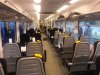
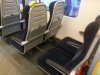
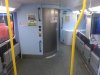
Here are a few more piccies:

As an aside, please also note that the "entry to service" diagrams have changed:

From Monday 30th December - Thursday 2nd January the 0715 MIA - GLC and 1109 GLC - MIA will be worked by a 350. On 30th December it is scheduled to be 2 x 350. The previously planned diagram starting with the 0558 from MIA to EDB will be 185 worked on these days, I believe 2 x 185s.

From Friday 3rd January onwards the already planned diagrams will apply, which will see the 0558 MIA - EDB, 1008 EDB - MIA, 1400 MIA - EDB and 1812 EDB - MIA being 350 worked on SX dates.

Not sure what the weekend plan is I'm afraid.

Also to note: Seating round tables is arranged in a facing / backing format for seat reservations so there are 2 of some seat numbers - so it should be possible, for the first time, to book facing or backing seats on TPE services!
 

Attachments

  • 20131212_121930.jpg
    20131212_121930.jpg
    163.7 KB · Views: 174
  • 20131212_121935.jpg
    20131212_121935.jpg
    155.3 KB · Views: 154
  • 20131212_121939.jpg
    20131212_121939.jpg
    146.6 KB · Views: 166
Last edited:

Eagle

Established Member
Joined
20 Feb 2011
Messages
7,106
Location
Leamingrad / Blanfrancisco
I think it says a lot about me that the first thing I noticed is that the clock on the PIS is on the right, rather than the left as seems to be the general rule on other Desiros. :lol:
 

Solent&Wessex

Established Member
Joined
9 Jul 2009
Messages
2,745
I think it says a lot about me that the first thing I noticed is that the clock on the PIS is on the right, rather than the left as seems to be the general rule on other Desiros. :lol:

185s are on the right too!
 
Status
Not open for further replies.

Top