Thanks to @Senex's reply to my Bills question on the forum (which I was grateful for) I thought I'd reply under this new thread as it's brought up a whole new railway company I didn't realise ever existed...
The Clitheroe Junction Railway Company:
Although I was researching the very early plans / bills for the Gt. Harwood loop / Padiham branch, the very first mention of it comes from a bill submitted in November 1845. However it didn't read quite right to me as this bill was titled "Clitheroe Junction Railway" (CJR), plus it also refers to junctions with the East Lancashire Railway (ELR for short).
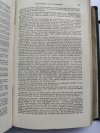
It was only when I searched the London Gazette for "Clitheroe Junction Railway" that the penny dropped. I thought this 1845 bill was actually submitted by the ELR but no I was wrong. It was actually a separate new company.
This company planned not only to build a line from Whalley - Read - Padiham - Burnley plus one from Blackburn to Gt. Harwood (of interest to me) but also a line from Blackburn - Clitheroe - Hellifield - Settle. 1845 was the height of railway mania, even the ELR's East Lancs main line wasn't finished (Blackburn - Accrington - Burnley - Nelson - Colne).
8 September 1846 notice is given in the Gazette that this company was going to hold a meeting with its shareholders at the Star Hotel, Deansgate (Manchester) Saturday 19 September at 12 noon with regards to should this company be dissolved or not.
The motion was carried by enough shareholders to allow it to pass, and that was the end of that company. It's not clear if the shareholders got their money back? would they have done?
For me, it means my old branch line's history goes way back much further than has been written about - another discovery!
My questions are:
Do you think the CJR (Clitheroe Junction Railway Co)'s 1845 bill was passed? sadly there are many Acts of Parliament still not available online at this time.
Nor can I find any acts for the ELR from the 1840's regarding my research.
What I have read is that it was rare for Parliament at that time to reject a bill for a new railway unless it just wasn't feasible to build / too costly - is that correct?
Did many MP's around this time actually hold railway shares? and would that have been allowed?
The Clitheroe Junction Railway Company:
Although I was researching the very early plans / bills for the Gt. Harwood loop / Padiham branch, the very first mention of it comes from a bill submitted in November 1845. However it didn't read quite right to me as this bill was titled "Clitheroe Junction Railway" (CJR), plus it also refers to junctions with the East Lancashire Railway (ELR for short).
It was only when I searched the London Gazette for "Clitheroe Junction Railway" that the penny dropped. I thought this 1845 bill was actually submitted by the ELR but no I was wrong. It was actually a separate new company.
This company planned not only to build a line from Whalley - Read - Padiham - Burnley plus one from Blackburn to Gt. Harwood (of interest to me) but also a line from Blackburn - Clitheroe - Hellifield - Settle. 1845 was the height of railway mania, even the ELR's East Lancs main line wasn't finished (Blackburn - Accrington - Burnley - Nelson - Colne).
8 September 1846 notice is given in the Gazette that this company was going to hold a meeting with its shareholders at the Star Hotel, Deansgate (Manchester) Saturday 19 September at 12 noon with regards to should this company be dissolved or not.
The motion was carried by enough shareholders to allow it to pass, and that was the end of that company. It's not clear if the shareholders got their money back? would they have done?
For me, it means my old branch line's history goes way back much further than has been written about - another discovery!
My questions are:
Do you think the CJR (Clitheroe Junction Railway Co)'s 1845 bill was passed? sadly there are many Acts of Parliament still not available online at this time.
Nor can I find any acts for the ELR from the 1840's regarding my research.
What I have read is that it was rare for Parliament at that time to reject a bill for a new railway unless it just wasn't feasible to build / too costly - is that correct?
Did many MP's around this time actually hold railway shares? and would that have been allowed?
Last edited: