1310 off Worksop today 0Q59 to Castle Donington EMDC https://www.realtimetrains.co.uk/service/gb-nr:R25139/2024-08-30/detailed ...then tomorrow 5Q58 0937 to Old Dalby https://www.realtimetrains.co.uk/service/gb-nr:K18459/2024-08-31/detailed

-
Our new ticketing site is now live! Using either this or the original site (both powered by TrainSplit) helps support the running of the forum with every ticket purchase! Find out more and ask any questions/give us feedback in this thread!
You are using an out of date browser. It may not display this or other websites correctly.
You should upgrade or use an alternative browser.
You should upgrade or use an alternative browser.
Class 93 Tri-mode Loco
- Thread starter ExRes
- Start date
Sponsor Post - registered members do not see these adverts; click here to register, or click here to log in
R
RailUK Forums
Trainman40083
Established Member
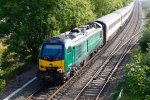
93001, 93002 and 37218. 93002 isn't registered yet, so won't show on systems.
Why Castle Donington? Are those paths not completely different?1310 off Worksop today 0Q59 to Castle Donington EMDC https://www.realtimetrains.co.uk/service/gb-nr:R25139/2024-08-30/detailed ...then tomorrow 5Q58 0937 to Old Dalby https://www.realtimetrains.co.uk/service/gb-nr:K18459/2024-08-31/detailed
I think it is where the stock for the testing was taken the other dayWhy Castle Donington? Are those paths not completely different?
Trainman40083
Established Member
Presume that Mark 3 set again at Castle DoningtonI think it is where the stock for the testing was taken the other day
Completely forgot about the Mk3sI think it is where the stock for the testing was taken the other day
== Doublepost prevention - post automatically merged: ==
On the move away from Worksop 16 minutes late.1310 off Worksop today 0Q59 to Castle Donington EMDC https://www.realtimetrains.co.uk/service/gb-nr:R25139/2024-08-30/detailed ...then tomorrow 5Q58 0937 to Old Dalby https://www.realtimetrains.co.uk/service/gb-nr:K18459/2024-08-31/detailed
Last edited:

Bob Price
Established Member
- Joined
- 8 Aug 2019
- Messages
- 1,245
Picture via Twitter here: https://x.com/holtona72/status/1829861084561301563?t=4mkagNOXoFFwvKtRXkIgHw&s=19
== Doublepost prevention - post automatically merged: ==
And a better view on Threads with the 37 on the front with 001 https://www.threads.net/@arutlandph...QGztHUQTDLjLEXqwG8RZY8X3i0ybb_N4l0S4AZhO-xYdA
== Doublepost prevention - post automatically merged: ==
And a better view on Threads with the 37 on the front with 001 https://www.threads.net/@arutlandph...QGztHUQTDLjLEXqwG8RZY8X3i0ybb_N4l0S4AZhO-xYdA
Last edited:
Sonyman66
Member

Rail Quest
Member
I've come across this video of 93001/002 running on the overheads on the test track with some high speed running. Skip to 0:34 for the clips with audio, and 0:42 for the high speed running clip. Good stuff! As one might expect, the locos are barely audible on electric aside from the wisp of what sounds like cooler fans at full power.
110mph they were reaching on the stretch of track passing Widmerpool.I've come across this video of 93001/002 running on the overheads on the test track with some high speed running. Skip to 0:34 for the clips with audio, and 0:42 for the high speed running clip. Good stuff! As one might expect, the locos are barely audible on electric aside from the wisp of what sounds like cooler fans at full power.
Starting from a couple of hundreds yards south of Old Dalby Village and accelerating to the high speeds Widmerpool section, coming to a stand at Plumtree.
Been told a loco light engine 0-100mph in 60seconds!
- Joined
- 13 Dec 2018
- Messages
- 4,588
Would have thought they were quicker than that, an OEBB Taurus does that in around 14-16 seconds.Been told a loco light engine 0-100mph in 60seconds!
Unless it was 16seconds and I miss heardWould have thought they were quicker than that, an OEBB Taurus does that in around 14-16 seconds.
- Joined
- 13 Dec 2018
- Messages
- 4,588
That would be more likely, expect they have car like performance when running light engine.Unless it was 16seconds and I miss heard

Nottingham59
Established Member
A 100t locomotive at 110mph (50m/s) has a kinetic energy of 125MJ. So an 86t at 100mph is about (guessing) 90MJ.Been told a loco light engine 0-100mph in 60seconds!
4.6MW under the wires will deliver that energy in 20s.
Allowing for wind resistance, 60s could be about right. 16s wouldn't be possible.
The U Taurus might be able to do it, with 6.4MW output and a top speed of 230km/h
- Joined
- 13 Dec 2018
- Messages
- 4,588
Even allowing for wind resistance and frictional losses 60s still sounds way too long. Happy to be proved wrong, though.A 100t locomotive at 110mph (50m/s) has a kinetic energy of 125MJ. So an 86t at 100mph is about (guessing) 90MJ.
4.6MW under the wires will deliver that energy in 20s.
Allowing for wind resistance, 60s could be about right. 16s wouldn't be possible.
The U Taurus might be able to do it, with 6.4MW output and a top speed of 230km/h

GRALISTAIR
Established Member
Really good looking locos too. Thanks for posting.I've come across this video of 93001/002 running on the overheads on the test track with some high speed running. Skip to 0:34 for the clips with audio, and 0:42 for the high speed running clip. Good stuff! As one might expect, the locos are barely audible on electric aside from the wisp of what sounds like cooler fans at full power.
Nottingham59
Established Member
You're right of course. I was assuming the the 110mph top speed of the 93 was its limited by wind, but that's not the case.Even allowing for wind resistance and frictional losses 60s still sounds way too long. Happy to be proved wrong, though.
Thinking about it, an HST (2.8MW) had an absolute maximum speed of around 140mph. So the wind resistance of a train at 100mph will be about 1.4MW, as resistance varies with the square of the speed. That's a sizeable fraction of the 4MW available, but the 93 will still be accelerating strongly when it reached 100mph. So maybe 25s to 100mph? That's still faster than many cars.

I think people may be forgetting the much lower co-efficient of friction between a steel wheel and a steel rail when compared to a rubber tyre on asphalt.You're right of course. I was assuming the the 110mph top speed of the 93 was its limited by wind, but that's not the case.
Thinking about it, an HST (2.8MW) had an absolute maximum speed of around 140mph. So the wind resistance of a train at 100mph will be about 1.4MW, as resistance varies with the square of the speed. That's a sizeable fraction of the 4MW available, but the 93 will still be accelerating strongly when it reached 100mph. So maybe 25s to 100mph? That's still faster than many cars.
Nottingham59
Established Member
It's only at low speeds that friction matters. Above around 20mph, it's the power per tonne that limits the acceleration.I think people may be forgetting the much lower co-efficient of friction between a steel wheel and a steel rail when compared to a rubber tyre on asphalt.
- Joined
- 13 Dec 2018
- Messages
- 4,588
Won't matter much with a light engine either. Converse gives rail the ultimate advantage as less friction means less energy needed to reach same speed. I know not quite as simple as that.It's only at low speeds that friction matters. Above around 20mph, it's the power per tonne that limits the acceleration.

ac6000cw
Established Member
For a 93 on OHLE, the transition point is around 30mph (see the TE graph here: https://www.railforums.co.uk/threads/class-93-tri-mode-loco.210779/page-33#post-6791682 )Above around 20mph, it's the power per tonne that limits the acceleration.
If you are trying to calculate a theoretical 0-100mph time for a 93 on OHLE, 0-30 is constant acceleration (constant force) and 30-100 is constant power.
Calculating each part separately using 4.6 MW max short-term power and 290 kN max tractive effort, I think it's about 4s for 0-30mph + 17s for 30-100mph = 21s for 0-100mph. That's not accounting for any rolling or air resistance etc., so the 25s to 100mph you estimated earlier is in the right ball park I think.
A light Class 90 can do 0-60mph in just under 12s and 0-75mph in just over 17sFor a 93 on OHLE, the transition point is around 30mph (see the TE graph here: https://www.railforums.co.uk/threads/class-93-tri-mode-loco.210779/page-33#post-6791682 )
If you are trying to calculate a theoretical 0-100mph time for a 93 on OHLE, 0-30 is constant acceleration (constant force) and 30-100 is constant power.
Calculating each part separately using 4.6 MW max short-term power and 290 kN max tractive effort, I think it's about 4s for 0-30mph + 17s for 30-100mph = 21s for 0-100mph. That's not accounting for any rolling or air resistance etc., so the 25s to 100mph you estimated earlier is in the right ball park I think.
Nottingham59
Established Member
That sounds about right. 75mph has 9/16 of the kinetic energy of 100mph, so a 90 would take 30-35 seconds to get to 100, but then it's on 3.7MW on AC compared to 4.6MW for the 93.A light Class 90 can do 0-60mph in just under 12s and 0-75mph in just over 17s
ac6000cw
Established Member
Note the 90 has higher short-term rating than the 93 (5.86MW versus 4.6MW) - see post https://www.railforums.co.uk/threads/class-93-tri-mode-loco.210779/post-6536307 and following posts.That sounds about right. 75mph has 9/16 of the kinetic energy of 100mph, so a 90 would take 30-35 seconds to get to 100, but then it's on 3.7MW on AC compared to 4.6MW for the 93.
Nottingham59
Established Member
Every day you learn something new! I don't know if the 93 has a short term rating too? Or even if it can add battery boost to the AC.Note the 90 has higher short-term rating than the 93 (5.86MW versus 4.6MW) - see post https://www.railforums.co.uk/threads/class-93-tri-mode-loco.210779/post-6536307 and following posts.
ac6000cw
Established Member
According to hwl's post here - https://www.railforums.co.uk/threads/class-93-tri-mode-loco.210779/post-6536326 - the 93's 4.6MW rating is a short-term 'boost' rating (it's 4MW otherwise).I don't know if the 93 has a short term rating too?
I suspect real-world performance of a 93 versus a 90 will be swings and roundabouts - the 93's modern traction system provides higher tractive effort at lower speeds, so better acceleration, but the 90's higher short-term power rating should give it an advantage at the higher end of the speed range.
Of course once the wires run out the 93 is 100% better than a 90...
 (and including that off-wire capability is what compromises the rating under the wires due to overall weight and space limits).
Nottingham59
Established Member
Whatever the light engine performance, it will be interesting to see the results of any trials with a load. The stated Traction Effort of 290kN suggests an absolute maximum load of 2300t up a 1:80 gradient. But I wonder what safety margin is needed for real life train scheduling?
For me, the questions for the 93 design are:
For me, the questions for the 93 design are:
- How heavy a load can it reliably haul over Shap and Beattock, in icy rain, in leaf fall season?
- How quickly can it get a train of intermodals up the hill out of Felixstowe, i.e. without wires?
- How well it performs over the unelectrified final mile at freight terminals near electrified routes, such as Gateway?
- What its performance is like with an 1800t max weight intermodal on long unelectrified lines across flat county in the fens and Lincolnshire
- Is the claimed advantage in operating costs over the 66 achievable in real life?

D365
Veteran Member
- Joined
- 29 Jun 2012
- Messages
- 13,207
It looks like the question has been asked. No response to that end as yet.Rail Operations Group have posted a video on LinkedIn showing the 93 on the Old Dalby test track reaching 110mph in 60seconds. Presuming it was with the mk3s and another loco on rear.
What do you mean?It looks like the question has been asked. No response to that end as yet.