• Our new ticketing site is now live! Using either this or the original site (both powered by TrainSplit) helps support the running of the forum with every ticket purchase! Find out more and ask any questions/give us feedback in this thread!

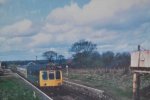
Class 121 bubble car on Ilfracombe Line

Sun Chariot

Established Member
Joined
16 Mar 2009
Messages
6,668
Location
2 miles and 50 years away from the Longmoor Milita
It's not quite Ilfracombe, but a bubble car made it to Torrington (and thus would have been to Barnstaple on the way) on what seems to have been an inspection run before the Barnstaple - Meeth line was lifted. https://www.cornwallrailwaysociety.org.uk/latest-input--news--old-pictures-etc/21st-october-2020

209a-tdb975023-at-torrington-26th-january-1983-copyright-keith-gale-copy_orig.jpg
209b-tdb975023-at-fremington-26th-january-1983-copy_orig.jpg
Great find. Former class 122 W55001, route-learning / track inspection car TDB 975023 (with Old Common set L101 in these photos) certainly got about. I have a phoro of it, years later, at Manchester Piccadilly.
 
Last edited:
Sponsor Post - registered members do not see these adverts; click here to register, or click here to log in
R

RailUK Forums

Joined
23 Nov 2023
Messages
761
Location
Grimsby
Not Ilfracombe, but there are some photos of 121s at Halwill Junction on the disused stations website, proving at least that they were in the area, link below;

And the Cornwall Railway Society website has a photo of this combination (photo and link to web page below) at Copplestone on the Barnstaple line. I can't tell if it's a 121 or a vehicle from a class 118 (the roof vents point to the latter), but either way it has been added to what appears to be a 2-car class 119- I assume the latter's centre car was out of traffic for some reason and the "suburban" vehicle had been added as a temporary replacement?
Unfortunately the blind has been wound to blank, so we can't tell where it was heading.
 

Attachments

  • IMG_20260717_133447.jpg
    IMG_20260717_133447.jpg
    162.1 KB · Views: 39
Last edited:

westernpunk

Member
Joined
16 Apr 2024
Messages
93
Location
Crediton
According to Railway Observer March 1973, the ban on Westerns was north of Lapford, not Coleford Junction, and was imposed in January 1973. The last Westerns known to have worked the 1558 Exeter-Barnstaple were D1020 on 6 January 1973 and D1049 on 11 January 1973.


I think this is a train for the Duke of Edinburgh on 11-12 November 1971 for engagements in Plymouth and Truro, which overnighted at Barnstaple. This was unusual as Royal Trains to Devon and Cornwall usually overnighted on the Heathfield branch near Newton Abbot.
i believe the last western to reach barnstaple was 1055 30 jun 1973
On the padd barn 5823 had failed and it wes the only available replacement
Also someone i knew that worked at laira said 1059 worked a royal train to barnstaple maybe he meant 1049
According to Railway Observer March 1973, the ban on Westerns was north of Lapford, not Coleford Junction, and was imposed in January 1973. The last Westerns known to have worked the 1558 Exeter-Barnstaple were D1020 on 6 January 1973 and D1049 on 11 January 1973.


I think this is a train for the Duke of Edinburgh on 11-12 November 1971 for engagements in Plymouth and Truro, which overnighted at Barnstaple. This was unusual as Royal Trains to Devon and Cornwall usually overnighted on the Heathfield branch near Newton Abbot.
the last western to reach barnstaple was 1055 30 jun 1973

Pictured at eggesford not my photo
1784321592520.png
 

Sir Felix Pole

Established Member
Joined
21 Oct 2012
Messages
2,181
Location
Wilmslow
Not Ilfracombe, but there are some photos of 121s at Halwill Junction on the disused stations website, proving at least that they were in the area, link below;

And the Cornwall Railway Society website has a photo of this combination (photo and link to web page below) at Copplestone on the Barnstaple line. I can't tell if it's a 121 or a vehicle from a class 118 (the roof vents point to the latter), but either way it has been added to what appears to be a 2-car class 119- I assume the latter's centre car was out of traffic for some reason and the "suburban" vehicle had been added as a temporary replacement?
Unfortunately the blind has been wound to blank, so we can't tell where it was heading.
In the same series of the Cornwall Rly. Soc. photos, there is a shot at Lapford in 1974 (after the closure of Ilfracombe) of a bubble car (with distinctive cab exhaust pipes) leading a three car train. The individual photos are not indexed for a link, so scroll down.
 
Joined
23 Nov 2023
Messages
761
Location
Grimsby
In the same series of the Cornwall Rly. Soc. photos, there is a shot at Lapford in 1974 (after the closure of Ilfracombe) of a bubble car (with distinctive cab exhaust pipes) leading a three car train. The individual photos are not indexed for a link, so scroll down.
There is indeed, but it's a class 122 Gloucester unit.
 

Taunton

Veteran Member
Joined
1 Aug 2013
Messages
12,293
Not Ilfracombe, but there are some photos of 121s at Halwill Junction on the disused stations website, proving at least that they were in the area, link below;

And the Cornwall Railway Society website has a photo of this combination (photo and link to web page below) at Copplestone on the Barnstaple line. I can't tell if it's a 121 or a vehicle from a class 118 (the roof vents point to the latter), but either way it has been added to what appears to be a 2-car class 119- I assume the latter's centre car was out of traffic for some reason and the "suburban" vehicle had been added as a temporary replacement?
Unfortunately the blind has been wound to blank, so we can't tell where it was heading.
Those are typical shots of the time, with a range of oddball combinations, in fact there is hardly a properly formed 3-car set there at all, following the edict that as many trains as possible on the old SR network should have one car with toilets. The WR Cross-Country units, of both Swindon and Gloucester RCW build, had two of their three so equipped, and were thus key in this breaking up and reforming. Obviously couldn't be done with single car trains, which did seem most common on the far west end of these lines.

A complete contrast to the rest of the Western Region diesel units, where many 3-car diesels would still be running in their original sequential formation 20 or more years after delivery.
 

Magdalia

Established Member
Joined
1 Jan 2022
Messages
7,392
Location
The Fens
i believe the last western to reach barnstaple was 1055 30 jun 1973
On the padd barn 5823 had failed and it wes the only available replacement
This is in Railway Magazine October 1973, though with the wrong date. The report starts "despite being banned north of Lapford, a class 52 No 1055 Western Advocate worked 0815 Paddington-Barnstaple onward from Exeter..."
 

Harpo

Established Member
Joined
21 Aug 2024
Messages
3,874
Location
Newport
There’s probably a need for an archive dive to find whether the class 52 bans being mentioned were absolute or conditional. If the ban said ‘except emergency’ or similar, that bans regular diagrammed use but gives a loco failure/shortage loophole.
 

Taunton

Veteran Member
Joined
1 Aug 2013
Messages
12,293
What was the key weight restriction? Well known that in steam days Unrebuilt Bulleid Pacifics, the semi-streamlined ones, were standard across the far west, but Rebuilt ones, which with new normal valve gear were several tons heavier, were banned. I did think the Taw Viaduct at Barnstaple, just beyond the Junction station on the Ilfracombe line, was the critical structure; having watched 3-car dmus tippy-toe across it at 10mph it looked far more spindly even than Meldon.

For axle load the Westerns were no different to Warships, the latter common fare at Ilfracombe in diesel times, but obviously put a greater load on long spans of a bridge.
 

Sir Felix Pole

Established Member
Joined
21 Oct 2012
Messages
2,181
Location
Wilmslow
What was the key weight restriction? Well known that in steam days Unrebuilt Bulleid Pacifics, the semi-streamlined ones, were standard across the far west, but Rebuilt ones, which with new normal valve gear were several tons heavier, were banned. I did think the Taw Viaduct at Barnstaple, just beyond the Junction station on the Ilfracombe line, was the critical structure; having watched 3-car dmus tippy-toe across it at 10mph it looked far more spindly even than Meldon.

For axle load the Westerns were no different to Warships, the latter common fare at Ilfracombe in diesel times, but obviously put a greater load on long spans of a bridge.
Several of the many bridges over the River Taw north of Lapford to Barnstaple were also weak - and are an ongoing problem.

WC/BB rebuilt Bulleid Pacifics did reach Plymouth after Meldon Viaduct was strengthened in 1960.
 

Taunton

Veteran Member
Joined
1 Aug 2013
Messages
12,293
Seemed an issue in the area with weak large bridges. On Taunton to Barnstaple both the viaducts over the Tone, and then the Exe, had severe speed and weight restrictions, in dmu days they had to cross both at walking pace. On the SR main line at Bere Ferrers the viaduct over the Tavy looks spindly, and at Cowley Bridge the crossing of the Exe was long troublesome with floodwater.
 

30907

Veteran Member
Joined
30 Sep 2012
Messages
21,961
Location
Airedale
Having looked at the Cornwall Railways site and other sources, I would say:
No evidence of a 121/122 to Ilfracombe
Evidence of same to Barnstaple in a mixed formation, so in theory similar could have happened when Ilfracombe was open.
No evidence of solo 121/122 - the "Cornwall" photo is almost certainly an Okehampton train, which accords with my own 1971 memory.
 

Gloster

Veteran Member
Joined
4 Sep 2020
Messages
13,005
Location
Up the creek
I don't know if this is relevant but curiously enough this evening I spotted what was a photo of three single car units in tandem running across Meldon viaduct during 1966. The consist is said to have come from Bude and Wadebridge (possibly even Padstow) all of which regularly saw single car units. Evidently it had merged at Halwill Junction.

Whether it indicates such a combo (or a single car even) had been to Ilfracombe is still anyone's guess!

Facebook - Branch Lines of the British Isles.

In the 1965-1966 timetable the last Up Wadebridge terminated at Launceston but then appears to couple to a short working from Halwill. They then did a return trip to Halwill before heading to Okehampton, with a working from Bude probably attaching at Halwill. If these were worked by single-cars, then that could produce three at Meldon.

(All worked from an uncorrected public timetable, so not absolutely guaranteed.)
 

30907

Veteran Member
Joined
30 Sep 2012
Messages
21,961
Location
Airedale
I only have 1965 to hand which is slightly different, but as historically a loco and stock berthed overnight at Bude and Launceston some such working must have occurred.
 

Top