The discussion around whether or not head codes (or a similar identifier) should be displayed publicly is off-topic. It has therefore been moved to it's own thread which can be found here.

-
Our new ticketing site is now live! Using either this or the original site (both powered by TrainSplit) helps support the running of the forum with every ticket purchase! Find out more and ask any questions/give us feedback in this thread!
You are using an out of date browser. It may not display this or other websites correctly.
You should upgrade or use an alternative browser.
You should upgrade or use an alternative browser.
Changes to 4-Character Headcode Conventions in recent years
- Thread starter GordonT
- Start date
- Status
- Not open for further replies.
Sponsor Post - registered members do not see these adverts; click here to register, or click here to log in
R
RailUK Forums

As stated earlier, class 9 services indicate 'different' or 'unusual' routing. In the case of TPX Liverpool Edinburgh services it indicates that from Liverpool they do not head for Preston and from Edinburgh they do not head off for Carstairs.
I happened to notice that the 0951 ex Blackpool North-Euston has the reporting number "9M51" which breaks the originally devised integrity of the 4-character headcode system in two respects. "9" as the first character was originally used to denote a light loco movement. I believe at some stage a decision was taken to utilise it to denote specific WCML trains which were to be given higher priority for regulation purposes but it seems to have become more common. "M" as the second character was originally used to denote an inter-regional train bound for a destination within what was the London Midland Region. It seems odd to use it for a service entirely within the "M" region. Not that it matters a great deal as the former inter-regional letters are now commonly used for non inter-regional services as well as inter-regional services. The "system" now seems a bit muddled although I appreciate that a system which restricts the end number to numbers between 01 and 99 is restrictive when trying to avoid confusing duplication of use. I'm wondering if folk on here would comment on some of the changes to the system which have taken place, why they were made and whether the changes have helped or hindered.
Class 9 originally was for an unfitted freight
 then moved on for Eurostar, and the books now state, Certain Routes & where specailly authorised.
Introduction of the Corby Electrics next year see some changes. Corby becomes 1Yxx on Down, and 1Hxx on up. Anything that goes beyond Corby (and is therefore diesel) remains 1P/1M.Headcodes starting with "9" also apply to TPE Liverpool-York-Newcastle-Edinburgh trains.
Probably to distinguish TPE trains heading west to Liverpool rather than south to Manchester Airport, at the Ordsall Chord junction.
(Actually it can't be that because there are some "9" trains to/from the Airport too...).
There's no reason to retain the inter-regional codes now the regions don't exist, but they still seem to be used like that in places.
There are some odd ones like on the Marches line, it's V southbound but W northbound (not M).
On the other axis through Shrewsbury it's I towards Birmingham, and J towards Cambrian/Chester (you'd think they would avoid using I and O).
NR route/region boundaries keep changing too, as signalling areas expand.
The Midland main line south of Chesterfield is now in LNE territory, for instance (where trains to Corby use code M!).
With Eurostar there was some complicated reason why train numbers starting "9" also worked for Eurotunnel and SNCF/SNCB control systems.
Presumably it also works in the Netherlands too.
Not necessarily...Introduction of the Corby Electrics next year see some changes. Corby becomes 1Yxx on Down, and 1Hxx on up. Anything that goes beyond Corby (and is therefore diesel) remains 1P/1M.

Wilts Wanderer
Established Member
- Joined
- 21 Nov 2016
- Messages
- 3,199
The great expansion of XC services in the early 2000s created a national shortage of inter regional headcodes, particularly 1Vxx (to Western Region) and 1Oxx (to Southern Region). For this reason other inter regional routes such as Cardiff-Portsmouth have moved to letter-specific routing, in this case 1Fxx, which works just as well as long as it is properly adhered to.
swt_passenger
Veteran Member
- Joined
- 7 Apr 2010
- Messages
- 34,328
M has been traditional for inter regional towards London Midland, ie WCML and its branches, neither letter is unusual.TPE use 9Sxx for the services to Scotland via Newcastle and 9Mxx for their return to Liverpool. I took the letters to stand for Scotland and Merseyside.

I do wonder if there any use at looking at a total reshuffle of headcode numbers to account for the larger numbers of different priority passenger services and the general reduction in variety of freight.
1, 2, 3 descending order of importance of passenger.
4, 5 for ECS
6, 7, 8 for freights.
9 left for special instructions.
0 as is.
How many Class 8s even run these days? Even class 7s there are not a huge number are there?
1, 2, 3 descending order of importance of passenger.
4, 5 for ECS
6, 7, 8 for freights.
9 left for special instructions.
0 as is.
How many Class 8s even run these days? Even class 7s there are not a huge number are there?
theironroad
Established Member
- Joined
- 21 Nov 2014
- Messages
- 3,717
I always understood light loco was a class 0 and pretty sure it still is in the rule book.I thought light engine movements always began with “0”?
9XXXs are also used for class 442s at Waterloo to avoid using platforms which can't take them - or has that now been resolved?
They were still using class 9 when they last ran in service in march, not just the platforms at Waterloo but a few other route restrictions , the idea being the 9Bxx would highlight to the signaller that it was a 442 rather than a 1Bxx usual desiro. The ECS version would often be 5Qxx.

LNW-GW Joint
Veteran Member
As stated earlier, class 9 services indicate 'different' or 'unusual' routing. In the case of TPX Liverpool Edinburgh services it indicates that from Liverpool they do not head for Preston and from Edinburgh they do not head off for Carstairs.
Well, how do you account for 9Exx on Manchester Airport-York* services (normally 1Exx)?
And at Edinburgh you can get 9Mxx TPE to Liverpool via York, and 9Mxx VT to London via Birmingham.
*admittedly, there's only one, and it runs via Todmorden
The Planner
Veteran Member
- Joined
- 15 Apr 2008
- Messages
- 19,762
Still a few Class 7s. It would cause a lot of confusion to alter Class 4 freight.I do wonder if there any use at looking at a total reshuffle of headcode numbers to account for the larger numbers of different priority passenger services and the general reduction in variety of freight.
1, 2, 3 descending order of importance of passenger.
4, 5 for ECS
6, 7, 8 for freights.
9 left for special instructions.
0 as is.
How many Class 8s even run these days? Even class 7s there are not a huge number are there?

4-SUB 4732
Established Member
- Joined
- 7 Jan 2018
- Messages
- 2,150
I happened to notice that the 0951 ex Blackpool North-Euston has the reporting number "9M51" which breaks the originally devised integrity of the 4-character headcode system in two respects. "9" as the first character was originally used to denote a light loco movement. I believe at some stage a decision was taken to utilise it to denote specific WCML trains which were to be given higher priority for regulation purposes but it seems to have become more common. "M" as the second character was originally used to denote an inter-regional train bound for a destination within what was the London Midland Region. It seems odd to use it for a service entirely within the "M" region. Not that it matters a great deal as the former inter-regional letters are now commonly used for non inter-regional services as well as inter-regional services. The "system" now seems a bit muddled although I appreciate that a system which restricts the end number to numbers between 01 and 99 is restrictive when trying to avoid confusing duplication of use. I'm wondering if folk on here would comment on some of the changes to the system which have taken place, why they were made and whether the changes have helped or hindered.
9M51 is usually a service from Scotland to the Midland Region, with the 9 indicating high priority as it runs via the West Mids and not the Trent Valley. The reason it is a Blackpool to Euston one there is basically using the 9M51 path from Preston to Euston via Birmingham that would normally come from Scotland, but instead is coming from Blackpool, it is therefore I suppose VAR.
As for 1R, that just means in morning peak stuff going from anywhere to Euston is a Pendolino and has a differing calling pattern so you have to exercise caution e.g. does it stop at Lichfield and Tamworth? Or Stafford? Does it need to use Platform 5 at MK? Etc.
== Doublepost prevention - post automatically merged: ==
One thing that is true however is that there definitely needs to be a change to the rules. You very rarely see any instances of 8s or 'real' 9s (25mph?).
I would probably start at the top end, and come down.
9 for Intercity and Inter-Regional stuff, to indicate a train with longer dwell times and a need to try to keep them on time.
8 for high-priority regional traffic, such as Thameslink and Crossrail.
7 for local passenger.
6 for Intermodal traffic, but you can reserve certain letters (e.g. W, X, Y) for any 'faster' freight, as well as reserved numbers for the same purpose. E.g. 6Y99 is only to be used for a 90mph freight.
5 for slower freight in the current 60mph bracket.
4 for very slow freight, anything from 45mph to 25mph. Again, reserved numbering perhaps in the 00-09 range for the slowest traffic and the lettering the same.
3 for priority ECS moves and things like Mail traffic.
2 for standard ECS moves.
1 for light engines and loco-hauled charter, where Z is reserved for excursions and again you use the higher 90-99 range to indicate passengers on board.
Last edited:

306024
Established Member
I do wonder if there any use at looking at a total reshuffle of headcode numbers to account for the larger numbers of different priority passenger services and the general reduction in variety of freight.
1, 2, 3 descending order of importance of passenger.
4, 5 for ECS
6, 7, 8 for freights.
9 left for special instructions.
0 as is.
How many Class 8s even run these days? Even class 7s there are not a huge number are there?
Sounds simple when you put it like that but the software behind these classifications generates other data that you wouldn’t see. It would require quite a major software re-write, plus all the interfaces this data links to. Not really worth it just to make things look tidy.
Sounds simple when you put it like that but the software behind these classifications generates other data that you wouldn’t see. It would require quite a major software re-write, plus all the interfaces this data links to. Not really worth it just to make things look tidy.
Technical issues aside, even just the logistics of planning out a new system are huge. For example in May 2018, one of the biggest constraints in re-doing GTR's headcodes was one of the south coast signal boxes (Barnham maybe?) can't describe certain characters on the panel.
Bristol PSB used to have issues with xQxx.Technical issues aside, even just the logistics of planning out a new system are huge. For example in May 2018, one of the biggest constraints in re-doing GTR's headcodes was one of the south coast signal boxes (Barnham maybe?) can't describe certain characters on the panel.
Still a few Class 7 around and a token number of Class 8 freight.

YorksLad12
Established Member
M has been traditional for inter regional towards London Midland, ie WCML and its branches, neither letter is unusual.
Perhaps so, but you have to admit it's a handy way of remembering which direction the service in running

I did have a look at TPE services through Leeds using RTT and listing the cancelled ones as well. There's one service leaving Leeds at 1115 which is something like 9P15 under STP, 1P15 under CAN. That suggests to me that it's been reallocated from a 185 to a 68/Mk5a or 802, which ties in the "Signaller Beware!" element of it starting with a '9'.
As a Chartered Librarian (as well) I'm always interested in classification schemes but head codes, being historic and still tied to companies that haven't been around for 70 years, always confused the chuff out of me.
Gloster
Veteran Member
When the system was introduced I think that there were a number of letters that either weren’t used or were only for use in book timetables in areas with no power signalboxes. D, I, Q, and W spring to mind because of possible misreading (as O and V for the first and last). Not sure if F, M and U were also restricted.
sjm77
Member
I believe 9xxx was originally introduced on TPEx when the Chat Moss service was introduced as a 5th hourly service, and the only one to serve Victoria. At the time the other 4 tph on 1xxx series headcodes still travelled via Guide Bridge to Piccadilly.
Q, X are only used for certain trains. Z you won't (shouldn't) see in the WTT but as ever there are small exceptions. I avoid I where possible but it is used.When the system was introduced I think that there were a number of letters that either weren’t used or were only for use in book timetables in areas with no power signalboxes. D, I, Q, and W spring to mind because of possible misreading (as O and V for the first and last). Not sure if F, M and U were also restricted.
I've been in a signal box where 2R89 was on the Up and 2R98 was on the Down and passing each other. Not quite a duplicate headcode!
Q, X are only used for certain trains. Z you won't (shouldn't) see in the WTT but as ever there are small exceptions. I avoid I where possible but it is used.
I've been in a signal box where 2R89 was on the Up and 2R98 was on the Down and passing each other. Not quite a duplicate headcode!
I imagine dyslexic or partially sighted passenger could easily mix them up if using them to figure out which train they should be on.
Snow1964
Veteran Member
Bristol PSB used to have issues with xQxx.
Still a few Class 7 around and a token number of Class 8 freight.
Would probably be ok to merge them, and free up another number block if required.
Even if not nationally, must be some congested parts of the commuter network where class 8 trains no longer exist
Needs a Rule Book change. The Anti-Icers on the Southern used to be 8YxxWould probably be ok to merge them, and free up another number block if required.
Even if not nationally, must be some congested parts of the commuter network where class 8 trains no longer exist
Gloster
Veteran Member
Not sure if F, M and U were also restricted.
I definitely wasn’t thinking: M was used for the London Midland Region, despite N being used for the old North Eastern Region.
??? Read my post carefully and it specifically explains these.Well, how do you account for 9Exx on Manchester Airport-York* services (normally 1Exx)?
And at Edinburgh you can get 9Mxx TPE to Liverpool via York, and 9Mxx VT to London via Birmingham.
*admittedly, there's only one, and it runs via Todmorden

50039
Member
Interesting thread.... I have another question... don’t think it’s already here... but I always thought that London services were 1Axx (unless inter-regional eg 1M, 1E.... ) but on the MML, EMR services to St Pancras are 1Bxx or 1Cxx.... why not 1Axx?
4-SUB 4732
Established Member
- Joined
- 7 Jan 2018
- Messages
- 2,150
Interesting thread.... I have another question... don’t think it’s already here... but I always thought that London services were 1Axx (unless inter-regional eg 1M, 1E.... ) but on the MML, EMR services to St Pancras are 1Bxx or 1Cxx.... why not 1Axx?
Because, I assume, in the olden days when stuff left Notts, Sheffield, Manchester (etc) via other routes, they took A so the Midland was B and C. Especially as they also had stuff from Leeds and the like.
A also means Matlock and what not in the East Mids I think?

Spartacus
Established Member
- Joined
- 25 Aug 2009
- Messages
- 3,852
Curiously initially the Thameslink Core class 9s reverted to Class 1 and 2 when engineering works meant they were diverted away, into St Pancras for instance, but that no longer happens.

150219
Member
- Joined
- 24 Nov 2009
- Messages
- 471
When the system was introduced I think that there were a number of letters that either weren’t used or were only for use in book timetables in areas with no power signalboxes. D, I, Q, and W spring to mind because of possible misreading (as O and V for the first and last). Not sure if F, M and U were also restricted.
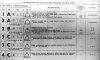
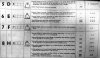
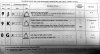
The original series of letters used were:-
A, B, C, D, E, F, G, H, J, K, L, M, N, O, P, S, T, V, X, Z
It could be argued that if 'I' was able to be confused with '1' or 'J', then 'O' could be confused with '0' and 'E' could be confused with 'F' if the blind had slipped or wasn't wound around fully.
Many of the PSBs were fitted with describers that could only physically show these letters (or less than) and advancements of technology were able to see the increased use of letters that weren't previously available.
== Doublepost prevention - post automatically merged: ==
Attached are excerpts from the 1960 Regional Appendix.
Attachments
Merle Haggard
Established Member
Interesting thread.... I have another question... don’t think it’s already here... but I always thought that London services were 1Axx (unless inter-regional eg 1M, 1E.... ) but on the MML, EMR services to St Pancras are 1Bxx or 1Cxx.... why not 1Axx?
The letter was used, for trains running within a region, the destination division.
Before the divisions were amalgamated, as far as the LM region was concerned, the letters used were;
A: London (Western), B: London (Western) , C: London (Midland) or Manchester, D: Chester or Nottingham, F: Leicester or Liverpool, G: Birmingham, H: Birmingham or Manchester, J:Chester or Manchester, K: Stoke-on-Trent, L:Preston, P: Preston or Nottingham.
Incidentally, the first number was originally intended to imply relative importance for regulation purposes.
- Status
- Not open for further replies.