• Our new ticketing site is now live! Using either this or the original site (both powered by TrainSplit) helps support the running of the forum with every ticket purchase! Find out more and ask any questions/give us feedback in this thread!

Cambridgeshire guided busway

Status
Not open for further replies.

Steelman

Member
Joined
30 Oct 2023
Messages
22
Location
Essex
The Cambridgeshire Guided Busway is the gift that just keeps giving. Cambridgeshire county council has pleaded guilty to health and safety offences over the deaths of three people on the system. It's been massively over-budget, the contractors made a massive loss and now these three deaths. The dream of having a rail - road system should disappear in my opinion. I've worked in transport planning for 25 years and busways are the golden egg that keeps on going rotten. The Edinburgh guided busway practically fell apart before it was got rid of, I suspect the same will happen with the Cambridge one.

Council pleads guilty to busway deaths
 
Sponsor Post - registered members do not see these adverts; click here to register, or click here to log in
R

RailUK Forums

johncrossley

Established Member
Joined
30 Mar 2021
Messages
4,402
Location
London
I've worked in transport planning for 25 years and busways are the golden egg that keeps on going rotten. The Edinburgh guided busway practically fell apart before it was got rid of, I suspect the same will happen with the Cambridge one.

When you talk of "busways", are you talking only about guided ones, or are you also including ones which are just normal roads, like the ones in South America?
 

Steelman

Member
Joined
30 Oct 2023
Messages
22
Location
Essex
I'm talking about the totally segregated ones with curved tracks for the wheels to go onto. I don't know what you mean by the South American ones, sorry.
 

johncrossley

Established Member
Joined
30 Mar 2021
Messages
4,402
Location
London
I'm talking about the totally segregated ones with curved tracks for the wheels to go onto. I don't know what you mean by the South American ones, sorry.

Most of the biggest busway systems in the world follow the example of Curitiba in Brazil, including ones outside South America such as in Jakarta and Istanbul. Basically middle income countries where tram building is considered too expensive. They just use normal roads for buses only. Kerb guided busways are much more of a niche.
 
Last edited:

Simon75

On Moderation
Joined
25 May 2016
Messages
1,512
Most of the biggest busway systems in the world follow the example of Curitiba in Brazil, including ones outside South America such as in Jakarta and Istanbul. Basically middle income countries where tram building is considered too expensive. They just use normal roads. Kerb guided busways are much more of a niche.
Runcorn Bus way opened 1971 and was the first, ans still going
 

markymark2000

On Moderation
Joined
11 May 2015
Messages
5,100
Location
Great Britain
Runcorn, Peterborough and Redditch have busways which are just tarmaced roads. Lack of other traffic and in some cases, because there are less pedestrians about, buses can travel at higher speeds. Where there is a normal junction, buses get priority. I think that is what @johncrossley means.


Guided Busways in my opinion are just a gimmick. They serve no benefits over an unguided busway. Drivers have to be guideway trained normally. For busways with a lot of on/off sections, the journey is slow or jolty as the bus has to keep lining up. Vehicles need the guidewheels which is just extra faff to deal with. Plus any kind of maintenance requires the full closure of at least that lane, requiring buses to have a large diversion. All of which can be combatted against with a normal busway. Plus a normal busway can be maintained by normal highways teams as it's the same as a normal road.

Cambridge is a special case in that they are daft enough to just plonk small parts of guided busway in for no actual benefit. Such as between Cambridge North and Milton Road. 2 x 40 metres of guided busway means that 750 metres of busway can't be used by other local buses, meaning the 2 is using Cowley Road when it has no need to!
 

Mollman

Established Member
Joined
21 Sep 2016
Messages
1,708
Location
Preston
The Cambridgeshire Guided Busway is the gift that just keeps giving. Cambridgeshire county council has pleaded guilty to health and safety offences over the deaths of three people on the system. It's been massively over-budget, the contractors made a massive loss and now these three deaths. The dream of having a rail - road system should disappear in my opinion. I've worked in transport planning for 25 years and busways are the golden egg that keeps on going rotten. The Edinburgh guided busway practically fell apart before it was got rid of, I suspect the same will happen with the Cambridge one.

Council pleads guilty to busway deaths
Are you forgetting about the debacle that was the first phase of the Edinburgh Tram including the cases there of cyclists being injured through their interactions with the tram tracks.
 

Magdalia

Established Member
Joined
1 Jan 2022
Messages
7,372
Location
The Fens
The Cambridgeshire Guided Busway is the gift that just keeps giving. Cambridgeshire county council has pleaded guilty to health and safety offences over the deaths of three people on the system.
The Cambridgeshire Guided Busway is in the news again because of legal proceedings following the deaths of three people. For their families and friends it is not a "gift that just keeps giving".

Busways are expensive pieces of infrastructure. I don't know much about public transport in Turkey, Brazil or Indonesia, but we are talking about very big cities so it seems feasible that they could have bus services with sufficient intensity and speed to justify the infrastructure investment. That means lots of buses, up to 60bph, and fast running at up to 50mph/80kph.

In the UK there are few places where bus usage gets anywhere near those levels, and definitely not in small cities like Cambridge. This week Stagecoach are blowing their own trumpet about their latest timetable changes for the Cambridgeshire busway, the 4th different timetable of 2024:


A Stagecoach director said he hoped an increase to the number of buses available in a service would help it to become a "turn up and go" system.

We are supposed to be excited about services of 6bph! Also, on significant parts of the busway the maximum speed in now only 30mph/50kph, because of the safety issues, thus negating the main benefit of the busway being guided.

The Edinburgh guided busway practically fell apart before it was got rid of, I suspect the same will happen with the Cambridge one.
I don't suspect that outcome for the Cambridge guided busway, mainly because it would cost a lot to dismantle the guideway, then a lot more to convert it to another use. The local authorities and the bus operators have to find ways to get more use out of it. Franchising might achieve that, though I can't say that I'm optimistic about the prospects given the track records of the organisations involved.

There won't be any more guided busways in Cambridge, but there are controversial proposals on the table for unguided busways on the Cambourne, Haverhill and Waterbeach corridors.

My view is that the level of usage of the existing guided routes is a good indicator of whether it is worthwhile to invest in more busways. As things stand, that usage is not high enough. In the case of the Cambridge Station-Biomedical Campus-Trumpington section that should be an "open goal" yet usage is still well below capacity. At the same time there is significant congestion on the local roads around the station and the biomedical campus, including guideway equipped buses running along Hills Road instead.

 

Vespa

Established Member
Joined
20 Dec 2019
Messages
1,733
Location
Merseyside
Perhaps convert the busway into tramways as the segregated route is already in place ?
 

hdennis13

Member
Joined
1 Nov 2023
Messages
49
Location
Cambridge
The issue with a tram is the city centre. The busway has the potential to be a frequent and reliable system, but the city centre has high levels of congestion.
It was built on an old rail line and sees higher frequencies and lower fares than trains would.
However, management and safety has been poor, timetables are often tweaked and ridership is imbalanced. A buses are often full and standing in the city centre, but the B is often empty and as mentioned in post 6, the section to trumpington is poorly used.

Whether it is busways or otherwise, many corridors such as to cambourne and haverhill are congested and extra capacity is needed
 

TheGrandWazoo

Veteran Member
Joined
18 Feb 2013
Messages
22,909
Location
Somerset with international travel (e.g. across th
The issue with a tram is the city centre. The busway has the potential to be a frequent and reliable system, but the city centre has high levels of congestion.
It was built on an old rail line and sees higher frequencies and lower fares than trains would.
However, management and safety has been poor, timetables are often tweaked and ridership is imbalanced. A buses are often full and standing in the city centre, but the B is often empty and as mentioned in post 6, the section to trumpington is poorly used.

Whether it is busways or otherwise, many corridors such as to cambourne and haverhill are congested and extra capacity is needed
This is the point. People can wring their hands and say that it should be heavy or light rail line but it would be a half hourly service at best and would still have the issues of a lack of city centre penetration... Yes, there are other major traffic objectives but the single largest one (by some distance) is Cambridge city centre.

6 buses per hour may seem like "not a big deal" but for a link from the sticks into a relatively modestly sized provincial city, it's pretty decent and much better than what you'd have with heavy rail.

The Cambridgeshire Guided Busway is in the news again because of legal proceedings following the deaths of three people. For their families and friends it is not a "gift that just keeps giving".

Absolutely right. I'd love to say the phrasing is clumsy but it's not; it's devoid of insight and empathy.

As we saw with the Elsenham incident in 2005, instances of this nature do occur. It is incredibly sad that they do, and sadly, only a serious incident or fatality seems to focus the resources and minds in dealing with these evident and documented issues.
 

Ashfordian6

Member
Joined
2 Feb 2022
Messages
82
Location
East Region
From where I sit the busway is the best option available, far superior to heavy rail, light rail or trams over the route because of the flexibility they provide.

It's issues are poor management from the council/Stagecoach and a lack of joined up thinking with Cambridge rail stations (that is applicable to most transport). It looks like Stagecoach have a monopoly over the routes and they provide a poor service for customers when better is needed. More buses (capacity) are desperately needed during peak periods.

With the building of Northstowe the western section will see an ever growing use and if reliable peak time services could be delivered the attached P&R's would increasingly take car off the road because of a faster journey times.

There is little benefit to be gained from speeding up the busway as it is far faster than rush hour Cambridge traffic when on the busway parts.

The deaths are unfortunate, but it is not dangerous if care is taken. It is far safer than road routes for cyclists/pedestrians but these modes still need to treat it with care, which doesn't seem to have been the case from what I have read and how I have seen it used.
 

johncrossley

Established Member
Joined
30 Mar 2021
Messages
4,402
Location
London
Are the accidents related to the busway being kerb guided, or would the accidents have happened anyway if it was just a bus only road ?
 

stuu

Established Member
Joined
2 Sep 2011
Messages
3,765
I must admit I'm a bit puzzled by this, did the buses leave the guideway and hit people? It doesn't appear that they did, so I fail to see why it is any different from any other road in the country, very few of which have fencing separating people from traffic. Is there any more detail about what the actual safety issue was/is?
 

TheGrandWazoo

Veteran Member
Joined
18 Feb 2013
Messages
22,909
Location
Somerset with international travel (e.g. across th
Are the accidents related to the busway being kerb guided, or would the accidents have happened anyway if it was just a bus only road ?
Perhaps a bit nuanced on this. One instance was someone cycling and whilst avoiding pedestrians, clipped the kerb and fell into the path of a bus. Another one was a pedestrian. Some of the contributory issues identified were the speeds involved (buses travelling at 50 mph), width (or lack) of the cycleway/footpath, physical barriers/absence of physical segregation.

Being kerb guided permits high speeds potentially (but not necessarily).
 

johncrossley

Established Member
Joined
30 Mar 2021
Messages
4,402
Location
London
Busways are expensive pieces of infrastructure. I don't know much about public transport in Turkey, Brazil or Indonesia, but we are talking about very big cities so it seems feasible that they could have bus services with sufficient intensity and speed to justify the infrastructure investment. That means lots of buses, up to 60bph, and fast running at up to 50mph/80kph.

Congestion is rather serious in Cambridge, though, so what is your solution, if it isn't bus priority? I suppose more could be done on cycling.
 

stevieinselby

Established Member
Joined
6 Jan 2013
Messages
1,676
Location
Selby
6 buses per hour may seem like "not a big deal" but for a link from the sticks into a relatively modestly sized provincial city, it's pretty decent and much better than what you'd have with heavy rail.
Although if heavy rail allows significantly higher speeds then it might be that the effective journey time by rail is quicker than by bus, even after allowing for longer waiting times for a less frequent service – there's swings and roundabouts!
Perhaps a bit nuanced on this. One instance was someone cycling and whilst avoiding pedestrians, clipped the kerb and fell into the path of a bus. Another one was a pedestrian. Some of the contributory issues identified were the speeds involved (buses travelling at 50 mph), width (or lack) of the cycleway/footpath, physical barriers/absence of physical segregation.
One factor that can be a higher risk on a guideway is that a bus can't swerve around anyone who strays onto the busway, whereas on a regular 2-lane tarmac carriageway there may be that option to avoid or mitigate a collision rather than the only option being braking.
 

MarlowDonkey

Established Member
Joined
4 Apr 2013
Messages
1,854
One factor that can be a higher risk on a guideway is that a bus can't swerve around anyone who strays onto the busway, whereas on a regular 2-lane tarmac carriageway there may be that option to avoid or mitigate a collision rather than the only option being braking.

Was the issue about why the busway had to be guided because it was reusing an old railway formation? Thus as a conventional road, it wouldn't be wide enough to enable two buses to pass at speed and allow adequate space for a cycle track and footpath alongside.
 

bspahh

Established Member
Joined
5 Jan 2017
Messages
2,421
Although if heavy rail allows significantly higher speeds then it might be that the effective journey time by rail is quicker than by bus, even after allowing for longer waiting times for a less frequent service – there's swings and roundabouts!
For Cambridge, heavy rail would have meant traffic chaos from a level crossing at the junction with Milton Road, or £££ from a tunnel or bridge.
 

TheGrandWazoo

Veteran Member
Joined
18 Feb 2013
Messages
22,909
Location
Somerset with international travel (e.g. across th
Although if heavy rail allows significantly higher speeds then it might be that the effective journey time by rail is quicker than by bus, even after allowing for longer waiting times for a less frequent service – there's swings and roundabouts!
Heavy rail undoubtedly has its place and, as we've seen in other areas, the introduction of rail services has had a consequent impact and abstracted passengers. This is where, as you say, speed and convenience win out.

However, in this instance, we're talking about a route where the Cambridge city centre to Histon (20 mins), Longstanton (30 mins) and St Ives (40 mins). A slightly faster (and we're probably talking marginally faster - 60 mph line speed?) journey won't outweigh the faff of non direct routes to the city centre or drop in frequency.

As I say, heavy rail has its place as part of the transport mix, both in inter-urban and suburban contexts. For South Wales Metro (into Cardiff), it makes absolute sense even if some of that expenditure seems on the fringes of cost effectiveness.
One factor that can be a higher risk on a guideway is that a bus can't swerve around anyone who strays onto the busway, whereas on a regular 2-lane tarmac carriageway there may be that option to avoid or mitigate a collision rather than the only option being braking.
All have an influence. Were the speed limits appropriate, especially with potential pedestrian conflict?
 

Ashfordian6

Member
Joined
2 Feb 2022
Messages
82
Location
East Region
Are the accidents related to the busway being kerb guided, or would the accidents have happened anyway if it was just a bus only road ?

The guided bit does mean the buses are unable to swerve to try and avoid accidents, however the busway is definitely being held to much higher standards than normal roads.

Reports of the deaths can be found linked in this article - https://www.bbc.co.uk/news/articles/c204273jpvwo

On each death as listed in the article:

The first was caused by crossing the busway in the dark in front of the bus, they saw the bus headlights but thought there was enough time to cross the busway. There are long sight lines in both directions at this spot.

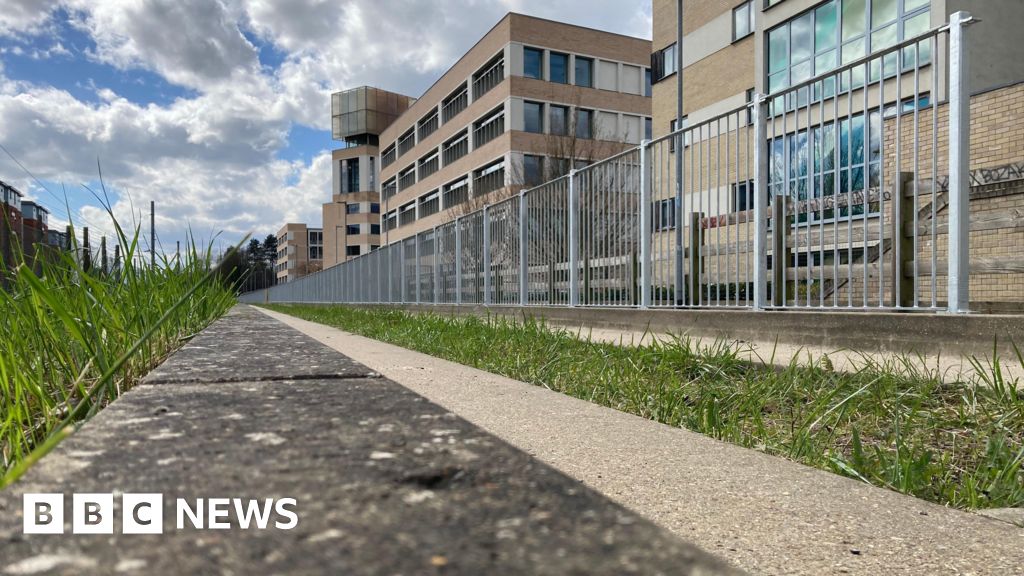
The cyclist died on the busiest stretch of the busway which is used by lots of pedestrians and cyclists. There is now a fence segregating the busway and the path. Personally this part of the busway is a victim of the success the path being there. It's definitely felt congested when I have used this section.

The third one I cannot understand how it occurred unless the woman was walking down the actual busway and not the path that runs along side it.

I am surprised at the reported speeds of up to 56mph in that close proximity to cyclists and pedestrians. This does seem foolish. Considering the directness of the route I see no problem with the reduced 30 & 40mph speeds now in place as very little time is lost/saved when having to stop every couple of minutes.
 
Last edited:

stevieinselby

Established Member
Joined
6 Jan 2013
Messages
1,676
Location
Selby
Was the issue about why the busway had to be guided because it was reusing an old railway formation? Thus as a conventional road, it wouldn't be wide enough to enable two buses to pass at speed and allow adequate space for a cycle track and footpath alongside.
In some places, that may be a factor, although for much of the route it's hard to believe that they couldn't have extended the width of the roadway by a metre or two.
I believe one of the reasons for making busways guided is because it means that only two narrow concrete strips need to be installed and not several metres of tarmac, which also has the feature of making the roads inaccessible to cars and most other vehicles that don't have a wide enough track to use them, thereby circumventing the need for access controls.
However, in this instance, we're talking about a route where the Cambridge city centre to Histon (20 mins), Longstanton (30 mins) and St Ives (40 mins). A slightly faster (and we're probably talking marginally faster - 60 mph line speed?) journey won't outweigh the faff of non direct routes to the city centre or drop in frequency.
Cambridge North to St Ives P&R is 12 miles, so you could easily make the journey from Cambridge station to St Ives in 25 minutes, probably 20 with a new time. I can't see any reason why it would need to be built for only 60mph, it's a good alignment, and it's very rare for new or rebuilt lines to have a linespeed below 75mph other than for tight curvature.
 

Megafuss

Member
Joined
5 May 2018
Messages
887
Location
Spalding
The Busway was very very successful, then COVID hit.

Stagecoach were planning a huge uplift in services. This would have meant Fen villages getting very early buses and an overall improved service. They put thier money where thier mouth was.

One of the first steps was to order the tri-axle deckers. Obviously, it looks a bit foolish now, but they were ordered BEFORE COVID even existed. So, some of the comments I've seen on the forum and elsewhere, are quite frankly garbage about the use of them.

With regards accidents. As far as I'm aware no bus driver has ever been arrested or faced action, other than the employee of the bus that ended up in the apple orchid in Trumpington. That tells me, virtually all the accidents, although possibly avoidable, were not the fault of the buses or drivers....food for thought.

For what it's worth, IMO the Busway was the right solution to the St Ives/Cambridge corridor. Heavy Rail would not be able to achieve the high frequency service or have the adaptability to serve parts of St Ives a bus can.
 
Last edited:

greenline712

Member
Joined
2 Oct 2023
Messages
380
Location
Inside the M25
Prior to Covid, the peak timetables were at 18 BPH, and the buses in the high peak hour were full; hence tri-axle buses.

Then Covid hit . . . and peak loadings crashed away. Cambridge is a city with a very high incidence of high-tech employment; and in general these workers have been able to and have been encouraged to work from home. Is it any wonder that numbers have fallen so much? Off-peak loadings are also lower (based on my occasional journeys) . . . we still have the "seniors" travelling at around 80% of numbers pre-2020.

Busway was built on the understanding that new housing would come to sites such as Longstanton and Northstow; as well as in the St Ives villages, which would have boosted passengers numbers. These have (in general) not yet arrived, so again numbers are down.

For what it's worth, IMO the Busway was the right solution to the St Ives/Cambridge corridor. Heavy Rail would not be able to achieve the high frequency service or have the adaptability to serve parts of St Ives a bus can.
Spot on. Busways / Light Rail have their places, but not everywhere. Cambridge, however, IS the right place.
 

hdennis13

Member
Joined
1 Nov 2023
Messages
49
Location
Cambridge
Although if heavy rail allows significantly higher speeds then it might be that the effective journey time by rail is quicker than by bus, even after allowing for longer waiting times for a less frequent service – there's swings and roundabouts!
In bristol, they have local railways, but the branches only receive 1 tph, which isn't good for a growing city where many commute from outside. And as mentioned, level crossings would be needed. And busways provide the flexibility to run as regular buses, such as the extensions around St ives which have since been separated into V1 etc routes and also allow a direct connection between North and south busways. A tunnel has been mooted before, but the cost far outweighs the benefit.

And regarding the incidents, I fail to see how the busway is any less safer than the regular roads. Surely bus drivers are more likely to be better trained and less likely to be drunk consuming drugs.

The busway may not be perfect, but I think it's the best solution for Cambridgeshire. I doubt if it wasn't a busway, it wouldn't be railway or tramway and the buses would run on the a14.

== Doublepost prevention - post automatically merged: ==

Busway was built on the understanding that new housing would come to sites such as Longstanton and Northstow; as well as in the St Ives villages, which would have boosted passengers numbers. These have (in general) not yet arrived, so again numbers are down.
I believe that a bus only road is being built to allow for buses to divert from the busway to travel through northstowe Town. At least there's a bit of joined up thinking for northstowe
 

TheGrandWazoo

Veteran Member
Joined
18 Feb 2013
Messages
22,909
Location
Somerset with international travel (e.g. across th
Cambridge North to St Ives P&R is 12 miles, so you could easily make the journey from Cambridge station to St Ives in 25 minutes, probably 20 with a new time. I can't see any reason why it would need to be built for only 60mph, it's a good alignment, and it's very rare for new or rebuilt lines to have a linespeed below 75mph other than for tight curvature.
Yes, but Cambridge station ISN'T in the city centre which is what I was saying. So 25 mins, the faff on interchanging and then a bus is why it is suboptimal for the single biggest traffic objective - the city centre!

I suggested 60 mph only as that is what is mainly on Borders Rail IIRC. That is a route that did make sense for reopening as heavy rail.
 

Magdalia

Established Member
Joined
1 Jan 2022
Messages
7,372
Location
The Fens
The Busway was very very successful
  • cost of construction more than £100m
  • way over budget and opened 2 years late
  • expensive legal dispute with the main contractors
  • three deaths on the busway
  • expensive remedial and legal costs as a result of those deaths, including the northbound biomedical campus-station section being closed for more than a year
  • apart from Huntingdon, no country extensions remain beyond the busway
Given the costs involved, no it is not a success.

Cambridge is a city with a very high incidence of high-tech employment and in general these workers have been able to and have been encouraged to work from home.
In Cambridge much of the high tech employment is in the life sciences, working in laboratories. It is not done from home.

And not many people working for the three major hospitals on the biomedical campus are working from home. Compared to, for example London, Cambridge is not significantly affected by WFH.

Yes, but Cambridge station ISN'T in the city centre
That is not significant any more. Most of the employment is not in the old city either, it is near the 2, soon to be 3, railway stations. Also, the three big educational establishments for 16-18 year olds are not in the old city, and their students are a major group of bus users.

  • biomedical campus >20k jobs plus >2k Long Road college students
  • station area no decent employment estimate but definitely thousands, plus >2k Hills Road students
  • science park 7k jobs plus >4k full time students at Cambridge Regional college (CRC)
hence tri-axle buses.
These were mainly for the peak student flows to/from Long Road, Hills Road and CRC.

The remaining retail and tourism in the old city is well served by park and ride and the citi routes. Whilst employment outside the old city is growing rapidly, bits of the old city are in steep decline especially the Grafton Centre.
 
Last edited:

TheGrandWazoo

Veteran Member
Joined
18 Feb 2013
Messages
22,909
Location
Somerset with international travel (e.g. across th
  • cost of construction more than £100m
  • way over budget and opened 2 years late
  • expensive legal dispute with the main contractors
  • three deaths on the busway
  • expensive remedial and legal costs as a result of those deaths, including the northbound biomedical campus-station section being closed for more than a year
  • apart from Huntingdon, no country extensions remain beyond the busway
Given the costs involved, no it is not a success.
I'm sorry but many projects have similar issues with both budget and time delays, not least HS2. However, we can also see with Borders Rail that it was over budget - is that any less of a success? That's before we get onto other projects like Edinburgh Trams, Sheffield Tram-Train, etc.

Similarly, look at Network Rail and they've also been prosecuted for long standing failures in managing health and safety in a number of areas - it doesn't detract from the overall benefits that the train network brings?

By any stretch of the imagination, the passenger growth before Covid was extremely strong.
In Cambridge much of the high tech employment is in the life sciences, working in laboratories. It is not done from home.

And not many people working for the three major hospitals on the biomedical campus are working from home. Compared to, for example London, Cambridge is not significantly affected by WFH.
Anyone would think that each and every person is busy with a test-tube and wearing a white coat.

Quite a number of the roles are in administration and back office and can, and have, been part of the hybrid world of working.
That is not significant any more. Most of the employment is not in the old city either, it is near the 2, soon to be 3, railway stations. Also, the three big educational establishments for 16-18 year olds are not in the old city, and their students are a major group of bus users.

  • biomedical campus >20k jobs plus >2k Long Road college students
  • station area no decent employment estimate but definitely thousands, plus >2k Hills Road students
  • science park 7k jobs plus >4k full time students at Cambridge Regional college (CRC)
Cambridge city centre not a significant employment source? The place isn't some sort of down on its luck backwater....that's Huntingdon! And traffic objective also means not just employment but for leisure and tourism...

The reality is that these views suggest you're wedded to rail. Equally evident is that the busway is here to stay and a suburban light rail or heavy rail solution for Cambridge simply won't happen.
 

higthomas

Established Member
Joined
27 Nov 2012
Messages
1,227
In Cambridge much of the high tech employment is in the life sciences, working in laboratories. It is not done from home.

And not many people working for the three major hospitals on the biomedical campus are working from home. Compared to, for example London, Cambridge is not significantly affected by WFH.
I work on the science park. I can tell you that COVID massively changed things. Yes, people working in labs still come in. But a building with labs in will have far fewer employees than one with just desks. And about 50% of buildings are still primarily desks.

So the science park has been hit by 2 things which have reduced occupation: people at deals coming in much less and offices being converted to labs, resulting in a >50% reduction in occupancy anyway.

This resulting in much lower occupancy.
 

Magdalia

Established Member
Joined
1 Jan 2022
Messages
7,372
Location
The Fens
I'm sorry but many projects have similar issues with both budget and time delays, not least HS2.
I'm sorry but saying the overruns on the busway are not as bad as HS2 is a lame excuse. The busway is very costly for what it has delivered so far. It was supposed to be a high speed high frequency service and it is neither.

Anyone would think that each and every person is busy with a test-tube and wearing a white coat.
Not all of them, but lots of them, and the proportion is growing. The big push for property in Cambridge is more lab space, because labs is the part of the Cambridge economy that is growing most rapidly. The biomedical campus has a big new lab building currently being fitted out with site preparation work already started for 2 more.

Cambridge city centre not a significant employment source?
No, these days there is little employment in the old city apart from tourism, retail and hospitality. For bus travel to and from work/education the old city is now behind the biomedical campus, the station area and the science park/CRC. For the old city a very big chunk of its bus traffic is well looked after by park and ride.

The place isn't some sort of down on its luck backwater.
You obviously haven't been to the Grafton Centre lately. It is less than 50% occupied. Upstairs in the Grand Arcade now has lots of empty units.

The reality is that these views suggest you're wedded to rail. Equally evident is that the busway is here to stay and a suburban light rail or heavy rail solution for Cambridge simply won't happen.
What I'm wedded to is making best use of the infrastructure that Cambridge already has, and, in particular, grasping the opportunity that comes next year when Cambridge South opens. That can only be done by breaking way from the outdated 20th century notion that the Cambridge transport network has to be hub and spoke based on the old city. What is needed is something completely different: to manage congestion it is necessary to eliminate as many as possible of journeys that pass through the old city, but where the old city is not the origin or destination. Heavy rail and the guided busway both have a key part to play in that, by making the most of their comparative advantages. The guided busway is here, and better use needs to be made of it. Done right, the busway could at last deliver properly for Cambridge. That means guided buses going up and down the guideway, not stuck in traffic in the old city. For going between the north side of Cambridge and the south side of Cambridge, people need to be on the train, doing the journey in 10 minutes, instead of being stuck in a bus that takes anything from 30-60 minutes, and uses up valuable space on the congested old city roads.
 
Status
Not open for further replies.

Top