• Our new ticketing site is now live! Using either this or the original site (both powered by TrainSplit) helps support the running of the forum with every ticket purchase! Find out more and ask any questions/give us feedback in this thread!

Bus Manufacturer News & Discussion

Richard Scott

Established Member
Associate Staff
International Transport
Railtours & Preservation
Joined
13 Dec 2018
Messages
4,587
About the one thing, myself and the current London mayor agree on is that if we're going to find political willpower to do anything with them, it's scrapped the lot
That might be what you want but it's very costly and not necessarily the most sensible option.
 
Sponsor Post - registered members do not see these adverts; click here to register, or click here to log in
R

RailUK Forums

Volvodart

Established Member
Joined
12 Jun 2010
Messages
2,958
Equipmake enters Wrightbus StreetDeck battery-electric repower


Equipmake is a further party to enter the market for repower of Wrightbus StreetDeck diesel double-deckers to battery-electric, with a package that it says will deliver a range of up to 200 miles.

That will involve the fitment of 436kWh of lithium-ion battery storage and no reduction in passenger capacity, the supplier adds. Equipmake’s own electric motor that produces up to 3,500Nm of torque is part of the package. Conversions can be carried out in “under three weeks” and come in at a cost of under £200,000.

Work with the StreetDeck represents a further application of the Equipmake Zero Emission Drivetrain. It plugs into the prop shaft and includes power electronics and an inverter that like the motor are proprietary, along with a patented and “ultra-efficient” vehicle thermal management system.

The driveline equipment fits into existing space within the bus and charging is via DC through a standard CCS connection.

Equipmake CEO Ian Foley says that the Snetterton business has worked “incredibly hard” to develop its repower package to suit the Wrightbus StreetDeck.

Mr Foley claims that the package is “sector leading.” While Equipmake has not named any customers for the conversion, he adds that the business looks forward “to converting as many of these vehicles as possible in the coming months.” Such work will deliver claimed lower running costs and “a better experience for passengers and drivers.”

Equipmake has already committed to repowering open-top tour buses in the London market to battery-electric and it has also installed the same driveline into a fleet of 12 Optare Versa EVs with First York. Those buses were built new as battery-electrics but subsequently reengineered by Equipmake.
 

Gag Halfrunt

Member
Joined
23 Jul 2019
Messages
1,007
Embarrassing for Wrightbus that Equipmake promise "no reduction in passenger capacity", while Wrightbus's conversion reduces capacity by six (for four battery packs) or twelve (five packs).
 

hst43102

Member
Joined
28 May 2019
Messages
974
Location
Tyneside
Equipmake enters Wrightbus StreetDeck battery-electric repower

Interesting to see two separate manufacturers offering an electric conversion for the Streetdeck - I wonder if any will offer a conversion for the E400 (surely must be many more E400s than Streetdecks in service?)
 

Edvid

Established Member
Joined
7 Feb 2008
Messages
2,554
W.r.t. Wrightbus' interest in NRM repowering, their phased withdrawal from passenger service (owing to age and the 15-year TfL limit) will probably commence by 2027. TfL could make an exception for them - they own them after all - but realistically the older builds wouldn't last long enough to make their conversion commercially attractive.

Sidenote - Equipmake pilot LT11 (off-road since December 2023) is now 11 years old.

I wonder, what are the oldest busses Equipmake has converted?
They're halfway through converting twenty 12-plate Anhui Ankai open-top deckers for Big Bus London.

Zenobē, a pioneer in electrifying transport fleets, has partnered with Big Bus Tours to deliver 20 sustainable open-top buses and the associated charging infrastructure to transform London’s sightseeing experience.

Serving iconic London landmarks including Big Ben, Tower Bridge and Tower of London, the new vehicles support the growing desire for greener tourism options, with 79% of travellers globally saying they want to use environmentally friendly modes of transport while on holiday1.

The agreement sees Zenobē financing the e-buses, in the company’s first retrofit project, as well as providing a Power Purchase Agreement (PPA) to enable Big Bus to be more proactive and agile with their energy costs.

Big Bus’ existing 10-year-old open-top Ankai diesel buses are making the switch from diesel to electric, after being repowered with a 328 kWh LG Chem Battery and powertrain, by Equipmake Limited.

Zenobē has also installed 10 temporary Direct Current (DC) chargers at Big Buses’ Wimbledon depot. This solution has enabled Big Bus to get their retrofitted fleet on the road in time for the busy spring, summer season and before the upgrade of the local electricity grid is complete.

The final of the first 10 buses has just entered into service and a further 10 at the end of the year.

And on that note, much of the recent work on ex-diesels (completed or underway) by Equipmake, Kleanbus and Magtec is for sightseeing operations.

* Diamond Bus / Magtec - 5 x MAN 12.240 Plaxton Centro
* Tootbus / Magtec - 15 x open-top Volvo B9TL Optare Visionaire
* Lothian Buses / Kleanbus - 18 x open-top Volvo B5TL Wright Eclipse Gemini 3
* Golden Tours / Equipmake - over 10 x open-top Volvo B5TL MCV eVoSeti
 

stevieinselby

Established Member
Joined
6 Jan 2013
Messages
1,731
Location
Selby
One thing has struck me though. The claimed 175 miles between charges is somewhat lower than that of the latest new offerings. That'll restrict where these conversions can be used.
That's unlikely to be a significant restriction, if that's 175 miles in normal service use. Looking at core bus routes in various cities around the country, even vehicles that run from the pre-morning-peak right through the evening typically cover less than 150 miles in a day's work ... and those are the most intensively used vehicles, there will be many more than are not running continuously for 18 hours. So an achievable range of 175 miles would allow you to cover the vast majority of urban daily diagrams – sure, there might be a small minority of boards that go over that, but that doesn't mean that this kind of conversion couldn't make a significant contribution towards greenifying a fleet more cost effectively and without scrapping a load of vehicles that still had years of useful life left in them.
 

Goldfish62

Veteran Member
Joined
14 Feb 2010
Messages
13,235
That's unlikely to be a significant restriction, if that's 175 miles in normal service use. Looking at core bus routes in various cities around the country, even vehicles that run from the pre-morning-peak right through the evening typically cover less than 150 miles in a day's work ... and those are the most intensively used vehicles, there will be many more than are not running continuously for 18 hours. So an achievable range of 175 miles would allow you to cover the vast majority of urban daily diagrams – sure, there might be a small minority of boards that go over that, but that doesn't mean that this kind of conversion couldn't make a significant contribution towards greenifying a fleet more cost effectively and without scrapping a load of vehicles that still had years of useful life left in them.
The claimed battery range always seems to be somewhat inflated in reality, is based on batteries when new and at optimum operating temperature. Plus it's usually recommended that state of charge is maintained in the range 20-80% to preserve battery life. No operator would wish to schedule anywhere remotely near the claimed maximum operational range.
 

GusB

Established Member
Joined
9 Jul 2016
Messages
8,197
Location
Elginshire
I wonder whether it's only Wrightbus vehicles they can repower.
It would seem that the aim is to start with vehicles that they actually built themselves, but move on to other types.

NewPower aims to speed up the decarbonisation process by eradicating diesel powertrains in older fleets at a substantially lower price than a new battery-electric bus. It is focused on fitting its tailored electric drivetrain into Streetdeck buses, then tailoring it for Gemini 2, then New Route Master, with plans to then engineer solutions for other common buses, at around £1m per model.
I assume that the "£1m per model" is a one-off development cost, rather than per bus!

I read somewhere (sorry, can't remember where) that the issue with repowering any other vehicles (both Wright and other makes) was the cost of the initial templating for each model. If there was sufficient demand for a particular model, then they could do it.
I suspect this is probably from one of the articles regarding Equipmake's conversions. I can't remember exactly where I read it, but I'm sure I recall the company saying that the biggest hurdle was converting one vehicle of a particular type and getting it right; thereafter it's far easier to roll the modifications out to others.

It will be interesting to see how the situation plays out and whether there's enough demand to sustain multiple re-powering solutions; so far we've got Equipmake, Kleanbus and now NewPower.
 

MotCO

Established Member
Joined
25 Aug 2014
Messages
6,147
I seem to remember reading that Plaxton are withdrawing from the coach market for a couple of years whilst they concentrate on bus manufacture. However, reading therough Buses magazine, there seem to be large numbers of new coaches being purchased, so are Plaxton missing out?

In particular, Yutongs seem to be appearing in many fleets, and many Flixbus operators are choosing them. Given that the BYD double decker bus was widely reported to be £100,000 cheaper than the equivalent ADL model, is the popularity of the Yutongs down to price, or are they really good quality coaches? Would Plaxtons have been as good?
 

GusB

Established Member
Joined
9 Jul 2016
Messages
8,197
Location
Elginshire
I seem to remember reading that Plaxton are withdrawing from the coach market for a couple of years whilst they concentrate on bus manufacture. However, reading therough Buses magazine, there seem to be large numbers of new coaches being purchased, so are Plaxton missing out?

In particular, Yutongs seem to be appearing in many fleets, and many Flixbus operators are choosing them. Given that the BYD double decker bus was widely reported to be £100,000 cheaper than the equivalent ADL model, is the popularity of the Yutongs down to price, or are they really good quality coaches? Would Plaxtons have been as good?
I don't recall Plaxton saying that it was withdrawing from the coach market, but it seems to be a widely held belief. There was an article published earlier, linked to somewhere in this thread, talking about Plaxton building a run of coaches (Panthers and Leopards) for stock for this year, then concentrating on bus production. It's certainly still delivering coaches.

== Doublepost prevention - post automatically merged: ==

Edit: I found the article while looking for something else
Not seen it widely reported but Plaxton has suspended production of coaches for 2 years to free up production for Electric buses:

----

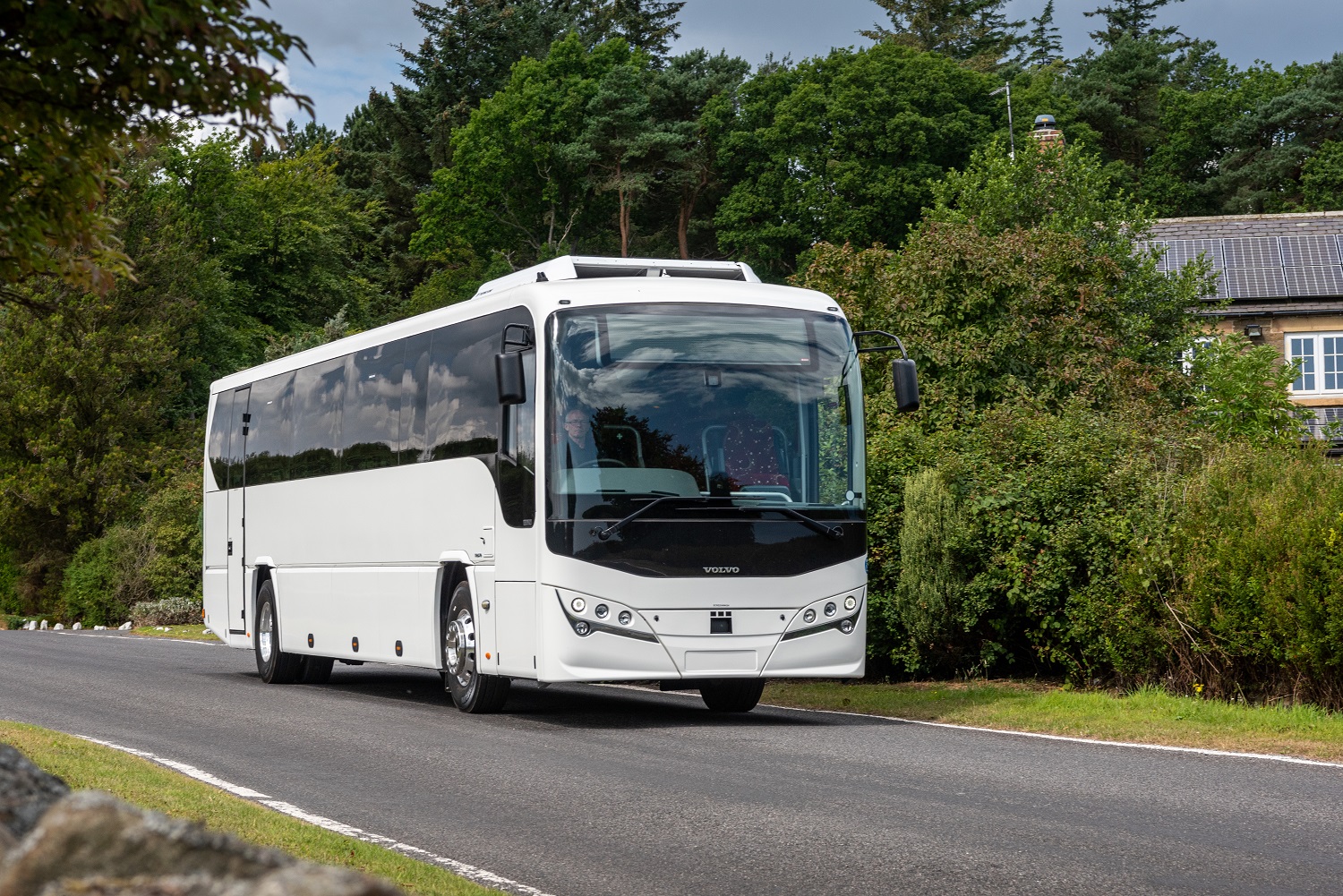
Separately, Volvo's tie-up with Sunsundegui to produce 9700 (single deck) and 9900 coaches now won't be going ahead.

Volvo Buses and Sunsundegui have stopped plans to relocate body manufacture for the Swedish OEM’s B13R-based 9700 single-deck and 9900 coaches to Spain in a decision that leaves both models in limbo for now.

The two businesses say that the planned transfer – which was formalised in late 2023 – has been brought to a halt with immediate effect.

“Despite efforts from both parties, it has been shown to be too complex, and therefore the need for additional investments, including time and resources, is significantly higher than predicted and not viable from a business and profitability perspective,” a Volvo Buses spokesperson says.

Collaboration on existing Sunsundegui products mounted on Volvo chassis – including the SB3, SC5 and SC7 – will continue with no interruption, it has been confirmed.

It always seemed a bit strange that a body manufacturer would agree to building outsourced bodies alongside its own products, thereby competing with itself!
 
Last edited:

joieman

Member
Joined
18 Feb 2024
Messages
991
Location
Loughborough
Separately, Volvo's tie-up with Sunsundegui to produce 9700 (single deck) and 9900 coaches now won't be going ahead.


It always seemed a bit strange that a body manufacturer would agree to building outsourced bodies alongside its own products, thereby competing with itself!
I thought Volvo was quitting building its own vehicle bodies.
 

MotCO

Established Member
Joined
25 Aug 2014
Messages
6,147
I thought Volvo was quitting building its own vehicle bodies.
Or was it only bus production?

I fear that bus and coach manufacture is being affected by Chinese imports in much the same way as car production. Looking at fleet news in Buses magazine, the number of operators chosing Yutong coaches seems to stand out.
 
Joined
3 Aug 2021
Messages
836
Location
Glasgow
Or was it only bus production?

I fear that bus and coach manufacture is being affected by Chinese imports in much the same way as car production. Looking at fleet news in Buses magazine, the number of operators chosing Yutong coaches seems to stand out.

Some operators are choosing Yutong as they are the only manufacturer able to offer decent delivery times. There is an article in CBW (Coach & Bus Week) that the Yutong factory complex can produce 400 vehicles a day!
 

Goldfish62

Veteran Member
Joined
14 Feb 2010
Messages
13,235
Or was it only bus production?

I fear that bus and coach manufacture is being affected by Chinese imports in much the same way as car production. Looking at fleet news in Buses magazine, the number of operators chosing Yutong coaches seems to stand out.
They're choosing Yutong because from what I'm told the product is very good indeed.

== Doublepost prevention - post automatically merged: ==

Some operators are choosing Yutong as they are the only manufacturer able to offer decent delivery times. There is an article in CBW (Coach & Bus Week) that the Yutong factory complex can produce 400 vehicles a day!
Have you got a link to that article? Producing 146,000 buses a year seems overly impressive.
 

GusB

Established Member
Joined
9 Jul 2016
Messages
8,197
Location
Elginshire
They're choosing Yutong because from what I'm told the product is very good indeed.

== Doublepost prevention - post automatically merged: ==


Have you got a link to that article? Producing 146,000 buses a year seems overly impressive.
I'm not sure if this is the same article that @Dfatcontroller is referring to, but it says here that Yutong has capacity to produce that number:

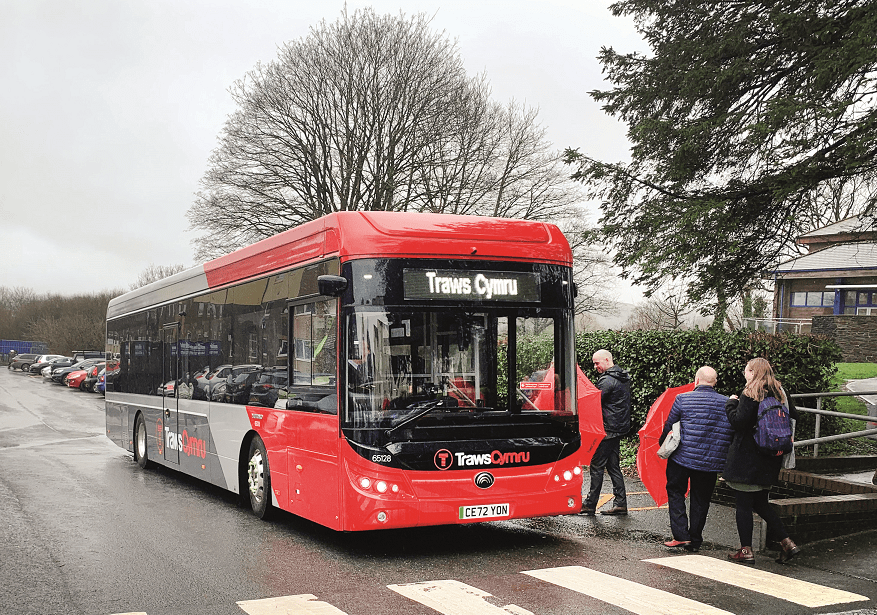
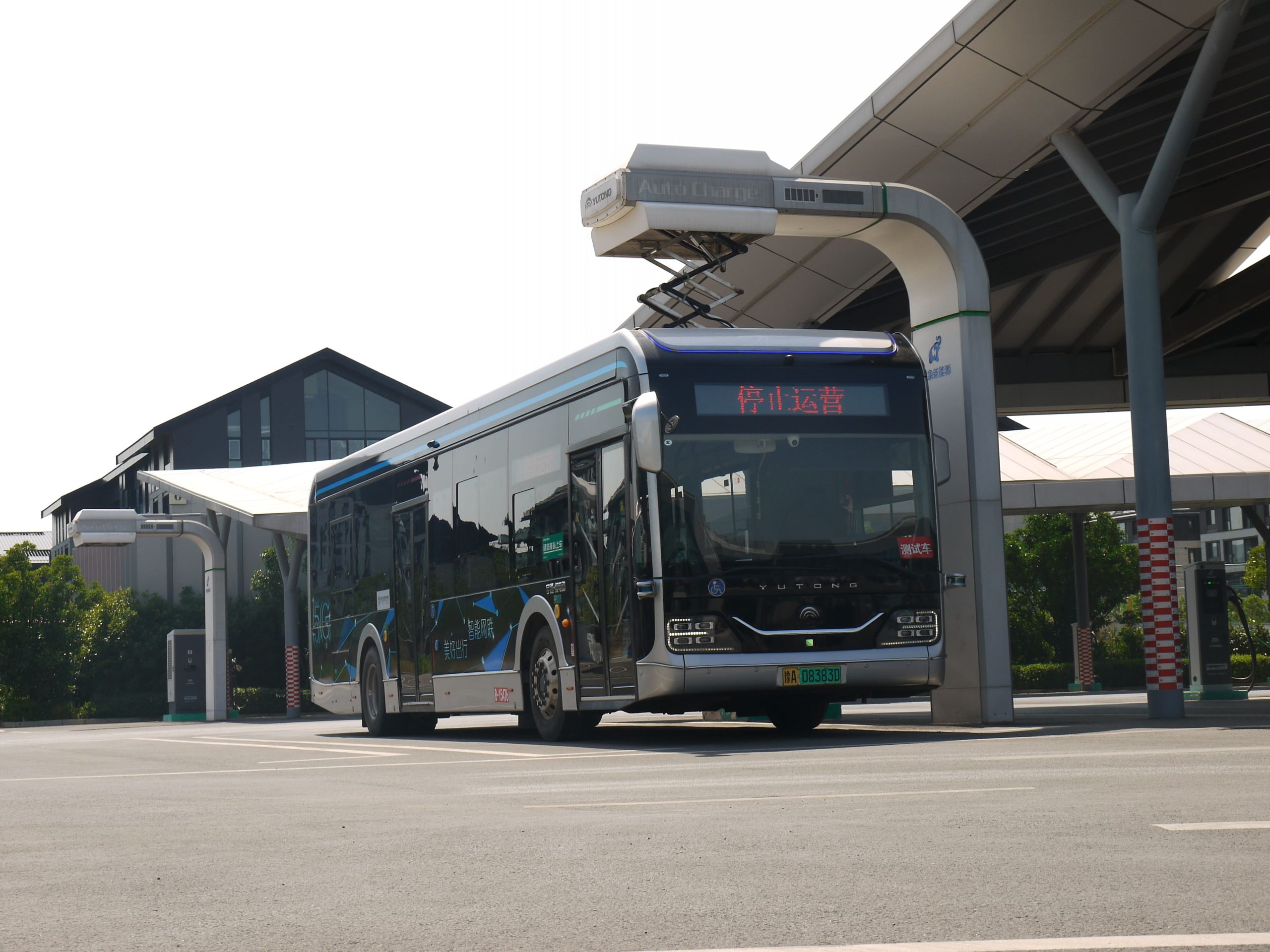
Next came Ian Downie, Head of Yutong UK Pelican Bus & Coach, who stressed the British heritage of Pelican and the investment being undertaken by the company, while Yutong is the world’s largest bus manufacturer with 16% of the worldwide market share, producing 400 vehicles per day. In addition to First, both Cardiff and Newport municipal undertakings have Yutong buses, and it was a Newport bus that was used for trials over the T1 route before orders were placed for the TrawsCymru service.

I don't know how true that is, but it's an impressive figure; it certainly explains how Yutong can be so competitive on price when it's churning out so many units.

I fear that bus and coach manufacture is being affected by Chinese imports in much the same way as car production. Looking at fleet news in Buses magazine, the number of operators chosing Yutong coaches seems to stand out.

If the quality from Chinese manufacturers is as good or better than the products coming from the established European factories at a much lower price point, who can blame operators for going for a cheaper option? Having said that, Irizar also seems to be doing fairly well from what I've been reading (purely anecdotal, of course).

At the other end of the scale, you have some operators going more upmarket. One of my local coach firms, Mayne's (Buckie) has recently taken delivery of another three Neoplans, over and above three Mercedes Tourismos registered earlier in the year. It's far cry from the days of Bedfords with Plaxton bodies!

(Mayne's publishes a fleet list - it's here if anyone's interested: https://www.maynes.co.uk/wp-content/uploads/2024/01/Maynes-Fleet-List-2024.pdf)
 

Volvodart

Established Member
Joined
12 Jun 2010
Messages
2,958
Some operators are choosing Yutong as they are the only manufacturer able to offer decent delivery times. There is an article in CBW (Coach & Bus Week) that the Yutong factory complex can produce 400 vehicles a day!
It was probably from the same visit as this:-


Both NEV and traditional energy vehicles are manufactured on a total of 15 moving production lines at two bus manufacturing facilities with a daily production capacity of 445 units.
 

Swanny200

Member
Joined
18 Sep 2010
Messages
680
There is a youtube video of a tour of their plant, the place is like a city within a city with an autonomous bus system as well although I am seeing a couple of early yutongs up here in the North east that look very worse for wear, but from what I hear it is more the coach company's fault than Pelican and Yutong
 

ClydeCoaster

Member
Joined
31 Jul 2019
Messages
203
Separately, Volvo's tie-up with Sunsundegui to produce 9700 (single deck) and 9900 coaches now won't be going ahead.
i notice that Route One says both the 9700 and 9900 are "in limbo for now", but the Swedish trade magazine Buss Magasinet on Instagram announced yesterday that both models have ceased production for good with no more orders being taken.

Where does that leave Volvo's coach offering in the UK? Their website, other than 97/900 only mentions the B8R chassis, which Sunsundegui (and maybe Plaxton, if they decide they're not resting after all?) body, and the MCV eVoTor, which is marketed with it's own tab. So is the UK going to be left with the B8R?

Also can't help but think Plaxton are missing out given the waiting lists for other manufacturers. If Beulas, irizar and Castrosua can adapt quickly to build on different chassis, then I guess ADL have decided there's little value in volume coach body production.
 

Bungle965

Established Member
Associate Staff
Buses & Coaches
Joined
2 Jul 2014
Messages
3,389
Location
Calder Valley
Beulas, irizar and Castrosua can adapt quickly to build on different chassis, then I guess ADL have decided there's little value in volume coach body production.
I have often wondered how much money there is in the UK market for the smaller manufacturers (Irizar excluded here) Beulas have managed a few deliveries of the past couple of years however I am not aware of any new Castrosua products for years now.
We also have MobiPeople who appear to have carved out a little niche.
 

37114

Member
Joined
4 Jul 2019
Messages
518
Also can't help but think Plaxton are missing out given the waiting lists for other manufacturers. If Beulas, irizar and Castrosua can adapt quickly to build on different chassis, then I guess ADL have decided there's little value in volume coach body production.
I presume Beulas, Irizar and Castrosua sell across Europe in markets much larger than the UK so have signifcantly more volume whereas Plaxton are mainly if not exclusively selling in the UK? As such 100 or so coaches a year is not going to sustain developing new models etc and even widening the chassis pool wider than just Volvo is never going to pay back the development costs of adapting the body/stocking the extra spares so it is not surprising the future of Plaxton is hanging in the balance. With a healthy order book for buses then it is perhaps not a surprise ADL are focussing on the bus side and seemingly as well focussing on integral buses with the Scania gas and Diesel /Volvo 3 axle options for the E400 discontinued.
 

ClydeCoaster

Member
Joined
31 Jul 2019
Messages
203
Bussmagasinet have a Beulas factory tour video on YouTube (
) where Beulas state they manufacture 150 vehicles a year, mostly for the Spanish market. Yet they'll basically put a body on any coach chassis you want.

Irizar I get are much larger these days, with expansion into Central and South America in particular, but outside the UK and the Iberian peninsula you hardly see any Irizar coaches across Europe.
 

Energy

Established Member
Joined
29 Dec 2018
Messages
5,135
With a healthy order book for buses then it is perhaps not a surprise ADL are focussing on the bus side and seemingly as well focussing on integral buses with the Scania gas and Diesel /Volvo 3 axle options for the E400 discontinued.
There's a massive backlog for electric buses, I'd expect ADL to be more fearful of more orders going to yutong or even Mercedes.

The Panther and Leopard are comparatively old products now, they still get occasional deliveries but its quite clear that Irizar and Mercedes dominate the market recently.

Local bus orders from First, Stagecoach, National Express West Midlands etc. are much larger than most coach orders, which are typically a few vehicles, so keeping these more loyal to ADL is more important than the small coach sales.

I hope Plaxton return with a punch, they could really do with a competitive product and export it in left hand drive. It still seems mad that the Panorama was UK only.
 
Last edited by a moderator:

37114

Member
Joined
4 Jul 2019
Messages
518
I hope Plaxton return with a punch, they could really do with a competitive product and export it in left hand drive. It still seems mad that the Panorama was UK only.
To be fair, the opportunity was there when they produced the left hand drive coaches for Polskibus in Poland but presumably it didn't stack up. Brexit won't have helped selling into the EU and making the body left hand drive is probably the easy bit, setting up the dealer support network to sell and maintain it and gain market share in an established market is costly and not straightforward.
 

Mikey C

Established Member
Joined
11 Feb 2013
Messages
8,285
It probably doesn't help Plaxton, that their main market niche is in "bog standard" coaches, where they are vulnerable to cheaper Chinese (and other low cost) competition, where some of the surviving European manufacturers sell more upmarket and expensive vehicles, and can thus survive on lower volumes?
 

Energy

Established Member
Joined
29 Dec 2018
Messages
5,135
It probably doesn't help Plaxton, that their main market niche is in "bog standard" coaches, where they are vulnerable to cheaper Chinese (and other low cost) competition, where some of the surviving European manufacturers sell more upmarket and expensive vehicles, and can thus survive on lower volumes?
I think the gap between standard and premium coaches is getting smaller, most new ones are delivered with a toilet and PSVAR.

However, Plaxton/Volvo did tend to get smaller customers who maybe order 1 or 2 coaches every few years rather than large orders. I suspect Yutong is chipping away at operators with less money, Volvo's 9700/9900 eating into operators with a strictly Volvo fleet and many choosing used vehicles.
 
Last edited:

Top