• Our new ticketing site is now live! Using either this or the original site (both powered by TrainSplit) helps support the running of the forum with every ticket purchase! Find out more and ask any questions/give us feedback in this thread!

Bus Industry in Peril

Status
Not open for further replies.
Joined
31 Dec 2021
Messages
834
Location
Glasgow
What’s your thoughts.


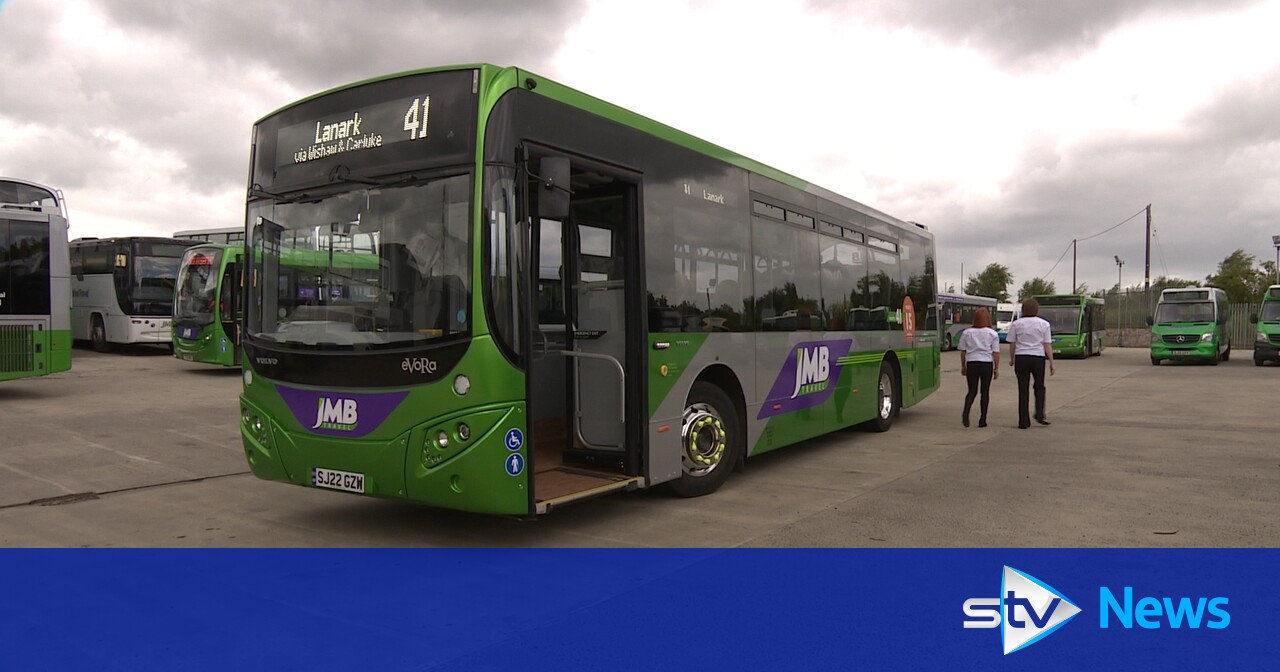
The manager of a bus company in South Lanarkshire said the company will struggle to survive if it cannot fill driver vacancies.

Max Cairns, from JMB Travel, told STV News that many staff have left the business to join the HGV industry, which also faces shortages.

The company has 25 vacancies, but can’t compete with higher wages being offered to drive lorries.

“It’s posing a significant challenge and we simply can’t continue to run the level of service without getting new bodies in the business,” he said.

“It’s just not viable anymore.”

The firm is now trying to entice new drivers to the sector, with former cleaner Kylia Aitchison among those currently training.

She said becoming a trainee bus driver was a “great opportunity” and she sits her theory test soon.

“It’s a very precarious time for the bus industry”.

“It is scary to start with,” she said. “You’ve got your width and your length and all that to think of. It’s daunting at first, but you get there.”

The company is hopeful the training school will be a worthwhile investment – but it’s costing them around £3,000 per head and Scottish Government pandemic funding is due to end in July.

Mr Cairns believes it’s too early to remove financial support, branding it a “critical time” for the sector.

He said: “We’re not back at normal passenger levels and that’s a result of not running full services because we don’t have enough drivers.

“It’s a very precarious time for the bus industry”.
 
Last edited by a moderator:
Sponsor Post - registered members do not see these adverts; click here to register, or click here to log in
R

RailUK Forums

Stan Drews

Established Member
Joined
5 Jun 2013
Messages
2,151
I think we will see many operators disappearing during the next 12 months. The level of wages required to make the job attractive enough to staff, quite simply can’t be supported by the level of fares that people are currently willing to pay for a journey by bus.
The busiest routes will probably scrape by with modest increases to wages/fares, but many won’t!
 
Joined
31 Dec 2021
Messages
834
Location
Glasgow
I think we will see many operators disappearing during the next 12 months.
In the long term that may not be such a bad thing.

The level of wages required to make the job attractive enough to staff, quite simply can’t be supported by the level of fares that people are currently willing to pay for a journey by bus.
Wages aren’t the defining factor here, if it was you’d have few issues with those companies paying better wages.

The busiest routes will probably scrape by with modest increases to wages/fares, but many won’t!
And this too might not be such a bad thing, we see especially in Glasgow and presumably other cities where 100s of 1000s of £’s are spent subsidising hourly, very short routes when there may actually be a primary commercial route which could be adapted to run in its place.
 

Ken H

Established Member
Joined
11 Nov 2018
Messages
6,718
Location
N Yorks
Are buses full at rush hours any more? With working from home and internet shopping the city centres are dying, and with it commuting. The days of buses leaving every 2-3 minutes with 70+ people on board have gone..
Public transport will ned to reinvent itself.
 
Last edited by a moderator:

Titfield

Established Member
Joined
26 Jun 2013
Messages
3,217
This problem has been in the making for a considerable number of years.

Many of the larger operators will tell you that recruitment but especially retention has long an issue. The problem has been brought into sharp focus by a bubble of retirement of older drivers and that drivers laid off as part of the covid response simply havent come back.

Given many sectors have reported problems the question has to be asked is where have all those made redundant due to covid gone to? I suspect many of those approaching retirement (say within 7 years) have taken a good hard long life at life, their finances (especially those who may have had a good redundancy pay off) and decided they can call it a day.
 

Ken H

Established Member
Joined
11 Nov 2018
Messages
6,718
Location
N Yorks
This problem has been in the making for a considerable number of years.

Many of the larger operators will tell you that recruitment but especially retention has long an issue. The problem has been brought into sharp focus by a bubble of retirement of older drivers and that drivers laid off as part of the covid response simply havent come back.

Given many sectors have reported problems the question has to be asked is where have all those made redundant due to covid gone to? I suspect many of those approaching retirement (say within 7 years) have taken a good hard long life at life, their finances (especially those who may have had a good redundancy pay off) and decided they can call it a day.
Or are driving trucks. Some bus drivers say they can get better money in a warehouse with less hassle and no shift working.
 
Joined
31 Dec 2021
Messages
834
Location
Glasgow
This problem has been in the making for a considerable number of years.

Many of the larger operators will tell you that recruitment but especially retention has long an issue. The problem has been brought into sharp focus by a bubble of retirement of older drivers and that drivers laid off as part of the covid response simply havent come back.

Given many sectors have reported problems the question has to be asked is where have all those made redundant due to covid gone to? I suspect many of those approaching retirement (say within 7 years) have taken a good hard long life at life, their finances (especially those who may have had a good redundancy pay off) and decided they can call it a day.
Totally agree, it has been years in the making, there is no aspiration to be found in the population now to wanting to be a bus driver.

COVID or more importantly the furlough scheme has made this all the more evident, the bus industry all over has always mandated that bus drivers work 12hr shift, why should they have ever done that? Because unions accepted this for decades.

Now we are here in 2022 and it’s utterly failing, workers require “more” than ever before but we really don’t see any changes happening throughout the industry.

More recently at airline companies I think the proviso has been that everything would be ok in terms of getting news workers but they also went head over heels to open up holiday booking in a hurry to gain revenue without actually having the recourses available to support and influx of holiday makers.

many bus firm seemingly appear to have been under this idea but only recently have we witnessed them starting to cut services which don’t make great revenue then prioritising what staff they do have onto profit makers.
 

TheGrandWazoo

Veteran Member
Joined
18 Feb 2013
Messages
22,909
Location
Somerset with international travel (e.g. across th
Totally agree, it has been years in the making, there is no aspiration to be found in the population now to wanting to be a bus driver.

COVID or more importantly the furlough scheme has made this all the more evident, the bus industry all over has always mandated that bus drivers work 12hr shift, why should they have ever done that? Because unions accepted this for decades.

Now we are here in 2022 and it’s utterly failing, workers require “more” than ever before but we really don’t see any changes happening throughout the industry.

More recently at airline companies I think the proviso has been that everything would be ok in terms of getting news workers but they also went head over heels to open up holiday booking in a hurry to gain revenue without actually having the recourses available to support and influx of holiday makers.

many bus firm seemingly appear to have been under this idea but only recently have we witnessed them starting to cut services which don’t make great revenue then prioritising what staff they do have onto profit makers.
The 12 hour shift is a bit of a misnomer in that drivers working in the logistics world are doing that as well.

The problem is also that the logistics (lorries) and bus industry have long had the challenge of an aging workforce AND the reliance on drivers from Eastern Europe. With Covid, the older drivers have retired naturally or going on furlough has simply brought it forward. In the latter, those drivers who were purely here (on their own) for the cash went back when Covid lockdowns came in. Different if they'd come over with families and put down roots. Otherwise they went back (as did many with families) and now, thanks to Brexit, they can't or won't return. Remember that whilst supermarkets kept going through the lockdowns, drivers for non-food retail or hospitality weren't needed and if you weren't earning, would you stay in a rented house in Rugby or head back home to Lithuania?

Whether it be trucks or buses, the fact is that foreign labour helped to paper over the cracks for years.

The difference is now that you have the logistics industry (esp. grocery retail) being able to out compete the bus industry in terms of drivers wages. You can add £2/hour onto a drivers' wages via a penny on a tin of beans and a shopper barely notices. However, to do the same on bus fares and the impact is much greater - 20p on a single fare? Much greater impact on price elasticity of demand.

However, the impact of staff shortages is now all pervasive. I was walking through a local town at 4pm the other afternoon and both WH Smiths and Waterstones had closed through lack of staff.
 

richw

Veteran Member
Joined
10 Jun 2010
Messages
11,528
Location
Liskeard
Are buses full at rush hours any more? With working from home and internet shopping the city centres are dying, and with it commuting. The days of buses leaving every 2-3 minutes with 70+ people on board have gone..
Public transport will ned to reinvent itself.
Personal observation in the south west is that leisure travel has bounced back strongly, but the commuter market hasn’t.
 

Ken H

Established Member
Joined
11 Nov 2018
Messages
6,718
Location
N Yorks
The 12 hour shift is a bit of a misnomer in that drivers working in the logistics world are doing that as well.

The problem is also that the logistics (lorries) and bus industry have long had the challenge of an aging workforce AND the reliance on drivers from Eastern Europe. With Covid, the older drivers have retired naturally or going on furlough has simply brought it forward. In the latter, those drivers who were purely here (on their own) for the cash went back when Covid lockdowns came in. Different if they'd come over with families and put down roots. Otherwise they went back (as did many with families) and now, thanks to Brexit, they can't or won't return. Remember that whilst supermarkets kept going through the lockdowns, drivers for non-food retail or hospitality weren't needed and if you weren't earning, would you stay in a rented house in Rugby or head back home to Lithuania?

Whether it be trucks or buses, the fact is that foreign labour helped to paper over the cracks for years.

The difference is now that you have the logistics industry (esp. grocery retail) being able to out compete the bus industry in terms of drivers wages. You can add £2/hour onto a drivers' wages via a penny on a tin of beans and a shopper barely notices. However, to do the same on bus fares and the impact is much greater - 20p on a single fare? Much greater impact on price elasticity of demand.

However, the impact of staff shortages is now all pervasive. I was walking through a local town at 4pm the other afternoon and both WH Smiths and Waterstones had closed through lack of staff.
There is a europe wide shortage of drivers. E European drivers can make as much money in their home countries as they would in UK and the tax regime is better for them. The roll out of tougher IR365 tax regs hasn't helped. So why would they come to UK and have to pay for accommodation when they could stay at home?
 

E-Rail

Member
Joined
7 Dec 2012
Messages
272
In Poole, Damory drivers earn £10.35 ph (although probably more like £8.80 once unpaid breaks are factored in). McDonalds in Poole are paying £11.75 an hour.
 

freetoview33

Established Member
Joined
24 May 2009
Messages
3,815
Location
West of England
Are buses full at rush hours any more? With working from home and internet shopping the city centres are dying, and with it commuting. The days of buses leaving every 2-3 minutes with 70+ people on board have gone..
Public transport will ned to reinvent itself.
The ones I've been on this week in Bristol have been standing room only, there is definitely demand still.
 

Ken H

Established Member
Joined
11 Nov 2018
Messages
6,718
Location
N Yorks
The ones I've been on this week in Bristol have been standing room only, there is definitely demand still.
But you buy a bus and crew it (2 shifts). If you only get 1 reasonable load that's not going to pay.
 
Last edited by a moderator:
Joined
31 Dec 2021
Messages
834
Location
Glasgow
The ones I've been on this week in Bristol have been standing room only, there is definitely demand still.
There is always going to be demand.

If there are people to pick up but no one to actually drive the buses we are heading for an uneasy future regarding bus transport and for many who don’t drive.

== Doublepost prevention - post automatically merged: ==

In Poole, Damory drivers earn £10.35 ph (although probably more like £8.80 once unpaid breaks are factored in). McDonalds in Poole are paying £11.75 an hour.
But do they have drivers?

If so then all I can say is that the pay is not the defining factor here and brexit is just a comfortable reason for some to use.

You often do find in the industry where you have many smaller firms that drivers are on lesser wages than, say, someone who works for a larger firm, but the reason they choose the worse off paying job is because they generally get less hassle from Toxic Manager styles in larger firms, amongst other things.
 
Last edited by a moderator:

overthewater

Established Member
Joined
16 Apr 2012
Messages
9,114
Why can't big companies give drivers decent shifts? Years ago, a driver would be on the same duty for a whole week. None of this mucking around having different start times and doing different routes.

That would be a good starting point to fix.
 
Last edited by a moderator:

Ken H

Established Member
Joined
11 Nov 2018
Messages
6,718
Location
N Yorks
Why can't big companies give drivers decent shifts? Years ago, a driver would be on the same duty for a whole week. None of this mucking around having different start times and doing different routes.

That would be a good starting point to fix.
Because they now have a mix of part and full timers, some who have agreed not to do school runs. We now have 5 weeks paid holiday a year. Rostering is far more complex.
My local company has people who have effectively retired but who drive 1 or 2 days a week. It keeps buses on the road but must make rostering a nightmare. 'Can I get old Fred to cover this one?'
 
Last edited by a moderator:

Bletchleyite

Veteran Member
Joined
20 Oct 2014
Messages
113,185
Location
"Marston Vale mafia"
If there are people to pick up but no one to actually drive the buses we are heading for an uneasy future regarding bus transport and for many who don’t drive.

People will drive buses if pay and conditions are improved. Conditions include quality of management.

This could be the end of for-profit unregulated commercial bus operation, but not the end of buses as a thing.
 

freetoview33

Established Member
Joined
24 May 2009
Messages
3,815
Location
West of England
Don't get me wrong I understand the lack of drivers but all the buses I have been on throughout the day over the last few weeks have been very well loaded and in a few cases standing room only, so I think the biggest issue is the lack of drivers for whatever reasons mentioned above.
 

PaulMc7

Established Member
Joined
9 Jul 2019
Messages
4,029
For me personally, conditions is the biggest factor in the industry. If you get conditions spot on then you'll always have the ability to get staff in. Pay should go up year on year in affordable doses but there's no excuses for being any less than 100% spot on with working conditions and it appears that in the bus industry, managers lack any sort of people skills which is huge too. Dealing with the public is a huge issue but good working conditions is a basic thing any management should achieve and if they don't then time to move on and let someone who will do the job
 

Snow1964

Established Member
Joined
7 Oct 2019
Messages
11,087
Location
West Wiltshire
Shortage of bus drivers is not new

Didn’t London Transport advertise bus driver jobs in the Caribbean about 60 years ago and import staff because they couldn’t get enough UK staff.

As an industry there is not much commitment to poach staff from other industries by paying enough to do it. Far to many routes don’t generate the revenue to do it, so would be bankrupt without subsidies
 

WM Bus

Member
Joined
28 Jul 2018
Messages
296
Are buses full at rush hours any more?
They are and always have been in very largely National Express area, particularly Central Birmingham on the 14, 94/95, X1/X2, 65/67 etc.

Some of the Arriva 110's heading out of Sutton towards Tamworth look well loaded as well, when I see them.
 
Last edited:
Joined
31 Dec 2021
Messages
834
Location
Glasgow
From
People will drive buses if pay and conditions are improved. Conditions include quality of management.

This could be the end of for-profit unregulated commercial bus operation, but not the end of buses as a thing.
I sure hope so.

I gather that in Scotland we currently have major transport firms saying they're carrying between 65-75% of pre-COVID numbers. Surely if driver numbers weren’t the issue then theoretically all they have to do is match the ridership and the service level. Technically that means they would be back to how they operated before, albeit with a lesser amount of buses on the road.

Finances don’t seem to be the defining factor here either; is there something more sinister at work?

Perhaps the profit making route, whilst they will see a reduction in use and therefore revenue, they will still be making money, albeit it won’t be enough to subsidies loss makers?
 
Last edited by a moderator:

ALEMASTER

Member
Joined
18 Aug 2011
Messages
486
My understanding/observations...

There are two factors really, both Covid related
- staffing issues
- passenger demand and finances

On the staffing front, yes it didn't help that drivers were poached to drive HGVs but there is generally a regular turnover of bus drivers anyway as staff move on in their career to jobs that either pay better, offer more sociable hours or simply less interaction with the public! The problem has more been recruiting and training new staff and this wasn't helped by the delays to new trainee drivers receiving their licences. The other issue as a result of Covid is that the numbers of drivers off work sick has been higher.

On the finance front, almost all public transport in England is currently subsidised by the government to a specified level. The current funding for buses and trams - the Covid recovery grant - ends in October. Anything that is still not commercially viable by then will have to be axed, other than tendered services that local authorities fund. Some buses are indeed busy now - there is demand for the school run, shoppers, leisure travel to events etc - but the leisure demand fluctuates from one day or week to the next depending on events etc and there isn't the volume of regulars buying weekly/monthly passes for a daily commute.

Culture has changed. People don't commute to offices every working day, they shop locally or order online, eating and drinking out in City Centres is now more of a special occasion too.

Hopefully what will happen in the various network reviews between now and October won't be just a cut and burn, it will see routes and timetables change to reflect changes in demand, for example where I live we have a good service to the City Centre in the daytime but a very poor service to other more local places where people now actually want to go much more than before.
 

E-Rail

Member
Joined
7 Dec 2012
Messages
272
Don't get me wrong I understand the lack of drivers but all the buses I have been on throughout the day over the last few weeks have been very well loaded and in a few cases standing room only, so I think the biggest issue is the lack of drivers for whatever reasons mentioned above.
But what was the load profile? If its a full load of ENCTS passengers then it's not profitable (and actually not allowed under the scheme rules to be profitable).

And there lies the circle that can't be squared. Revenue is basically capped as a result of ENCTS and to increase reimbursement means increasing fares for passengers that actually pay. Increase them too much and you'll lose them. Don't increase them and you'll lose the drivers to better paying jobs.

After 23 years in the industry, I am confident in predicting we are in the end game of bus services in their present form.
 

Ken H

Established Member
Joined
11 Nov 2018
Messages
6,718
Location
N Yorks
But what was the load profile? If its a full load of ENCTS passengers then it's not profitable (and actually not allowed under the scheme rules to be profitable).

And there lies the circle that can't be squared. Revenue is basically capped as a result of ENCTS and to increase reimbursement means increasing fares for passengers that actually pay. Increase them too much and you'll lose them. Don't increase them and you'll lose the drivers to better paying jobs.

After 23 years in the industry, I am confident in predicting we are in the end game of bus services in their present form.
Maybe its ENCTS that needs fixing.
I have a job. I pay tax at a higher rate. Is it right I get free bus rides. I would only use them for jollies. I work from home so don't actually need buses.
£1 a go to use ENCTS would help. as long as it goes to the bus operator.
 

RT4038

Established Member
Joined
22 Feb 2014
Messages
5,455
From

I sure hope so.

I gather that in Scotland we currently have major transport firms saying they're carrying between 65-75% of pre-COVID numbers. Surely if driver numbers weren’t the issue then theoretically all they have to do is match the ridership and the service level. Technically that means they would be back to how they operated before, albeit with a lesser amount of buses on the road.

Finances don’t seem to be the defining factor here either; is there something more sinister at work?

Perhaps the profit making route, whilst they will see a reduction in use and therefore revenue, they will still be making money, albeit it won’t be enough to subsidies loss makers?
If ridership is 65% of what was being operated before, then (for instance) instead of running 100 buses, the bus company would only be running 65 (and that assuming that the cost of overheads - depots, management, administration etc could be downsized to the same proportion). So these 65 buses ('back to how the were before') would mean a service which was every 30minutes would now be every 50 minutes, and a service running 5 times a day would only now run 3 times a day. And that is making an assumption that the 65% of passengers would be quite happy with the service reduction and would carry on travelling irrespective, which I would suggest is unlikely to say the least.

So what more sinister can be at work? If bus companies increase drivers wages, they either have to increase fares to cover the additional costs (and have to put much of the increase on the paying customers, as ENCTS reimbursement mechanism does not adequately compensate) and/or reduce the amount of service operated, which is rendered uneconomic by customers leaving because of the higher fares and/or reduced service.
 

overthewater

Established Member
Joined
16 Apr 2012
Messages
9,114
What I do find strange is Stagecoach West Scotland doesn't believe the new under 22 free travel in Scotland will generate any more passengers. It plans to cut no 11 Ayrshire service down to every 15mins on School holidays and Saturdays. So they don't believe the concessionary travel scheme will get them more passengers, the issues can't solely be down to these types of schemes.

Too many routes still need to be overhauled to play catch up in the new world order of where the public want to travel to.
 
Last edited by a moderator:
Joined
27 May 2021
Messages
690
Location
Daventry
I have always believed that the introduction of ENCTS Passes would be the death knell of many routes (Albeit a slow and lingering one). Covid has just accelerated this..
 

GusB

Established Member
Joined
9 Jul 2016
Messages
8,124
Location
Elginshire
I appreciate that concessionary schemes are somewhat relevant to the discussion, but let's not go too far down that particular route; they have been discussed at length in other threads.
 

MacT

Member
Joined
6 Jul 2021
Messages
23
Location
Dorset
In Poole, Damory drivers earn £10.35 ph (although probably more like £8.80 once unpaid breaks are factored in). McDonalds in Poole are paying £11.75 an hour.
I'm reliably informed some Damory drivers are on more than that, with some having paid breaks. First Wessex are paying their drivers approx. £10.56 an hour, so fairly comparative with the competitors.
 
Status
Not open for further replies.

Top