• Our new ticketing site is now live! Using either this or the original site (both powered by TrainSplit) helps support the running of the forum with every ticket purchase! Find out more and ask any questions/give us feedback in this thread!

Buddleia roots and the damage they cause.

Status
Not open for further replies.

Peter Mugridge

Veteran Member
Joined
8 Apr 2010
Messages
17,804
Location
Epsom
We have mentioned on this forum many times before about the damage that buddleia roots can do, but so far we haven't actually illustrated it.

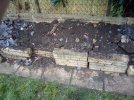
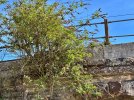
This picture is of the root stock of a single buddleia bush just seven feet high which was removed from a raised flowerbed in my garden on Monday; the second picture is the state of the flowerbed after the root was removed - the blocks had already been dislodged by the roots.

The sheer size of it is somewhat surprising.

Now... imagine this growing inside a structure, and it now becomes much easier to understand what the extreme buddleia growth we see everywhere on the railway is doing to our national infrastructure... If anyone wishes to use the picture of the root stock below when trying to get a particularly obvious growth, especially in a wall or bridge, taken seriously and dealt with - feel free to snag it for the purpose.

 

Attachments

  • IMG_20250324_104741.jpg
    IMG_20250324_104741.jpg
    3.5 MB · Views: 827
  • IMG_20250324_104804.jpg
    IMG_20250324_104804.jpg
    3.7 MB · Views: 822
Sponsor Post - registered members do not see these adverts; click here to register, or click here to log in
R

RailUK Forums

Bevan Price

Established Member
Joined
22 Apr 2010
Messages
8,321
Buddleia is a rampant, dangerous weed - yet a lot of people encourage us to plant them because they attract butterflies.....
 

D Mylchreest

Member
Joined
10 Dec 2022
Messages
101
Location
London
There are lots of varieties of Buddleia. The one which is banned is Buddleia Davidii which is the one that grows prolifically on railway premises because it particularly likes the extremely well drained environment that the railway presents. It also seeds itself prolifically too.
It's not a good idea to plant any tree within about twenty metres of your house and a large one not at all. Leave them for public parks.
 

Noddy

Established Member
Joined
11 Oct 2014
Messages
1,642
Location
UK
There are lots of varieties of Buddleia. The one which is banned is Buddleia Davidii which is the one that grows prolifically on railway premises because it particularly likes the extremely well drained environment that the railway presents. It also seeds itself prolifically too.
It's not a good idea to plant any tree within about twenty metres of your house and a large one not at all. Leave them for public parks.

It is regarded as an invasive species by Defra, but it isn’t banned! It’s not even listed in section 14 of the Wildlife and Countryside Act. The more interesting garden varieties are also davidii and will continue to hybridise with the wild/feral ones.
 

John Luxton

Established Member
Joined
23 Nov 2014
Messages
2,037
Location
Liverpool
Evil stuff!

Acquired one with my house in 2007 been hacking away at it for years and I think I have finally destroyed the remnants over the winter.

There is an abandoned synagogue to the rear of my house which is owned by a developer. The developer is in dispute with the council from whom they bough the lease and things have dragged on since 2016.

The grounds are getting quite overgrown and there is a a very interesting crop of buddleia growing out of the brickwork at the near the roof which has really taken hold in the past 18 months. Goodness knows what damage it will be doing if it doesn't get attended to soon.
 

alxndr

Established Member
Joined
3 Apr 2015
Messages
1,679
This is my "favourite" (for want of a better word) image illustrating just how distructive buddleia can be:

GXnQOPHXAAA4pxC

[alt text: Image showing brickwork with about 20 bricks missing and replaced with a network of thick roots. Only one branch protrudes out of the wall.]

Source: https://x.com/MurphyNiallGLA/status/1835727273556611137
 

fgwrich

Established Member
Joined
15 Apr 2009
Messages
10,621
Location
Hampshire
Any plant with wind blown seeds is very efficiently dispersed by the movement of passing trains.
Not just that but the rolling stock themselves can also inadvertently aid the spreading around of such species - DMUs such as 170s and 180s were notorious for having blocked radiators from things such as leaves, pollen, seed heads etc. IIRC it was either GC or Hull Trains 180s which seemed to suffer badly from Pollen ingestion a few years back blocking the radiators and causing them to overheat.
 

John Luxton

Established Member
Joined
23 Nov 2014
Messages
2,037
Location
Liverpool
Something else which appears to be quite prolific growin on disused railway land is silver birch.

Anyone using the Merseyrail service to Chester or Ellesmere Port will be familiar with the virtual forest of the stuff which has grown up on the former Birkenhead lines between Rock Ferry and Green Lane. Would be over 30 years since anything ran over the still extant tracks to the docks and it just looks a mess - it will be in leaf again soon!

Anyone know why that particular tree species seems to colonise railways as I have seen it at other locations sometime even appearing to grow out of wooden sleepers?
 
Last edited:

Mcr Warrior

Veteran Member
Joined
8 Jan 2009
Messages
17,185
Something else which appears to be quite prolific growin on disused railway land is silver birch.
Silver birch is a "pioneer species" which grows relatively quickly in open land, and so out-competes other, slower-growing, species.
 

Recessio

Established Member
Joined
4 Aug 2019
Messages
1,501
Location
London
Any plant with wind blown seeds is very efficiently dispersed by the movement of passing trains.
Indeed, I used to live in Vauxhall in a tower block and I could see that pretty much every building within 500m of the viaduct would have buddleia growing out of the roof. Pretty shocking the state of the growth on the viaduct, especially given they had that cable trough collapse a couple of years back so I thought they would be taking better care of the brickwork
 

DarloRich

Veteran Member
Joined
12 Oct 2010
Messages
32,892
Location
Fenny Stratford
Now... imagine this growing inside a structure, and it now becomes much easier to understand what the extreme buddleia growth we see everywhere on the railway is doing to our national infrastructure...
The removal issue is one of resource; human, financial and time. There are not enough people, there isn't enough money and there isn't enough access to deal with this issue

BTW try Japanese Knotwood. I once worked in a garden with it. Took a JCB to dig out the root!

Something else which appears to be quite prolific growin on disused railway land is silver birch.
irc: Silver Birch isn't very fussy what it grows in. Even quite polluted land as shown here!
 

Envoy

Established Member
Joined
29 Aug 2014
Messages
3,126
I just can’t understand why the railways appear to not take action against Buddleia? Below are 3 photographs of Ely Mill underpass on the City Line in Cardiff. This has recently been opened up for pedestrians to use to a new residential area.

Photo 1 is a long shot of the underpass with large Buddleia bushes growing out of the Victorian stonework above - complete with seed heads to blow away and make more bushes.
Photo 2 shows how the roots have penetrated into the mortar beds and are ripping the stone layers apart.
Photo 3 is looking up at the roof of the underpass and again, this does not look in good condition.

Clearly no action has been taken for years by Network Rail and now it is looking like more costly repairs will be needed. That problem will now be for Transport for Wales to sort out as this line is now under their control.

Surely, if staff were employed to go around looking at the infrastructure for Buddleia taking root, they could spray it whilst small and thus avoid the costly damage that ensues by doing nothing?
 

Attachments

  • CITY LINE - ELY MILL UNDERPASS.jpeg
    CITY LINE - ELY MILL UNDERPASS.jpeg
    1.3 MB · Views: 237
  • BUDDLEIA DAMAGE - ELY MILL BRIDGE IN CARDIFF.jpeg
    BUDDLEIA DAMAGE - ELY MILL BRIDGE IN CARDIFF.jpeg
    769 KB · Views: 238
  • ROOF OF ELY MILL PEDESTRIAN UNDERPASS.jpeg
    ROOF OF ELY MILL PEDESTRIAN UNDERPASS.jpeg
    794.8 KB · Views: 237

zwk500

Veteran Member
Joined
20 Jan 2020
Messages
18,460
Location
Northampton
Surely, if staff were employed to go around looking at the infrastructure for Buddleia taking root, they could spray it whilst small and thus avoid the costly damage that ensues by doing nothing?
Employing staff costs money now to avoid a (technically) theoretical future expense, guess which option the treasury (on whom the burden eventually falls) prefers?
 

Tetragon213

Member
Joined
14 Oct 2024
Messages
680
Location
West Midlands
Buddleia is nasty stuff. Difficult to kill as well, though obviously nothing on the planet beats Japanese Knotweed at the "being a right so-and-so to get rid of" game.
 

vic-rijrode

Member
Joined
31 Aug 2016
Messages
440
Buddleia is nasty stuff. Difficult to kill as well, though obviously nothing on the planet beats Japanese Knotweed at the "being a right so-and-so to get rid of" game.
Not all Buddleia is necessarily "nasty" - as has been alluded to upthread, there are many beautiful cultivars that look great in even small gardens. The trick with it though is to keep pruning it hard - virtually down to ground level each year.

I will agree that it is obviously impractical to remove or even annually prune buddleia that grows on the railway which leads to the kind of bare, leggy monstrosities that infest structures (and disfigure gardens).
 

Peter Mugridge

Veteran Member
Joined
8 Apr 2010
Messages
17,804
Location
Epsom
I just can’t understand why the railways appear to not take action against Buddleia? Below are 3 photographs of Ely Mill underpass on the City Line in Cardiff. This has recently been opened up for pedestrians to use to a new residential area.

Photo 1 is a long shot of the underpass with large Buddleia bushes growing out of the Victorian stonework above - complete with seed heads to blow away and make more bushes.
Photo 2 shows how the roots have penetrated into the mortar beds and are ripping the stone layers apart.
Photo 3 is looking up at the roof of the underpass and again, this does not look in good condition.
That bush appears to be a similar size to the one which generated the root stock in the photo in my opening post. It is a fair bet, then, that there will be a similar volume of root stock lurking within that wall.


Not all Buddleia is necessarily "nasty" - as has been alluded to upthread, there are many beautiful cultivars that look great in even small gardens. The trick with it though is to keep pruning it hard - virtually down to ground level each year.
The one in my opening post was being pruned right back to ground level each year... and it still generated massive roots.


Nothing wrong with buddleia per se; it just often grows where it shouldn't be growing...
 

HSTEd

Veteran Member
Joined
14 Jul 2011
Messages
20,281
Clearly no action has been taken for years by Network Rail and now it is looking like more costly repairs will be needed. That problem will now be for Transport for Wales to sort out as this line is now under their control.

Surely, if staff were employed to go around looking at the infrastructure for Buddleia taking root, they could spray it whilst small and thus avoid the costly damage that ensues by doing nothing?
It would require a substantial number of staff to cover the entire railway estate and reliably locate a significant portion of the buddleia plants that are growing.

Given railway salaries are what they are, it would require a lot of money.
And thats assuming the staff can even get access to the plants now that red zone working (adjacent to a live track) is largely banned.
 

Tetragon213

Member
Joined
14 Oct 2024
Messages
680
Location
West Midlands
It would require a substantial number of staff to cover the entire railway estate and reliably locate a significant portion of the buddleia plants that are growing.

Given railway salaries are what they are, it would require a lot of money.
And thats assuming the staff can even get access to the plants now that red zone working (adjacent to a live track) is largely banned.
I was under the impression it was "unassisted" lookout working that was virtually banned, i.e. TOWS/LOWS/ATWS based systems were still ok? When did this all change?

They still teach you Red Zone Working in the PTS! (Went on mine very recently)
 
Joined
3 Mar 2020
Messages
669
Location
Furness
Buddleia is nasty stuff. Difficult to kill as well, though obviously nothing on the planet beats Japanese Knotweed at the "being a right so-and-so to get rid of" game.
Japanese Knotweed has evolved to grow on the side of volcanoes after lava flows. If you take it out of that habitat and put ot elsewhere, its going to behave more aggressively.
 
Joined
29 Sep 2010
Messages
204
The Flora of Birmingham and the Black Country (2013) lists the following plants as being particularly associated with railways in the West Midlands.

Buddleia (Buddleia davidii)
Danish scurvy-grass
Common stork's-bill
Common fumitory
Common toadflax
Common mallow
Long-headed poppy
London plane
Yellow mignonette
Oxford ragwort
Hedge mustard
Rat's-tail fescue
Japanese knotweed

Many (but not all) are drought-tolerant weeds with abundant seed production.
 

Mcr Warrior

Veteran Member
Joined
8 Jan 2009
Messages
17,185
Rosebay Willowherb (a.k.a. "Fireweed") and Himalayan Balsam also tend to grow unchecked on railway verges, but not sure though what damage they might cause, if any, to masonry.
 
Status
Not open for further replies.

Top