
• Our new ticketing site is now live! Using either this or the original site (both powered by TrainSplit) helps support the running of the forum with every ticket purchase! Find out more and ask any questions/give us feedback in this thread!

Bridge strikes statistics

Status
Not open for further replies.

Magdalia

Established Member
Joined
1 Jan 2022
Messages
7,345
Location
The Fens
The list of most bashed bridges in 2024/25 has now been published see here:
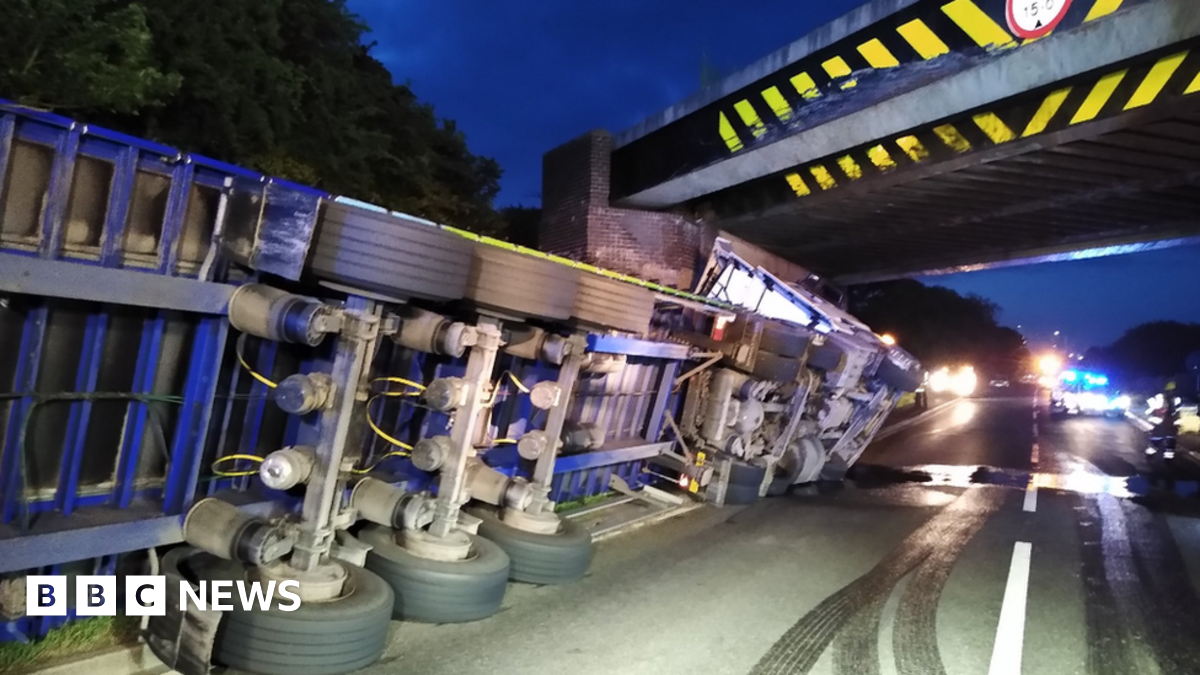

A low bridge in Leicestershire has regained the dubious honour of being the most bashed in Britain.

Network Rail said the A5 Watling Street bridge in Hinckley was struck 22 times between 1 April 2024 and 31 March 2025.

That placed it ahead of Harlaxton Road in Grantham, Lincolnshire, which was hit 18 times in the same period and Stuntley Road in Ely, Cambridgeshire, which saw 15 crashes.

Network Rail has urged haulage drivers to check their vehicle heights and plan suitable routes after reporting 1,666 bridge strikes nationally - an 8.75% increase on the previous year.

The "Top Ten" are:

Britain's most bashed bridges​

  • Watling Street A5, Hinckley - 22 strikes
  • Harlaxton Road, Grantham, Lincolnshire - 18 strikes
  • Stuntney Road, Ely, Cambridgeshire - 15 strikes
  • Stonea Road, Stonea, Cambridgeshire - 15 strikes
  • Lower Downs Road, Wimbledon - 15 strikes
  • Station B4105, Berkswell, Warwickshire – 14 strikes
  • Ickleton Road, Great Chesterford, Essex, – 11 strikes
  • Barrowby Road, Grantham, Lincolnshire – 11 strikes
  • Abbey Farm, Thetford, Norfolk - 11 strikes
  • Coddenham Road, Needham Market, Suffolk – 11 strikes
 
Sponsor Post - registered members do not see these adverts; click here to register, or click here to log in
R

RailUK Forums

Ayrshire Roy

Member
Joined
8 Feb 2019
Messages
113
Plot those on a UK map and there is a remarkable concentration - any thoughts as to why?
A lot of the areas are pretty flat so drivers will not have to deal with a lot of under bridges compared to a city or hilly area.
 

Tester

Established Member
Joined
5 Jul 2020
Messages
1,663
Location
Watford
A lot of the areas are pretty flat so drivers will not have to deal with a lot of under bridges compared to a city or hilly area.
There is logic in that.

In which case, I wonder if level crossing discipline shows up as better in a similar area.
 

edwin_m

Veteran Member
Joined
21 Apr 2013
Messages
28,612
Location
Nottingham
A lot of the areas are pretty flat so drivers will not have to deal with a lot of under bridges compared to a city or hilly area.
In those sorts of areas the railway is typically fairly near to grade, and there are often water table issues making it more difficult to lower the road. So there may just be more low bridges to be hit.
 

35B

Established Member
Joined
19 Dec 2011
Messages
5,379
Plot those on a UK map and there is a remarkable concentration - any thoughts as to why?
Victorian engineers pushed embankments through relatively low above the towns they crossed, creating targets for lorry drivers.

I regularly drive under two of the bridges listed, and they act as blockages on the roads they cross.
 

Mcr Warrior

Veteran Member
Joined
8 Jan 2009
Messages
17,182
Victorian engineers pushed embankments through relatively low above the towns they crossed, creating targets for lorry drivers.
So, are we talking about Victorian engineers, back in the day, 'cheaping out' by building railway lines as absolutely inexpensively as possible, the nature of the local geography in that particular part of the country, and the tendency for modern day road vehicles to be much bigger/higher (and far more numerous) than ever could have been contemplated 150 or so years ago?
 

35B

Established Member
Joined
19 Dec 2011
Messages
5,379
So, are we talking about Victorian engineers, back in the day, 'cheaping out' by building railway lines as absolutely inexpensively as possible, the nature of the local geography in that particular part of the country, and the tendency for modern day road vehicles to be much bigger/higher (and far more numerous) than ever could have been contemplated 150 or so years ago?
Thinking of the two in my neck of the woods, absolutely. There are four low bridges in Grantham, and while you could do a certain amount to ease road clearances, the fundamental constraint is the level of the railway embankment through the town. Two of the bridges are very close to a slope, but two cross straight, flat and level roads.
 

Magdalia

Established Member
Joined
1 Jan 2022
Messages
7,345
Location
The Fens
Plot those on a UK map and there is a remarkable concentration - any thoughts as to why?
Three of the top ten are near to here: Ely, Stonea and Great Chesterford.

The railway was constructed in the 1840s through flat rural areas with little road traffic so railways usually crossed the roads on the level.

As the number of private cars on the roads increased, restricted height underpasses were sometimes constructed next to busy level crossings. All of Ely, Stonea and Great Chesterford are like this, though the level crossing at Ely is now closed following the opening of the bypass.

The bridge heights are 6'6" at Stonea, 8'6" at Great Chesterford and 9'0" at Ely.

There are various examples of the same arrangement that are no longer in use, including Milton Road in Cambridge, where it crossed the St Ives line, and Littleport, where the underpass is closed to road traffic and now used as the means for passengers to get between the down and up platforms.
 

30907

Veteran Member
Joined
30 Sep 2012
Messages
21,935
Location
Airedale
What would the figures look like if you counted those bridges that have protective beams etc installed?
I suspect that these examples are ones that haven’t made NR's cut - unlike, say, the notorious A205 at Tulse Hill.
 

HSTEd

Veteran Member
Joined
14 Jul 2011
Messages
20,281
What would the figures look like if you counted those bridges that have protective beams etc installed?
I suspect that these examples are ones that haven’t made NR's cut - unlike, say, the notorious A205 at Tulse Hill.
I think the bridge on Barrowby Road in Grantham does have a beam installed, but I might be misremembering.

That is currently on the A52 route through the town, so might become less of an issue when the bypass (eventually) opens. It was delayed again because the viaduct designers forgot to account for wind loads during the beam push.
 

35B

Established Member
Joined
19 Dec 2011
Messages
5,379
I think the bridge on Barrowby Road in Grantham does have a beam installed, but I might be misremembering.

That is currently on the A52 route through the town, so might become less of an issue when the bypass (eventually) opens. It was delayed again because the viaduct designers forgot to account for wind loads during the beam push.
It does, but lorries do keep clouting it despite clear signage - ditto the A607 Harlaxton Road bridge.

I suspect strikes will fall once the bypass opens, but am not sure how quickly traffic will migrate.
 

andy33gmail

Member
Joined
23 Mar 2025
Messages
296
Location
cambridgeshire
I wonder what effect closing the Ely level crossing had on bridge strikes on its underpass.

Intuitively, at least some of the struck vehicles would have elected to go over the crossing rather than hit the bridge. Certainly there’s less friction to doing so once you’ve gone the wrong way than having to turn around in the space available.

Clearly it’s impossible to separate variables here - as the bypass was opened shortly before. This surely must have induced some traffic away and thereby reduced strikes.

All that said, I can appreciate that the level crossing posed some risk, and given train volumes was pretty unusable anyway

aside; they did the opposite action at Littleport - closed the underpass but left the manual gated crossing open. This makes some sense, as previously you traffic shooting under there just as pedestrians were rushing for trains. And with the closure of the barrow crossing, pedestrian volumes were profoundly increased.
 
Status
Not open for further replies.

Top