
The dictionary says that intransigence is "refusal to change one's views or to agree about something", I struggle to see how the particular cause of the intransigence somehow means that it doesn't exist. The lack of pragmatism from the EU has benefited nobody, and only had negative consequences to European scientific endevours.The EU is rules-based; the only intransigence was on the UK side.

-
Our new ticketing site is now live! Using either this or the original site (both powered by TrainSplit) helps support the running of the forum with every ticket purchase! Find out more and ask any questions/give us feedback in this thread!
You are using an out of date browser. It may not display this or other websites correctly.
You should upgrade or use an alternative browser.
You should upgrade or use an alternative browser.
Brexit matters
- Thread starter Xenophon PCDGS
- Start date
Sponsor Post - registered members do not see these adverts; click here to register, or click here to log in
R
RailUK Forums
Enthusiast
Established Member
- Joined
- 18 Mar 2019
- Messages
- 1,226
That's an interesting discussion.There's no value judgement being applied, just a recognition that on the selfish/altruistic scale the factors leading to the vote were clearly much closer to the former end of the scale than the latter.
I have been quite honest about my reasons for voting to leave and as I suggested, I wanted us to leave regardless of the consequences. I have to add, though, that I also believe it is in the best interests of the UK as a whole to be outside the EU. Whether or not it would have swayed my decision if I did not think that is hard to say as it's very difficult for me to imagine that I would consider the UK would be better off as a member.
Bearing in mind, of course, that the EU does not maintain the status quo. It is a developing construction with its current aims far beyond those of the predecessor which the UK joined. If you have any doubts about that, look at the EC as it was in around 1990. Then look at it post-Maastricht and towards the end of the 1990s. During that time, the Single Market was launched, the EU took a greater role in a common foreign policy for the bloc, the Schengen agreement (which was originally restricted to just five neighbour nations) was extended to almost the whole of the Mainland EU nations and the foundations of the euro were laid prior to its introduction in 1999. Whether you think these developments were good or bad (or whether you think they didn't matter as the UK had opt-outs from two of them) is immaterial to this point - these were all changes of considerable significance and the "status quo" enjoyed in 1990 was not, by any stretch, that enjoyed just a few years later. There is little reason to believe that changes of similar significance will not be visited upon the remaining EU citizens in the coming years..... but I felt maintaining the status quo was the right thing to do at that time.
There seem to be an awful lot of comments dismissed as "nonsense". Most, coincidentally, seem not to agree with your point of view!What a nonsense .

Yes, because the biggest single bloc of voters might not be representative of the population as a whole.Let's deal with each of those - the monarch's role is mainly ceremonial now. The monarch cannot dictate to parliament, instead the monarch is the final sign off on whatever parliament votes for.
The House of Lords is similarly limited, it cannot create legislation, it can only revise legislation. And it cannot indefinitely block or overturn the wishes of an elected House of Commons, unlike, say, the US Senate which *can and does* do this to the President and House of Representatives.
On First Past The Post (FPTP) - no system is perfect, is a Proportional Representation result which leads to a "coalition of the losers" democratic when it means the biggest single block of voters aren't considered really a better outcome ?
I feel this is true for the UK at the moment in that, of the major parties, the Tories, to me, are clearly on their own in terms of ideology, and Labour and the Lib Dems are much closer to each other than either are to the Tories, at least now.
I suspect that there is a clear correlation between FPTP support and Tory support in the UK, for very obvious reasons. FPTP has disproportionately benefited the Tories, due to the prime ideological divide I have mentioned above.
A "coalition of the losers" is better than a "tyranny of the largest minority" if the so-called "losers" are acceptable to a larger percentage than the "winner".
Are SNP and Plaid Cymru "extremists"? Or people with valid views that a certain proportion of the population support?FPTP also has the benefit it has managed to prevent extremists from gaining a foothold in parliament - should a party which achieved 2 or 3 % have the power to hold a government to ransom with the threat of bringing it down if its demands aren't met ? Think of how the SNP or Plaid would behave given such power.
And I would extend my point to the presence or otherwise of Faragist MPs too. Why not have a few Faragist MPs if that's what people want? Unless they convinced other MPs to support their views, they would never hold that much influence, unless what they are saying is fairly mainstream.
And the UK is a shining beacon of political stability since David Cameron's monumentally ill-considered decision to hold that badly-designed referendum?Many countries have found, to their cost, that PR brings political instability - Italy and Israel beimg the main examples. Italy has recently diluted its PR system in an attempt to bring some stability.

edwin_m
Veteran Member
Seeing as you don't seem too bothered about the state of democracy in the UK, it seems somewhat two-faced to be criticising it in the EU. And as you note yourself, the UK had opt-outs from some of the more contentious policies. I'd actually be in favour of a "two-speed Europe" where members could choose to adopt the economic aspects only - but that wasn't a reason to leave entirely (especially as by doing so the UK lost the ability to influence towards that outcome). And leaving an institution because of what it might do in the future isn't a sensible policy - wouldn't it be better to try to influence it towards what you'd prefer, and leave only if it actually adopted something unacceptable?I also believe it is in the best interests of the UK as a whole to be outside the EU. Whether or not it would have swayed my decision if I did not think that is hard to say as it's very difficult for me to imagine that I would consider the UK would be better off as a member.
Bearing in mind, of course, that the EU does not maintain the status quo. It is a developing construction with its current aims far beyond those of the predecessor which the UK joined. If you have any doubts about that, look at the EC as it was in around 1990. Then look at it post-Maastricht and towards the end of the 1990s. During that time, the Single Market was launched, the EU took a greater role in a common foreign policy for the bloc, the Schengen agreement (which was originally restricted to just five neighbour nations) was extended to almost the whole of the Mainland EU nations and the foundations of the euro were laid prior to its introduction in 1999. Whether you think these developments were good or bad (or whether you think they didn't matter as the UK had opt-outs from two of them) is immaterial to this point - these were all changes of considerable significance and the "status quo" enjoyed in 1990 was not, by any stretch, that enjoyed just a few years later. There is little reason to believe that changes of similar significance will not be visited upon the remaining EU citizens in the coming years.
I do feel that many Leave voters made that decision and selected or even invented the facts to justify it afterwards. I can't help thinking some had an ulterior motive of betting against the UK and capitalising on its decline. And decline there undoubtedly is - idealists may profess to ignore economic issues, but less economic activity means either more taxes or poorer public services.
Yes, because the biggest single bloc of voters might not be representative of the population as a whole.
I feel this is true for the UK at the moment in that, of the major parties, the Tories, to me, are clearly on their own in terms of ideology, and Labour and the Lib Dems are much closer to each other than either are to the Tories, at least now.
Bit in bold - not true and disregards the history of the Liberal party.
The problem is too many people only think of "liberalism" where social matters are concerned. True Liberalism had its roots in things like Adam Smith's "The Wealth of Nations" - espousing free markets, completely unlike the socialists who wanted state control.
The current Lib Dems are an odd mix of those who believe in social liberalism but not economic liberalism and vice versa, they are a political dichotomy. But there are many Liberals who don't want to work with Labour.
edwin_m
Veteran Member
You could say much the same for Labour. The Blairites certainly didn't want state control and the same is true of most of the senior people in the party today.Bit in bold - not true and disregards the history of the Liberal party.
The problem is too many people only think of "liberalism" where social matters are concerned. True Liberalism had its roots in things like Adam Smith's "The Wealth of Nations" - espousing free markets, completely unlike the socialists who wanted state control.
Enthusiast
Established Member
- Joined
- 18 Mar 2019
- Messages
- 1,226
Well, people who voted to leave have been described as "extremists" (and a lot worse than that). So I don't see why a party that seeks to withdraw Scotland from the United Kingdom or one which (reading between their lines of political gobbledygook) looks as if it might prefer the same for Wales should escape the same description. .Are SNP and Plaid Cymru "extremists"? Or people with valid views that a certain proportion of the population support?
And the UK is a shining beacon of political stability since David Cameron's monumentally ill-considered decision to hold that badly-designed referendum?
Mr Cameron asked a question on an issue that had been festering in the UK for more than 20 years. It was evident then that large numbers of the electorate were unhappy with the UK's membership of the EU.
Where have I suggested that I am not too bothered about the state of democracy in the UK?Seeing as you don't seem too bothered about the state of democracy in the UK, it seems somewhat two-faced to be criticising it in the EU.
The UK had opt outs at the point it left. Those opt-outs could have been withdrawn at any time and probably would have been when the next major Treaty is "agreed.".And as you note yourself, the UK had opt-outs from some of the more contentious policies. I'd actually be in favour of a "two-speed Europe" where members could choose to adopt the economic aspects only - but that wasn't a reason to leave entirely (especially as by doing so the UK lost the ability to influence towards that outcome). And leaving an institution because of what it might do in the future isn't a sensible policy - wouldn't it be better to try to influence it towards what you'd prefer, and leave only if it actually adopted something unacceptable?
A "two-speed" Europe is not a possibility under the EU. Its integrationist policies only ever move in one direction. Mr Cameron tried to influence the EU towards what the UK preferred. He asked for next to nothing and came away with slightly less than that. The only realistic course of action was to ask the country what it wanted.
I think it's very wise to consider membership of an organisation based on what it might do, especially when that organisation has assumed legislative supremacy to national governments, who, individually, can do very little to prevent measures being introduced with which they may not agree. My objection to the EU is not what it has done or might do, but the very fact that they can do it.
edwin_m
Veteran Member
A UK government with a majority such as Sunak has now or Starmer will probably have in a year or so can do virtually anything, with little in the way of checks or balances, as you yourself pointed out above. It's ironic that Johnson tried to override one of the few impediments that exist, while railroading Brexit through.I think it's very wise to consider membership of an organisation based on what it might do
So I'll be expecting you to leave the UK any time now.
Last edited:
class ep-09
Member
- Joined
- 5 Sep 2013
- Messages
- 641
More uninformed nonsense …Let's deal with each of those - the monarch's role is mainly ceremonial now. The monarch cannot dictate to parliament, instead the monarch is the final sign off on whatever parliament votes for.
The House of Lords is similarly limited, it cannot create legislation, it can only revise legislation. And it cannot indefinitely block or overturn the wishes of an elected House of Commons, unlike, say, the US Senate which *can and does* do this to the President and House of Representatives.
On First Past The Post (FPTP) - no system is perfect, is a Proportional Representation result which leads to a "coalition of the losers" democratic when it means the biggest single block of voters aren't considered really a better outcome ? FPTP also has the benefit it has managed to prevent extremists from gaining a foothold in parliament - should a party which achieved 2 or 3 % have the power to hold a government to ransom with the threat of bringing it down if its demands aren't met ? Think of how the SNP or Plaid would behave given such power.
Many countries have found, to their cost, that PR brings political instability - Italy and Israel beimg the main examples. Italy has recently diluted its PR system in an attempt to bring some stability.
The Monarchy is only ceremonial if laws do not apply to them .
If they do not like it they TELL government to remove or change it :
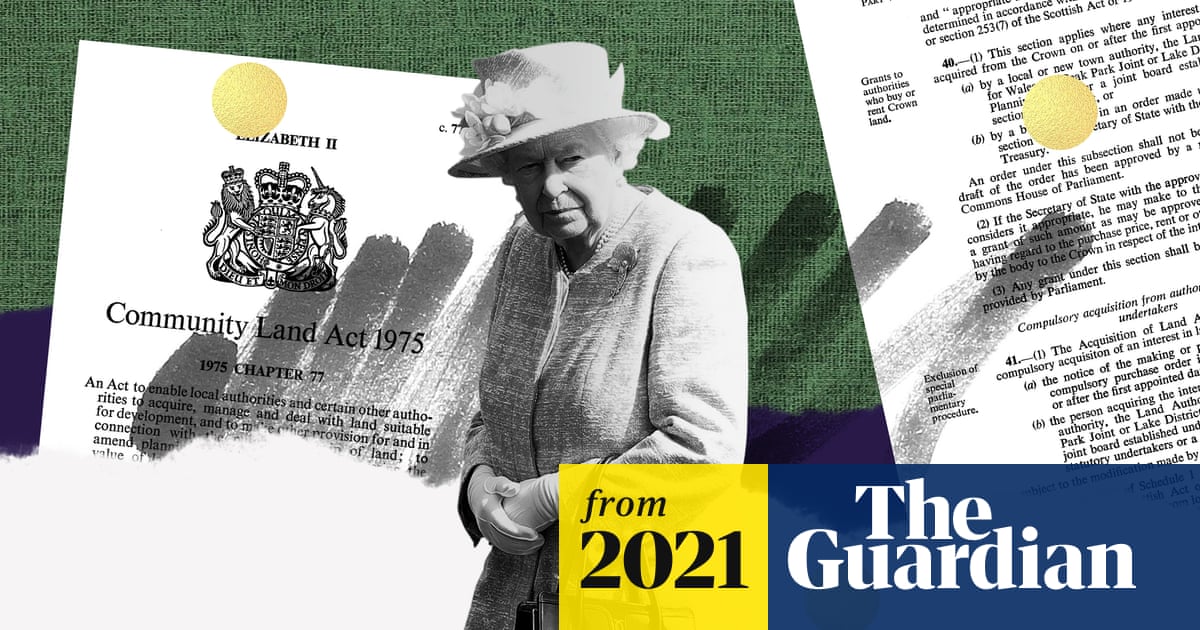
Royals vetted more than 1,000 laws via Queen’s consent
Exclusive: secretive procedure used to review laws ranging from Brexit trade deal to inheritance and land policy
 www.theguardian.com
How about replacing unelected HoL with elected 2nd chamber that can apply properly check and balances ?
Will that be more democratic or not ?
FPTP - gives 100% of power to minority in UK’s case , dictating majority .
PR at least would offer chances of coalitions of parties , where each party making coalition could temper the appetites of other party for some stupid laws ( like brexit ).
Plus - it is a voting system that is proportional and by definition more democratic .
More uninformed nonsense …
The Monarchy is only ceremonial if laws do not apply to them .
If they do not like it they TELL government to remove or change it :
Royals vetted more than 1,000 laws via Queen’s consent
Exclusive: secretive procedure used to review laws ranging from Brexit trade deal to inheritance and land policy
How about replacing unelected HoL with elected 2nd chamber that can apply properly check and balances ?
Will that be more democratic or not ?
FPTP - gives 100% of power to minority in UK’s case , dictating majority .
PR at least would offer chances of coalitions of parties , where each party making coalition could temper the appetites of other party for some stupid laws ( like brexit ).
Plus - it is a voting system that is proportional and by definition more democratic .
In 2017, the most likely outcome under PR wpuld have been a Conservative UKIP coalition - that would have forced Brexit through withput question.
You clearly don't like Brexit - but here's a question for you - was it democratic that *not one* of the major parties had, until the 2015 General Election, offered the electorate any policy other than "more Europe" in the previous 30 years.
edwin_m
Veteran Member
It's tricky to say what the outcome of a previous election would have been under PR, because it probably involves the two large parties splitting into smaller ones, and many of the decisions made on the basis of electoral advantage could have been very different. In particular, the Tory party would probably have split in two and the more moderate wing might have been able to form a coalition with other parties to its left.In 2017, the most likely outcome under PR wpuld have been a Conservative UKIP coalition - that would have forced Brexit through withput question.
You clearly don't like Brexit - but here's a question for you - was it democratic that *not one* of the major parties had, until the 2015 General Election, offered the electorate any policy other than "more Europe" in the previous 30 years.
Perhaps the reason for no serious party offering a non-Europe option was because all serious politicians could see it was undeniably in Britain's interest? UKIP forced Brexit onto the agenda not because there was a big public appetite, but because they threatened to siphon off enough Tory votes to deny them power - something that was entirely enabled by FPTP.
Perhaps the reason for no serious party offering a non-Europe option was because all serious politicians could seeI t was undeniably in Britain's interest ?
UKIP forced Brexit onto the agenda not because there was a big public appetite, but because they threatened to siphon off enough Tory votes to deny them power - something that was entirely enabled by FPTP.
Labour ran on various tickets on the EEC / EU in 1964, 66, 70, 74, 79 and 83. I don't think it's either fair or accurate to state.
it was undeniably in Britain's interest
edwin_m
Veteran Member
The situation in 1983 or before doesn't say much about 2016 or 2017.Labour ran on various tickets on the EEC / EU in 1964, 66, 70, 74, 79 and 83. I don't think it's either fair or accurate to state.
Last edited:
The situation in 1983 or before doesn't say much about 2016 or 2017. And you also appear to have contradicted your own assertion that the electorate was never offered a non-EU option.
Think you need a trip to Specsavers, try re-reading my post, specifically:
You clearly don't like Brexit - but here's a question for you - was it democratic that *not one* of the major parties had, until the 2015 General Election, offered the electorate any policy other than "more Europe" in the previous 30 years.
edwin_m
Veteran Member
I'll give you that one. However, Labour's anti-EC policy in the 1980s clearly didn't meet with favour from the electorate, so it's not too surprising that no party offered that until UKIP in the 2010s.Think you need a trip to Specsavers, try re-reading my post, specifically:
Enthusiast
Established Member
- Joined
- 18 Mar 2019
- Messages
- 1,226
Post #6690 is not mine.Your post #6,690.
A UK government with a majority such as Sunak has now or Starmer will probably have in a year or so can do virtually anything, with little in the way of checks or balances, as you yourself pointed out above. It's ironic that Johnson tried to override one of the few impediments that exist, while railroading Brexit through.
So I'll be expecting you to leave the UK any time now.
The UK is not an organisation of which I am a member. It is the country where I live and I am bound by the decisions of its government. I have the opportunity to change it every five years or thereabouts if I don't like what it does or what it threatens to do. I know I may not always get the government that I'd prefer, but I'm perfectly happy with that as I don't see any practical and acceptable alternative. I have no similar opportunity if I don't like the way the EU is going.
So if it's all the same, I'll stay here a while longer (particularly as this country is no longer an EU member).
I'll give you that one. However, Labour's anti-EC policy in the 1980s clearly didn't meet with favour from the electorate, so it's not too surprising that no party offered that until UKIP in the 2010s.
I'd suggest having a leader who dressed like Worzel Gummidge who was seen to be utterly out of touch with normal people, together with a wider manifesto which proposed an economic policy akin to that of the Soviet Bloc was probably more to do with it. After all, one of their own MPs (Gerald Kaufman) described the 1983 manifesto as "the longest suicide note in history".
edwin_m
Veteran Member
Apologies, edited out.Post #6690 is not mine.
Well actually you did, and we're all suffering from it, including you unless you happen to be one of the super-rich who isn't hurt by higher taxes or worse public services. You may be satisfied with being poorer but prouder, but many others who voted the same way now regret their decision.I have no similar opportunity if I don't like the way the EU is going.
== Doublepost prevention - post automatically merged: ==
A major plank of which was opposition to the EC. The fact remains that no major political party ran on an anti-EU platform since then, until the advent of populist policies in the 2010s.I'd suggest having a leader who dressed like Worzel Gummidge who was seen to be utterly out of touch with normal people, together with a wider manifesto which proposed an economic policy akin to that of the Soviet Bloc was probably more to do with it. After all, one of their own MPs (Gerald Kaufman) described the 1983 manifesto as "the longest suicide note in history".
A major plank of which was opposition to the EC. The fact remains that no major political party ran on an anti-EU platform since then, until the advent of populist policies in the 2010s.
And a bunch of other things which were monumentally unpopular - I'd suggest that unilateral nuclear disarmament was probably of more consequence than Common Market (as it was then) membership. Most traditional working class voters supported having a strong defence policy - let it not be forgotten it was less than 40 years since the end of WW2 which the majority of the electorate had either lived through or seen the immediate aftermath of. Even the previous Labour PM, Jim Callaghan publicly disowned the unilateral disarmament policy.
Really? 2017 results: Tory 42.3%, Labour 40.0%, Lib Dem 7.4%, SNP 3.0%, UKIP 1.8%.In 2017, the most likely outcome under PR wpuld have been a Conservative UKIP coalition - that would have forced Brexit through withput question.
To me that looks like a Lab-Lib Dem-(SNP?) coalition would be more likely than a Tory-UKIP coalition. There's a clear majority for liberal-left parties, with those three alone exceeding 50%. So a Tory-UKIP coalition, on 44.1%, would most definitely not be a fair outcome of that election.
If we're talking about controversial issues, is it democratic that all the major parties, AFAIK, take a "keep cannabis illegal" position? Maybe, maybe not - or perhaps they believe in their opinion that legalising cannabis would cause too many problems. So, before 2015, all the parties believed (rightly IMO) that Brexit would cause too many problems.You clearly don't like Brexit - but here's a question for you - was it democratic that *not one* of the major parties had, until the 2015 General Election, offered the electorate any policy other than "more Europe" in the previous 30 years.
I know this is probably politically incorrect to say this, but in my view, the decision on whether or not to stay in the EU is something that requires expert knowledge, and should be decided only by those who are able to evaluate, in a measured and reasoned way, what the effect on the economy, trade, international collaboration, and international relations will be.
It should, in my view, really not be something decided by the random person in the street, some of whom will have made the decision based on raw emotion and without the required expert knowledge to make the decision. So David Cameron was much mistaken in entrusting this decision to people without the required expert knowledge - and what's more, I believe he would have won the 2015 election anyway without doing so.
I should add that I include myself in "people without the expert knowledge", but obviously I didn't boycott the referendum because that would be completely self-defeating.
As I said I realise this is probably not such a popular opinion, but some Brexiters on here have been similarly forthright with their views, so I will be with my own.
Last edited:

Welcome to the first past the post voting system!So a Tory-UKIP coalition, on 44.1%, would most definitely not be a fair outcome of that election.
My grandfather was opposed to all referendums for his entire life on the basis "I elected some fella to go to Parliament and sort this out for me, why should I have to vote on a single issue when I don't have the time to do the research needed to make an informed judgement?". It's a view which has held a certain attraction personally!I know this is probably politically incorrect to say this, but in my view, the decision on whether or not to stay in the EU is something that requires expert knowledge, and should be decided only by those who are able to evaluate, in a measured and reasoned way, what the effect on the economy, trade, international collaboration, and international relations will be.
It should, in my view, really not be something decided by the random person in the street, some of whom will have made the decision based on raw emotion and without the required expert knowledge to make the decision. So David Cameron was much mistaken in entrusting this decision to people without the required expert knowledge - and what's more, I believe he would have won the 2015 election anyway without doing so.
I''d ha
Really? 2017 results: Tory 42.3%, Labour 40.0%, Lib Dem 7.4%, SNP 3.0%, UKIP 1.8%.
To me that looks like a Lab-Lib Dem-(SNP?) coalition would be more likely than a Tory-UKIP coalition. There's a clear majority for liberal-left parties, with those three alone exceeding 50%. So a Tory-UKIP coalition, on 44.1%, would most definitely not be a fair outcome of that election.
Mea culpa - was thinking of 2015 - when the Conservative vote share was 36.8%, UKIP 12.6% = 49.4%
More than Lab 30.4%, Lib Dem 7.9%, SNP 4.7% and Green 3.8% = 46.8%.
== Doublepost prevention - post automatically merged: ==
If we're talking about controversial issues, is it democratic that all the major parties, AFAIK, take a "keep cannabis illegal" position? Maybe, maybe not - or perhaps they believe in their opinion that legalising cannabis would cause too many problems. So, before 2015, all the parties believed (rightly IMO) that Brexit would cause too many problems.
The Lib Dems have advocated legalising cannabis https://change.libdems.org.uk/canna...e limits,legal, regulated market for cannabis.
I think I've argued before that, whilst I vehemently disagree with most UKIP policies, it was a travesty that 12.6% of the vote gets 1 seat whilst the SNP get 4.7% and 56 seats. That is not healthy for a democracy.Mea culpa - was thinking of 2015 - when the Conservative vote share was 36.8%, UKIP 12.6% = 49.4%
Merle Haggard
Established Member
Only tangentially involving Brexit, I know; but I wonder what is the reason for the outcome of binary polls usually being a close result? As well as Brexit, the Scottish independence referendum, Biden v Trump (and many previous U.S. Presidential elections, which are effectively binary) are other obvious examples. Is it just an indication of the absolute polarisation of opinion that seems so evident nowadays?
I think I've argued before that, whilst I vehemently disagree with most UKIP policies, it was a travesty that 12.6% of the vote gets 1 seat whilst the SNP get 4.7% and 56 seats. That is not healthy for a democracy.
In some ways I agree with you - though my example would be a party which attracted 4.7% of the votes, getting 8.6% of the seats having only run candidates in an area which is already over-represented at Westminster (Scotland).
Ah ok - fair enough.Mea culpa - was thinking of 2015 - when the Conservative vote share was 36.8%, UKIP 12.6% = 49.4%
More than Lab 30.4%, Lib Dem 7.9%, SNP 4.7% and Green 3.8% = 46.8%.
edwin_m
Veteran Member
Perhaps if the public is overwhelmingly on one side on a particular issue, there's not much point in calling a referendum on it?Only tangentially involving Brexit, I know; but I wonder what is the reason for the outcome of binary polls usually being a close result? As well as Brexit, the Scottish independence referendum, Biden v Trump (and many previous U.S. Presidential elections, which are effectively binary) are other obvious examples. Is it just an indication of the absolute polarisation of opinion that seems so evident nowadays?
Merle Haggard
Established Member
Perhaps if the public is overwhelmingly on one side on a particular issue, there's not much point in calling a referendum on it?
Yes, I suppose that's true. But it does always seem to be either overwhelming or finely balanced, never 1/3 to 2/3 say. I think it's Switzerland (and possibly Sweden ???) that have a number of referendums and this seems to also apply.
PS I've been told that the plural of referendum is NOT referenda presumably because it's not Latin - but I'm not sure. Perhaps we should have a referenda on it
Yes, I suppose that's true. But it does always seem to be either overwhelming or finely balanced, never 1/3 to 2/3 say. I think it's Switzerland (and possibly Sweden ???) that have a number of referendums and this seems to also apply.
You can see all Swiss referendums on Wikipedia, for example start here https://en.wikipedia.org/wiki/2021_Swiss_referendums
Some are 50:50 or 80:20, but plenty are 67:33 or thereabouts too.