• Our new ticketing site is now live! Using either this or the original site (both powered by TrainSplit) helps support the running of the forum with every ticket purchase! Find out more and ask any questions/give us feedback in this thread!

Brexit matters

brad465

Veteran Member
Joined
11 Aug 2010
Messages
11,390
Location
Taunton or Kent
Car manufacturer Stellantis is now threatening to withdraw some of its production from the UK if the Brexit deal isn't renegotiated:


One of the world's biggest carmakers has called on the government to renegotiate part of the Brexit deal or risk losing parts of its car industry.
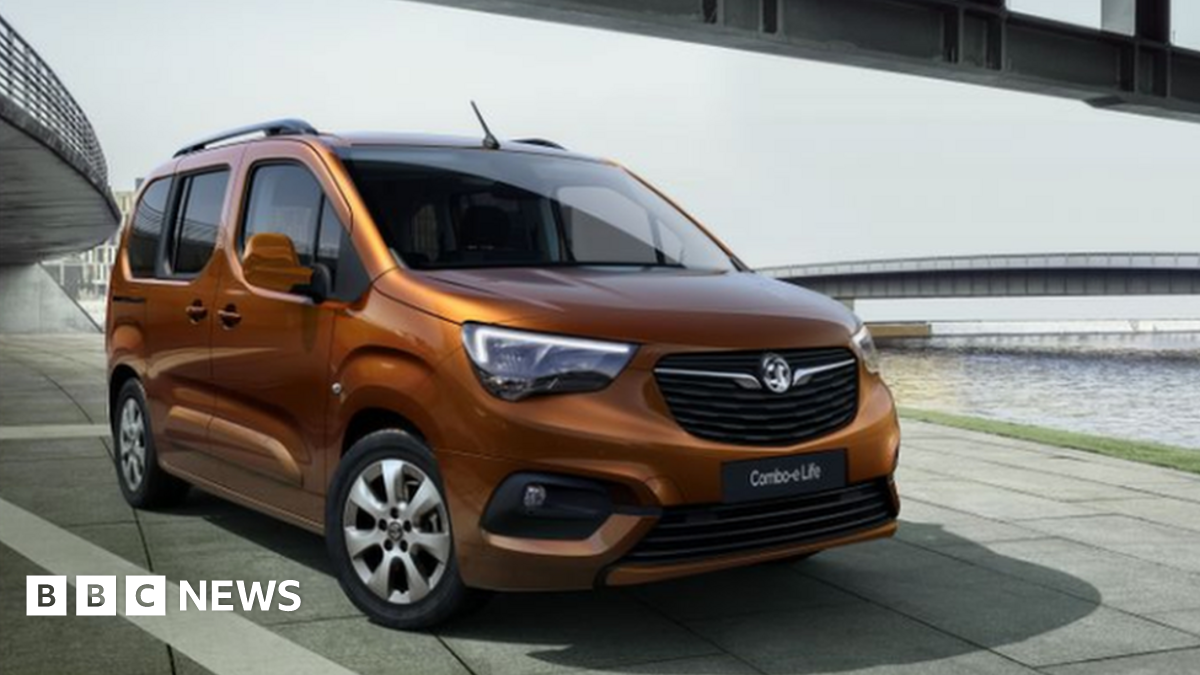
Stellantis, which makes Vauxhall, Peugeot, Citroen and Fiat had committed to making electric vehicles in the UK.
But it has now said it is no longer able to meet Brexit trade rules on where parts are sourced.
The government is "determined" that the UK will remain competitive in car manufacturing, a spokesperson said.
Stellantis called on the government to come to an agreement with the EU to keep rules as they are until 2027.
It also wants arrangements for manufacturing parts in Serbia and Morocco to be reviewed.
Just two years ago, the world's fourth biggest car maker said the future of its Ellesmere Port and Luton plants were secure.
But now Stellantis has asked the UK government to renegotiate part of the Brexit deal amid a "threat to our export business and the sustainability of our UK manufacturing operations".
In a submission to a Commons inquiry into electric car production, the firm said its UK investments were based on meeting the strict terms of the post-Brexit free trade deal.
These rules state that from next year, 45% of the value of the electric car should originate in the UK or EU to qualify for trade without tariffs.
Stellantis said it was "now unable to meet these rules of origin" after the surge in raw materials costs during the pandemic and energy crisis.
 
Sponsor Post - registered members do not see these adverts; click here to register, or click here to log in
R

RailUK Forums

DynamicSpirit

Established Member
Joined
12 Apr 2012
Messages
9,211
Location
SE London
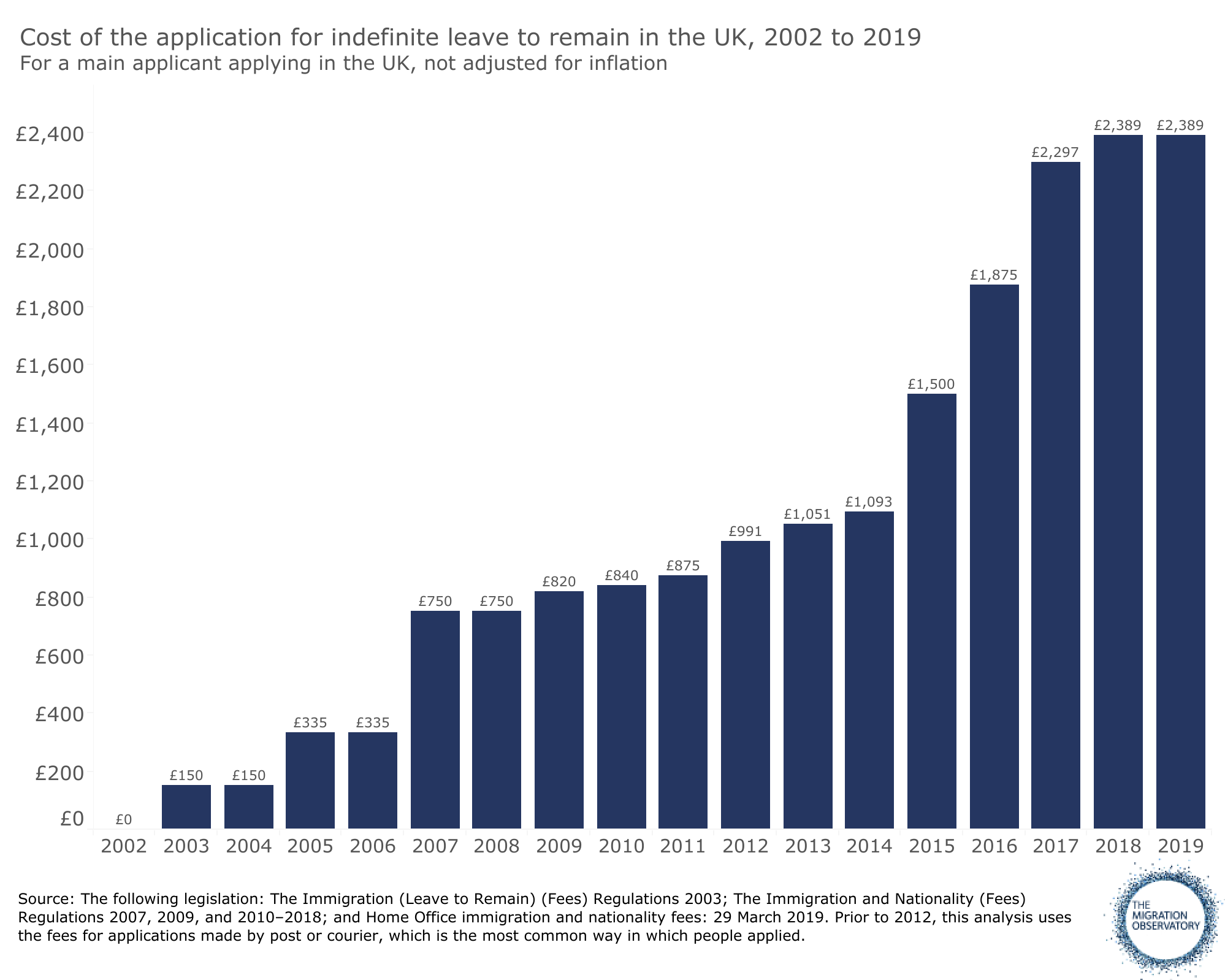
Fees are quite appropriate for obtaining indefinite leave to remain - there is a cost in providing the administration of the system, which should be financed by the people applying for the privilege.

As far as I can work out, someone spends 15 minutes or so checking through your documents to make sure everything is in order. Even allowing for home office inefficiencies plus the need to maintain secure back-end databases so documents can be cross-checked against existing records etc., plus the occasional need for further investigations if any issue is identified (which might require much more extensive work), I'm not sure how that level of admin justifies the £2400 fee (plus an extra £500 to get a decision in 5 days, or an extra £800 to get a decision the next day).

(I do actually broadly agree with your wider point about demonstrating commitment to a country. But I'm not sure that commitment should include paying exorbitant fees at any stage of the process)
 

jfollows

Established Member
Joined
26 Feb 2011
Messages
10,078
Location
Wilmslow
As far as I can work out, someone spends 15 minutes or so checking through your documents to make sure everything is in order. Even allowing for home office inefficiencies plus the need to maintain secure back-end databases so documents can be cross-checked against existing records etc., plus the occasional need for further investigations if any issue is identified (which might require much more extensive work), I'm not sure how that level of admin justifies the £2400 fee (plus an extra £500 to get a decision in 5 days, or an extra £800 to get a decision the next day).

(I do actually broadly agree with your wider point about demonstrating commitment to a country. But I'm not sure that commitment should include paying exorbitant fees at any stage of the process)
The work involved doesn't warrant the cost, no.
My partner moved to the UK in 2000 and in due course became a British citizen. He remains a US citizen because he can. At all times in the process the fees were reasonable and reflected a realistic cost to processing the application.
A political decision has since been made to make people pay more to move to this country. I don't believe in any way this reflects the actual cost, the process has been made more hostile, the people involved in implementing it are required to observe the strict letter of the rules at all times, and the applicants are made to pay a lot of money.
A significant number of voters in the UK will agree with that stance.
I don't, but primarily consider myself lucky that the process was both easier and significantly less expensive twenty years ago.
From https://freemovement.org.uk/how-expensive-are-uk-immigration-applications-and-is-this-a-problem/ (dated 2017 but updated in 2019) and note that the article states that the cost increases started in earnest in 2006/7, so it's not a "Conservative government" thing.

Briefing: How expensive are UK immigration applications and is this a problem?​

The cost of making an immigration or nationality application has risen extremely steeply in recent years. Annual increases of 20% or 25% per year became standard, bringing the current cost of an application for indefinite leave to remain (aka settlement) to £2,389.
The actual cost of processing such an application is £243, so the Home Office is generating considerable income from each application. A Tier 2 work visa for someone working in a “shortage occupation”, where the UK is desperate for workers, has an administrative cost of £127 but is charged at up to £928. As The Times reports, immigration fees delivered a £500 million surplus for the Home Office last year.
The cost of settlement is only one of the last steps in a long journey of applications, though. The total costs of applying to enter the UK as a spouse, for example, are far higher once all the different applications and fees are taken into account:
Initial application
£1,523​
Extension application
£1,033​
NHS surcharge
£2,000​
Settlement
£2,389​
Naturalisation
£1,330​
TOTAL
£8,275
Fees were only introduced for in-country applications in 2003 and the increase only began in earnest in 2006/07 (in the very early days of this blog!), when for example a postal application for indefinite leave to remain was increased from £335 to £775 and an application for naturalisation as a British citizen from £200 to to £575.
Fig-5.png

The updated list of fees for immigration and nationality applications that apply from 29 March 2019 surprisingly shows that most fees remain unchanged from last year. The problem is that the overall cost remains higher than 2018, particularly when paying the Immigration Health Surcharge. This fee doubled in 2019 from £200 to £400 per year.
The principal driver for the increases appears to be pressure on the Home Office budget. The Autumn 2015 Spending Review indicated that the Home Office was aiming to achieve “a fully self-funded borders and immigration system.” Savings were needed but
the remainder will be funded through targeted visa fee increases, which will remove the burden on the UK taxpayer while ensuring the UK remains a competitive place for work, travel and study internationally.
There seems little doubt, however, that as far as Ministers are concerned a welcome side effect of the steep fee increases is that this “prices out” migrants of modest means. There is certainly anecdotal evidence that families struggle to afford the necessary fees and the earnings threshold for spouses and some are driven to explore alternative migration routes as a consequence. The Guardian reports that young people are forced
into destitution due to Home Office fees.
For children, the cost of registering as a British citizen is £1012 but the actual unit cost to the Home Office is £372. Over the past five years this particular fee alone has generated a £100 million surplus for the Home Office. A watchdog report confirms that this is literally prohibitive for unaccompanied children who otherwise qualify for citizenship. The high cost has reportedly deterred parents who are struggling financially from making applications that would be in the best interests of their children. David Bolt, Inspector of Borders and Immigration, said:
I am disappointed that the Home Office does not recognise that this is a question of basic fairness, which should not have to wait on discussions with the Treasury about the department’s future funding.
But the government’s next Spending Review is overdue. How long will we have to wait? Chief Secretary to the Treasury, Liz Truss, said that it is now unlikely the Spending Review will follow its original schedule and implied we’ll have to wait until the revenue budgets are set in 2020.
The Immigration Skills Charge introduced on 1 April 2017 is more explicitly and overtly aimed at reducing immigration. It was introduced at a level of £1000 per year per worker and is due to be doubled (Conservative Manifesto 2017, p 20). Introducing the implementing regulations, the Minister, Lord Nash, said
Through the charge we want to incentivise employers to think differently about their recruitment and skills decisions and the balance between investing in UK skills and overseas recruitment … There are many examples of good practice, but it seems that some employers would prefer to recruit skilled workers from overseas rather than invest in training UK workers.
The Migration Advisory Committee, appointed by central Government to advise on immigration policy questions, recommended that £1,000 would be
large enough to have an impact on employer behaviour and that this would be the right level to incentivise employers to reduce their reliance on migrant workers.
The government has not yet introduced any legislation or announced when the charge will be increased.
But this is not the only cost. Employers also have to purchase and maintain a sponsorship licence and the cost of the immigration applications for the employee must also be borne, either by the employer or the employee. The direct costs soon mount up:
Small employerLarge employerEmployee
Sponsor licence
£536​
£1,476​
Certificate of sponsorship
£199​
£199​
Immigration Skills Charge
£1,820​
£5,000​
Initial application
£1,220​
Extension
£1,408​
NHS surcharge
£2,000​
Settlement
£2,839​
Naturalisation
£1,330​
£2,555​
£6,675​
£8,797​
The indirect costs are also considerable and are probably more of a deterrent. These fees omit several other elements of friction:
  • the fact that a skilled worker can only be recruited if the job has been advertised in a certain way and there were no suitable UK applicants
  • the reference to the hundreds of pages of so called “SOC codes”, which impose a minimum salary for every conceivable job in the United Kingdom
  • the quota on skilled migrants
  • the fact the skilled worker will need to be sacked at the end of five years unless earning £35,800 (increasing to £36,200 by April 2020)
  • the cost of onerous sponsor administrative and compliance duties imposed by the Home Office, which can be extremely time consuming but neglect of which leads to loss of the sponsorship licence and therefore current and future foreign workers.
The Immigration Skills Charge is explicitly intended to make foreign workers uncompetitive in order to reduce immigration. It is a classic “tariff” in intention and effect. Like all tariffs, such misplaced protectionism is likely to have unintended consequences, including making us all poorer.
Imposing these tariffs on human beings in the form of onerous and — for some — unaffordable application fees as if they were widgets, whether for entry as family or as workers, is inhumane and is very poor policy indeed.
This post was originally published on 3 August 2017 by Colin Yeo and was updated on 3 September 2019 with help from Pip Hague.

 
Last edited:

Gloster

Veteran Member
Joined
4 Sep 2020
Messages
12,942
Location
Up the creek

tomuk

Established Member
Joined
15 May 2010
Messages
2,009
And of course , they need us more than we need them.....


( sarcasm)

The rules say 45% of the vehicle must be made in either the UK or EU to not attract an import tariff when imported into either the UK or EU. Where is Stellantis's battery factory? It can be anywhere within the UK or the other 27 EU states. Are we saying the the UK and EU governments should roll over to allow the worlds fifth biggest car company to use cheap Chinese batteries in their EU/UK built vehicles?
 

class ep-09

Member
Joined
5 Sep 2013
Messages
631
The rules say 45% of the vehicle must be made in either the UK or EU to not attract an import tariff when imported into either the UK or EU. Where is Stellantis's battery factory? It can be anywhere within the UK or the other 27 EU states. Are we saying the the UK and EU governments should roll over to allow the worlds fifth biggest car company to use cheap Chinese batteries in their EU/UK built vehicles?
Show me a car battery manufacturer ( one that has production potential now ) in the UK.
Nope …
So , where is the car manufacturer supposed to buy batteries from if not from China ?


It looks that the fifth world car manufacturer has power over UK and UK obeys .
 

tomuk

Established Member
Joined
15 May 2010
Messages
2,009
Show me a car battery manufacturer ( one that has production potential now ) in the UK.
Nope …
So , where is the car manufacturer supposed to buy batteries from if not from China ?
They factory can be anywhere in the UK or the 27 EU states to meet the rules. As to your question about UK battery production:

Work starts on massive new 1,000-job electric car battery plant near Nissan
Work starts today on a massive new electric car battery plant expected to create around 1,000 jobs.
https://www.sunderlandecho.com/busi...lectric-car-battery-plant-near-nissan-3947483
 

class ep-09

Member
Joined
5 Sep 2013
Messages
631
They factory can be anywhere in the UK or the 27 EU states to meet the rules. As to your question about UK battery production:

Work starts on massive new 1,000-job electric car battery plant near Nissan
Work starts today on a massive new electric car battery plant expected to create around 1,000 jobs.
https://www.sunderlandecho.com/busi...lectric-car-battery-plant-near-nissan-3947483
And when is it going to be operational if the new rules in trade with EU are commencing in January ?

Also - what percentage of UK’s demand that one factory is going to meet ?

1% ?
 

tomuk

Established Member
Joined
15 May 2010
Messages
2,009
And when is it going to be operational if the new rules in trade with EU are commencing in January ?

Also - what percentage of UK’s demand that one factory is going to meet ?

1% ?
The plant is for use by Nissan in future models there is already a 1.9GWh plant there that has made the batteries for the Nissan Leaf and nv200 vans. The new factory will initially supply 9GWh by 2024 but can grow to 25Gwh by 2030. An almost identically sized plant is also being built in France for Renault, Nissan's partner in the Renault-Nissan-Mitsubishi Alliance following the same timescales.

Why can't Stellantis ship the required batteries from an EU plant like it is doing with most of the rest of the parts to assemble the vans?
 

class ep-09

Member
Joined
5 Sep 2013
Messages
631
The plant is for use by Nissan in future models there is already a 1.9GWh plant there that has made the batteries for the Nissan Leaf and nv200 vans. The new factory will initially supply 9GWh by 2024 but can grow to 25Gwh by 2030. An almost identically sized plant is also being built in France for Renault, Nissan's partner in the Renault-Nissan-Mitsubishi Alliance following the same timescales.

Why can't Stellantis ship the required batteries from an EU plant like it is doing with most of the rest of the parts to assemble the vans?
Ask them .
Price of batteries to high ?

While now Chinese batteries are still cheaper , after January 10% tariffs will added to each vehicle , making selling cars to EU uncompetitive ?
 

najaB

Veteran Member
Joined
28 Aug 2011
Messages
33,590
Location
Scotland
Why can't Stellantis ship the required batteries from an EU plant like it is doing with most of the rest of the parts to assemble the vans?
Perhaps they've done the sums and shipping both the batteries and the components that they already are makes it cheaper to just build a new plant inside the EU.
 

tomuk

Established Member
Joined
15 May 2010
Messages
2,009
Perhaps they've done the sums and shipping both the batteries and the components that they already are makes it cheaper to just build a new plant inside the EU.
They don't need to build any more assembly plants they've got too many as it is as they combine all the Vauxhall\Opel GM Europe, Peugeot Citroen and Fiat plants plus the offshore plants in Turkey, Morocco and Algeria. That also ignores their North American plants inherited from Chrysler.
 

najaB

Veteran Member
Joined
28 Aug 2011
Messages
33,590
Location
Scotland
They don't need to build any more assembly plants they've got too many as it is as they combine all the Vauxhall\Opel GM Europe, Peugeot Citroen and Fiat plants plus the offshore plants in Turkey, Morocco and Algeria. That also ignores their North American plants inherited from Chrysler.
Aye. But they need us more than we need them...
 

jon0844

Veteran Member
Joined
1 Feb 2009
Messages
30,844
Location
UK
This video covers the problem quite well. And it doesn't just blame Brexit, as the bigger issue seems to be a Government totally oblivious to the threat to jobs by not embracing EV tech earlier. Would Labour have been any better? Who knows. Who actually cares?

I've said for some time, the jobs of tomorrow will be in the manufacturing, maintenance, refurbishing and then recycling of battery tech. We are being left behind and most likely once ICE vehicle production ends, car makers won't retool here for EVs and just look elsewhere.

To be fair, we are actually starting to do the recycling bit and could do well from other companies setting up to use modern tech to break up old vehicles of all types. But it's a drop in the ocean and won't replace the job losses if we don't act quick to catch up on the EU, USA and of course China.

Video from the Electric Viking talking about 800,000 potential job losses in UK car industry by 2030.


tomuk

Established Member
Joined
15 May 2010
Messages
2,009
I've said for some time, the jobs of tomorrow will be in the manufacturing, maintenance, refurbishing and then recycling of battery tech. We are being left behind and most likely once ICE vehicle production ends, car makers won't retool here for EVs and just look elsewhere.
Nissan which is our largest car producer in Sunderland is building a 'giga-factory' now. The government should give grants\tax breaks but it is for the manufacturers to source the batteries it is what gives them a potential advantage over their competitors.
 

class ep-09

Member
Joined
5 Sep 2013
Messages
631
They don't need to build any more assembly plants they've got too many as it is as they combine all the Vauxhall\Opel GM Europe, Peugeot Citroen and Fiat plants plus the offshore plants in Turkey, Morocco and Algeria. That also ignores their North American plants inherited from Chrysler.
I am sure you know better than them , what is good for their business …
 

tomuk

Established Member
Joined
15 May 2010
Messages
2,009
I am sure you know better than them , what is good for their business …
The Auto industry is full of overcapacity .Their strategy is to try and make all the plants profitable by building all of their 16 brands on only four platforms and combining all the logistics and back office functions from the pre-merger companies. Economies of scale in action. Carlos Tavares the CEO has given the brands\plants an at most 10 year period to prove themselves. If they don't he will be more than happy to get the knives out.
 

REVUpminster

Established Member
Joined
3 Jan 2021
Messages
1,228
Location
Paignton
Don't know about overcapacity. Eight month wait for a new Suzuki. My 11 year old one came from Hungary. New one coming from Japan. Suzuki and Toyota might not have an electric car for another 2 years.
 

najaB

Veteran Member
Joined
28 Aug 2011
Messages
33,590
Location
Scotland
Don't know about overcapacity. Eight month wait for a new Suzuki. My 11 year old one came from Hungary. New one coming from Japan. Suzuki and Toyota might not have an electric car for another 2 years.
Given that Stellantis make neither Toyotas not Suzukis, I'm not sure what the relevance is?
 

DynamicSpirit

Established Member
Joined
12 Apr 2012
Messages
9,211
Location
SE London

najaB

Veteran Member
Joined
28 Aug 2011
Messages
33,590
Location
Scotland
That particular criticism appears to be a criticism of VAT changes that the Government chose to make, not a criticism of Brexit.
The VAT changes were brought in by the Government as part of their 'post-Brexit' changes:
Earlier this month the Treasury said that the retail scheme, which enables non-EU visitors to reclaim VAT paid on their purchases, would finish at the end of December. The Treasury says it is making use of the end of the Brexit transition period to bring personal duty and tax systems in line with international norms.

So while it isn't, directly, a result of Brexit there's no doubt that it's part of the Brexit mindset that pervades among senior members of the government.
 

E27007

Member
Joined
25 May 2018
Messages
1,033
Don't know about overcapacity. Eight month wait for a new Suzuki. My 11 year old one came from Hungary. New one coming from Japan. Suzuki and Toyota might not have an electric car for another 2 years.
There is considerable over capacity for manufacturing of cars, the 11 month wait for your new car is not due to under capacity of car assembly plants, it is due to a shortage of semiconductor parts, car makers are rationed of those parts and cannot fulfill their orders
 

jon0844

Veteran Member
Joined
1 Feb 2009
Messages
30,844
Location
UK
There is considerable over capacity for manufacturing of cars, the 11 month wait for your new car is not due to under capacity of car assembly plants, it is due to a shortage of semiconductor parts, car makers are rationed of those parts and cannot fulfill their orders
Some car makers removed certain features (bet they didn't give a discount) to cope with the shortages. Not sure that was a great solution personally.
 

E27007

Member
Joined
25 May 2018
Messages
1,033
Some car makers removed certain features (bet they didn't give a discount) to cope with the shortages. Not sure that was a great solution personally.
It is a great situation from the position of the car makers, the market changed from buyer to seller-led, new cars are sold before they are manufactured, car makers profits have climbed, VW group, more profits from lower volumes of sales
 

jon0844

Veteran Member
Joined
1 Feb 2009
Messages
30,844
Location
UK
I made a lot more selling my old car than I ever imagined due to the rise in second hand car values.
 

najaB

Veteran Member
Joined
28 Aug 2011
Messages
33,590
Location
Scotland
I made a lot more selling my old car than I ever imagined due to the rise in second hand car values.
And it helps that a, say, five year old car these days on average is in *way* better condition than a similarly aged car would have been a decade or two ago. I see cars all the time even with 13 plates that look almost brand new.
 

jon0844

Veteran Member
Joined
1 Feb 2009
Messages
30,844
Location
UK
Sadly I think second hand car prices have crashed now the waiting times have fallen markedly (not all brands/models of course).

With many EVs not coming with loads of configurable options, as long as you're not too fussed about colour, it's actually possible to get one in a matter of weeks (or maybe a couple of month) instead of six months to a year.

Second hand EV prices are also falling at last, as you'd expect when new cars are less difficult to get.
 

Top