• Our new ticketing site is now live! Using either this or the original site (both powered by TrainSplit) helps support the running of the forum with every ticket purchase! Find out more and ask any questions/give us feedback in this thread!

Black and Yellow Shunting Signals

Status
Not open for further replies.

Western 52

Established Member
Joined
19 Jun 2020
Messages
1,672
Location
Burry Port
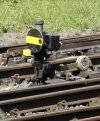
At Abergavenny yesterday I noticed a black and yellow shunting disc, which can be passed at danger in one direction, but not the other. In this case it allows moves from the loop to a siding, but would need to be pulled off for a move to the main line. I can't remember seeing one of these anywhere else recently, are there many left elsewhere?

The picture shows the black and yellow disc signal at Abergavenny on 23 July 2024.
 

Attachments

  • Screenshot_20240724_210421_Gallery.jpg
    Screenshot_20240724_210421_Gallery.jpg
    412 KB · Views: 53
Sponsor Post - registered members do not see these adverts; click here to register, or click here to log in
R

RailUK Forums

DoubleO

Member
Joined
30 May 2018
Messages
215
I think there's still one at Harrogate. They're certainly few and far between though. There used to be one at Barnetby but it was removed during resignalling 7-8 years ago.
 

John Webb

Established Member
Joined
5 Jun 2010
Messages
3,781
Location
St Albans
There are some around, and the GPL (Ground position light) equivalent as well, but I believe they are not recommended for modern signalling systems; I'm not quite clear what the argument against them is.
 

Wilts Wanderer

Established Member
Joined
21 Nov 2016
Messages
3,199
Not on Network Rail, but there is a yellow shunting disc at Highley protecting the north exit from the yard. A shunt move along the headshunt passes it at danger. (From memory it is a yellow bar on a white background, but the meaning is the same.) I believe it is soon to be replaced as the SVR intend to more comprehensively signal Highley including fully controlled shunting signals for entry and exit - currently Up yard arrivals are undertaken by hand signal from the box.
 

John Webb

Established Member
Joined
5 Jun 2010
Messages
3,781
Location
St Albans
I think there is still one at Canterbury West...(?) Or is it a black stripe on yellow disc...
Most likely Yellow stripe on Black disc. SR (both before and after 1948) in electrified areas tended to floodlight disc signals rather than the more usual arrangement of a lamp behind shining through coloured holes in the disc. They found the yellow bar on a white disc wasn't easy to see, hence the change to a black background. This was adopted elsewhere on BR over the years.
 

Wilts Wanderer

Established Member
Joined
21 Nov 2016
Messages
3,199

Previous discussion on this topic from post #13
 

Islineclear3_1

Established Member
Joined
24 Apr 2014
Messages
6,594
Location
PTSO or platform depending on the weather
Most likely Yellow stripe on Black disc. SR (both before and after 1948) in electrified areas tended to floodlight disc signals rather than the more usual arrangement of a lamp behind shining through coloured holes in the disc. They found the yellow bar on a white disc wasn't easy to see, hence the change to a black background. This was adopted elsewhere on BR over the years.
Thanks, that is what I "think" I remember...memories fade over the years....
 

Boilinthebag

Member
Joined
12 Jul 2022
Messages
49
Location
GWR
Just to add to this, these aren't passed at danger. The signal does not apply/is disregarded for movements not towards the main line. In effect the signal does not exist until the train requests a route/is routed towards the main line. The old BR signalling video on YouTube has a good example of one in action.
 

edwin_m

Veteran Member
Joined
21 Apr 2013
Messages
28,718
Location
Nottingham
There are some around, and the GPL (Ground position light) equivalent as well, but I believe they are not recommended for modern signalling systems; I'm not quite clear what the argument against them is.
Certainly by the late 1980s when I was involved in IECC schemes, the preference was to have back to back shunt signals which remained permanently "off" for movements not going to the main line, and were restored to danger while the points were switched for a move to or from the main line.
 

zwk500

Veteran Member
Joined
20 Jan 2020
Messages
18,629
Location
Northampton
There are some around, and the GPL (Ground position light) equivalent as well, but I believe they are not recommended for modern signalling systems; I'm not quite clear what the argument against them is.
My understanding is that yellow and black shunting signals were introduced to save the signaller frequent operation of a shunt signal in busy areas, which was both a benefit for the signaller and saved on wear for the signal. It possibly also reduced the need for individual discs for the routes being protected.
I would guess that the maintenance issue isn't a factor with colour-light shunt signals, and that as computerised controls (including slots given to a depot/yard) have come in, and route indications are provided, there's no real benefit to having a slightly different form of shunt signal.

Interestingly, Signalmaps indicates at Bristol TM https://signalmaps.co.uk/#gwml9:1633 that there's a yellow shunt signal controlling the exit at the London ends of Bristol East depot (bottom) and Barton Hill Depot (top), but the arrangement @edwin_m describes is present at the country end of Barton Hill Depot. The shunt signal is normally 'off' reading to the headshunt (which has a Stop board protecting the exit) but then changes to on if a train is signalled to or from the main line. Certainly for Barton Hill, the overwhelming majority of shunt moves are made at the end with the Red GPL.

 

John Webb

Established Member
Joined
5 Jun 2010
Messages
3,781
Location
St Albans
That has the old type lamp too. What colour lights do these discs have?
Yellow and Green - the latter when the move onto the main line is cleared. That particular signal in #9 is, I believe, electrically lit; I recall reading all the mechanical signals in the area are.
 

Tractor37

Member
Joined
23 May 2017
Messages
298
I think there's still one at Harrogate. They're certainly few and far between though. There used to be one at Barnetby but it was removed during resignalling 7-8 years ago.
Your thinking is right - there is one at Harrogate, at the north end of the station.
 

Ashley Hill

Established Member
Joined
8 Dec 2019
Messages
5,666
Location
The West Country
There are two yellow discs (yellow stripe/white background) at Bishops Bridge on the SDR.
Locally there are several yellow GPLs. Keyham,Exmouth Junction and Bridgewater spring to mind.
 

Belperpete

Established Member
Joined
17 Aug 2018
Messages
3,679
There are some around, and the GPL (Ground position light) equivalent as well, but I believe they are not recommended for modern signalling systems; I'm not quite clear what the argument against them is.
The problem is that there is nothing to prevent the signaller from changing the points beyond the disc while a loco is running up to it at ON and the driver intending to pass it. Perhaps not too bad in situations where the signaller has visibility of moves approaching the signal, but an accident waiting to happen where the signaller is miles away and has no way of knowing about the approaching loco.

I once came across a case of a fixed yellow disc, at Poole IIRC. The crossover to the main had been taken out, but for some reason the yellow disc in the yard had been left.
 

Railsigns

Established Member
Joined
15 Feb 2010
Messages
2,754
I once came across a case of a fixed yellow disc, at Poole IIRC. The crossover to the main had been taken out, but for some reason the yellow disc in the yard had been left.
I've seen the opposite situation where the headshunt had been removed, but the signal was still coloured yellow.

Cobh yellow disc 2001.jpg

[Photo shows a yellow disc signal at Cobh, Ireland]
 

DoubleO

Member
Joined
30 May 2018
Messages
215
The problem is that there is nothing to prevent the signaller from changing the points beyond the disc while a loco is running up to it at ON and the driver intending to pass it. Perhaps not too bad in situations where the signaller has visibility of moves approaching the signal, but an accident waiting to happen where the signaller is miles away and has no way of knowing about the approaching loco.

I once came across a case of a fixed yellow disc, at Poole IIRC. The crossover to the main had been taken out, but for some reason the yellow disc in the yard had been left.
Surely there'll be something in the regs to prevent that happening, either direct line of sight from the box or some alternative measure such as a track circuit etc?
 

Belperpete

Established Member
Joined
17 Aug 2018
Messages
3,679
I've seen the opposite situation where the headshunt had been removed, but the signal was still coloured yellow.

View attachment 162364

[Photo shows a yellow disc signal at Cobh, Ireland]
A square disc!

== Doublepost prevention - post automatically merged: ==

Surely there'll be something in the regs to prevent that happening, either direct line of sight from the box or some alternative measure such as a track circuit etc?
I can think of some yellow GPLs where the power box would have had no line of sight, such as Old Oak. Don't see how a track circuit would help - it tells you something is there, but not whether it is moving, let alone in which direction.
 

edwin_m

Veteran Member
Joined
21 Apr 2013
Messages
28,718
Location
Nottingham
Don't see how a track circuit would help - it tells you something is there, but not whether it is moving, let alone in which direction.
If there is a yard where shunting takes place, the signaller will need to come to some arrangement with the person in charge whether it's for a train entering the yard (so they can confirm there is a clear track to put it on) and when leaving (because it won't be signalled until it is ready). One or other has to be agreed before the signaller will consider reversing the points, and neither is possible if there are trains moving around that might be passing over those points.
 
Joined
19 Apr 2019
Messages
25
I think there is still one at Canterbury West...(?) Or is it a black stripe on yellow disc...

I've just checked, as I took photo's of Canterbury West on 17/07/2008, whilst on duty. Seems there were two at that time, not sure if they still exist.

Canterbury West 17-07-2008.jpg


Picture 436.jpg


Also found in my collection, a Yellow GPL photographed at Gillingham, Dorset on 5/11/2009. This was before the West of England resignalling, guess it's gone now!


IMG_0032.JPG
 
Last edited:

DoubleO

Member
Joined
30 May 2018
Messages
215
A square disc!

== Doublepost prevention - post automatically merged: ==


I can think of some yellow GPLs where the power box would have had no line of sight, such as Old Oak. Don't see how a track circuit would help - it tells you something is there, but not whether it is moving, let alone in which direction.

A TC would help if the signaller wasn't allowed to change the points if the circuit was occupied.
 

jupiter

Member
Joined
9 May 2021
Messages
340
Location
Dorset
I can think of some yellow GPLs where the power box would have had no line of sight, such as Old Oak. Don't see how a track circuit would help - it tells you something is there, but not whether it is moving, let alone in which direction.

Wouldn’t the signalling be interlocked so the points can’t be moved if the track circuit is occupied?
 

edwin_m

Veteran Member
Joined
21 Apr 2013
Messages
28,718
Location
Nottingham
Wouldn’t the signalling be interlocked so the points can’t be moved if the track circuit is occupied?
It would, but it doesn't help if a train shunting is approaching within the yard, hasn't got to the track circuit but is unable to stop in time. However, the consequence relatively minor: damage to points if trailed through, low-speed derailment of a train with no passengers, or a train continuing a short distance towards or onto the main line where there can't be another train passing.
 

Falcon1200

Established Member
Joined
14 Jun 2021
Messages
6,591
Location
Neilston, East Renfrewshire
the preference was to have back to back shunt signals which remained permanently "off" for movements not going to the main line, and were restored to danger while the points were switched for a move to or from the main line.

Such an arrangement also existed in non/pre IECC areas. For example, in the Glasgow area for the Depot headshunts at Shields and Polmadie (Shawfield end).
 

John Webb

Established Member
Joined
5 Jun 2010
Messages
3,781
Location
St Albans
I've just checked, as I took photo's of Canterbury West on 17/07/2008, whilst on duty. Seems there were two at that time, not sure if they still exist.

View attachment 162441


View attachment 162444


Also found in my collection, a Yellow GPL photographed at Gillingham, Dorset on 5/11/2009. This was before the West of England resignalling, guess it's gone now!


View attachment 162449
Interesting that these two disc signals have an electric lamp and the coloured 'spectacle' glasses rather than being floodlight as I've seen the majority of SR discs (yellow or the more common red).
 

Islineclear3_1

Established Member
Joined
24 Apr 2014
Messages
6,594
Location
PTSO or platform depending on the weather
Interesting that these two disc signals have an electric lamp and the coloured 'spectacle' glasses rather than being floodlight as I've seen the majority of SR discs (yellow or the more common red).
I can't remember if the 2003 resignalling had anything to do with it - abolition of remaining semaphores/colour light installation. Maybe the shunt discs were "upgraded" to electric lights at the same time?
 

Railsigns

Established Member
Joined
15 Feb 2010
Messages
2,754
The Southern Railway/Southern Region only used floodlit disc shunting signals in colour light signalling areas. This was in response to a recommendation of a sub-committee of the Railway Clearing House in 1934 that shunting signals in colour light areas should be of the 'position' type (as opposed to displaying miniature 'colour' aspects). The exact type of signal was not specified. Alternative solutions adopted by the other companies included the use of banner type shunting signals or position light signals. The Southern Region began installing position light signals in the early 1960s.
 
Status
Not open for further replies.

Top