• Our new ticketing site is now live! Using either this or the original site (both powered by TrainSplit) helps support the running of the forum with every ticket purchase! Find out more and ask any questions/give us feedback in this thread!

Attitudes to walking on railway lines

Status
Not open for further replies.

DanTrain

Member
Joined
9 Jul 2017
Messages
753
Location
Sheffield
Sorry if this already has a thread somewhere, but I thought that, given a couple of recent incidents involving trespassing, to look at the different attitudes abroad.

For example, in the US/Canada, it is seen to be fairly normal to walk on many railway tracks in rural areas, even using them as a shortcut by walking down them. Presumably this is just an issue to do with such a low volume of trains on the line, but then again how safe really is it?

Equally, in some other European countries (France in particular) they take the attitude that if someone is killed, it's their fault and so don't bother fencing off many lines, you can freely access a lot of their lines.

I wondered if some of these places have higher fatalities, particuarly in Europe, or whether people are just more accustomed to the dangers of the railway in those places?

Dan :)
 
Sponsor Post - registered members do not see these adverts; click here to register, or click here to log in
R

RailUK Forums

theironroad

Established Member
Joined
21 Nov 2014
Messages
3,717
I think India has different attitudes for sure....

There were some issues a few years back with eastern Europeans using tracks as a short cut,as this was often used in their native countries. Not sure if it is such an issue now as I think btp ran some sort of education campaigns.
 

Antman

Established Member
Joined
3 May 2013
Messages
6,840
I saw two Eastern European gentlemen walk across the four tracks at Hitchin, when they were berated by a member of staff they seemed baffled as to what they had done wrong, obviously a completely different attitude in their country. When I was in India it was quite alarming to see people nonchalantly strolling across the tracks with a high speed train bearing down on them with the horn blasting.
 

SPADTrap

Established Member
Joined
15 Oct 2012
Messages
2,355
People are always getting hit in India, the trains often don't stop either.
 

TheSeeker

Member
Joined
15 Feb 2016
Messages
314
Location
Braine-l'Alleud
Saw this from a train in Latvia. When I asked a local friend they said "Pfff Russians". Crossing the tracks at platforms was normal too. I was cringing as that incident in Spain had just happened when a group of young people running across the tracks around the rear of their train to the beach were hit by a non-stopping train going the other way.
 

jon0844

Veteran Member
Joined
1 Feb 2009
Messages
30,899
Location
UK
The trespasser at WGC last Friday was Romanian I think.

As for India, it is clearly so normal that when someone from India asked me where he could get a drink, he asked if he could cross the line and seemed surprised when told he had to use the bridge.

He said he wouldn't need to at home, but fortunately complied and avoided station staff making a very hasty call to the signaller!
 

stut

Established Member
Joined
25 Jun 2008
Messages
1,924
Yeah, India is terrible for this. I spent a while working in Hyderabad, regularly using the MMTS commuter service (which, as an aside, is my standard for a "third world service" - when people make this comparison for UK railways, they're a country mile off the mark).

The MMTS service is a fairly small, 36-station network using stops on inter-city lines, with services squeezed in when they can (and frequently disrupted as a result). It has ca 200k passengers a day in a city of 6.8M. There are 129 trains a day.

However, what's stunning is that this tiny network sees 700-900 deaths per year (that's compared to ca 2000 in the much larger network in Mumbai). It's quite terrifying. Most are at level crossings, it seems.

A lot of stations almost encourage you to walk along the tracks to gain access. Infrastructure around the stations is often thrown together when local offices or housing estates pop up, with little thought to how it all joins together. Often, you have the choice of walking over the tracks or a 3-mile detour. And commuters can't afford a shared auto every day to make that.

Hanging out the door (something you do for ventilation and enjoyment, really, rather than because of crowding - people can quite aggressively claim these spaces!) doesn't seem to figure heavily in the fatalities.
 
Joined
9 Nov 2017
Messages
260
On a recent holiday I encountered two vastly different attitudes.

In Russia, the train would frequently pull up to a short platform and everyone would just get off where they were, even if that was in the six-foot of the station throat. Nobody battered an eye-lid to a family of four dragging cases off the end of the platform, along the ballast and over an open line in order to get to their carriage without having to walk through the train.

At the other end of the spectrum, in Japan, a lot of non-high-speed lines in the countryside aren't even fenced. However, almost nobody tresspasses. Even though there's nothing stopping them, they know it's forbidden. When I was there, I saw a local news show leading with a headline about a man who'd trespassed near a station. He hadn't damaged anything, got hurt, threatened suicide or even particularly delayed trains; just walked along the track for a few minutes. That in itself was such a rare occurance that it warranted headline news!
 

DanTrain

Member
Joined
9 Jul 2017
Messages
753
Location
Sheffield
At the other end of the spectrum, in Japan, a lot of non-high-speed lines in the countryside aren't even fenced. However, almost nobody tresspasses. Even though there's nothing stopping them, they know it's forbidden. When I was there, I saw a local news show leading with a headline about a man who'd trespassed near a station. He hadn't damaged anything, got hurt, threatened suicide or even particularly delayed trains; just walked along the track for a few minutes. That in itself was such a rare occurance that it warranted headline news!
:lol::lol: You've got to love the Japanese railways. It's just a shame really that we don't manage to not trespass as a nation...

On a recent holiday I encountered two vastly different attitudes.

In Russia, the train would frequently pull up to a short platform and everyone would just get off where they were, even if that was in the six-foot of the station throat. Nobody battered an eye-lid to a family of four dragging cases off the end of the platform, along the ballast and over an open line in order to get to their carriage without having to walk through the train.
What sort of line was that? I imagine some of the Siberian lines are much like the North American ones where there are very few trains and so trespassing/walking on the line is fairly accepted (I know I've wandered in front of a train parked up at a Canadian station - no real danger as it wasn't going anywhere and there wasn't anything else around).
 
Joined
9 Nov 2017
Messages
260
:lol::lol: You've got to love the Japanese railways. It's just a shame really that we don't manage to not trespass as a nation...


What sort of line was that? I imagine some of the Siberian lines are much like the North American ones where there are very few trains and so trespassing/walking on the line is fairly accepted (I know I've wandered in front of a train parked up at a Canadian station - no real danger as it wasn't going anywhere and there wasn't anything else around).

Yeah, it was the trans-siberian. Despite what one might imagine, it's actually a surprisingly busy line with a quite a high frequence of trains (mostly freight). Even at large stations, the train (about 19 carriages) would sometimes over-shoot the platform. Here's an example: DSCF1101.jpg
 

furnessvale

Established Member
Joined
14 Jul 2015
Messages
4,908
The trespasser at WGC last Friday was Romanian I think.

As for India, it is clearly so normal that when someone from India asked me where he could get a drink, he asked if he could cross the line and seemed surprised when told he had to use the bridge.

He said he wouldn't need to at home, but fortunately complied and avoided station staff making a very hasty call to the signaller!
Unless the man was actually struck, a far more useful call would have been to the police. Why stop the job!
 

cav1975

Member
Joined
24 Sep 2010
Messages
455
I was in India last week. I had to make a tight connection between two suburban trains in Chennai. The one I was on was 2 minutes late but the connection was on time. I was the only person to use the footbridge, at least 20 "locals" ran across in front of the slowing connecting train. We all made it, but I was the last, jumping on to the moving train at an open doorway as if it was a traditional London Routemaster.

The Chennai local trains are very efficient. Mostly 12 carriages long and generally on time.
 

causton

Established Member
Joined
4 Aug 2010
Messages
5,504
Location
Somewhere between WY372 and MV7
Unless the man was actually struck, a far more useful call would have been to the police. Why stop the job!

I think the idea is to stop the train before it can hit the person. The police wouldn't do much if someone was just crossing the tracks and then continued on their way (i.e. not walking down the line and over Welwyn viaduct!) - they might give you a reference number or say they might turn up sometime in the next few hours but that's about it...
 

stut

Established Member
Joined
25 Jun 2008
Messages
1,924
The Chennai local trains are very efficient. Mostly 12 carriages long and generally on time.

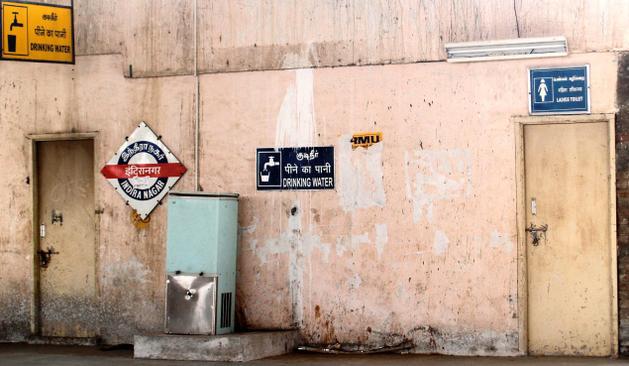
Some of the elevated stations look like a post-apocalyptic nightmare, though! This was my introduction to Chennai's MRTS, having stepped off a bus from the coast, keen to avoid the nightmare that is the bus station:

03_big.jpg

vqdodDOVCECQTVIPVVCVI.jpg

indiranagarmrts.jpg


Yes, that station is open, and it was built in.... 2004. I'd hopped off the bus having seen the station on the map, and was nervous that it had closed down. But no, people were coming out. I went in a secondary entrance, and it looked like a long-abandoned building from a horror film. Little lighting, lots of crumbling concrete, dripping water, and no sign of life. Up to the mezzanine, and there was a little man in a ticket booth - the first positive sign it was a station.

Up at platform level, it was a little better, but still didn't give much confidence, particularly given the state of the structure underneath. However, the train turned up, which was a blessed relief from the extreme heat and humidity. Found a door spot to hang out and enjoy the views into the city, accompanied by a cool breeze.

The other trick in India is boarding trains from the wrong side to ensure you get a space in unreserved carriages (which are dirt cheap, and in far too short supply, as they're the only ones affordable to whole swathes of the population). Boys and young men will jump down on to the tracks as the train comes in (and bear in mind trains in India do not have retention tanks) and clamber up from the wrong side so they can board as incoming passengers are getting off. They then get spaces for the family as much as possible.
 

sgraIRL

Member
Joined
18 Jul 2018
Messages
40
Sorry if this already has a thread somewhere, but I thought that, given a couple of recent incidents involving trespassing, to look at the different attitudes abroad.

For example, in the US/Canada, it is seen to be fairly normal to walk on many railway tracks in rural areas, even using them as a shortcut by walking down them. Presumably this is just an issue to do with such a low volume of trains on the line, but then again how safe really is it?

Equally, in some other European countries (France in particular) they take the attitude that if someone is killed, it's their fault and so don't bother fencing off many lines, you can freely access a lot of their lines.

I wondered if some of these places have higher fatalities, particuarly in Europe, or whether people are just more accustomed to the dangers of the railway in those places?

Dan :)

It is quite common in France, especially at rural stations to cross the tracks.
Not usual in larger stations - but this one has it..

3481-1_6032288.jpg
 

DanTrain

Member
Joined
9 Jul 2017
Messages
753
Location
Sheffield
There are a few in the UK which still use barrow crossings - Tywyn is one, it feels a bit wrong crossing with a train there.
It is quite common in France, especially at rural stations to cross the tracks.
Not usual in larger stations - but this one has it..

View attachment 49955
In that sort of situation, a train needs a bell like trams have to warn people they’re about to move! The horn seems a bit like overkill...
 

stut

Established Member
Joined
25 Jun 2008
Messages
1,924
There are a few in the UK which still use barrow crossings - Tywyn is one, it feels a bit wrong crossing with a train there.

Ipswich too, until recently, until the new bridge was opened, albeit with accompaniment towards the end of its life.
 

TheSeeker

Member
Joined
15 Feb 2016
Messages
314
Location
Braine-l'Alleud
Though over time the trend is towards the UK approach.

Does it come down to attitude to risk in different cultures? The UK seems to be way over the top in many respects but in the long term it must be the right way of doing things. Here in Belgium you often see a maintenance team working on points on a running line. The flagman blows his horn and they all step back out of the way.
 

stut

Established Member
Joined
25 Jun 2008
Messages
1,924
Does it come down to attitude to risk in different cultures? The UK seems to be way over the top in many respects but in the long term it must be the right way of doing things. Here in Belgium you often see a maintenance team working on points on a running line. The flagman blows his horn and they all step back out of the way.

I wonder if high-profile incidents nudge things in the direction of the UK. The horrific Castelldefels incident immediately springs to mind.
 

tsr

Established Member
Joined
15 Nov 2011
Messages
7,400
Location
Between the parallel lines
Unless the man was actually struck, a far more useful call would have been to the police. Why stop the job!

By reporting to the signaller, as is the required procedure for passengers/public being on the track inappropriately, the job will often not be stopped, but the information can be used to take other actions required... which could be:
- Running the next trains on each line at caution, so that any repeat behaviour (a regular occurrence) from the trespasser does not get them killed.
- Calling appropriate resources within the BTP, TOC staff, Network Rail and trespass prevention teams, as needed.
- Logging the issue internally, including an internal safety incident notification, plus any liaison needed for intelligence gathering. Such intelligence can rapidly build a picture of anybody matching descriptions of suicidal people, suspicious people and so on, whether said intel is being gathered in real time, or based on historic events which match up.
- Checking the welfare of staff involved and gathering first-hand reports.

If you call the police, none of the above will happen immediately, and the reaction will be much delayed whilst everyone realises they need to contact NR Control, especially if local forces get involved (which, for example, will happen if you call 999 - the initial 999 operators are largely useless if you need to speak to BTP, and refuse point-blank to do anything other than put you through to the local contact centre’s officers, who in my experience take a small age to even work out where a railway station is).

There are a few in the UK which still use barrow crossings - Tywyn is one, it feels a bit wrong crossing with a train there.

Plenty of such crossings exist at smaller stations, plus numerous crossings on very busy mainlines, some of which don’t even have anything mounted on the track ballast for people to walk on. The ECML, BML and others are only just starting to get rid of some of their footpath crossings. They are a mixed blessing - at least people are more likely to wander round the track if there’s fencing interspersed with designated and recognised crossings, and at least foot crossings are monitored for risks and can be closed in order of risk. However, of course, they can end up being used as busy pedestrian shortcuts if something like a housing estate or school opens nearby, and even if not, anything which is left unattended is bound to be misused by someone, ‘cause nobody’s looking...

Does it come down to attitude to risk in different cultures? The UK seems to be way over the top in many respects but in the long term it must be the right way of doing things. Here in Belgium you often see a maintenance team working on points on a running line. The flagman blows his horn and they all step back out of the way.

Working on the track is also carried out in a similar way on a lot of UK infrastructure. It’s not unusual to see staff working on the points at junctions such as Windmill Bridge (one of the busiest locations for heavy-rail operation in Europe) with lookouts using audible or flag warnings. It does very much depend on risk assessments and places of refuge at each location, though.

 

Mikey C

Established Member
Joined
11 Feb 2013
Messages
8,262
It does feel quite strange walking over the tracks on rural foot crossings, especially remote ones with nobody else around. This one is on the Ridgeway national trail, just south of Prince Risborough on the northbound Chiltern mainline.

tumblr_pcbso9PvcR1sl9kx3o1_1280.jpg
 

Llanigraham

On Moderation
Joined
23 Mar 2013
Messages
6,488
Location
Powys
Unless the man was actually struck, a far more useful call would have been to the police. Why stop the job!

Quite simply because that is what the Rule Book says.
All trains through the relevant section are then sent at Caution until the situation is reported as cleared.
I certainly wouldn't want to be the signaller responsible for possibly killing someone, or affecting a driver who did.
 

DanTrain

Member
Joined
9 Jul 2017
Messages
753
Location
Sheffield
Quite simply because that is what the Rule Book says.
All trains through the relevant section are then sent at Caution until the situation is reported as cleared.
I certainly wouldn't want to be the signaller responsible for possibly killing someone, or affecting a driver who did.
Exactly, even if one isn't concerned for the life of the person on the tracks, surely the psycological state and general mental health of the driver are reason enough to stop traffic!
 

kristiang85

Established Member
Joined
23 Jan 2018
Messages
2,744
I've been to many places in Europe where you simply have to walk across the rails to get between platforms - I'm pretty sure there aren't higher fatality rates there as people are aware of trains. I'd even say there might be less, as people are OK to do it and will do it in an obvious place, in good light, so both trains and walkers are visible to each other. Here its done more covertly, which is more dangerous.

I was on holiday in Sri Lanka earlier this year, and when embarking on a hike we were told to walk along the railway track for the first 2km. I got some amazing pictures of standing next to the train as it was slowly going by in the middle of the jungle 8-)
 

Re 4/4

Member
Joined
30 Jun 2018
Messages
226
Location
Bristol
I wondered if some of these places have higher fatalities, particuarly in Europe, or whether people are just more accustomed to the dangers of the railway in those places?

In Switzerland, the SBB themselves are trying to get rid of their last remaining public barrow crossings. I think Embrach might still be one case where if a train arrives on the rear platform, you have to walk across the front rail.
For metre-gauge railways, it's normal to have pedestrian and traffic crossings protected by nothing more than a warning sign, and there are a fair few stations like that around the country. There's even a special signal to warn trains that they are arriving on the nearside plaform of a station without underpasses or bridges, while another passenger train is on the far one.
The Forch railway which operates partly as a tram and partly as a train is the one I'm most familiar with having lived nearby in the past and it's mostly unfenced and with lots of unprotected level crossings.

I don't recall there being a particular fuss in the media about people getting hit by trains, though I was never an avid reader of the tabloids when I lived there. There was the occasional wrecked car once a year or so.

The Swiss railways have a website for their railway accident prevention campaign which gives the following statistics: 135 serious injuries on public transport in 2017; 30 deaths of which 16 are down to what they describe in such a way that every reader will know it's an euphemism for "being an idiot" (the official version is "being light on sense and lack of thinking").
 

Tim R-T-C

Established Member
Joined
23 May 2011
Messages
2,143
Part of the (slightly alternative) Inca trail requires walking along the narrow gauge tracks there:

12237344_938179559589841_1082792678_n.jpg


This was in 2015
 
Status
Not open for further replies.

Top