
• Our new ticketing site is now live! Using either this or the original site (both powered by TrainSplit) helps support the running of the forum with every ticket purchase! Find out more and ask any questions/give us feedback in this thread!

An alternative to Demand Responsive Transport?

Status
Not open for further replies.

MotCO

Established Member
Joined
25 Aug 2014
Messages
6,115
Given that Demand Responsive Transport (DRT) is generally not successful or viable, despite its best intentions, can I suggest an alternative. Most, if not all, DRT schemes are subsidised by the local Council or equivalent, so instead of the high infrastructure costs of DRT schemes, can the Council funding be used to subsidise taxi fares?

If someone wants to use a DRT bus, they have to phone or book on line, and wait for the next bus to be free. They also have to pay for their fares (unless they have an OAP pass). My suggestion is that the Council pays a proportion of the fare (say 50%) and the passenger pays the rest. You still have to phone to book, but this would be for a taxi, not a DRT. In this way you have a service when you want, but without the running costs of a DRT scheme.

Would his be a suitable and viable alternative?
 
Sponsor Post - registered members do not see these adverts; click here to register, or click here to log in
R

RailUK Forums

RT4038

Established Member
Joined
22 Feb 2014
Messages
5,456
Given that Demand Responsive Transport (DRT) is generally not successful or viable, despite its best intentions, can I suggest an alternative. Most, if not all, DRT schemes are subsidised by the local Council or equivalent, so instead of the high infrastructure costs of DRT schemes, can the Council funding be used to subsidise taxi fares?

If someone wants to use a DRT bus, they have to phone or book on line, and wait for the next bus to be free. They also have to pay for their fares (unless they have an OAP pass). My suggestion is that the Council pays a proportion of the fare (say 50%) and the passenger pays the rest. You still have to phone to book, but this would be for a taxi, not a DRT. In this way you have a service when you want, but without the running costs of a DRT scheme.

Would his be a suitable and viable alternative?
Is this with the local council regulating the taxi fares, or is the council going to be paying 50% of whatever the taxi firm demands?
 

AlbertBeale

Established Member
Joined
16 Jun 2019
Messages
3,188
Location
London
Is this with the local council regulating the taxi fares, or is the council going to be paying 50% of whatever the taxi firm demands?

Some (all?) London boroughs have a taxicard scheme, whereby older folks with mobility problems who find it hard to use the local bus routes to get to the shops (etc) have a card which gives access to the proper "black cabs" based in the area. They have a limit on how many times a month/year they can use the card (and maybe a limit on distances they can go); but up to that limit they can get a cab and pay something similar to the normal bus fare, with the social services budget (borough's or London-wide - not sure) covering the difference. Maybe that's cheaper than needing to pay extra carers to run errands for people, and is generally a positive thing for such people's physical and mental health.
 

Bletchleyite

Veteran Member
Joined
20 Oct 2014
Messages
113,533
Location
"Marston Vale mafia"
Milton Keynes Council used to have a Taxicard scheme too, but it was abolished to save money. But yes I'd agree that having a taxi firm operate DRT (even if it's still shared) is going to be more viable than having dedicated vehicles and crews, which if you're going to have them you might as well operate a fixed route timetabled bus service with them because it's easier for everyone and the excess cost is basically just the diesel.

That does however rely on there being a reasonably sized local taxi company, though. Anyone who's ever tried to get a taxi in Grange over Sands (for one example) will, after their long, uphill walk with their luggage, be aware that this is by no means the case everywhere. So it'd be more reliable when you've got DRT running from an area of small villages into a large town (like, say, MK) than a very rural, small-market-town-based one, because large towns tend to already have large taxi operations.
 

MotCO

Established Member
Joined
25 Aug 2014
Messages
6,115
Can I suggest another way of providing the service?

'Sn-ap' operates a coach service, but only if and when there is sufficient custom. Unlike DRT, they operate on a fixed route. Can bus services operate in a similar way, maybe in rural areas and/or when there is limited demand, i.e. on a fixed route maybe only on certain days of the week, but only when enough people have signed up for it?

I can see that it could be operationally difficult to provide such a service, but surely this is no different to DRT. Maybe the operator can list suggested times, and once there are sufficient passengers who sign up for it, then it runs. It maybe that there are different routes listed for the same time, but in a 'first past the post' system, the winning route is run and the other routes are cancelled. Maybe two or three buses could be operated, in which case the winning two or three routes are run.

The advantages are that the number of vehicles and drivers provided is fixed, there are no meandering routes where passengers may experience lengthy journeys, there are no complicated computer algorithms to match vehicles to pasengers to routes, and there are no route controllers - it just requires people to book on the web or send a text.

Would this work better than DRT?
 

edwin_m

Veteran Member
Joined
21 Apr 2013
Messages
28,675
Location
Nottingham
Can I suggest another way of providing the service?

'Sn-ap' operates a coach service, but only if and when there is sufficient custom. Unlike DRT, they operate on a fixed route. Can bus services operate in a similar way, maybe in rural areas and/or when there is limited demand, i.e. on a fixed route maybe only on certain days of the week, but only when enough people have signed up for it?

I can see that it could be operationally difficult to provide such a service, but surely this is no different to DRT. Maybe the operator can list suggested times, and once there are sufficient passengers who sign up for it, then it runs. It maybe that there are different routes listed for the same time, but in a 'first past the post' system, the winning route is run and the other routes are cancelled. Maybe two or three buses could be operated, in which case the winning two or three routes are run.

The advantages are that the number of vehicles and drivers provided is fixed, there are no meandering routes where passengers may experience lengthy journeys, there are no complicated computer algorithms to match vehicles to pasengers to routes, and there are no route controllers - it just requires people to book on the web or send a text.

Would this work better than DRT?
Some problems here I think.

People will want a confirmed journey that won't be cancelled after they may have made plans that depend on it. There may be enough people who don't need this to make Sn-ap viable, but it's a slightly different story for what could be a lifeline for many of those that use it. Also if there are several routes and some are intrinsically more popular, for example serving larger villages, then the people wanting the less busy routes will probably be outvoted most of the time. So you probably need some other prioritization than majority voting - but first come first served would disadvantage those that couldn't book early.

I've a feeling this takes us back to the concept of a route that operates to different destinations but on fixed days, which is pretty much how many "safety net" buses operate today.

As to using taxi firms, they would have the infrastructure to support booking and dispatching. But outside the big cities few of them operate accessible vehicles, which cost more to buy and operate, but are pretty much essential for those who can't use a bus. So it may be necessary for the local authority to buy the vehicles and just let an operating contract, which is probably what many of them do now.

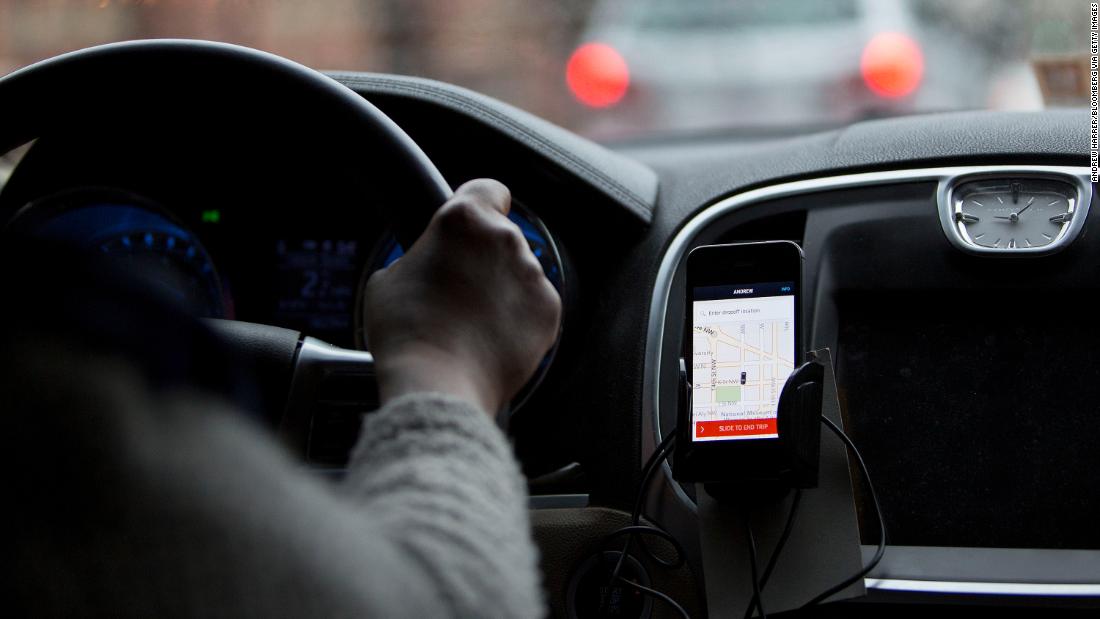
Uber has been trying to take over the public transport networks of some smaller cities in the States, but the results have generally not been good for the travelling public.
Transportation experts say that if Uber grabs a big chunk of its target market — 4.4 trillion passenger miles on public transportation in the 63 countries in which it operates — cities would grind to a halt, as there would literally be no space to move on streets.
That probably relates more to the big cities than to the smaller places they are targeting currently, but Uber's business model is all about using its vast tech funding to price out the competition and aim for monopoly.
 

RT4038

Established Member
Joined
22 Feb 2014
Messages
5,456
Can I suggest another way of providing the service?

'Sn-ap' operates a coach service, but only if and when there is sufficient custom. Unlike DRT, they operate on a fixed route. Can bus services operate in a similar way, maybe in rural areas and/or when there is limited demand, i.e. on a fixed route maybe only on certain days of the week, but only when enough people have signed up for it?

I can see that it could be operationally difficult to provide such a service, but surely this is no different to DRT. Maybe the operator can list suggested times, and once there are sufficient passengers who sign up for it, then it runs. It maybe that there are different routes listed for the same time, but in a 'first past the post' system, the winning route is run and the other routes are cancelled. Maybe two or three buses could be operated, in which case the winning two or three routes are run.

The advantages are that the number of vehicles and drivers provided is fixed, there are no meandering routes where passengers may experience lengthy journeys, there are no complicated computer algorithms to match vehicles to pasengers to routes, and there are no route controllers - it just requires people to book on the web or send a text.

Would this work better than DRT?

Sn-ap has been completely unsuccessful in this concept. Passengers want certainty that when they book, they are going to get the service. It is a pretty useless concept.
 

MotCO

Established Member
Joined
25 Aug 2014
Messages
6,115
Also if there are several routes and some are intrinsically more popular, for example serving larger villages, then the people wanting the less busy routes will probably be outvoted most of the time.

If they are that popular, they could form the basis of a new permanent route, albeit only operating at the popular times. That would free up the 'Bus Sn-ap' vehicles for routes which were outvoted.
 

edwin_m

Veteran Member
Joined
21 Apr 2013
Messages
28,675
Location
Nottingham
If they are that popular, they could form the basis of a new permanent route, albeit only operating at the popular times. That would free up the 'Bus Sn-ap' vehicles for routes which were outvoted.
That would involve finding more funding, as even "relatively popular" in the context of a demand-responsive service is nowhere near to covering costs. And local authorities that subsidise buses are struggling to find funding for the existing ones, let alone increasing it.
 

Energy

Established Member
Joined
29 Dec 2018
Messages
5,135
Given that Demand Responsive Transport (DRT) is generally not successful or viable, despite its best intentions,
Can you explain how it is not viable? Cost? Not too much different from a taxi if its a small bus like an Optare Solo, Needing to call for the bus to come? same thing with taxis.
 

MotCO

Established Member
Joined
25 Aug 2014
Messages
6,115
Can you explain how it is not viable? Cost? Not too much different from a taxi if its a small bus like an Optare Solo, Needing to call for the bus to come? same thing with taxis.

On the basis that DRT schemes never seem to to be a success, and never last long. I can quote Ashford (Kent), Sutton, Ealing, Oxford as examples.
 

Bletchleyite

Veteran Member
Joined
20 Oct 2014
Messages
113,533
Location
"Marston Vale mafia"
Can you explain how it is not viable? Cost? Not too much different from a taxi if its a small bus like an Optare Solo, Needing to call for the bus to come? same thing with taxis.

A key difference is that taxi drivers are self employed and cost nothing when they're not on hire whereas the DRT is costing you money even if it's sat there doing nothing. It's also expensive to scale.

A reasonable half way house is to use taxis to do DRT (i.e. the Uber Pool model).
 

edwin_m

Veteran Member
Joined
21 Apr 2013
Messages
28,675
Location
Nottingham
Can you explain how it is not viable? Cost? Not too much different from a taxi if its a small bus like an Optare Solo, Needing to call for the bus to come? same thing with taxis.
A key difference is that taxi drivers are self employed and cost nothing when they're not on hire whereas the DRT is costing you money even if it's sat there doing nothing. It's also expensive to scale.

A reasonable half way house is to use taxis to do DRT (i.e. the Uber Pool model).
Another factor is that taxi fares are higher than bus fares unless subsidized, as would probably happen if a taxi firm ran a DRT service. And of course a large proportion of DRT users will pay nothing.

At the sort of demand level where DRT is the most appropriate solution, each vehicle is probably carrying one person or nobody most of the time. If the numbers ever get high enough that fares start covering operating costs, then a fixed-route model probably becomes more appropriate.
 

RT4038

Established Member
Joined
22 Feb 2014
Messages
5,456
A key difference is that taxi drivers are self employed and cost nothing when they're not on hire whereas the DRT is costing you money even if it's sat there doing nothing. It's also expensive to scale.

A reasonable half way house is to use taxis to do DRT (i.e. the Uber Pool model).

The capital cost of an Optare Solo is considerably more than a taxi type vehicle, as are the running costs. The requirement for PCV drivers will also push up wage costs, and an operators licence with the requirements for a qualified Transport Manager etc. As you point out, the employment conditions of the drivers will be considerably cheaper.
 

CBlue

Member
Joined
30 Mar 2020
Messages
859
Location
East Angular
The capital cost of an Optare Solo is considerably more than a taxi type vehicle, as are the running costs. The requirement for PCV drivers will also push up wage costs, and an operators licence with the requirements for a qualified Transport Manager etc. As you point out, the employment conditions of the drivers will be considerably cheaper.

Add onto that the additional office infrastructure needed to run DRT and I'd be surprised if any of the schemes ever came close to paying for themselves.
 
Status
Not open for further replies.

Top