• Our new ticketing site is now live! Using either this or the original site (both powered by TrainSplit) helps support the running of the forum with every ticket purchase! Find out more and ask any questions/give us feedback in this thread!

A321XLR enters final certification

Status
Not open for further replies.

YorkRailFan

Established Member
Joined
6 Sep 2023
Messages
3,264
Location
York
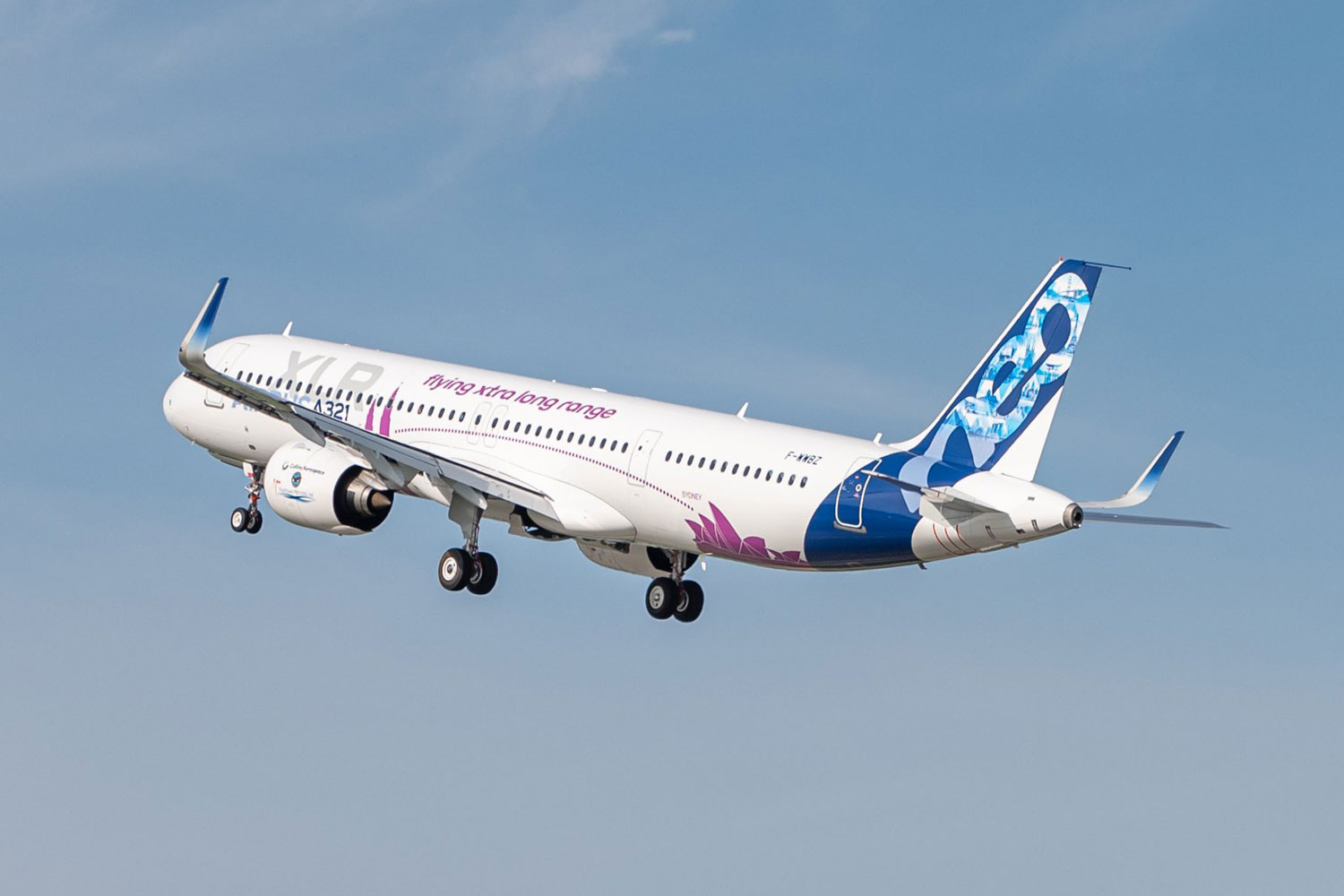
Airbus is now preparing for the XLR's Entry Into Service and has said that the XLR has entered final certification.

The A321XLR’s ongoing certification and flight-test campaign is now in its final stages. As well as debriefing after the airlines’ recent route-proving flights, attention is also being focussed on ensuring that the first operators will have everything that they will need in terms of airworthiness compliance and operational support on day-one. This includes especially the technical documentation and the strategic spares and on-site expert support – to enable the airlines’ smooth operations with the longest-range Airbus Single-Aisle airliner.During the last four years, teams from Airbus’ Customer Services department have been implanted into the A321XLR development team to ensure that all in-service feedback is embedded in the aircraft design and all its new components are assessed for potential in-service issues. This close working as part of a multi-functional team aims to drive the maturity of both the aircraft and the programme’s supporting procedures to maximise the availability of the aircraft once it is in airline service.

This team continues beyond the delivery of the first A321XLRs to launch operators. This approach will ensure that the airlines are well supported with updates to technical documents, availability of spare parts throughout the globe, as well as with training and day-to-day operational support.Compiling the technical documentation for Type Certification
One of the biggest challenges for the Type Certification and entry-into-service (EIS) of any new aircraft off the production line – and now for the A321XLR – is for its manufacturer to provide a full set of accompanying documents known as the “Instructions for Continued Airworthiness” (ICAs). These documents ensure that the type certification airworthiness standard is maintained throughout each aircraft’s operational life. They form the basis for the operators’ approved maintenance data.

For example, airframe ICAs typically provide information about mandatory and recommended overhaul periods; ICAs often list the required special tools – and may also include instructions on how to use the tooling; another key part are the maintenance procedures eg. for the removal/installation of parts and equipment. There are also engine ICAs which include overhaul instructions – for which the respective engine OEM is responsible.100% documentation required at EIS
Airworthiness regulations require 100% of the ICAs to be completed at EIS, for each aircraft delivery. For the A321XLR these have to be submitted by a fixed deadline in the summer of 2024.

The onus therefore is on the respective aircraft manufacturer – the Type Certificate holder – to produce all the completed procedures prior to delivery and EIS of a new aircraft. Even far-out scheduled maintenance tasks, such as those to be performed, say, 10 years after service entry, must be incorporated into the ICA at EIS. The ICAs are in essence regarded as a prerequisite to fly - for any new aircraft on any programme.

To this end, Airbus Customer Services has put the resources in place to meet the challenge. The authors will also likely face last-minute qualifications which will be formally validated and incorporated into the aircraft technical documentation.New A321 design elements require new technical documentation
Due to the derivative nature of the A321XLR, many of its parts are shared in common with the rest of the Airbus Single-Aisle Family, as are much of the associated processes and procedures contained in the ICAs. However, there are also major differences which require new ICA documentation to be authored.

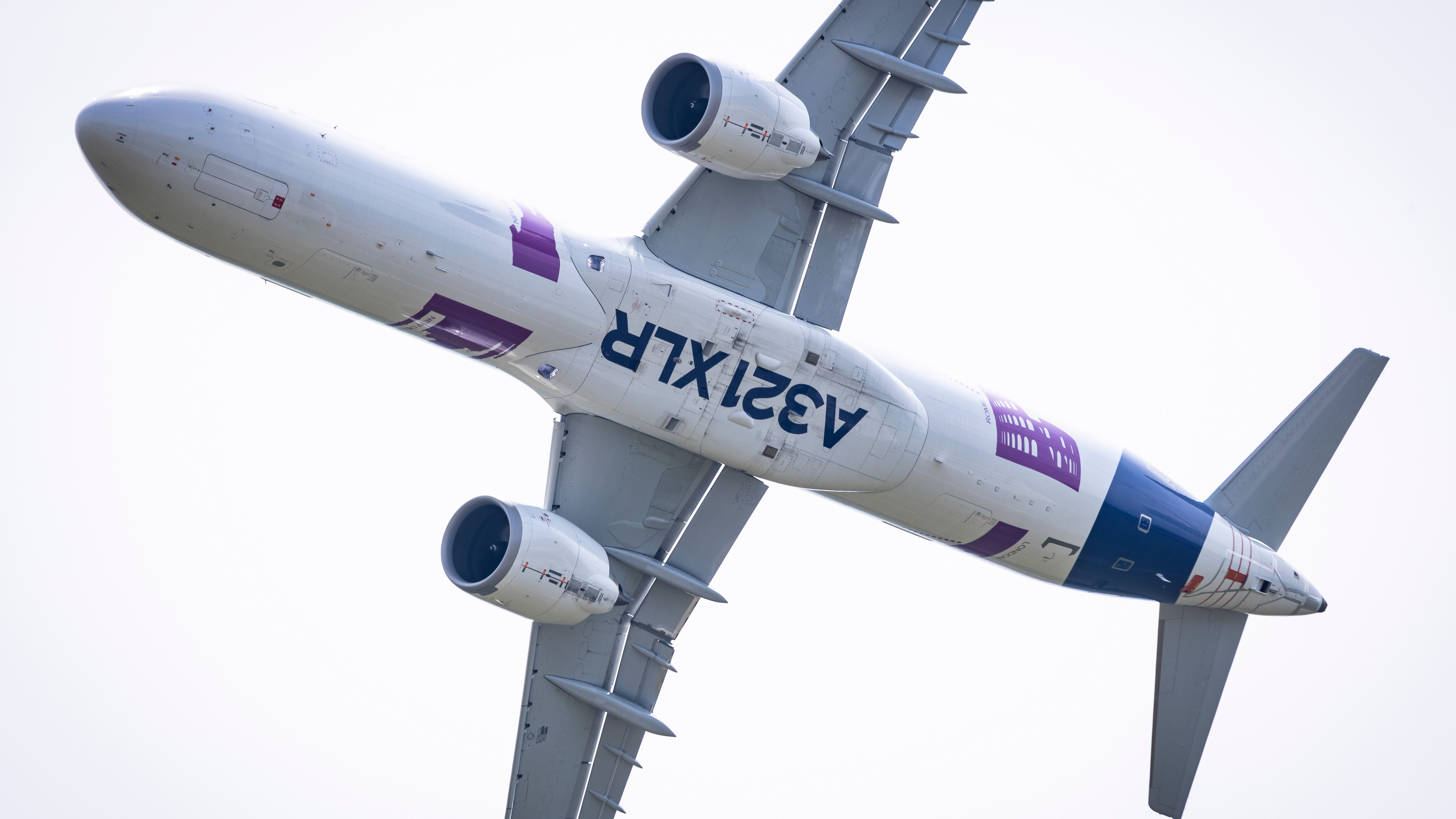
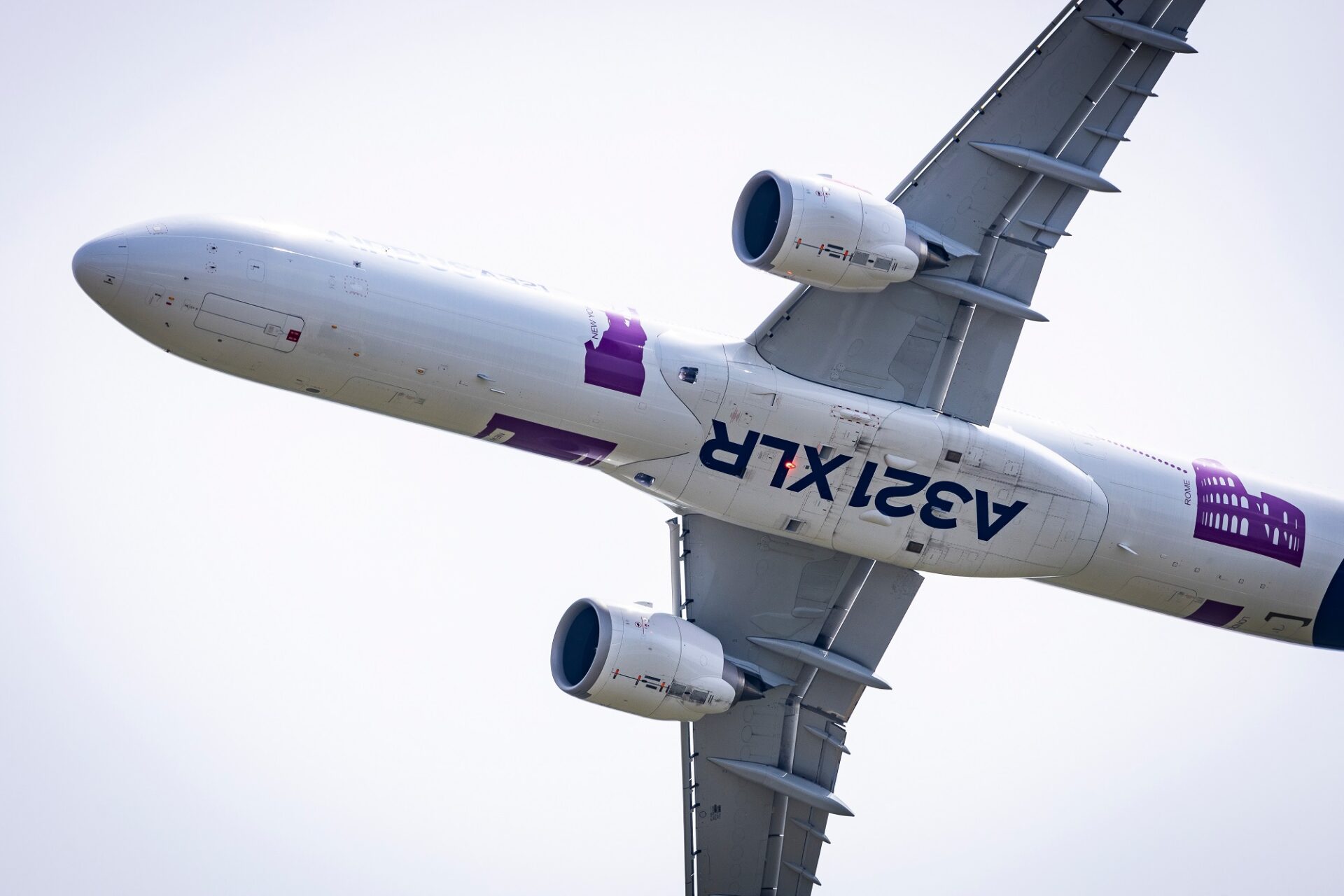
Design changes have been introduced with the A321XLR to enhance its long-range capabilities. These include: new main landing gears; new wing flaps; the new integrated long-range rear centre fuel tank (RCT) requiring a new fuel system; a new high-capacity water & waste system; a new extended belly-fairing, and higher maximum take-off weight. All of these will involve changes to their related ICAs.New belly fairing
To focus on one example of these, the XLR’s new extended belly fairing design Extended Belly Fairing has been introduced following new requirements from the Airworthiness Authorities, with a new material to increase protection to the RCT in specific crash scenarios – such as a belly landing. In contrast, the belly fairing on today’s A321neo, which contains no RCT, primarily serves as an aerodynamic shape.It follows therefore that the structural repair manual (SRM) coverage for this new part will be updated to reflect its new protective function, and which in turn is part of a new ICA for the A321XLR.

Moreover, on the regular A321neo version operators can repair the belly fairing autonomously almost as they would on the rest of the Single-Aisle fleet, and following the guidance in the SRM. However, on the XLR, since this part also has a safety-related function (ie. structurally shielding the RCT), its scope for potential reparability will be limited versus that on the A321neo). This leads to specific sections of the Belly Fairing being classed as a replacement item (ie. to be replaced rather than repaired in the event of damage).

Part of the maturity teams’ objective therefore is to anticipate all of this and to take necessary action to allow the safe dispatch of the aircraft in various configurations. That needs to be reflected in the SRM with repair procedures, or as a minimum, allowable damage.

For the latter, pre-defined solutions can be adapted and implemented on a case-by-case basis by Airbus engineering experts to allow the safe dispatch and operation of the customer’s aircraft.

For potential cases where there would be a lower probability of in-service repair, Airbus’ services organisation will stock pre-emptive spares and tooling at various locations to support the A321XLR fleet, eg. with Satair in Hamburg Germany, or at its numerous strategically located logistics hubs worldwide – and not wait for the day of the damage to discover that there is no possibility of repair nor any spare replacement in stock.

It is also worth noting that as an ultimate ‘life-line’ Airbus as the OEM can procure parts directly from its own final assembly line (FAL) or supply chain in case of the need to support an A321XLR customer. That’s the ultimate recourse, but the preference is to have spares located strategically with Satair.

Assuring post-EIS Airbus support with ‘continuity of experience’
In addition to preparing all the technical documentation and worldwide strategic spares support in advance of entry into service, Airbus is also preparing a cadre of technical specialists from its own ranks to be placed in-situ within each launch operator for a period of around six months. That person, who would act as the airline’s dedicated entry-point into Airbus’ support organisation, will have gleaned all the necessary technical expertise from the programme’s former design maturity activities, as well as feedback from the year-long flight-test campaigns.

Overall, Airbus will maintain a ‘continuity of experience’ in the support team in Toulouse, since they will be recruited from the same teams who had previously covered the development phase and will stay in place post-EIS for a certain amount of time. In short, the team that is knowledgeable with a product today will be the ones who will support the customer during the entry into service.

The countdown has begun! The #A321XLR is in the final stages of certification and the teams are gearing up to support its entry into service!

This follows EASA recently transitioning to a new leadership team. Some very exciting times ahead for the airlines awaiting the XLR.
 
Sponsor Post - registered members do not see these adverts; click here to register, or click here to log in
R

RailUK Forums

GRALISTAIR

Established Member
Joined
11 Apr 2012
Messages
10,457
Location
Preston Lancs
Looking forward to flying in one of these bad boys. Most TATLs are in the range capability. MAN to ATL which is my main route becomes very doable. I am very excited
 

YorkRailFan

Established Member
Joined
6 Sep 2023
Messages
3,264
Location
York
The XLR has officially received type certification from EASA, note only the CFM LEAP 1A version has been certified, not the PW1100G version. Deliveries to begin to Iberia in November.
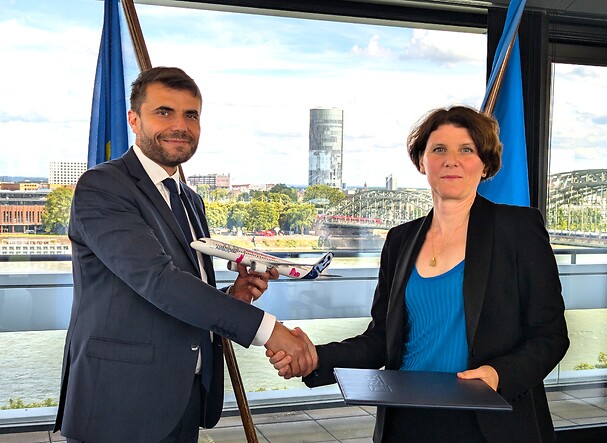
The Airbus A321XLR powered by CFM LEAP-1A engines has received its Type Certification from the European Union Aviation Safety Agency (EASA), preparing the way for the entry-into-service of the new aircraft at the end of the summer. The Type Certificate was handed over by Florian Guillermet, Executive Director of EASA to Isabelle Bloy, A321XLR Chief Engineer. Certification of the Pratt & Whitney engine version is slated for later in 2024.

"Here comes the A321XLR, a differentiated product that brings new value to the market, expanding the possibilities for our airline customers and passengers. With its long range, the A321XLR enables a host of new direct routes, offering natural growth opportunities to our customers and the travelling public. It provides airlines with the efficiency of commonality inside the A320/A321 product range and its versatile cabin a range of service possibilities that are just unique. It is quintessential Airbus!”, says Christian Scherer, CEO of the Commercial Aircraft business of Airbus. “With the certification, we have reached a key milestone. The next step is to prepare the aircraft for its first commercial missions with customers worldwide. We look forward to working with XLR customers to support the integration of the aircraft in their fleets.”

The award to Airbus of a Type Certificate for the A321XLR marks the end of a certification process for the European Union Aviation Safety Agency that lasted more than five years. Airbus’s aim for the new model was to offer a narrowbody aircraft which has additional fuel capacity and so is suited to long-haul flights. Airbus proposed to build in a new fuel tank, known as the Rear Central Tank or RCT. The proposal was classified as a major significant change, based on the closest derivative aircraft, the A321Neo. The RCT represented a novel unusual design, that was not fully covered by the existing CS-25 certification specifications, the main technical requirements that have to be complied with in the certification of large commercial aircraft.EASA’s approach in such a situation is to lay down what is known as Special Conditions to address any gaps or inadequacies in CS-25. The special condition defines safety standards which any manufacturer wishing to adopt this type of change would have to meet to achieve certification approval, without prescribing exactly how they should achieve this.“The aim of every action taken by EASA is to ensure that the aircraft is safe,” said EASA Executive Director Florian Guillermet. “Our requirements can be quite stringent and pose significant challenges to the manufacturer, in this case Airbus. But we have a truly common aim of ensuring safety.”In this case, the safety challenge was posed by the addition of the new fuel tank, integrated within the fuselage, in the underbelly of the aircraft. The special conditions set focused on crash safety, fire safety and occupant protection. For example, the risk of fire had to be mitigated to allow for a safe evacuation of passengers and crew in an accident.“We needed to be sure that the design location of the tank would not in itself trigger a safety issue, that the tank was adequately robust and crash resistant, even in a case where the landing gear failed or an unknown threat such as an item on the runway could damage the tank, and finally we wanted proof that if the tank was compromised, the leakage rate would be limited so as not to pose a threat,” said Michael Singer, Head of Department – Large Aeroplanes at EASA.Airbus responded by providing a sophisticated design for the tank integration which made it more crash resistant, by introducing stronger material compositions and additional supporting structural provisions to protect the fuselage for the case of an uncontrolled landing, and by introducing an inner liner to the tank to limit any potential leakage. The changes to the aircraft went far beyond the RCT itself. The landing gear was reinforced and local structure changes made to accommodate the increased take-off weight resulting from the extra fuel carried. The fuel system was adapted to integrate the RCT. Some other product enhancements were made, for example to the flight controls.

In the run-up to certification, EASA and Airbus held over 400 joint meetings of technical experts, 900 flight test hours on three test aircraft, more than 500 certification documents were produced, reviewed and signed off, tests were witnessed, inspections carried out and audits completed.

Very positive development, we can expect other regulators to follow suit soon.
 

GRALISTAIR

Established Member
Joined
11 Apr 2012
Messages
10,457
Location
Preston Lancs
The XLR has officially received type certification from EASA, note only the CFM LEAP 1A version has been certified, not the PW1100G version. Deliveries to begin to Iberia in November.


Very positive development, we can expect other regulators to follow suit soon.
Fabulous news - giving the 737 max and Boeing a real kick up the you know where.
 

thejuggler

Established Member
Joined
8 Jan 2016
Messages
1,640
The XLR could be as gamechanging for the airline industry as the Comet and 747 were.

How Boeing dropped the ball in not seeing a much improved 757 replacement would be needed by the mid 2020s is anyone's guess.
 

GRALISTAIR

Established Member
Joined
11 Apr 2012
Messages
10,457
Location
Preston Lancs
The XLR could be as gamechanging for the airline industry as the Comet and 747 were.

How Boeing dropped the ball in not seeing a much improved 757 replacement would be needed by the mid 2020s is anyone's guess.
Exactly. I truly believe Boeing dropped the ball on this and this was before the MAX issues.
 

Chester1

Established Member
Joined
25 Aug 2014
Messages
4,440
Looking forward to flying in one of these bad boys. Most TATLs are in the range capability. MAN to ATL which is my main route becomes very doable. I am very excited

They should be great for airports like Manchester. Some of the seasonal routes haven't come back since the pandemic e.g. Manchester to Vancouver. That is a route that would be much more viable with A321 XLR.
 

Snow1964

Established Member
Joined
7 Oct 2019
Messages
11,019
Location
West Wiltshire
The A321XLR has now been certified as 101t MTOW maximum take off weight (already has certification for 97t version). The higher weight allows for more fuel and longer distances

The XLR extra long range has additional centre fuel tanks which reduce cargo space.


I hear first flight should be Iberia livery to Heathrow on October 28th, with some others going to Aer Lingus in next few months.
 

thejuggler

Established Member
Joined
8 Jan 2016
Messages
1,640
Aer Lingus have just launched a service to Nashville from Dublin which begins in April 25 on the new XLR.
 

YorkRailFan

Established Member
Joined
6 Sep 2023
Messages
3,264
Location
York
Iberia has postponed the Entry Into Service of the XLR until 1 November, however transatlantic flights to Boston will still begin on 14 November:
Preliminary schedules have shown that Iberia has adjusted the entry date of the Airbus A321XLR, with the carrier delaying its commercial launch by several days.

Moving the A321XLR commercial launch date
According to data from the aviation analytics company Cirium, as of this week, Iberia has planned to launch commercial flights with the A321XLR on November 1.The Spanish airline has scheduled two flights from Madrid Barajas Airport (MAD) to Paris Charles De Gaulle Airport (CDG) on that day, as well as two return flights to the Spanish capital.Iberia should operate the A321XLR on the route until November 13, when the A321XLR would switch to operating the IB347 itinerary from Madrid to Boston Logan International Airport (BOS) on November 14.Cancelling A321XLR flights to London
As shown by Cirium’s last week’s schedules, Iberia had intended to fly the Airbus A321XLR from the Spanish capital to both Charles de Gaulle Airport (CDG) and London Heathrow Airport (LHR) from October 28.However, the Spanish airline had scheduled the A321XLR to fly from Madrid to London-Heathrow on four days only, October 28, October 29, October 30, and October 31, following which the aircraft was supposed to operate two daily flights from Madrid to Paris.

Annoying for anyone who booked to fly to Heathrow with Iberia to specifically fly on the XLR.
 

birchesgreen

Established Member
Joined
18 Aug 2015
Messages
7,652
Location
Solihull
The XLR could be as gamechanging for the airline industry as the Comet and 747 were.

How Boeing dropped the ball in not seeing a much improved 757 replacement would be needed by the mid 2020s is anyone's guess.
Well they did see that it would be needed (New Midsize Airplane project) but gave up on it in lieu of the MAX.
 

YorkRailFan

Established Member
Joined
6 Sep 2023
Messages
3,264
Location
York
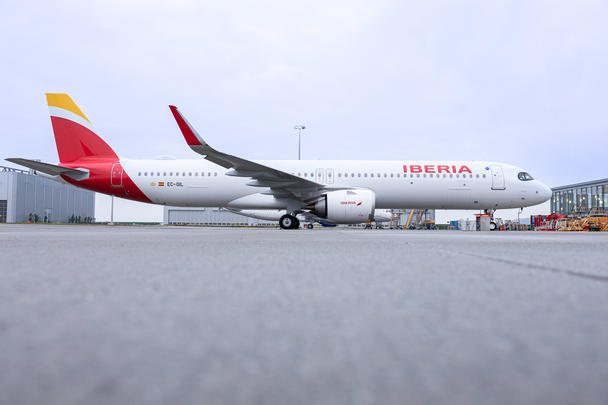
Airbus has now delivered the first of many XLRs, with this one going to Iberia:
Spanish flag carrier Iberia has taken delivery of its first A321XLR, becoming the launch operator of the world’s newest single-aisle aircraft.

The aircraft, powered by CFM LEAP-1A engines, will be operated by Iberia on a number of regional flights across the airline’s European network before its first transatlantic mission from Madrid to Boston later in November.

Marco Sansavini, CEO & Chairman at Iberia, said: “We are very proud to be the launch airline for this new Airbus aircraft. The A321XLR will allow us to reach new destinations, operating transoceanic routes and doing so in a more efficient way.”

Christian Scherer, CEO Commercial Aircraft at Airbus, said: “Five years in the making, the newest member of the Airbus family is all set to join its first operator, Iberia. The A321XLR will enable countless new non-stop destinations; it truly opens a new chapter in air connectivity. It is another proud “first” for all of us at Airbus in our constant quest to innovate and bring value to our customers. We are pleased to share this special moment with a special customer: gracias y felicidades Iberia.”

According to Planespotters, the aircraft has registration EC-OIL. Very exciting times!
 

AlterEgo

Verified Rep - Wingin' It! Paul Lucas
Joined
30 Dec 2008
Messages
29,186
Location
LBK
I’ll be on this aircraft next week (sadly they chopped and changed the start date so much I couldn’t make the inaugural!).
 

Chester1

Established Member
Joined
25 Aug 2014
Messages
4,440
I’ll be on this aircraft next week (sadly they chopped and changed the start date so much I couldn’t make the inaugural!).

I am jealous. I know it's just an A321 LR with an extra fuel tank but it could massively change medium haul flying.
 

AlterEgo

Verified Rep - Wingin' It! Paul Lucas
Joined
30 Dec 2008
Messages
29,186
Location
LBK
I am jealous. I know it's just an A321 LR with an extra fuel tank but it could massively change medium haul flying.
They just pushed the first public flights back a week! Another rebooking...
 

Cloud Strife

Established Member
Joined
25 Feb 2014
Messages
2,962
Well they did see that it would be needed (New Midsize Airplane project) but gave up on it in lieu of the MAX.

I think the ultimate problem that Boeing has is the lack of commonality. If someone has a type rating for the A319/A320/A321, they can cover both short haul and now long haul flights easily. Meanwhile, an airline with a Boeing fleet will need both a short haul plane (the Max) and a long haul plane and with more difficulties in moving pilots between the fleets.
 

YorkRailFan

Established Member
Joined
6 Sep 2023
Messages
3,264
Location
York
The FAA has certified the LEAP 1A powered XLR:
The Airbus A321XLR has been awarded Type Certification from the Federal Aviation Administration (FAA) after the European Union Aviation Safety Agency (EASA) approved the aircraft earlier this year.

According to Air Current, news of the important development has been kept low key with details regarding the approval added to the Airbus A320 family aircraft type certificate data sheet (TCDS) on December 5, 2024.

In a repeat of EASA’s approval in July 2024, the FAA certified the Airbus A321XLR only with CFM International LEAP-1A engines at this stage.

According to Air Current, EASA approval for the A321XLR with Pratt & Whitney PW1000G engines has slipped until at least 2025. It is unclear when the FAA will certify this aircraft type.

Some good news regarding the FAA certification. Hopefully certification of the PW1100G powered XLR isn't too far off.
 

AlterEgo

Verified Rep - Wingin' It! Paul Lucas
Joined
30 Dec 2008
Messages
29,186
Location
LBK
Have you done this flight yet? Interested in your impressions.
Afraid I haven’t! It’s now exclusively on transatlantic runs, and it evaded me again by being removed from service on a MAD-CDG run for a press shoot.
 

John R

Established Member
Joined
1 Jul 2013
Messages
6,061
Afraid I haven’t! It’s now exclusively on transatlantic runs, and it evaded me again by being removed from service on a MAD-CDG run for a press shoot.
. That’s frustrating, especially as Transatlantic is what its market is, so unlikely to appear on short haul.

Maybe when Aer Lingus starts operating it you can find a reason to go via Dublin to wherever!
 

YorkRailFan

Established Member
Joined
6 Sep 2023
Messages
3,264
Location
York
The FAA has now certified the PW1100G powered A321XLR:
The FAA, the US Federal Aviation Administration, has issued the certification of the GTF (PW1100G-JM) that will be used by the Airbus A321XLR, Pratt & Whitney revealed on Monday, 16.

According to the company, the agency updated the engine certification on December 12 to include the ultra-long-range aircraft.

“This is an important milestone for the GTF engine program, which was the first engine to power the A320neo aircraft family,” said Rick Deurloo, president of Commercial Engines at Pratt & Whitney.

Great news, United Airlines in the US has ordered the GTF powered XLR meaning that deliveries of XLRs to United can commence soon.
 
Status
Not open for further replies.

Top