• Our new ticketing site is now live! Using either this or the original site (both powered by TrainSplit) helps support the running of the forum with every ticket purchase! Find out more and ask any questions/give us feedback in this thread!

A strange circle

Status
Not open for further replies.

umontu

Member
Joined
17 Feb 2011
Messages
516
Location
Lancashire & Yorkshire
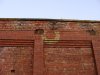
Wondering if anyone can tell me what this is...

I've seen these circles elsewhere around my local rail network, but can't for the life of me figure out what they're there for.

The photo is taken at Thornton For Cleveleys Station and the circle would have been part under and part above the original canopy over the platform.
I believe I've seen a similar circle at Kirkham and Wesham on a building that was demolished a few years a go.
 

Attachments

  • DSC07943.jpg
    DSC07943.jpg
    147.3 KB · Views: 380
Sponsor Post - registered members do not see these adverts; click here to register, or click here to log in
R

RailUK Forums

MidnightFlyer

Veteran Member
Joined
16 May 2010
Messages
12,856
Well this is near Blackpool so I don't think it'll be a LU roundel. Also the canopy survived the station closure in 1970 so I can't see it being a roundel. So I doubt it is one but thanks for the suggestion.

Roundels existed at just about every station in Britain from the early 20th Century to 1974, so it could well be.
 

umontu

Member
Joined
17 Feb 2011
Messages
516
Location
Lancashire & Yorkshire
Roundels existed at just about every station in Britain from the early 20th Century to 1974, so it could well be.

& DXMachina

I had no idea they were called roundels. My apologies. But why would it be up that high? It may not help much but the station was the first LMS built station as far as I know. Or atleast opened under LMS.
 

tsr

Established Member
Joined
15 Nov 2011
Messages
7,400
Location
Between the parallel lines
This is a bit of a random guess, but I don't think you'd put a roundel there, as it would be far easier to put it on another part of the brickwork where it would be both on a flat vertical surface, as well as centred symmetrically, so I think it could be an engineering symbol or possibly something for a camera or measuring device to latch onto. If this is the case, a good analogy would be the symbols on most LU platforms, where there are markings for cameras to align with, in order to ensure that they will be recording all of what they need to be.
 

umontu

Member
Joined
17 Feb 2011
Messages
516
Location
Lancashire & Yorkshire
This is a bit of a random guess, but I don't think you'd put a roundel there, as it would be far easier to put it on another part of the brickwork where it would be both on a flat vertical surface, as well as centred symmetrically, so I think it could be an engineering symbol or possibly something for a camera or measuring device to latch onto. If this is the case, a good analogy would be the symbols on most LU platforms, where there are markings for cameras to align with, in order to ensure that they will be recording all of what they need to be.

If so, then why at a station that was closed from 1970 onwards. The line itself has been mothballed since 1999 and until 2008 the platforms were covered in trees.
Thanks though.
 

tsr

Established Member
Joined
15 Nov 2011
Messages
7,400
Location
Between the parallel lines
If so, then why at a station that was closed from 1970 onwards. The line itself has been mothballed since 1999 and until 2008 the platforms were covered in trees.
Thanks though.

I've no idea about what's been happening during the closure period, I'm afraid! It just seems to be a bit of a messy position for a roundel, and I know that there are alignment systems available which use various shapes, some of which may be in "odd" places (if necessary).
 

Trog

Established Member
Joined
30 Oct 2009
Messages
1,546
Location
In Retirement.
Could it be where there used to be a cast iron sign giving the location of a water valve.
These were often painted yellow, and sometimes a boarder round them was also painted.
Do that then remove the sign and you get left with a yellow ring or oval.
 

Clip

Established Member
Joined
28 Jun 2010
Messages
10,821
Could it be where there used to be a cast iron sign giving the location of a water valve.
These were often painted yellow, and sometimes a boarder round them was also painted.
Do that then remove the sign and you get left with a yellow ring or oval.

I thought something similar too but there are no normal fixing holes in the wall space where they should be for a sign to hang. The only things that look like they may be are at 1300 and 1900 on there which would be odd.
 

jp4712

Member
Joined
1 May 2009
Messages
561
Location
Lichfield
I suspect that it was added in the Second World War, when all sorts of markings were painted on everything from trees to buses. They denoted the location of air raid shelters, emergency water supplies (see http://www.users.globalnet.co.uk/~rwbarnes/cd/ews.htm) or sandbags, fuel, ARP Warden post and all sorts of stuff.

The use of yellow paint, and the similarity in style and the degree of fading compared to other WW2 surviving signage, leads me to think that the 'O' was a sign signifying the presence of something - maybe a water main, maybe some equipment beginning with the letter 'o', I don't know.

Paul
 

John Webb

Established Member
Joined
5 Jun 2010
Messages
3,756
Location
St Albans
There seem to be three potential fixing holes visible in the brickwork joints - perhaps this particular sign was only held on by three screws?
I am inclined to a water valve or fire hydrant sign myself. The yellow colour has been associated with fire hydrants for a long time, and before standardisation mid-20th century into the rectangular 'H' plate, such signs were often round in shape. Possibly the yellow was added during WW2 to make the plate location more visible?
(Although it's interesting that the yellow appears to go over the dark object in the wall on the left of the ring which could have been a canopy support? Which implies the ring was added after the canopy was removed.)
 

umontu

Member
Joined
17 Feb 2011
Messages
516
Location
Lancashire & Yorkshire
There seem to be three potential fixing holes visible in the brickwork joints - perhaps this particular sign was only held on by three screws?
I am inclined to a water valve or fire hydrant sign myself. The yellow colour has been associated with fire hydrants for a long time, and before standardisation mid-20th century into the rectangular 'H' plate, such signs were often round in shape. Possibly the yellow was added during WW2 to make the plate location more visible?
(Although it's interesting that the yellow appears to go over the dark object in the wall on the left of the ring which could have been a canopy support? Which implies the ring was added after the canopy was removed.)

That sounds plausible but again the station closed in the 70's so I'm not sure.
Unfortunately no one bothered to take a picture of that side of the station with that particular location in view until me to be honest.
 

umontu

Member
Joined
17 Feb 2011
Messages
516
Location
Lancashire & Yorkshire
I've now found the other circle. It's at Kirkham & Wesham and is on what was one of the waiting rooms. I can't see this being an air raid shelter though. When the canopy was up at Kirkham I believe this would also have been part inside it.
 

Attachments

  • DSC07949.jpg
    DSC07949.jpg
    110 KB · Views: 91

table38

Established Member
Joined
12 Oct 2010
Messages
1,812
Location
Stalybridge
The pattern of 3 fixing holes inside each circle must be significant, as John Webb already suggested there was a sign or plate on the wall and the circle painted around it? But in the second case, the plate or sign couldn't be circular due to the birckwork above.
 

umontu

Member
Joined
17 Feb 2011
Messages
516
Location
Lancashire & Yorkshire
The pattern of 3 fixing holes inside each circle must be significant, as John Webb already suggested there was a sign or plate on the wall and the circle painted around it? But in the second case, the plate or sign couldn't be circular due to the birckwork above.

I agree. I just can't figure out why those locations or what it relates to. Both locations have little in common. At Thornton it's just randomly positioned half way down the platform nowhere near either of the waiting rooms, ticket office or stairs. At Kirkham it's above a former doorway to a waiting room.
 

table38

Established Member
Joined
12 Oct 2010
Messages
1,812
Location
Stalybridge
It's a long shot, but the local library or historical society or might have some old photographs of the station which might let you match a feature common to both locations?

(For example, our council has kindly put a lot of stuff up on their website here if anyone is interested!)
 

umontu

Member
Joined
17 Feb 2011
Messages
516
Location
Lancashire & Yorkshire
It's a long shot, but the local library or historical society or might have some old photographs of the station which might let you match a feature common to both locations?

(For example, our council has kindly put a lot of stuff up on their website here if anyone is interested!)

Thanks for the tip off there. Though with Thornton station I have access to the vast majority of the photos of this station including some private collections.

If I do find out that way I'll post it on here. (Incase anyone is as gripped by this as me.)

also incase anyone else is wondering, this is the lancashire equivalent to the Tameside image site. http://lanternimages.lancashire.gov.uk/
 
Last edited:

umontu

Member
Joined
17 Feb 2011
Messages
516
Location
Lancashire & Yorkshire
There are also some old pictures of Thornton Cleveleys here

Aye I know of Rossall beach, thanks though.
There's nothing on Lancashire Lantern or Flickr showing either area.
I could try my library I guess. Unless anyone knows a place or archive I don't.

I'm not actually asking for myself but for a gentleman that doesn't use the internet much.
 
Last edited:

eastwestdivide

Established Member
Joined
17 Aug 2009
Messages
3,403
Location
S Yorks, usually
There's a similar sort of painted circle on a derelict factory in Rotherham (attached).
Might be a complete red herring though, as this is only about 4-5 feet from the ground. The wavy line suggests water, and this is right beside the river, in an area known to flood (the Guest & Chrimes factory near the new stadium construction site). On the other hand, it's the same faded yellow, and about the same size, maybe a little smaller, judging by the number of brick courses.
 

Attachments

  • circle Rotherham.jpg
    circle Rotherham.jpg
    69.8 KB · Views: 50

Ploughman

Established Member
Joined
15 Jan 2010
Messages
3,099
Location
Near where the 3 ridings meet
It wouldn't be some sort of datum plate would it?
Actually positioned at the recorded mileage for that station.
The NER and LNER had cast signs for this at trackside. Stating DP.
 

umontu

Member
Joined
17 Feb 2011
Messages
516
Location
Lancashire & Yorkshire
It wouldn't be some sort of datum plate would it?
Actually positioned at the recorded mileage for that station.
The NER and LNER had cast signs for this at trackside. Stating DP.

The nearest milage marker to the Thornton circle is 16 1/4 which is much further down the platform.

I'm not sure about Kirkham's nearest milage marker. I believe its 6 miles but there's no marker along the platforms.

eastwestdivide
Possible, both stations have small (Dykes or steams?) right along side them (Kirkham's is at the far end of the woods on the down platform). But given that both of these are a good 20 ft separating them in height and to my knowledge never flood, I doubt it.

Thanks though!
 
Status
Not open for further replies.

Top