
• Our new ticketing site is now live! Using either this or the original site (both powered by TrainSplit) helps support the running of the forum with every ticket purchase! Find out more and ask any questions/give us feedback in this thread!

A federal UK?

Status
Not open for further replies.

Bletchleyite

Veteran Member
Joined
20 Oct 2014
Messages
113,058
Location
"Marston Vale mafia"
I think this merits its own thread to see what views are on how this could work.

From the Labour thread:

England already is ceremonial. It’s the only one of the home nations without its own assembly/parliament and its laws cover England and Wales at the lowest level. In a national level, only a handful of departments and agencies are confined to England.

Indeed, and that's something I would like to change in any move to true federalism. However, at present England basically controls the "UK stuff".

I am not going to be changed from the view that any proposal to break up England politically in the way being suggested is something that is pushed mostly by non-English people (i.e. Welsh, Scots, NI and EU) to reduce the power England has, and for me that is an absolute, non-negotiable red line, as I said I would rather see the breakup of the United Kingdom than accept that, though my preference would be a federal UK consisting of England, Wales, Scotland, NI (if it doesn't choose to reunify) and a London city state, and I don't see any need for the component parts to be of the same size, just as I see doing that with unitarisation of local authorities as harmful zealotry*.

As long as federal matters are dealt with by a wholly separate set of representatives and are not cascaded upwards, England cannot "crowd out" the others on federal decisions in and of itself, and those who think a Welsh or Scots voter should have higher influence on federal matters than an English voter (by giving England, Wales, Scotland and NI each a vote on such matters rather than a vote per representative) are again asking for a settlement that I can under no circumstances accept. It strikes me that most people who favour such a settlement are doing this specifically to harm the influence of England, and I cannot have that.

* Unitary local authorities should encompass areas which associate with one another, with towns including their travel to work area and similar, not be based on numbers aside from that very small ones would be unviable. Divided TTW areas such as West Lancashire not being within the Liverpool City Region make for very poor transport decisions and funding issues.
 
Sponsor Post - registered members do not see these adverts; click here to register, or click here to log in
R

RailUK Forums

Magdalia

Established Member
Joined
1 Jan 2022
Messages
7,336
Location
The Fens
What we need among other fixes is a federal UK, with regional state parliaments (a single English parliament won't work, because England is too large).

Breaking up England in this way, other than possibly London as a federal capital city state, is an absolute red line for me and many others. I would vote against any federalisation plan that included doing so and would prefer a dissolution of the UK than this.

Devolution to the English regions would be much more popular than you seem to think. There are strong local identities in addition to the wider English identities. Giving more power to the local regions is really the only way we get out of the current mess.

Some devolution would be welcome. But breaking up England entirely and leaving it only as a ceremonial entity would not be acceptable.
The nearest that the UK has come to attempting devolution leading towards federalism was the regional assemblies proposed by John Prescott when he was Deputy Prime Minister. It was a complete flop with the referendum on creation of a regional assembly for the North East being heavily defeated in 2004.

The key point is that England has been a nation and identity for more than 1000 years. That came about by the Kingdom of Wessex prevailing over various regional kingdoms, followed not long after by the Norman Conquest, with no strong regional identities surviving within England.

As parliament wrestled power away from the monarchy a major consequence is parliamentary sovereignty forming a cornerstone of the UK constitution and it is difficult to devise a federal structure compatible with that.

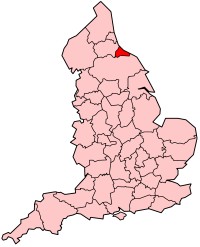
The result of imposing regional structures with no strong identity was well demonstrated by the failure of regional devolution under Prescott, and further illustrated by the fate of Avon, Humberside and Cleveland county councils set up in the 1974 local government reorganisation.

Meanwhile this government is actually being quite radical on devolution in England, with the roll out of strategic authority mayors across England, and the contemporaneous elimination of two tier local government in those parts of England where it still exists. A particularly interesting feature of the process is that there is no top down imposition of a new single tier local authority structure, the local authorities themselves have been given first shot at devising structures that best meet local needs and identities.

I am keeping a close watch on what is happening here in the East of England, where Cambridgeshire and Peterborough already has a mayor, with Essex and Norfolk+Suffolk mayors to come soon. The local politicians are discussing options for how the new single tier local authority map will look, but the evidence suggests that there is little awareness of this amongst local electors. That includes this forum, where I have been surprised that there is no discussion of the relative merits of the various local proposals.
 

Tetchytyke

Veteran Member
Joined
12 Sep 2013
Messages
17,457
Location
Isle of Man
It was a complete flop with the referendum on creation of a regional assembly for the North East being heavily defeated in 2004.
That was Dominic Cummings' first foray into politics and, it is fair to say, the entire campaign led by Cummings was built on lies. A bit like his subsequent campaigns.

It was a very unusual campaign, complaining that Westminster never listens and then arguing for more Westminster.
 

ainsworth74

Forum Staff
Staff Member
Global Moderator
Joined
16 Nov 2009
Messages
31,069
Location
Redcar
and further illustrated by the fate of Avon, Humberside and Cleveland county councils set up in the 1974 local government reorganisation.
I don't know enough about Avon and Humberside but I reckon that Cleveland county was gotten rid of due to the massive child abuse scandal that rocked the place in the late 1980s when loads of kids were taken into social services care due to sexual abuse when it may well have been no such abuse was taking place.

The Cleveland child abuse scandal is a wave of suspected child sexual abuse cases in 1987 in Cleveland, England, many of which were later discredited.

In that year, a large number of child sexual abuse allegations followed the use of a new and controversial diagnostic test by paediatricians at the Middlesbrough Hospital. A total of 121 children were removed from their parents as a result. In 1988, the Butler-Sloss Inquiry into the cases concluded that most of the diagnoses were incorrect; 94 of the children were subsequently returned and the two paediatricians involved were criticized. In 1991, the Children Act was implemented, in part as a result of the scandal and the ensuing report. In 1997, a controversial TV documentary suggested that the majority of the diagnoses were in fact correct, and that a number of the children had again been determined to be at risk of abuse.


WelshBluebird

Established Member
Joined
14 Jan 2010
Messages
5,577
However, at present England basically controls the "UK stuff".
And can you not see how that is troublesome to the other home nations?
Would you hold the same view if it was NI not England who were in charge?
I am not going to be changed from the view that any proposal to break up England politically in the way being suggested is something that is pushed mostly by non-English people (i.e. Welsh, Scots, NI and EU) to reduce the power England has, and for me that is an absolute, non-negotiable red line, as I said I would rather see the breakup of the United Kingdom than accept that my preference would be a federal UK consisting of England, Wales, Scotland, NI (if it doesn't choose to reunify) and a London city state,
I'm not going to change that view clearly, and to a degree am only proving your point, but why is it such a red line?
To me the only reasoning I can see, reading between the lines, is that you don't want England to be weaker than it is now, but by that being the reason you essentially agree that the current situation is unfair on the other nations and you dont want England to be in the same position of them, even if it would benefit parts of England greatly.

my preference would be a federal UK consisting of England, Wales, Scotland, NI (if it doesn't choose to reunify) and a London city state,
So why grant London its own status but not say the north west of England?
 

RT4038

Established Member
Joined
22 Feb 2014
Messages
5,454
I am keeping a close watch on what is happening here in the East of England, where Cambridgeshire and Peterborough already has a mayor, with Essex and Norfolk+Suffolk mayors to come soon. The local politicians are discussing options for how the new single tier local authority map will look, but the evidence suggests that there is little awareness of this amongst local electors. That includes this forum, where I have been surprised that there is no discussion of the relative merits of the various local proposals.
Living in a County currently with a two-tier system, my observation is that the local politicians are far more interested in carving out something that will keep them in a job than what may be in the best interests of the electors. As the electors are not going to be voting on any particular proposal, it is in the interests of the local politicians to keep them in the dark so they can sew up things in their interest.
 

Cloud Strife

Established Member
Joined
25 Feb 2014
Messages
2,962
From the other thread:


What we need among other fixes is a federal UK, with regional state parliaments (a single English parliament won't work, because England is too large). I think Wales and Scotland are better off overall, even where their governments have big issues, because they know what the local/regional issues are and can target them more effectively. A smaller Westminster deals with national matters, while regional devolution through federal parliaments provides funding and powers to better target deprived/run down areas. Incidentally this is something Starmer has talked positively in favour of before, however I suspect the reason he's not currently pursuing it is the time, resources and political bandwidth involved is enormous, and higher priorities exist for now. Also, if it went in the manifesto on top of everything else, many would think there's too much in there to be deliverable in 4-5 years.

I'd argue slightly otherwise. If it were me, I'd go down the path of:

Northern Ireland / Wales / Scotland: national unicameral parliament and councils. None of them are big enough to warrant a second layer of administration between councils and parliament, although each of them would be free to decide how much is devolved to the council level.
England: As you say, it's too big for a single parliament. In this case, I'd have an English House of Representatives, which would work as the national parliament and be elected directly. There would also be regional assemblies, which would deliver regional devolution, and these regional assemblies would elect members to an English Senate. These regional assemblies would then have councils under them.

The idea, broadly speaking, is that England would have "double devolution", reflecting the fact that it's a large country by European standards, and it would allow for London to have different policies to NE England. The Senate would act as a chamber of revision, reflecting the interests of the regions.

Then there would be a federal UK Parliament, which would deal with the handful of matters that aren't currently devolved to Scotland and Wales. This federal parliament would be comprised of 25 MPs from Scotland/Wales/Northern Ireland and 75 from England, and they would be chosen from their respective national parliaments. By going down this path, the national parliaments are essentially delegating representatives to the federal parliament, so that the composition of the UK federal parliament reflects the current will of voters.

It sounds bureaucratic, but this system would abolish English dominance over the UK while providing for meaningful representation.

Incidentally, I think Starmer is holding off on the federal discussions until after the next elections. If the SNP and Plaid win those elections and get their own First Ministers, then there will be a huge amount of pressure on Labour to actually deliver a federal system before the next general election, especially with all three devolved parliaments having a nationalist First Minister.

And can you not see how that is troublesome to the other home nations?

It's incredibly troubling. It's actually this sentiment that has driven nationalist parties to intentionally move away from how things are done in England, because there's a significant amount of resentment towards England forcing various things on them without their consent.
 

Bletchleyite

Veteran Member
Joined
20 Oct 2014
Messages
113,058
Location
"Marston Vale mafia"
Meanwhile this government is actually being quite radical on devolution in England, with the roll out of strategic authority mayors across England, and the contemporaneous elimination of two tier local government in those parts of England where it still exists. A particularly interesting feature of the process is that there is no top down imposition of a new single tier local authority structure, the local authorities themselves have been given first shot at devising structures that best meet local needs and identities.

Ish.

What hasn't happened there is the ability to move things between former authorities. So moving West Lancashire into the Liverpool City Region, for example, is not being considered, and is not able to be considered, as part of the Lancashire unitarisation. And there does seem to be part of the brief requiring similarly sized unitaries, a rule which I think is damaging - the unitaries should be an urban area plus its TTW area, and nothing else.

Thinking of Lancashire, the only one that to me makes any sense is:

West Lancs into LCR
Blackpool and Fylde unitary
Lancaster and Wyre unitary (I would have favoured including the Furness in that too, but that's too late as that's already been done)
Preston, South Ribble and Chorley unitary (or even consider just Preston and SR which really do need to stay together as they constitute two parts of the same city; Chorley could perhaps be considered as going into Greater Manchester alongside Wigan)
East Lancashire unitary

Yet that isn't on offer.
 

35B

Established Member
Joined
19 Dec 2011
Messages
5,369
I think this merits its own thread to see what views are on how this could work.

From the Labour thread:


Indeed, and that's something I would like to change in any move to true federalism. However, at present England basically controls the "UK stuff".

I am not going to be changed from the view that any proposal to break up England politically in the way being suggested is something that is pushed mostly by non-English people (i.e. Welsh, Scots, NI and EU) to reduce the power England has, and for me that is an absolute, non-negotiable red line, as I said I would rather see the breakup of the United Kingdom than accept that, though my preference would be a federal UK consisting of England, Wales, Scotland, NI (if it doesn't choose to reunify) and a London city state, and I don't see any need for the component parts to be of the same size, just as I see doing that with unitarisation of local authorities as harmful zealotry*.

As long as federal matters are dealt with by a wholly separate set of representatives and are not cascaded upwards, England cannot "crowd out" the others on federal decisions in and of itself, and those who think a Welsh or Scots voter should have higher influence on federal matters than an English voter (by giving England, Wales, Scotland and NI each a vote on such matters rather than a vote per representative) are again asking for a settlement that I can under no circumstances accept. It strikes me that most people who favour such a settlement are doing this specifically to harm the influence of England, and I cannot have that.

* Unitary local authorities should encompass areas which associate with one another, with towns including their travel to work area and similar, not be based on numbers aside from that very small ones would be unviable. Divided TTW areas such as West Lancashire not being within the Liverpool City Region make for very poor transport decisions and funding issues.
There is a political issue in a federal system if one part of it is disproportionately larger than the others - I suggest the situation of Prussia within post-1870 Germany is a useful example.

This creates an impasse, where a federal system that links to the major units of the UK that people relate to is structurally imbalanced, but one that redresses those imbalances will struggle to gain acceptance from the wider electorate - an issue seen with the regional assemblies and, differently, with the moves towards unitary authorities.

Part of the issue is that the English largely do not comprehend the imbalance, or its impact, and will tend to resist attempts to change that. That means, for example, that there is deep resistance to the idea that equality of power in a federal system might move away from an approximate equality of individual voters' influence in selecting representatives. I have no particular issue with the idea that each state in a federal system might have a single vote, regardless of population - especially where there is also a major imbalance between members of the federation.

As so often with constitutional questions, the answer surely lies in a different question - what is the purpose of the change?
 

Bletchleyite

Veteran Member
Joined
20 Oct 2014
Messages
113,058
Location
"Marston Vale mafia"
That means, for example, that there is deep resistance to the idea that equality of power in a federal system might move away from an approximate equality of individual voters' influence in selecting representatives.

Indeed. I am utterly resistant to the idea of moving away from "one person, one vote, everyone is equal as an individual". I would rather see the complete dissolution of the UK into separate countries of England, Wales and Scotland (and probably NI becoming part of the Republic, realistically) than I would to breach this red line despite the other point you make.

I have no particular issue with the idea that each state in a federal system might have a single vote, regardless of population - especially where there is also a mjor imbalance between members of the federation.

I have a huge issue with it. I don't agree with "positive discrimination" in any form to be honest, it's still discrimination.

As so often with constitutional questions, the answer surely lies in a different question - what is the purpose of the change?

One of the few things that might prevent the dissolution of the UK, particularly given that a Reform Government in England but a Plaid majority in Wales and an SNP one in Scotland is looking highly likely.

But I would have more of an issue with dissolution of England than dissolution of the UK. Scotland can have independence if it truly wants (but if it does choose that it is as a third country to England, not pseudoindependence), as can Wales (though I doubt it would likely want), but I have an issue with being told that my country of England cannot exist any more as a political construct - that is not acceptable to me. Indeed, I would advocate federalism so as to create a situation where matters affecting solely England are not voted upon by Wales/Scotland - at present that is an imbalance.
 

Noddy

Established Member
Joined
11 Oct 2014
Messages
1,635
Location
UK
I think this merits its own thread to see what views are on how this could work.

From the Labour thread:


Indeed, and that's something I would like to change in any move to true federalism. However, at present England basically controls the "UK stuff".

I am not going to be changed from the view that any proposal to break up England politically in the way being suggested is something that is pushed mostly by non-English people (i.e. Welsh, Scots, NI and EU) to reduce the power England has, and for me that is an absolute, non-negotiable red line, as I said I would rather see the breakup of the United Kingdom than accept that, though my preference would be a federal UK consisting of England, Wales, Scotland, NI (if it doesn't choose to reunify) and a London city state, and I don't see any need for the component parts to be of the same size, just as I see doing that with unitarisation of local authorities as harmful zealotry*.

As long as federal matters are dealt with by a wholly separate set of representatives and are not cascaded upwards, England cannot "crowd out" the others on federal decisions in and of itself, and those who think a Welsh or Scots voter should have higher influence on federal matters than an English voter (by giving England, Wales, Scotland and NI each a vote on such matters rather than a vote per representative) are again asking for a settlement that I can under no circumstances accept. It strikes me that most people who favour such a settlement are doing this specifically to harm the influence of England, and I cannot have that.

* Unitary local authorities should encompass areas which associate with one another, with towns including their travel to work area and similar, not be based on numbers aside from that very small ones would be unviable. Divided TTW areas such as West Lancashire not being within the Liverpool City Region make for very poor transport decisions and funding issues.

You’ve contradicted yourself here. You don’t want England to break up but yet you’re happy with a London city state.

Other ‘single’ countries have strong federal systems within them, I don’t see how England is so different?

The key point is that England has been a nation and identity for more than 1000 years. That came about by the Kingdom of Wessex prevailing over various regional kingdoms, followed not long after by the Norman Conquest, with no strong regional identities surviving within England.

I find this frankly ludicrous. Many places within England have strong regional identities. Cornwall had its own language up until the 18th century! Polling for the Yorkshire assembly in 2004 indicated it would have voted much more in favour than the NE. I was there at the time and I would have voted for it.

Then there would be a federal UK Parliament, which would deal with the handful of matters that aren't currently devolved to Scotland and Wales. This federal parliament would be comprised of 25 MPs from Scotland/Wales/Northern Ireland and 75 from England, and they would be chosen from their respective national parliaments. By going down this path, the national parliaments are essentially delegating representatives to the federal parliament, so that the composition of the UK federal parliament reflects the current will of voters.

The size and nature of the ‘parliament’ you describe sounds more like a senate. Look at other Federal states and see what their parliament+senates/lower+upper houses look like, their sizes and voting systems, and the functions they perform.
 
Last edited:

Bletchleyite

Veteran Member
Joined
20 Oct 2014
Messages
113,058
Location
"Marston Vale mafia"
You’ve contradicted yourself here. You don’t want England to break up but yet you’re happy with a London city state.

I accept that one is a slight contradiction. However London does differ from almost all the rest of England, and pragmatically we would need a federal capital. So that's the one exception to the red line.
 

35B

Established Member
Joined
19 Dec 2011
Messages
5,369
Indeed. I am utterly resistant to the idea of moving away from "one person, one vote, everyone is equal as an individual". I would rather see the complete dissolution of the UK into separate countries of England, Wales and Scotland (and probably NI becoming part of the Republic, realistically) than I would to breach this red line despite the other point you make.
Then there needs to be something that provides a level of equality of the components. The US does this by giving every state two Senators, and then a population based representation in the House of Representatives; other states differ.
I have a huge issue with it. I don't agree with "positive discrimination" in any form to be honest, it's still discrimination.
Not necessarily - it doesn't always follow that pure majoritarianism delivers fair outcomes. Applying balances to the scales so that formally equal components of a whole have an equal say does not have to be positive discrimination.
One of the few things that might prevent the dissolution of the UK, particularly given that a Reform Government in England but a Plaid majority in Wales and an SNP one in Scotland is looking highly likely.
A federal system that gave England an inbuilt head start would do nothing to resolve those tensions.
But I would have more of an issue with dissolution of England than dissolution of the UK. Scotland can have independence if it truly wants (but if it does choose that it is as a third country to England, not pseudoindependence), as can Wales (though I doubt it would likely want), but I have an issue with being told that my country of England cannot exist any more as a political construct - that is not acceptable to me.
England hasn't existed as a political construct since at least 1707. That, incidentally, is part of the issue around non-English desires for independence - too many of we English do not differentiate between "England" and "Britain", with predictable impact.
Indeed, I would advocate federalism so as to create a situation where matters affecting solely England are not voted upon by Wales/Scotland - at present that is an imbalance.
I agree, that is unfinished business. I just dispute the logic that this can be done without creating other, equally challenging, imbalances. Personally, I would also push for devolution of powers to ease the burden of "the man in Whitehall" always knowing best.
 

Bletchleyite

Veteran Member
Joined
20 Oct 2014
Messages
113,058
Location
"Marston Vale mafia"
Then there needs to be something that provides a level of equality of the components.

There doesn't.

The model of federalism I would propose is simply that what is devolved to the components is devolved and wholly theirs to manage (including local taxation to pay for it), and that a wholly separate representative body deals with federal matters. Just as it works now with Councils and the Government - there is no connection nor flow of power between the two per-se.

Not necessarily - it doesn't always follow that pure majoritarianism delivers fair outcomes. Applying balances to the scales so that formally equal components of a whole have an equal say does not have to be positive discrimination.

That's exactly what it is.

A federal system that gave England an inbuilt head start would do nothing to resolve those tensions.

In your opinion.

But if that's a majority opinion in Wales and Scotland, let's instead break up the Union and they can go it alone as they see fit as third countries, with our relationship to them being the same as it presently is to the Republic of Ireland.

England hasn't existed as a political construct since at least 1707. That, incidentally, is part of the issue around non-English desires for independence - too many of we English do not differentiate between "England" and "Britain", with predictable impact.

A political English entity, which I've wanted for a while, with similar devolved powers as Wales and Scotland, would resolve that aspect.

I agree, that is unfinished business. I just dispute the logic that this can be done without creating other, equally challenging, imbalances. Personally, I would also push for devolution of powers to ease the burden of "the man in Whitehall" always knowing best.

I'm fine with that, just not breaking England up to suit the others.
 

35B

Established Member
Joined
19 Dec 2011
Messages
5,369
A political English entity, which I've wanted for a while, with similar devolved powers as Wales and Scotland, would resolve that aspect.
I very much doubt it. Size and scale matter, and the disproportionate size of England would have disproportionate influence. I chose the example of Prussia earlier very deliberately - the change you advocate would, in structural terms, be very akin to the changes of 1870-71 that saw a new country (Germany) form, but be overwhelmingly dominated by one state (Prussia) because of both size and political history.

It is very noticeable that the post-war German settlement has used many traditional boundaries, but none that correspond to Prussia.
 

RT4038

Established Member
Joined
22 Feb 2014
Messages
5,454
I have no particular issue with the idea that each state in a federal system might have a single vote, regardless of population - especially where there is also a major imbalance between members of the federation.

As so often with constitutional questions, the answer surely lies in a different question - what is the purpose of the change?
I would have a major issue with that idea - the other states could easily gang up on and outvote the one with the population that is more than the sum of the other states.
 

35B

Established Member
Joined
19 Dec 2011
Messages
5,369
I would have a major issue with that idea - the other states could easily gang up on and outvote the one with the population that is more than the sum of the other states.
An issue which, viewed the other way round, is at the heart of the desire for independence in Scotland and Wales. It is a compromise, and one that only works where there is a reasonable balance between the members of the federation.

It's why, while I recognise the force of what @Bletchleyite says about English identity, I disagree with his conclusion that a federal UK must have a united England as one of the units.
 

Magdalia

Established Member
Joined
1 Jan 2022
Messages
7,336
Location
The Fens
The idea, broadly speaking, is that England would have "double devolution", reflecting the fact that it's a large country by European standards, and it would allow for London to have different policies to NE England. The Senate would act as a chamber of revision, reflecting the interests of the regions.

Then there would be a federal UK Parliament, which would deal with the handful of matters that aren't currently devolved to Scotland and Wales. This federal parliament would be comprised of 25 MPs from Scotland/Wales/Northern Ireland and 75 from England, and they would be chosen from their respective national parliaments. By going down this path, the national parliaments are essentially delegating representatives to the federal parliament, so that the composition of the UK federal parliament reflects the current will of voters.

It sounds bureaucratic, but this system would abolish English dominance over the UK while providing for meaningful representation.
Something like this is not going to happen. It creates more bureaucracy, more politicians, is incredibly disruptive and incredibly expensive. In the current climate for the UK public finances no government is going to regard such a proposal as a priority for large amounts of ministerial and parliamentary time.

What hasn't happened there is the ability to move things between former authorities.
It isn't completely ruled out, but there has to be a very strong case because of the costs involved.


I find this frankly ludicrous. Many places within England have strong regional identities. Cornwall had its own language up until the 18th century! Polling for the Yorkshire assembly in 2004 indicated it would have voted much more in favour than the NE. I was there at the time and I would have voted for it.
These are just about the only examples of counties with strong regional identities within England, you couldn't say the same for Wiltshire or Staffordshire.

Some big cities, together with their hinterland, have an identity, but there are large parts of the southern half of England outside London that have no obvious regional identity.

A political English entity, which I've wanted for a while, with similar devolved powers as Wales and Scotland, would resolve that aspect.
This isn't going to happen without breaking up the UK, simply because England is bigger than the other three constituents of the United Kingdom combined.
 

PrincesWinsdor

On Moderation
Joined
17 Feb 2025
Messages
105
Location
Asia
Maybe England should be divided into Southern England, Midlands and Northern England as three federal units? This could give a more balanced influence without having a large majority state.

Also, some large cities like London, Birmingham, Manchester and Liverpool could
become Special municipalities(directly managed by the national government instead of the state government).
 
Last edited:

cactustwirly

Established Member
Joined
10 Apr 2013
Messages
8,407
Location
UK
Given the almighty mess that is the current plans to create more unitary authorities.
Basically a very expensive argument between various councils, my area is a battleground for a long standing argument between a historically conservative but now Lib Dem LA and a Labour one

I would be against this proposal as it will be costly and even more messy. If it isn't broke don't fix it!

== Doublepost prevention - post automatically merged: ==

Ish.

What hasn't happened there is the ability to move things between former authorities. So moving West Lancashire into the Liverpool City Region, for example, is not being considered, and is not able to be considered, as part of the Lancashire unitarisation. And there does seem to be part of the brief requiring similarly sized unitaries, a rule which I think is damaging - the unitaries should be an urban area plus its TTW area, and nothing else.

Thinking of Lancashire, the only one that to me makes any sense is:

West Lancs into LCR
Blackpool and Fylde unitary
Lancaster and Wyre unitary (I would have favoured including the Furness in that too, but that's too late as that's already been done)
Preston, South Ribble and Chorley unitary (or even consider just Preston and SR which really do need to stay together as they constitute two parts of the same city; Chorley could perhaps be considered as going into Greater Manchester alongside Wigan)
East Lancashire unitary

Yet that isn't on offer.

Have a look at the Reading boundaries, whole streets divided down the middle between different councils.
The population is often underestimated on this forum as the population in the suburbs comes under a different LA so isn't on the official statistics for Reading.
Once you take into account the logical land area the population is easily an extra 100k
 
Last edited:

ainsworth74

Forum Staff
Staff Member
Global Moderator
Joined
16 Nov 2009
Messages
31,069
Location
Redcar
Given the almighty mess that is the current plans to create more unitary authorities.
Basically a very expensive argument between various councils, my area is a battleground for a long standing argument between a historically conservative but now Lib Dem LA and a Labour one
Though of course that's mostly because the effort has been cack-handed. Neither Tory nor Labour want to actually grasp the nettle that is the complete and utter mess that local and regional government and they're even more loathe to give up any real power away from Whitehall (why else are the various schemes to do with levelling up interminable bidding processes, to make sure that a) money goes to the "right" places and b) because those provincial types just cannot be trusted).

So we get Combined Authorities or new Unitary Authorities with odd collections of powers and strange reporting lines making a further mess of local government in England.
I would be against this proposal as it will be costly and even more messy. If it isn't broke don't fix it!
I'm not sure the current system of administration in England could be described as in good working order...
 

Magdalia

Established Member
Joined
1 Jan 2022
Messages
7,336
Location
The Fens
Maybe England should be divided into Southern England, Midlands and Northern England as three federal units? This could give a more balanced influence without having a large majority state.
That's easy to say from a long way away but it would not work. Southern England would be hugely dominant economically, its support for the rest of the UK would become more explicit, and even more difficult to justify to its taxpayers.

Also, some large cities like London, Birmingham, Manchester and Liverpool could
become Special municipalities(directly managed by the national government instead of the state government).
All of these already have directly elected mayors.

a federal system just isn't suitable to the UK.
Agreed.

Given the almighty mess that is the current plans to create more unitary authorities.
But fewer local authorities in total. For example, Cambridgeshire and Peterborough currently has 1 county council, 1 unitary council, and 5 district councils, and is likely to end up with just 2 unitary councils. Essex currently has 15 councils which will come down to 3, 4 or 5.
 

GusB

Established Member
Joined
9 Jul 2016
Messages
8,113
Location
Elginshire
I am not going to be changed from the view that any proposal to break up England politically in the way being suggested is something that is pushed mostly by non-English people (i.e. Welsh, Scots, NI and EU) to reduce the power England has, and for me that is an absolute, non-negotiable red line, as I said I would rather see the breakup of the United Kingdom than accept that, though my preference would be a federal UK consisting of England, Wales, Scotland, NI (if it doesn't choose to reunify) and a London city state, and I don't see any need for the component parts to be of the same size, just as I see doing that with unitarisation of local authorities as harmful zealotry*.
Is it being pushed mostly by non-English people? Do you have any figures to back this up?

If you want to have a federal UK, it makes sense to have regions/nations with similar populations.

As long as federal matters are dealt with by a wholly separate set of representatives and are not cascaded upwards, England cannot "crowd out" the others on federal decisions in and of itself, and those who think a Welsh or Scots voter should have higher influence on federal matters than an English voter (by giving England, Wales, Scotland and NI each a vote on such matters rather than a vote per representative) are again asking for a settlement that I can under no circumstances accept. It strikes me that most people who favour such a settlement are doing this specifically to harm the influence of England, and I cannot have that.
What do you mean by "federal matters"? I assume that you're referring to devolved matters; federal matters are those which would be dealt with by the uppermost tier of government, such as defence, foreign policy etc.

All that is being suggested is that the United Kingdom is divided up into smaller administrative bodies that are more accountable to the population. I don't think that anyone is suggesting the dismantling of England; English people will still feel English, regardless of how their day-to-day affairs are managed.

Let's face it, if you have a single, central English parliament you'll still have the problem where people who live in the extremities will still have grievances because they think that their "national" government is out of touch with their needs.

* Unitary local authorities should encompass areas which associate with one another, with towns including their travel to work area and similar, not be based on numbers aside from that very small ones would be unviable. Divided TTW areas such as West Lancashire not being within the Liverpool City Region make for very poor transport decisions and funding issues.
Would you mind clarifying what you mean by "TTW area"?
 

Magdalia

Established Member
Joined
1 Jan 2022
Messages
7,336
Location
The Fens
Would you mind clarifying what you mean by "TTW area"?
TTW area usually means travel to work area.

It is an economic concept that most people don't recognise, and it doesn't always shape or correlate with regional identity.

Here in the Fens what are sometimes called the carousel towns (Newmarket, Haverhill, Saffron Walden, Royston, St Neots, Huntingdon, St Ives and Ely) are part of the Cambridge TTW area but have strong local identities independent of Cambridge and would prefer to keep it that way.

The first 4 have never been part of Cambridgeshire, and look at the county boundaries on a map to see the effort that has been taken at Newmarket and Royston to achieve that. The other 4 only got swallowed up by Cambridgeshire when Huntingdonshire and Isle of Ely were abolished in 1965, and they have never liked that. After reorganisation I'm expecting a Greater Cambridge unitary authority that won't include any of the carousel towns.
 

Noddy

Established Member
Joined
11 Oct 2014
Messages
1,635
Location
UK
What do you mean by "federal matters"? I assume that you're referring to devolved matters; federal matters are those which would be dealt with by the uppermost tier of government, such as defence, foreign policy etc.

It strikes me that a lot of folk who oppose the UK becoming a federal country don’t actually understand how federal countries are structured and work. Equally some seem to believe that the ‘Federal Goverment’ would just deal with matters such as foreign affairs and defence. Many other ‘internal’ matters would still likely be dealt with by the Federal state; in the context of this forum for example the national railway infrastructure (ie Network Rail), non-local/regional passenger services, British Transport Police, the Railway Inspectorate (and HSE) etc etc.

The UK helped to develop the post-war structure of Germany. Instead of messing around pretending that council reorganisations and metro mayors are somehow going to devolve powers to enable the regions to become economic ‘powerhouses’ we could look to other countries such as Germany to understand how they have actually done it in the real world.
 
Last edited:

sor

Member
Joined
15 Nov 2013
Messages
780
That's easy to say from a long way away but it would not work. Southern England would be hugely dominant economically, its support for the rest of the UK would become more explicit, and even more difficult to justify to its taxpayers.
And there would also be huge differences even within that region. What does Cornwall have in common with Surrey, for example.

I couldn't care less if "England" continued to exist or not. There is merit in the regions of England having something similar to the rest of the UK. The South West (as it is defined for political reasons) has a slightly larger population than Scotland. Why shouldn't it have an assembly with similar powers?

It would be far superior to the mess we presently have, where some places have directly elected mayors and most don't, the powers of those mayors vary wildly (some are also the local PCC, some aren't, and London policing oversight is its own oddity), and where county councils also have totally different devolution "deals" depending on what they negotiated with the government of the day. Realistically all of this is window-dressing compared to Scotland/Wales/NI. Standardise the lot, and solve the West Lothian Question in the process.
 
Status
Not open for further replies.

Top