This series of articles on transit blog S(ubstack)-Bahn recently finished. They provide an interesting critical view on the privatisation of Japanese National Railways, often lauded as an example of "doing privatisation right" in the West. I've linked all four articles and quoted the key sections.
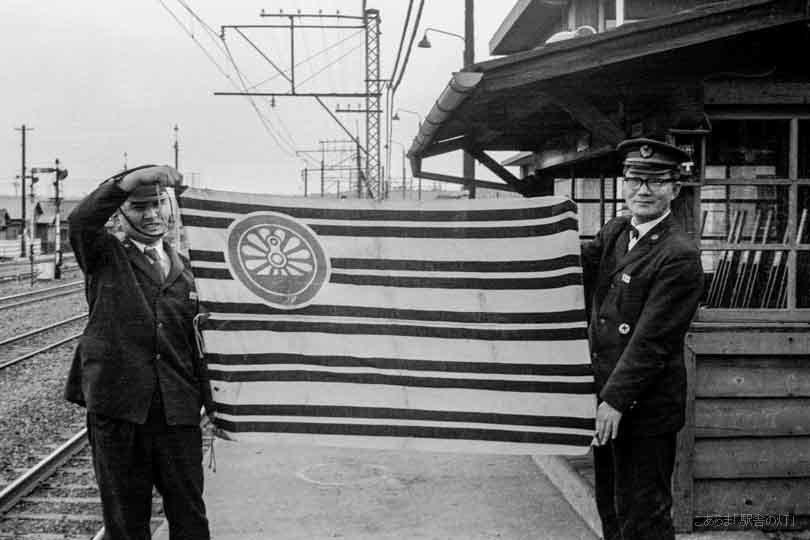
 www.substack-bahn.net
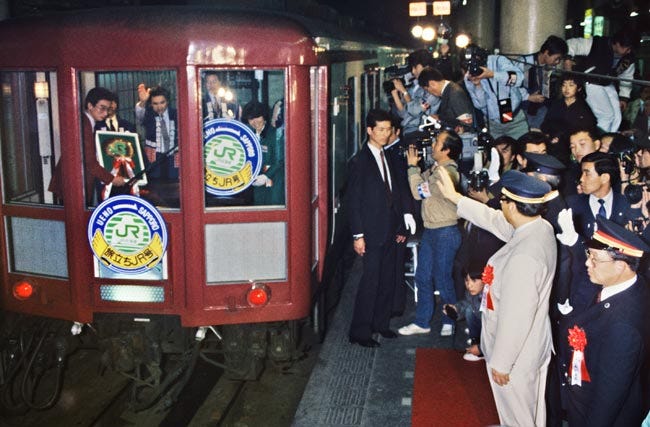 www.substack-bahn.net
== Doublepost prevention - post automatically merged: ==
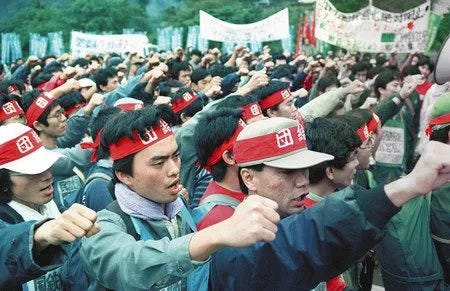 www.substack-bahn.net
The Death and Privatization of Japanese National Railways (Part 1, 1949-1982)
How does a train agency rack titanic amounts of debt?
www.substack-bahn.net
In 1964, the same year JNR opened the Tokaido Shinkansen ten days before the Tokyo Olympics, JNR recorded its first major fiscal deficit. JNR management assured this would be a one-time blip. The deficit grew slowly the next few years then exploded in 1968. Any private corporation would have been well liquidated before 1970, but the public JNR soldiered on as it bled profusely every year. After JNR’s multiple failed internal reforms in the 1970s, cries for accountability and administrative reform sparked a niche elitist movement which sped through a staggering pace. Under such momentum, the monolithic JNR was dissolved and split in 1987, its expansive trackage and massive train fleets split between six regional (and one freight) private Japanese Railways (JR) companies.
Most prosaic explanations diagnose JNR’s downfall in an Edward Gibbons-esque prose: a bloated, rotten, bankrupt public entity corrupted by lazy union workers hastened the need for radical change in the neoliberalism-crazed 1980s. But this has always been too juvenile a history, wholly unable to capture the velocity and weight of the collapse. Economic narratives work better; JNR lost its land transportation monopoly as both passenger and freight transportation slid in market share to private automobiles and trucks. By 1970, cars and trucks would surpass railways in transportation market share, and JNR was unable to overcome their market share decline. But the broad strokes miss out on the fine details.
...
It is the emphasis of this post to prescribe the death of the 38-year-old Japanese National Railways as a political murder, ranging between a mercy killing and an assassination depending on your sympathies for JNR and its conditions. As JNR became insolvent in the 1960s, the Diet and the Ministry of Transport – the two final arbiters of JNR’s annual budgets – refused to allay the situation until the 1980s. Despite attempts at internal reform, JNR was at the whims of Diet politicians who used it as an open check for their own easy political wins. Starting in the 1970s, a small group of politicians, bureaucrats and academics pushed for administrative reform across all of government but only through political savvy was JNR targeted in the open as the sacrificial lamb at the altar of neoliberalism in the 1980s. It took a wily, experienced Prime Minister once derided as the “weathervane” to make the JNR privatization his signature political achievement come true.
...
Increasingly unprofitable local passenger lines, especially on the main Honshu Island, mushroomed in trackage. JNR was obligated by the Diet to operate additional railway lines being built in rural areas with little wiggle room for the corporation to give feedback or object. In 1951, the government established the Railway Construction Council to manage railway construction on behalf of the national interest. For the next thirteen years, the Railway Construction Council ordered JNR to construct 80 new railway lines – in mostly rural areas – which JNR would have to operate indefinitely. This Council had 29 members but only one was a JNR representative. Perhaps more egregiously, the 80 new lines were determined using a plan for a comprehensive national rail network set in 1922 – a whole generation before World War II and the total postwar reshuffling of Japan’s demographics.
In 1964, the government replaced the Railway Construction Council with the Japan Railway Construction Public Corporation to allow the latter to provide funding for railway construction projects in both the public and private sectors.12 The Japan Railway Construction Public Corporation however worsened JNR’s position, as it directly funded new railway constructions which JNR would have to operate. Under the previous Council, JNR were still able to make objections to newly planned railway lines and offer revisions. This mechanism, however lacking to JNR’s bottom line, was stripped away with the arrival of the new corporation. As Smith notes with the new corporation, “the Diet effectively removed the impetus of JNR opposition to the continuation of the policy of building lines which even at the outset were known to be unprofitable.” Adding salt to the wound, Japan Railway Construction Public Corporation continued to use the 1922 framework to lay out future new lines all the way into the late 1970s. By 1980, when the practice was stopped under the new JNR Reconstruction Act, rural routes accounted for 40% of JNR’s total trackage but only 5% of its ridership.
In 1966, JNR reported an operating loss of 123 billion Yen, four times the loss it reported in 1964.15 JNR’s reserves were obliterated. Had it been a private company, JNR would have declared bankruptcy and been liquidated with such a loss. JNR’s capital budget was similarly obliterated in 1967, when JNR’s financing scheme for the Diet-approved Third Five Year Long Term Plan collapsed, leaving JNR responsible for a mountain of high-interest bonds. In 1965, JNR issued large amounts of railway bonds without a government guarantee to fund the plan after Ministry of Finance disapproved entrance to its government-backed Fiscal Investment and Loan Program (FILP).16 The Ministry of Finance effectively balked at the huge spike of annual investments requested by JNR compared to past years, and JNR went its own way to raise funds. Within two years of issuance, JNR was reduced to “issuing tokubetsu (special) bonds to meet the interest payments on its railway bonds.” While the national government began to provide subsidies to ease the capital debt burden starting in 1969 (the operating subsidies would come to rescue in the 1970s), researcher Nobuo Takahashi writes this financing scheme failure as the “direct cause” of JNR’s bankruptcy and downfall.
Despite the alarming consecutive years in the red, the Diet pressed for expansionary spending from JNR throughout the late 1960s and early 1970s. It was financial prudence thrown out the window, but it was sound politics within the contours of the Liberal Democratic Party, which maintained a one-party rule in Japan since 1955. The first decades of LDP’s big tent coalition was founded upon a high and ironclad rural turnout. Keeping its main rivals the Socialist Party at arm’s length from power, the Dietary LDP sought to score easy political wins for their rural or small town constituency, and the path of least resistance often was a new or improved JNR rail line. Many elected LDP members were retired senior bureaucrats who were intimately close to their successors and well-versed in party machine politics.19 The elitist, incestual Japanese bureaucracy which the American occupiers in the 1940s worried would consume Japanese politics turned out to be prescient.
...
JNR’s acquiescence was not due to a lack of effort. In 1968, JNR management proposed to close a large number of its unprofitable local lines, but they were rebuffed by the Ministry of Transport.23 In its deliberations for the Five Year Long Term Plan in 1965, JNR proposed the ability to issue domestic bonds of its own and a revision of the tariff rate to be able to raise passenger fares and freight rates to balance their manageable debt. Both were struck down by the Prime Minister Eisaku Sato, citing concerns of escalating inflation.
...
In 1975, the fourth reform plan proposed workforce rationalization and more government aid but also with a 50% increase in passenger fares nationwide. The fare increase was allowed after the government finally relaxed its tariff rate controls after nearly two decades of suppressed fare increases. Repeated Diet pressures to keep fares artificially low as part of its domestic economic policy contributed to very affordable fares lagging far behind annual inflation rates. A sudden, 20-year-high jump in fare prices angered riders and depressed JNR’s ridership as choice riders in larger metropolitan areas opted for now-cheaper private railways (they were adjusting fares accordingly in the same timespan) or resorting to use of private automobile. To keep up its debt obligations and catch up to the rate of inflation, JNR running under relaxed tariff controls increased passenger fares between 4% and 16% and freight rates — despite transport volumes virtually collapsing behind the truck industry in the 1970s — between 3% and 10% every year from 1978 until 1987.
The reforms targeted inside the house as well. Arguably the most important reform plan of the 1970s was the Productivity Increase Movement (Marusei Undon), a multi-year effort declared by management to reduce labor waste, improve productivity and synchronize management-labor relations. The main objective for the movement was to offload much of a 430,000 strong workforce which was aging and soon in need of pensions — something a destitute JNR had little reserves to fund.
The Productivity Increase Movement’s legacy, however, was the destruction of most remaining goodwill between management and the labor unions – and among the various JNR labor unions themselves. A new moderate and pro-management labor union Tetsuro emerged during this time period and rapidly expanded due to its acquiescence to the Productivity Increase Movement and warm relationship to management. The pre-existing unions, Kokuro and Doro, were radicalized by a hostile management and Tetsuro’s concurrent moves to alienate and fracture their labor front. Between 1973 and 1975, unions held illegal slowdowns and walk-outs to protest against its management.
Riders across Japan did not handle the sudden disruptions well; during the March 1973 slowdown, enraged commuters stranded at Ageo Station in suburban Tokyo rampaged and destroyed the station, took hostage the stationmaster and stoned the unmoving trains. A month later, another slowdown strike led to 26 stations being vandalized and destroyed, with an undisclosed amount of trains set on fire. Popular discontent against JNR unions for these actions began to brew from these impacts, and such bitter memories would prove to be a powerful source for anti-public corporation sentiment during the lead-up to JNR privatization in the 1980s.
Starting in 1977, the government began relaxing many of its fiscal restraints put against JNR for almost 30 years. The Diet relinquished its controls on the tariff rate altogether and ended restrictions on investments outside the mainstream railway business in 1977. In 1980, the JNR Reconstruction Act passed by the Diet finally released JNR from the obligation to help construct and operate new rail lines and abandoned the 1922 framework used to plan new, unprofitable rail lines in rural areas. Also in 1980, the JNR Management Improvement Plan was drafted with the intent to establish a fiscally sound JNR operation by 1985. The days of JNR’s expansionary modus operandi were over, albeit very overdue. The delay would prove indeed too late; the 1980 plan would be the last reform plan from JNR to fix its finances before its privatization seven years later.
...
Despite the struggling rural lines and a decline in transport market shares, JNR through the 1960s and 1970s maintained the high level of service frequency, cleanliness and organization renowned internationally to this day. It is evidenced by the continued growth in ridership in the Tokaido Shinkansen and its trunk lines, mainly between and in the Tokyo and Osaka metropolitan areas.
...
Two men at the helm of the Second Rincho and the Fourth Subcomittee steered the ship. Toshiwo Doko was appointed by Prime Minister Suzuki to chair the Second Rincho. Doko was the former President of Federation of Economic Organizations (Keidanren), Japan’s largest and most powerful big business association. Doko was ardently pro-business and anti-taxation and came into his new appointment with a “telling conviction” that reform without taxation was the tonic which would spur new prosperity to the nation. His leanings were reflected in the Second Rincho’s composition, as business interests and a journalist from the right-wing newspaper Nikkei Shinbun created the majority over labor union delegates.
The contours of privatization began to take shape under the Fourth Subcommittee and its chair Hiroshi Kato, who reported to Doko. Kato, a professor at Keio University, sought to compose his subcommittee free from bureaucratic interests; only five of the 16 members were former and current public sector employees. While Kato himself was initially not convinced of privatization for JNR, his subcommittee included academics with an extensive record advocating for privatization or criticizing JNR’s freight business model. The Fourth Subcommittee submitted its first report in April 1982, submitting – for the first time in any reform group so far – recommendations to privatize and divide JNR into sectional companies. Three months later, the subcommittee submitted another report, officially confirming its stance for the first time that JNR be broken up.
JNR’s board and upper management’s reaction at the time was opaquely muted and delayed in public, but internally it clearly showed a “high degree of complacency and lack of concern” according to Smith. They also seemed to be rather unaware of enemies already inside the gate. Three mid-level executives, eager for reform, would covertly work with Doko and Kato to pressure JNR for systemic change and soon lead an internal campaign to dissolve JNR. Known as the San Nin Gumi (Group of Three), the three executives did not believe the 1980 Management Improvement Plan would succeed and held a longstanding antipathy toward JNR labor unions.
While the San Nin Gumi were nominally part of a larger pro-reform faction inside JNR, the three conspirators took things further. In an early-stage senior management meeting to discuss how to respond to the Second Rincho, the San Nin Gumi proposed to their higher-ups the dissolution of JNR and dismissal of all its employees to start over and then left their seats. After the theatrics which shocked JNR senior management, “there were no organized, calm discussions within the JNR concerning what the future national railway should be like,” according to a former JNR executive.
...
In June 1982, a month before the Fourth Subcommittee’s July report, the LDP Mitsutaka Subcommittee submitted its own report, concluding that systemic changes, including privatization, should be supported on the condition that the 1980 Management Improvement Plan would not succeed. The conclusion shocked much of LDP’s leadership and rank-and-file, as it crossed the Party’s unofficial line and sided with the Second Rincho. With alignment between the reformist-minded Second Rincho and ostensibly the LDP, the ammunition — at least in the working papers department — to privatize and split JNR was fully stocked. After the July report from the Fourth Subcommittee officially calling for privatization, preparations immediately began to form a JNR Reform Commission (which would begin the next year) to dictate the recommendation into law. In September 1982, the Suzuki government announced firm plans to reconstruct JNR within five years.
The Death and Privatization of Japanese National Railways (Part 2, 1982-1987)
How does a national train agency die?
www.substack-bahn.net
I have had to make two posts due to the length of the post.In the winter of 1981 and spring of 1982, JNR privatization was still nascent idea incubating deep within the committee meetings of the Second Rincho and LDP’s own Mitsuzaka Subcommittee. But media interest began to snowball around the new idea, and they created their own velocity by openly and positively discussing privatization. Long a supporter of JNR labor unions, the media turned on the unions to air anti-labor grievances, with mass newspapers leading the charge on investigating the sudden issue of the “collapse of JNR work discipline”.
When a train crashed in Nagoya in March 1982 due to a drunken engineer driving a diesel locomotive into a passenger train and injuring 10, the newspapers surprised JNR insiders with its ferocious criticism, a deviation from relative sympathetic positions of the past despite worse accidents. The pressure was unrelenting and hyperbolic; magazines began labeling JNR and its unions was enemies to the nation, as evidenced by a April 1982 magazine piece titled “JNR Labor-Management Relationship: A Traitor Theory to the Country”.
...
The JNR Reform Commission began meeting in the summer of 1983, but according to Smith, “the reform war has already been won”. The opposition party, the Socialists, and other leftist minority parties in the Diet aligned themselves with JNR’s two most left-leaning labor unions, Kokuro (The National Railways Labor Union) and Doro (National Railway Locomotive Power Union), and voiced their fundamental opposition to JNR privatization and dissolution. However, they were electorally outmatched by LDP. Despite many LDP Diet members’ private concerns on how JNR privatization may impact business dealings made with close LDP business donors, they stayed quiet behind party lines and on [Prime Minister] Nakasone’s promise JNR privatization and division would help deliver an even bigger victory at the next General Election.
...
In 1984, JNR reported 3.88 trillion Yen in revenue. Nearly 81 percent of its total revenues came from passenger revenues – and a third of passenger revenues came solely from the Tokaido and Sanyo Shinkansens which connected Tokyo to Fukuoka via Osaka. But it reported expenses of 5.2 trillion Yen, leaving JNR with the total deficit of 1.65 trillion Yen. It was the 19th consecutive year JNR reported deficits; its cumulative deficit was 12.2 trillion Yen, and its total long-term debt came to a whopping 21.8 trillion Yen. (In addition to ‘exceptional’ debts of more than 10 trillion Yen) Of the 245 passenger trunk and local lines JNR operated, only the Tokaido-Sanyo Shinkansen and seven lines between Tokyo and Osaka made profits.
In 1984, as the Reform Commission worked, initial promises made with privatization were being altered as reality set in. In an interim report to Nakasone in August 1984, the Commission wrote, for the first time, that privatization would not provide a complete solution to JNR’s long-term debts. This ran contrary to previous statements that JNR’s indebtedness was precisely the reason for the need for privatization. Instead, the Commission promised to deliver methods to “handle a certain amount of JNR’s liabilities by depending on taxation of the people.”
In August, the minority Socialist Party announced its own JNR reform plans. The Socialist plan listed opposition to JNR privatization or division; no employee layoffs; 30% of capital costs to be funded from the private sector; and JNR’s long-term debts and unprofitable areas of operations would be taken over by the state. However, the Socialists did not officially adopt it into the party’s platform until 1986, due to heavy resistance from Kokuro opposing any plans that entertained privatization, for or against. As the party representing Japanese labor, the Socialists could not move forward without Kokuro’s buy-in, but the Socialists ultimately adopted the plan without Kokuro support in preparation for the 1986 General Election.
With the LDP and Socialists taking sides on the JNR issue, labor unions and bureaucratic ministries also lined up their support. The first move came from the management-friendly JNR union Tetsuro (Japan Railway Workers Union), which in June announced its support for the Reform Commission. In October, the Ministry of Transport – long the neglected half-brother of JNR – also expressed support for JNR’s privatization, delivering a blow for JNR leadership who by then were desperate for allies inside government. The Ministry came to the decision on three reasons: realizing Nakasone will not be budged; its own regulatory powers will not be impacted by privatization and division; and to get even with JNR executives, who historically looked down at the Ministry as second fiddle in the transportation pecking order in the nation.
...
In February, Nakasone warned the JNR leadership to “take responsibility” for the agency’s fiscal crisis. The “final straw” came a few months later when the Prime Minister learned Ota contacted the Asahi Shinbun to publish materials supportive of the anti-privatization JNR Board. Nakasone sacked Nisugi and Ota and their supporters in June 1985 and replaced them with pro-privatization bureaucrats. To back Nakasone’s Pyrrhic victory, twenty JNR managers – included the infamous San Nin Gumi three – published a statement in June titled “We Feel This Way Towards JNR Reform'' lambasting JNR’s own Reform Plan and advocating for full privatization and division. The new JNR leadership rewarded the San Nin Gumi with promotions to senior posts the following month.
In July, the JNR Reform Commission completed its final report on privatization and division. Now it was time for the Diet to enact policies recommended in the report. The deadline to dissolve JNR was set to April 1, 1987.
Earlier in the year, the Nippon Telegraph and Telephone Corporation (NTT) and the Japan Tobacco and Salt Public Corporation (JTSPC) – were officially privatized from state monopolies to publicly traded stock companies. A mere five years ago, in 1980, the three San Kocha companies were in equal standing for reform in the eyes of administrative reformers of Doko and Kato. Within five years, JNR became the predominant focus of the movement as the NTT and JTSPC’s own privatization processes occurred with little resistance or fanfare. As NTT and JTSPC reached the end of their privatization journey, JNR was still hurtling toward the finish line. A few more dominos needed to fall before JNR’s demise.
Between 1975 and 1986, JNR shed nearly 150,000 workers from its payroll, shrinking from 432,200 workers nationwide to 277,020 eleven years later. The shrinkage had devastating effects on its once impregnable labor unions. Whatever intra-JNR labor solidarity remained by 1986 had been stripped in the ongoing labor reductions, and labor unions sought to find high ground for themselves in the incoming post-privatization future, one that forecasted 70,000 more job reductions within the next year.
In January 1986, the historically militant and left-wing labor union Doro declared its support for JNR privatization and division, joining the management-friendly labor union Tetsuro. Doro’s bending of the knee was shocking; the union steadfastly resisted privatization along with Kokuro for years and harbored more far-left radicals in its ranks than Kokuro. But Smith notes Doro union’s leader, Akira Matsuzaki, privately signaled JNR management as far back as 1981 he was willing to compromise to prevent the destruction of his union and avoid mass layoffs. Five years later, Matsuzaki’s Doro abandoned all further strike action and agreed to cooperate with management on voluntary retirements and job transfers prior to April 1, 1987. JNR and Doro further agreed to drop the latter’s legal claims of JNR unfair labor practices for the former's lawsuit for damages in previous illegal strikes.
Kokuro, the largest JNR labor union, now was the last holdout. Despite its executive leadership open to working with JNR management, its union membership staunchly opposed any and all proposals to give in. In March, the membership voted against supporting the Socialist Party’s JNR reform plan. In October, the leadership pleaded to let them negotiate with JNR but was overwhelmingly rejected in a vote. The leadership resigned following the failed referendum, and a new more hardline leadership declared its intent to continue fighting. For their recalcitrance, Kokuro members would soon pay the heaviest toll among all JNR unions in the job rationalizations in the lead-up to privatization.
Following the JNR Reform Commission’s final report in July 1985, the Japanese Diet set to legislate proposals for JNR privatization and division throughout 1986. In February and March, the Nakasone Cabinet drew up eight bills dissolving JNR and privatizing the sectional companies in its replacement by April 1, 1987. The bills were temporarily suspended for the General Election in July; Nakasone’s LDP won 300 out of 512 seats, the most seats ever won in Party history before and since. With a 43-seat majority, the LDP swiftly brought the eight bills back to the Diet in September. After former review of the bills, the eight JNR Reform Laws were passed on November 28.
With eight strokes of the pen, the Japanese National Railways – one of the world’s great railway agencies – would operate for four more months and then cease to exist when midnight struck on April 1, 1987.
== Doublepost prevention - post automatically merged: ==
The Rise and Fall of Japan's National Public Railway Labor Unions
A forgotten powerhouse which shaped Japan's present-day railways
www.substack-bahn.net
JNR’s unions were diverse and massive, with a membership of 432,000 in 1975 at the zenith of its powers. As one of the largest public sector employers, JNR workers wielded some of the strongest unions in Japan. When labor unions were legalized by Douglas MacArthur in his first months as Supreme Commander of the Allied Powers in 1946, the unions gravitated toward radical left-wing politics heavily influenced by Communists released from prison by MacArthur. Its longstanding ideology and willingness to use illegal work strikes on a national scale granted JNR unions considerable powers – and many enemies. In the 1980s, with Prime Minister Yasuhiro Nakasone’s critical support, anti-labor businessmen, academics and bureaucrats united under JNR privatization to break labor’s back. JNR labor unions of the 1980s were thoroughly out-maneuvered in the political dissolution of JNR into a rebirthed JR and left crushed by the transformation.
Japan’s national rail unions are now a fraction of its former selves. The National Railways Labor Union, or Kokuro, was once the most populous, powerful and militant JNR union with a membership of 245,000 in 1982; in 2016, they reported 9,000 members. JR Rengo is now the largest current railway union under the privatized JR companies at 74,600 members as of 2020, a fraction of Kokuro’s during JNR’s final years. While Kokuro’s successors have been reduced to a fraction in volume, its ferocity did not go extinct, as demonstrated by an exhaustingly long legal fight between terminated union employees and JR companies lasting from 1990 until 2010. The unions continue to make noise to this day.
...
Too often, observers and admirers of Japanese railways underplay its labor workforce as a reason for its success, falling back on infantilizing stereotypes as inordinately obedient or robot-like. The Japanese railway unions’ organization and militancy may surprise readers subscribed to the aforementioned underplaying.
...
In the 1950s and 1960s, JNR workers began splintering and creating their own labor unions. In 1951, The National Railway Locomotive Power Union, or Doro, was created for highly skilled locomotive engineers, power vehicle crews and some train operators; despite a more specified “skilled” labor union, Doro would work in tandem with Kokuro through the JNR era in labor fights against management. But not all JNR workers were supportive of Kokuro and Doro’s methods. In 1957, an unannounced labor strike in Niigata was the catalyst for the creation of a splinter faction opposed and critical of the Kokuro-Doro orthodoxy. This splinter group found kindred spirits across Japan and soon united with recent defections from the Japanese Socialist Party, both searching for a political future where labor and management can more harmoniously work together. In 1968, this labor coalition inside JNR became the Japan Railways Workers Union, or Tetsuro. Tetsuro’s origins as anti-Kokuro and Doro defectors instilled their instincts to work first with management and resist participating in Kokuro-led illegal strikes. The continuous infighting between labor union and an inability to present an unified labor front to JNR and, more importantly, national politicians in the Diet would prove an Achilles heel for all three unions in the 1980s.
Beginning in the late 1960s, JNR began to report exponentially higher deficits every year. To stem the financial hemorrhage, JNR launched the Productivity Increase Movement (Marusei Undon) as a tourniquet to reduce employee headcounts and its related costs, such as pension obligations. In 1975, JNR employed a total of 430,051 employees – twice more than the figure cited by a pro-privatization committee in 1985 to staff JNR adequately for full national rail operations. Employees at the time also averaged more than 20 years experience working for JNR; nearly half of JNR employees in 1976 were over the age of 45. Coupled with a freeze on spending for hires and reducing staffing levels, the Productivity Increase Movement sought to increase individual employee productivity and wrangle the unions under a more cooperative partnership to overcome JNR’s financial challenges. As one description goes, the Movement hoped to be a “spiritual movement to encourage a revolution in consciousness among employees.”
If anything, the Movement sparked a streak of rebelliousness among Kokuro and Doro members. Both unions filed numerous lawsuits against JNR managers citing unfair labor practices, such as pressuring union employees to quit their membership for a promotion or salary increase. Union-loyal train operators expressed their anger by tagging their own trains with anti-Productivity Increase Movement slogans, such as “overthrow Marusei” or christening a train the “Marusei Crusher”. Doro, with a membership of 40,000, were especially involved — it harbored members in the forefront of the Japanese New Left movements of the 1970s and thus leaned more leftist than Kokuro’s general membership. Tetsuro, meanwhile, supported the Movement by wearing ribbons to express gratitude toward passengers. It stood in stark contrast to Kokuro’s own ribbons, commonly worn to support the union’s right to strike, an increasing demand among its ranks.
On October 8, 1971, the Productivity Increase Movement ceased its operations after the Diet’s Labor Committee of Public Enterprises ruled JNR management did in fact engage in unfair labor practices. Three days later, JNR President Ei Isozaki publicly apologized at the Diet for the charges. It was a major victory for Kokuro and Doro, who demonstrated that sustained resistance against JNR mismanagement is not only possible but successful. Emboldened by this episode, the 1970s would crescendo into an all-out labor-management battle, dramatized in newspapers and on television by the broken glass, burning trains and violence at the stations — all of which would deeply wound JNR’s already hemorrhaging finances and its sterling reputation in the Japanese cultural consciousness.
In 1948, the Diet under MacArthur’s supervision revoked the public sector union’s right to go on strikes. Over the next 25 years, Kokuro and Doro repeatedly sought for the return of this right, initiating the first illegal nationwide strike in 1961. Matters were complicated further when Japan’s Diet ratified the Freedom of Association and Protection of the Right to Organise Convention written by the United Nations’ International Labour Organization in 1965.19 Kokuro and Doro felt that the Convention guaranteed their right to exercise their labor rights, including the right to strike. After the Productivity Increase Movement died in 1971, the unions focused their energies into regaining their right to legally strike.
...
Kokuro and Doro began agitating for a nationwide illegal strike to occur in the tail end of 1975. The unions believed that a full-fledged nationwide strike would paralyze Japan, and bring the new Prime Minister Takeo Miki and the Liberal Democratic Party to concede their long-sought right to strike. Miki, however, willing to play hardball, pledging to “break the cycle of strike and punishment” of recent labor strife. By October 1975, the unions and leadership were at an impasse, with the former reporting to its workers via the union newspaper that they will “fight for the fate” of JNR in a strike that will last 10 days or more. The foreseen battle commenced on the morning of November 26, and JNR’s entire operations immediately froze up. Only 3 percent of its passenger trains ran the day of and nearly all freight trains were inoperable.
Three groups buffered the labor strike’s blows. First, the Miki government did not relent quietly into concession. To combat the impact of freight rail’s absence, and the possibility of food shortages in urban areas, the government encouraged then mandated truck companies and associations to transport foods in lieu of freight trains. The strike’s impact on transporting goods was proven minimal, at least in the popular commerce spaces: one customer at the famous Tsukiji Fish Market in Tokyo told a TV interviewer that perhaps there was more inventory than usual during the strike than before. The second group was private railway companies who were not involved and thus ran normal service. Whereas Tokyo — with a far more extensive JNR network in its capital region — were heavily impacted by the strike, the Keihanshin region of Osaka and Kyoto saw much less inconveniences due to a wider presence of private railway operators. On November 28, the third day of the strike, labor unions representing private railways went on a 24-hour solidarity strike – but the impact was minimal and inconsistent based on the railway. There would be no more shows of solidarity from the private railway unions to supply more leverage toward Kokuro and Doro. The third group was Tetsuro, the lone JNR union who did not assent to the strike. According to a Tetsuro representative in a post-strike briefing at the Diet, the union instructed its members to go to work during the strike. In response to crossing the picket line, Tetsuro workers were threatened, harassed and attacked by pro-strike union members and sympathizers.
On the tenth day on December 3rd, Kokuro called off the strike. In their internal newspaper, the union leadership wrote it would be “wise to rebuild the struggle for the right to strike for next spring” and took pride that “the government and the Liberal Democratic Party were driven into a corner by this struggle.” But the 1975 strike would prove to be the apogee of Kokuro-Doro might. There would be no more strikes at the scale and length as November-December 1975. In 1976 and 1977, the unions laid low, striking for less than ten days each. Two months after the 1975 strike, JNR sued Kokuro and Doro for compensation of 20.2 billion Yen in damages for the 10-day rail stoppage. Kokuro and Doro began to bleed members after the failed 1975 strike, and Tetsuro ascended as the most politically secure JNR labor union.
The failure of the 1975 strike shook JNR unions to the core, who finally realized they no longer commanded a monopoly of Japan’s transportation choices. The private automobile was king in Japan, and private railways in key urban areas fragmented a dwindled monopoly in rail. Earlier in 1975, an unrelated 50 percent fare increase – a new Diet policy to sharply make up lost finances due to a 20-year pause in fare increases nationwide – depressed JNR ridership further as users opted for driving a car or taking the now more relatively affordable private railways. The major fare increase and continuous labor disruptions marked JNR as a public agency not only financially unstable but culturally as well. This sentiment was keenly expressed by exasperated bureaucrats and politicians who sought to reconstruct Japan’s public finances in the new economic system gaining traction in the West: neoliberalism. Killing off Japan’s militant labor unionism would soon surface as a key desired effect in their neoliberal laboratory of the 1980s.
In 1970, Kokuro outnumbered Tetsuro membership nearly four to one, with 270,000 compared to 70,000, respectively. By the end of the decade, Tetsuro more than doubled to 150,000 members, as Kokuro lost tens of thousands of members. A major factor in the unions’ reversal of fortune was JNR management’s thinly veiled discrimination against Kokuro members, such as demanding members to withdraw from the union and promoting other union members over Kokuro members. Kokuro filed on behalf of its members 30 times of these alleged unjust labor practices to the Public Labor Relations Committee, but only two cases were accepted for hearing. Frustrated by the squeeze, many members voluntarily left Kokuro. This was only the beginning of the siege against JNR’s organized labor.
The anti-labor turn in the Japanese mainstream came from two fronts starting in 1981 and through 1982. First, the administrative reform movement was in full bloom in its efforts to privatize and split JNR. Led by pro-business figureheads like Toshio Doko and Hiroshi Kato, the prospect of JNR privatization became a real possibility in 1982 and became a main platform for new Prime Minister Yasuhiro Nakasone. Second, the mass media: long sympathetic to unions across the political spectrum, the nationally syndicated newspapers all turned harshly against JNR employees and their unions. Reporting on the alleged “collapse of JNR work discipline”, the media pointed out JNR employees as lazy or non-present at the job, unserious, scheming for overtime and holiday pay, and careless – and its unions as abetting such behavior. In some papers, JNR employee behavior became symbolic for a socioeconomic rot present in Japan, titling such hypotheses as “A Traitor Theory to the Country” or “If We Continue in this Manner, Japan Will be Bankrupt.”
Kokuro and Doro leadership were locked out of conversations happening deep within the Japanese bureaucracy incubating the nascent proposal of JNR privatization. When the original administrative reform commission (also known as Second Rincho) formed in 1980, pro-business representatives made the majority over labor delegates. Three years later, when the JNR Reform Commission was created to officially begin the task of privatization, three of the five members were the most pro-business voices on the Second Rincho. Kokuro’s Secretary-General in 1982 hinted his frustrations at the shadowy process, saying “there is the [Second Rincho], but there is no government; there is the government, but there is no Diet; and there is the Diet, but there are no people.” The unions would remain cast out through the entire process inside JNR Reform Commission under Nakasone’s tight vigilance. And whatever intra-union solidarity there may have been was shattered for good in 1984, when Tetsuro backed privatization and the Reform Commission’s work.
1985 brought a series of bad news for Kokuro and Doro. First, former Prime Minister Kakuei Tanaka – the only man inside the Liberal Democratic Party who could dare oust Nakasone – suffered a massive stroke and was unavailable. Second, Nakasone fired all privatization-resistant JNR executives, including the President, in June. Third, the JNR Reform Commission finished its deliberations and presented full policies for privatization and division with the deadline of April 1, 1987. But the worst news of the year was to come in the early morning hours of November 28, 1985.
A small Doro splinter chapter in Chiba, a city east of Tokyo, declared a 24-hour strike, paralyzing JNR train service between Tokyo and Chiba. What was planned as a small wildcat strike turned into the biggest single-day shutdown in JNR history since 1968 (even more paralyzing than the 10-day national strike in 1975) due to the unsolicited sympathy participation of a far-left revolutionary group called Middle Core Faction, or Chukaku-ha. The Middle Core Faction participants vandalized 32 facilities around Tokyo and Osaka, and most importantly, severed coaxial and optical communications cables which powered the national train control computer systems. As a result, 20 train lines in Tokyo and 2 lines in Osaka was completely inoperable for the morning commute, leaving four million commuters stranded in the morning and nearly 11 million riders impacted in total. In addition, masked saboteurs in helmets threw gasoline bombs inside Asakusabashi station in central Tokyo, setting the station ablaze, along with 26 additional stations in the early morning hours.
Forty-eight participants were arrested for the attacks, but the damage was done reputationally against the unions. Both Kokuro and Doro condemned the “anti-social” attacks and apologized for the rider impacts. The minority Socialist Party canceled their solidarity press conference. Kokuro’s spokesperson worried this will trigger a “harsh response from the government” and this will impede on its signature-gathering effort to stop JNR privatization. The Nakasone government indeed responded strongly by dismissing 20 Doro-Chiba workers for the wildcat strike. (In comparison, only 15 were fired after the 1975 strike)
At the end of fiscal year 1986, JNR employed 276,000 workers, and that was a major issue for the JNR Reform Commission. The Commission determined that the new JR Group, by their creation date of April 1, 1987, should optimally employ 183,000 workers, 93,000 more than current staffing a year out. The year prior, 48,000 JNR employees already retired voluntarily thanks to improved pension conditions offered to leave the railways. In 1986, the national Pension Fund sweetened the offer further to include a special allowance of additional ten months’ salary on top of the new pension conditions. As a result, 53,000 more employees took the offer and left the workforce.
Losing 100,000 workers within two years was a cataclysmic blow to Kokuro and Doro which were now struggling for self-preservation. Doro — long the more left-wing union of the two — caved in January 1986, voting to back JNR privatization and division. The union’s president Akira Matsuzaki recognized as far back as 1981 that privatization can mean destruction of his union and worked for five years to convince his membership to put their arms down for survival. In a deal with JNR, Doro gave up all further strike actions, agreed to cooperate on voluntary retirements and job transfers before privatization and drop all legal claims of JNR unfair labor practices. JNR, in return, dropped its lawsuits seeking damages from previous strikes.
Kokuro was now alone. Unlike Doro, they remain resolved in the struggle. For two years, they have long resisted the Socialist Party’s alternative JNR reform plan and rejected it once more in March 1986; the Socialist Party carried the reform plan in its General Election platform later that year without Kokuro’s blessings. In October, nine months after Doro’s concession, Kokuro’s leadership begged its membership to concede and allow negotiations with JNR before privatization. In a referendum, its membership overwhelmingly rejected negotiations, balking at the requirement that Kokuro will drop all outstanding unfair labor practice claims. In response, the pro-leadership faction seceded in February 1987 to join Tetsuro and Doro in their pro-privatization stance.
Prior to privatization on April 1, 1987, the new JR companies were allowed to re-employ all JNR workers using new criteria set by its management. The companies used the clean slate to draft “requirements” in the re-hiring process to exclude workers previously opposed to privatization and allowed themselves to be extremely selective with their new organization. By April 1987, JR companies had 40,000 surplus workers from JNR, and used creative solutions to re-employ nearly 24,000 of them. Thousands more voluntarily retired or took outside employment. The remaining 7,600 JNR surplus workers rejected by JR companies and who chose not to leave the railways were transferred to the newly created JNR Settlement Corporation, a new body to house JNR’s titanic long-term debt and liabilities away from the newborn JR companies. The vast majority of these 7,600 were Kokuro members, the direct result of a “policy of active discrimination against Kokuro members” by JR officials ushering in a new era.
The total re-shuffling of the JNR workforce created new labor unions suitable for the new era. Doro and Tetsuro fused into one union, the Japan Confederation of Railway Workers’ Union (Tetsudororen or JR Soren) totaling 133,000 members. Kokuro’s pro-leadership faction created its own union, Japan Railways Industry Workers Union (Tetsusanro) as well. Kokuro, once the largest and mightiest labor union of 270,000 strong, was by April 1987 down to 34,000 members with nearly 7,000 on the unceremonious chopping block. At the outset of the JR era, JR Soren agreed with management that the new unions will not strike or disrupt services as JR took shape. The mass labor reductions and back-breaking of militant unions and JNR instilled unprecedented docility and anxiety among its workforce, an aimed achievement for JR management, according to one JR East executive:
"Dividing Japanese National Railways and making a private management system was a huge trial for us…Certainly the Heisei property [of the 1980s] contributed to our satisfactory management, but the employees’ attitudes made them accept the facts. The sinking of the Japanese National Railways, which was a symbol of a ‘ship which could never be sunk’, and the employment anxiety that between 70,000 and 80,000 employees out of 280,000 had to be fired, helped their attitudes further."
...
On April 1, 1990, JR’s third birthday, 1,047 workers still left over from the JNR era and employed under the JNR Settlement Corporation were ultimately fired. They were the remaining litter of the 7,600 surplus workers rejected from re-employment by JR, did not retire, did not take an outside job, or were not deemed hirable after a three-year re-employment program under the JNR Settlement Corporation. Of the 1,047 fired, 966 were Kokuro members.
For the post-JNR labor union front in a new JNR-less world, the fight for the 1,047 dismissed workers became a rallying point for labor justice. The dismissed Kokuro members alleged their dismissal stemmed directly from their steadfast refusals to leave the union and filed complaints for unfair labor practices with regional Labor Commissions. The fight between the dismissed workers and JR companies escalated into the courts in 1994, and it would remain there for more than 16 years. Interventions and court decision could not stop the struggle; a collapsed deal in 2000 by the Liberal Democratic Party and other left-wing parties to re-hire the dismissed workers and a 2003 Supreme Court split decision ruling the JR companies bear no liabilities despite found unfair labor practices failed to end the legal conflict. In 2010, the Japanese government brokered a settlement deal: JR companies would pay 904 dismissed workers 20 billion Yen (roughly $225 million), or roughly 22 million Yen (or $250,000) per person, in exchange for dropping all existing lawsuits. (The numerical difference between original 1047 and 904 plaintiffs is due to the Doro-Chiba splinter union refusing the offer and 60-plus plaintiffs dying during the 20-year struggle.)
Labor unionism in the JR era has remained in flux and fractional compared to what it once was under JNR. JR Soren, the Tetsuro-Doro fusion in 1987, were supplanted as the dominant JR union by JR Rengo in the early 1990s, formed over disagreements to JR Soren’s threats of a nationwide strike. As Soren leadership were dominated by ex-Doro members, JR Rengo assumed reins as the ideological heir to Tetsuro and its pro-management ideology. Allergy to mass strikes is now the standard for JR unions; in 2018, the JR East branch of JR Soren lost 70% of its membership in three months after its leadership announced its plans to strike. The union apologized for its plans and coaxed its dissidents to return to the membership.