
• Our new ticketing site is now live! Using either this or the original site (both powered by TrainSplit) helps support the running of the forum with every ticket purchase! Find out more and ask any questions/give us feedback in this thread!

1987 Glanrhyd Bridge collapse

Status
Not open for further replies.

90sWereBetter

Member
Joined
13 Nov 2012
Messages
1,046
Location
Lost somewhere within Bank-Monument tube station,
While keeping up with Storm Eunice, I've been reading up on this disaster, and I have a few questions which the all-knowing Oracle doesn't address

Some of the news reports from the 30th anniversary suggest that the front carriage "broke away and was swept downstream", yet it appears from photographs on Google that the carriage was submerged at a right angle to the bridge remains and second coach. I'm guessing that the journalists were dramatising this, but either way it was an unimaginably horrific way for the driver and the three passengers to go. :(

Was the train running on time or later than usual due to the need to survey the line?

Given how remote the bridge is to any main roads, how were the carriages eventually recovered, or were they broken up on site after the waters receded?
 
Sponsor Post - registered members do not see these adverts; click here to register, or click here to log in
R

RailUK Forums

Cowley

Forum Staff
Staff Member
Global Moderator
Joined
15 Apr 2016
Messages
18,883
Location
Devon
While keeping up with Storm Eunice, I've been reading up on this disaster, and I have a few questions which the all-knowing Oracle doesn't address

Some of the news reports from the 30th anniversary suggest that the front carriage "broke away and was swept downstream", yet it appears from photographs on Google that the carriage was submerged at a right angle to the bridge remains and second coach. I'm guessing that the journalists were dramatising this, but either way it was an unimaginably horrific way for the driver and the three passengers to go. :(

Was the train running on time or later than usual due to the need to survey the line?

Given how remote the bridge is to any main roads, how were the carriages eventually recovered, or were they broken up on site after the waters receded?

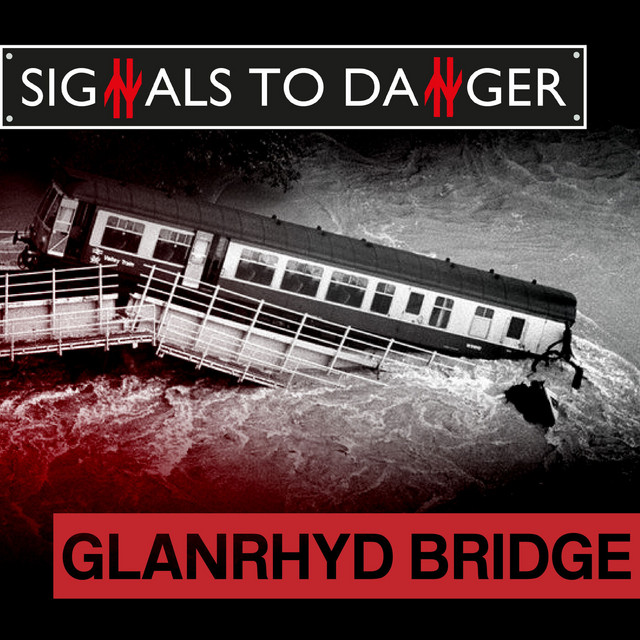
Friend of the forum Dan Fox (@tpfx89) did a well researched episode of his podcast on this awful event. It’s well worth a listen because he covers some of the things you’ve asked about.
Here’s the link:


edwin_m

Veteran Member
Joined
21 Apr 2013
Messages
28,613
Location
Nottingham
While keeping up with Storm Eunice, I've been reading up on this disaster, and I have a few questions which the all-knowing Oracle doesn't address

Some of the news reports from the 30th anniversary suggest that the front carriage "broke away and was swept downstream", yet it appears from photographs on Google that the carriage was submerged at a right angle to the bridge remains and second coach. I'm guessing that the journalists were dramatising this, but either way it was an unimaginably horrific way for the driver and the three passengers to go. :(

Was the train running on time or later than usual due to the need to survey the line?

Given how remote the bridge is to any main roads, how were the carriages eventually recovered, or were they broken up on site after the waters receded?
Have you seen the accident report? I'm skimming it now and there is a mention of the train being late. It appears the front car shifted some time after entering the water, and this was probably why some people could get out through the gangway connection but those following were unable to. It does mention the leading car being "swept away", but a crane later recovered both it and the bridge wreckage from a single position, so it can't have moved very far.


I report for the information of the Secretary of State for Transport, in accordance with the Direction dated 16 November 1987, the result of my Inquiry into the accident to a passenger train which occurred on 19 Octoher 1987 at Glanrhyd between Llandeilo and Llandovery in the Western Region of British Railways.
 

Mcr Warrior

Veteran Member
Joined
8 Jan 2009
Messages
17,185
I believe that it would be correct to assert that the frontmost of the two car unit at the 1987 Glanrhyd Bridge accident was still tenuously attached to the rear unit by a fragment of the flexible gangway, but, due to the power of the river water, the front car had suddenly been turned on its side, pushed at right angles to the orientation of the bridge, and crucially was now completely underwater.

From the perspective of any persons attempting rescue via the rear carriage, it would appear to have been "swept away".

Hopefully the photo below makes this a little clearer.

train.jpg

(Photo of aftermath of 1987 Glanrhyd Bridge accident. Source: South Wales Guardian)
 

Ash Bridge

Established Member
Joined
17 Mar 2014
Messages
4,214
Location
Stockport
That seems to be a fair assumption @Mcr Warrior, perhaps the propelling effect of the rear driving motor car of the unit played a significant part in this also once the front end of the lead car met some resistance?
 

edwin_m

Veteran Member
Joined
21 Apr 2013
Messages
28,613
Location
Nottingham
That seems to be a fair assumption @Mcr Warrior, perhaps also the propelling effect of the rear driving motor car of the unit played a significant part in this also once the front the lead car met some resistance?
The report indicates that the bridge had already partly collapsed before the train arrived. Paragraph 68 notes that the driver made an emergency brake application so no power would have been applied. Unfortunately although the train was travelling slowly, the upward gradient on the approach meant it was not seen until it was too late to stop.
 

Mcr Warrior

Veteran Member
Joined
8 Jan 2009
Messages
17,185
I'm skimming it now and there is a mention of the train being late.
Was the train essentially "late" as it had been held at Pantyffynnon to allow a "competent person" (such as a Permanent Way Supervisor, normally) to join the train in order to assess potential flooding on the middle section of the Heart of Wales line.

The two things I've never quite grasped from this regrettable accident are (i) why was a service train with passengers on board used to examine the potentially defective line on the morning in question, and (ii) why the driver of the train that came to grief perhaps didn't stop the train short of the Glanrhyd bridge, as with all the flooding in the area, it wouldn't have been all that unreasonable to expect the River Tywi might well be in spate.
 

edwin_m

Veteran Member
Joined
21 Apr 2013
Messages
28,613
Location
Nottingham
Was the train essentially "late" as it had been held at Pantyffynnon to allow a "competent person" (such as a Permanent Way Supervisor, normally) to join the train in order to assess potential flooding on the middle section of the Heart of Wales line.

The two things I've never quite grasped from this regrettable accident are (i) why was a service train with passengers on board used to examine the potentially defective line on the morning in question, and (ii) why the driver of the train that came to grief perhaps didn't stop the train short of the Glanrhyd bridge, as with all the flooding in the area, it wouldn't have been all that unreasonable to expect the River Tywi might well be in spate.
I think the report at least partially answers these points. I haven't read it exhaustively today but I did note that at least some of the delay was awaiting managers to ride in the cab.

The train was proceeding to inspect the line at different locations where the driver of a previous train had reported ballast being washed away, and at the time there was no suspicion about the condition of the bridge, though there probably should have been if had BR better understood the phenomenon of scour*. The Inspector makes the point that whether with passengers or just staff on board, a train would not be driven onto a bridge to test it if there was any doubt about its integrity. There was also an unclear regulation about whether the train should have stopped for someone to examine on foot, and the Inspector was of the view that should have happened.

Today the safety culture would have prevented many of the events described in the report taking place - quite literally today with Eunice, the service would just have been cancelled. But things were a bit different 30+ years ago.

*Also implicated in the Ness viaduct collapse not long after, and more recently in the collapses of the Malahide causeway and Lamington viaduct.
 

duncanp

Established Member
Joined
16 Aug 2012
Messages
4,856
Whilst the cancellation of all Transport for Wales services today undoubtedly is inconvenient for many people, it is better that a cautious approach is taken where there is reasonable suspicion that the railway infrastructure is compromised.

There will probably be disruption early tomorrow whilst the line is checked, but it is better to do that if it avoids accidents like the one referred to here.
 

Mcr Warrior

Veteran Member
Joined
8 Jan 2009
Messages
17,185
Given how remote the bridge is to any main roads, how were the carriages eventually recovered, or were they broken up on site after the waters receded?
Does anyone have any insights on this, please?
@edwin_m in post #3 (upthread) advises that a crane was brought in to recover the train. By rail, presumably, in view of the limited road access?

== Doublepost prevention - post automatically merged: ==
 

pdeaves

Established Member
Joined
14 Sep 2014
Messages
5,932
Location
Gateway to the South West
@edwin_m in post #3 (upthread) advises that a crane was brought in to recover the train. By rail, presumably, in view of the limited road access?

== Doublepost prevention - post automatically merged: ==
Oh, I understood that as being 'lift out of the water', not necessarily whether the vehicles were dismantled there or taken away (by rail?) to somewhere else.
 

Clarence Yard

Established Member
Joined
18 Dec 2014
Messages
3,263
I remember that day very well. At OOC Bob Evans and his breakdown crew were scrambled as we had the German (Kelbus) winch gear and a team trained to use it. ‘St Patrick’ (ADRC 96712) and the vans went down to Wales and it turned out to a longer job than anticipated, so much so I had to open an account with the Cardiff M&S so the team could buy some spare clothes!

The back car was derailed on it’s rear bogie and the body had lifted but the other end of it was fairly secure on the depressed first section of the bridge and the track was intact to & underneath it. The front car was fully in the river immediately in front of it at about 90 degrees and at a much lower level. A fixed crane was constructed on the river bank to lift it and bits of bridge out of the river. The back car was righted and winched clear fairly quickly, I believe that was done on the 20th and it was possibly the last time “the German winch gear”” was ever used by BR, on passenger stock recovery at least.

Both cars were taken back to Pantyfynnon and broken up by local scrappies in August of the following year.
 

Cowley

Forum Staff
Staff Member
Global Moderator
Joined
15 Apr 2016
Messages
18,883
Location
Devon
I remember that day very well. At OOC Bob Evans and his breakdown crew were scrambled as we had the German (Kelbus) winch gear and a team trained to use it. ‘St Patrick’ (ADRC 96712) and the vans went down to Wales and it turned out to a longer job than anticipated, so much so I had to open an account with the Cardiff M&S so the team could buy some spare clothes!

The back car was derailed on it’s rear bogie and the body had lifted but the other end of it was fairly secure on the depressed first section of the bridge and the track was intact to & underneath it. The front car was fully in the river immediately in front of it at about 90 degrees and at a much lower level. A fixed crane was constructed on the river bank to lift it and bits of bridge out of the river. The back car was righted and winched clear fairly quickly, I believe that was done on the 20th and it was possibly the last time “the German winch gear”” was ever used by BR, on passenger stock recovery at least.

Both cars were taken back to Pantyfynnon and broken up by local scrappies in August of the following year.

Fascinating @Clarence Yard, and you couldn’t ask for better information than that!
Were there any problems getting a firm base for the crane on the river bank? I can imagine with the amount of rain in the area that the ground might have been fairly soft?
 

Clarence Yard

Established Member
Joined
18 Dec 2014
Messages
3,263
I don’t know. When it became clear that recovery of the leading car would take a time (I believe it got lifted out in mid-November, when the crane became operational), the Old Oak Crew were stood down and sent home - they were there for the best part of a week.
 

Mcr Warrior

Veteran Member
Joined
8 Jan 2009
Messages
17,185
How long was the Heart of Wales through route closed for, before the bridge was re-built?
 

O8yityityit

Member
Joined
23 Oct 2019
Messages
73
Location
Cheshire
Was the train essentially "late" as it had been held at Pantyffynnon to allow a "competent person" (such as a Permanent Way Supervisor, normally) to join the train in order to assess potential flooding on the middle section of the Heart of Wales line.

The two things I've never quite grasped from this regrettable accident are (i) why was a service train with passengers on board used to examine the potentially defective line on the morning in question, and (ii) why the driver of the train that came to grief perhaps didn't stop the train short of the Glanrhyd bridge, as with all the flooding in the area, it wouldn't have been all that unreasonable to expect the River Tywi might well be in spate.
Have you read the accident report?
It goes into some detail as you'd expect.
 

Mcr Warrior

Veteran Member
Joined
8 Jan 2009
Messages
17,185
Have you read the accident report?
It goes into some detail as you'd expect.
The print quality of the 40 or so pdf pages I've been able to access is of a somewhat variable standard.

Railway Accident reports are usually quite detailed.

Appreciate if you could advise which particular details of the report are most worthy of note, in your opinion?
 

edwin_m

Veteran Member
Joined
21 Apr 2013
Messages
28,613
Location
Nottingham
The print quality of the 40 or so pdf pages I've been able to access is of a somewhat variable standard.

Railway Accident reports are usually quite detailed.

Appreciate if you could advise which particular details of the report are most worthy of note, in your opinion?
All of it is pretty interesting. On the copy linked above the text is a bit scratchy but still legible, and indeed the quote I pasted with the link was simply copied from the PDF and interpreted correctly as text.

I would recommend anyone seeking information about accidents to search Railways Archive for a report first, and to read it if there is one. They almost always present a good picture of what happened and why, as well as some fascinating side details about how the railway worked at the time.
 

stuu

Established Member
Joined
2 Sep 2011
Messages
3,763
Given how remote the bridge is to any main roads, how were the carriages eventually recovered, or were they broken up on site after the waters receded?
I hate to make such a pedantic point where the discussion involves the loss of life, but the site is two flat fields from the A40. There are many far more remote locations than this one. It's fair to say it's a long way from emergency assistance, but in recovery terms, not really
 

tpfx89

Member
Joined
1 Dec 2019
Messages
180
Location
Teesside
Just to echo what Cowley said upthread, I did cover this in an episode of my podcast, and while I'm a little shy about self promotion, it definitely answers some of the questions that have been asked here.

You can find it on any podcast provider by searching Signals to danger, or by going to signalstodanger.com. the episode was only a few months back so should be nice and easy to find wherever you look!
 

O8yityityit

Member
Joined
23 Oct 2019
Messages
73
Location
Cheshire
The print quality of the 40 or so pdf pages I've been able to access is of a somewhat variable standard.

Railway Accident reports are usually quite detailed.

Appreciate if you could advise which particular details of the report are most worthy of note, in your opinion?
In addition to the accident report I also found it well covered in a book by Adrian Vaughan called Tracks to Disaster.

The accident report itself goes into quite some detail about the erosion effect of the river and how it could rise from a stream meandering down the wide river bed to a full width torrent in a matter of hours.
Someone questioned the sending out of a passenger train to check the line, but for me the report highlighted how little was understood about the effects and power of the river and how it effected the bridge. That was clearly shown in the report was a previous repair to strengthen the central pier with concrete had the unintended effect of speeding up the flow through the bridge and making the scouring effect worse.This finally caused the failure of the structure.
Similarly the deck itself had been replaced several years earlier and this contributed to the track rising on the approach and giving the driver no opportunity to see the missing span.

Like most accidents this was a combination of events.

I can thoroughly recommend Mr Vaughan's book.
 
Status
Not open for further replies.

Top