SargeNpton
Established Member
- Joined
- 19 Nov 2018
- Messages
- 1,755



Plenty of time for sleep because berths would be available from about 2330 and did not need to be vacated until around 0730.How slow were the trains for Manchester, Liverpool and Leeds to London services? Surely not long enough to get some decent sleep.

Be interested to know the timings of the London-Manchester sleeper trains (in both directions) including the times when passengers could occupy / had to vacate their compartments.I've got a 1974 ABC rail guide if you want more info on those short workings
The Manchester and Liverpool portions joined / split at Stafford to enliven proceedings, however. I only travelled on the Manchester service once for an early interview at London Transport - didn't get the job!Plenty of time for sleep because berths would be available from about 2330 and did not need to be vacated until around 0730.
It was similar with the Glasgow/Edinburgh-Inverness sleeper.
Northbound occupy berth 22.45, depart 00.50, arrive 0418, vacate berth 08.00Be interested to know the timings of the London-Manchester sleeper trains (in both directions) including the times when passengers could occupy / had to vacate their compartments.

Thought we were talking about mid 1970s Sleeper services?Why Euston & Paddington? I thought the Motorail service all used Olympia back then?

I didn't realise there was a Nottingham-Glasgow sleeper. Assume that was a standalone train rather than a portion shunted between non-overnight services.
I travelled quite a bit on sleepers c1980, but only once between King's Cross and Leeds. My recollection is that the running time was quite short (others may have access to timetables), but there was a good amount of time spent at the platform both before departure and following arrival before you had to vacate your berth. Sleeping in a sleeper was a lot more restful when the train was stationary, so actually the quality of sleep was much better than if you'd spent the whole night on the move going say as far as Aberdeen!
I didn't realise there was a Nottingham-Glasgow sleeper. Assume that was a standalone train rather than a portion shunted between non-overnight services.
Doh! Sorry you're right I was getting confusedThought we were talking about mid 1970s Sleeper services?
IIRC,in the mid-late 1970's there was just a single sleeper coach from Nottingham that used to spend the day in the East facing bay (P2?) at Nottingham.Southbound the train was only from Glasgow to Nottingham. Northbound it was a through train from St Pancras that attached the Sleeping Cars at Nottingham.
It was the remnant of a train running through to and from St Pancras, the history is here:I didn't realise there was a Nottingham-Glasgow sleeper. Assume that was a standalone train rather than a portion shunted between non-overnight services.
 www.railforums.co.uk
IIRC,in the mid-late 1970's there was just a single sleeper coach from Nottingham that used to spend the day in the East facing bay (P2?) at Nottingham.
I travelled quite a bit on sleepers c1980, but only once between King's Cross and Leeds. My recollection is that the running time was quite short (others may have access to timetables), but there was a good amount of time spent at the platform both before departure and following arrival before you had to vacate your berth.
There was a lot of noise in Mk1 sleeper when on the move, no doubt assisted by the draughts from the window and the open drainage from the hand basin etc in each compartment - never mind the snoring if you ended up sharing. At stations, PO staff having loud disputes whilst trundling BRUTEs around were of course obligatory!My recollection of regular sleeping car travel slightly earlier was slightly different. Between stations, the travel seemed frenetic (Mkl 1 of course) punctuated by extended station calls while mails were loaded - also frenetically.
Whatever time of the night at every station it seemed you could always rely on a railwayman walking slowly down the platform whistling loudly and accidentally (???) hitting his tea billy can against the side of the sleep. He was awake, why weren't you? Or so it seemed.

Any perception of speed in a sleeping car was all in the mind. They were speed restricted for comfort when in service - I think the figure was 80 mph. But timings were deliberately slack (to use up the night) and I doubt they often needed to achieve that.There was a lot of noise in Mk1 sleeper when on the move, no doubt assisted by the draughts from the window and the open drainage from the hand basin etc in each compartment - never mind the snoring if you ended up sharing. At stations, PO staff having loud disputes whilst trundling BRUTEs around were of course obligatory!

Presumably that would be the Newcastle-Bristol, which I think had stops in York and Sheffield at least and finished in 1973?When were the last (if ever?) sleeper services between Yorkshire and the South West?

Forte Posthouses had well stocked bars, reasonable food, decent beds, the rooms were almost universally en suite and you got a kettle and B&W tv too. Car parking was normally excellent, so Cortina and Granada drivers most welcome. The one thing they didn't offer were city centre locations, so all fine and dandy the night before, but a bit miserable getting to where you actually wanted to end up first thing the following morning and then finding somewhere to leave the car. For arriving early in a city centre, the sleeper won hands down - even if Mark 1 idiosyncrasies meant you hadn't had a lot of sleep on the journey!The past really can be another country. In the 1970s there was no Premier Inn, Travelodge only came to the UK in 1973, and your chain hotel might have been a Forte Posthouse, Hilton or Holiday Inn (none of these multitudes of sub-brands). If you were staying in a hotel it might be an independent, possibly a railway (or ex-railway) hotel with shared bathroom facilities. Lodgings and B&Bs were other popular options. So a Mark 1 Sleeper might seem spartan to us in 2026, but 50 years ago it was probably quite competitive. The Mk 3A replacements offering air-con and better soundproofing would actually be better quality in many cases (even in current times I've been caught out by Premier Inns and Travelodges that still don't have air-con, so you can find yourself needing the window open in a city centre).
Yes, I forgot to say that the brand hotels were fairly premium, and targeted at car drivers by and large. It's interesting these days that I've frequently found I can get a chain hotel (IHG/Hotel) cheaper than a Premier Inn in some city centres. But then Premier Inn have largely nailed the consitency thing.Forte Posthouses had well stocked bars, reasonable food, decent beds, the rooms were almost universally en suite and you got a kettle and B&W tv too. Car parking was normally excellent, so Cortina and Granada drivers most welcome. The one thing they didn't offer were city centre locations, so all fine and dandy the night before, but a bit miserable getting to where you actually wanted to end up first thing the following morning and then finding somewhere to leave the car. For arriving early in a city centre, the sleeper won hands down - even if Mark 1 idiosyncrasies meant you hadn't had a lot of sleep on the journey!
More franchising these days. Back then, one brand, and they owned the property. Now, just look at the brands of the big two international chains in the UK, IHG and Hilton, competing with the Premier Inn market.Yes, I forgot to say that the brand hotels were fairly premium, and targeted at car drivers by and large. It's interesting these days that I've frequently found I can get a chain hotel (IHG/Hotel) cheaper than a Premier Inn in some city centres. But then Premier Inn have largely nailed the consitency thing.
Forte Posthouses had well stocked bars, reasonable food, decent beds, the rooms were almost universally en suite and you got a kettle and B&W tv too. Car parking was normally excellent, so Cortina and Granada drivers most welcome. The one thing they didn't offer were city centre locations, so all fine and dandy the night before, but a bit miserable getting to where you actually wanted to end up first thing the following morning and then finding somewhere to leave the car. For arriving early in a city centre, the sleeper won hands down - even if Mark 1 idiosyncrasies meant you hadn't had a lot of sleep on the journey!

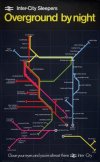
Got the Bristol - Glasgow sleeper on many an occasion. Always -or almost - had a banker up the Lickey.Recently came across this picture online, showing the extent of the overnight sleepers in 1974...