
-
Our new ticketing site is now live! Using either this or the original site (both powered by TrainSplit) helps support the running of the forum with every ticket purchase! Find out more and ask any questions/give us feedback in this thread!
You are using an out of date browser. It may not display this or other websites correctly.
You should upgrade or use an alternative browser.
You should upgrade or use an alternative browser.
1938 LMS WTT Letters Explanation
- Thread starter Andy873
- Start date
- Status
- Not open for further replies.
Sponsor Post - registered members do not see these adverts; click here to register, or click here to log in
R
RailUK Forums

pdeaves
Established Member
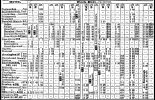
Are you able to put up images showing these letters? Context may help.I've got a small section of an LMS WTT (well I think that's what it is) from 1938. Can anyone tell me please what the following letters mean:
S, T, E, XS, TC. in relation to individual train journeys.
zwk500
Veteran Member
Are the timetables from around that period on Timetable world? https://timetableworld.com/ They may have cover sheets available that might explain it.
Otherwise any ad-hoc annotations are usually described in the same or a nearby column, or in a footnote.
However, putting the full context of the relevant pages up will help other members decipher it fairly quickly.
Otherwise any ad-hoc annotations are usually described in the same or a nearby column, or in a footnote.
However, putting the full context of the relevant pages up will help other members decipher it fairly quickly.
zwk500
Veteran Member
Edited as @hexagon789 has provided more info.

hexagon789
Veteran Member
S is likely Saturdays OnlyI've attached one of the pages so everyone can see what I'm asking better.
E is likely Saturdays Excepted
TC is Through Carriages
X and T would require the notes to decipher I suspect, as I don't think they are standard "symbols"
== Doublepost prevention - post automatically merged: ==
Through Carriages I would think.TC is almost certainly 'Train Continues' on another Table. Not sure on the others.
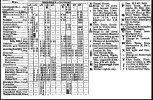
Good that you've found the key. Some of those letters and symbols would take a lot of guessing. Intruiguing that there are two different form of "s" denoting "Sats only".Well, thanks everyone, I found the missing page, which does indeed explain these letters and more, See attached.
Presumably some of these letters and symbols would have had the same meaning across all LMS timetables, but others are geographically specific. Did these reappear with different meanings in other timetables? If so, I wonder which letter or symbol was repeated most often and had the most different meanings.
That's a good question!Presumably some of these letters and symbols would have had the same meaning across all LMS timetables, but others are geographically specific. Did these reappear with different meanings in other timetables? If so, I wonder which letter or symbol was repeated most often and had the most different meanings.
I had a look on Timetableworld and found another LMS one, this time a public passenger timetable. Some of the letter now denote different things... If you look at table 187 (page 410 - page numbers at the bottom of the pages), you can see what I mean:
LMS July 1939 - Timetableworld
pdeaves
Established Member
and two forms of E. The wide one is the 'proper' one, narrow is for restricted space.Intruiguing that there are two different form of "s" denoting "Sats only".
Gloster
Veteran Member
I think that this is a public timetable covering only passenger train, not a WTT (Working Timetable, the internal one used by staff). The only entries are for stations, whereas a WTT would have a number of signalboxes, junctions and yards. All the trains appear to be passenger ones: no empty coaching stock, parcels, engine movements or even goods trains.
it looks remarkably like a page from my facsimile pre-war Bradshaw's... (1922?)I think that this is a public timetable covering only passenger train, not a WTT (Working Timetable, the internal one used by staff). The only entries are for stations, whereas a WTT would have a number of signalboxes, junctions and yards. All the trains appear to be passenger ones: no empty coaching stock, parcels, engine movements or even goods trains.
hexagon789
Veteran Member
I was thinking it looked more like the style of a Bradshaw than LMS timetable myself.it looks remarkably like a page from my facsimile pre-war Bradshaw's... (1922?)
LickeyIncliner
Member
Interesting that someone felt the need to distinguish "Stansfield Hall, Todmorden" from any other Stansfield Hall, but not to clarify Portmouth or Mill Hill
Sir Felix Pole
Established Member
I guess that this was to indicate that it was the station for Todmorden on Burnley - Halifax / Bradford services which avoided the main Todmorden station. By 1938 it looks as if it had hardly any trains, and indeed closed in 1944.Interesting that someone felt the need to distinguish "Stansfield Hall, Todmorden" from any other Stansfield Hall, but not to clarify Portmouth or Mill Hill
- Status
- Not open for further replies.