Flying_Turtle
Member
- Joined
- 4 Apr 2016
- Messages
- 194
Not even if the dead-man of a trainactuates and it is not reset within a certain period? (One minute I believe)Railway Emergency Calls are not triggered automatically in any circumstances

Not even if the dead-man of a trainactuates and it is not reset within a certain period? (One minute I believe)Railway Emergency Calls are not triggered automatically in any circumstances
I thought that too. But however the question was framed, the answer remains the same.It felt like she was teeing him up to say what we all know - that our railways are incredibly safe - rather than catch him out. Tony Miles was also spoken to later on and it seems a few other people in and around the railway press did the same. Better than using a generic travel correspondent, I guess.

No, that doesn't make an emergency call. It does make an automatic call, but not an emergency call.Not even if the dead-man of a trainactuates and it is not reset within a certain period? (One minute I believe)

It doesn't really matter what type or class of signal it is, the principle is the same. If there is no risk of a point of conflict at a junction or points because there is no junction or points, and there is no other reason for the signal to be high risk, then no TPWS will have been fitted.I'm sure someone will be along to correct me if I'm wrong, but I am sure there are signals on my route card which are plain line controlled signals as per the new standards, but still do not have TPWS.
I'm sure someone will be along to correct me if I'm wrong, but I am sure there are signals on my route card which are plain line controlled signals as per the new standards, but still do not have TPWS.

Aye, but I have seen suggestions elsewhere and possibly earlier in this thread that modern schemes have all signals fitted.It doesn't really matter what type or class of signal it is, the principle is the same. If there is no risk of a point of conflict at a junction or points because there is no junction or points, and there is no other reason for the signal to be high risk, then no TPWS will have been fitted.

After a minute then GSMR will bounce into life with it's own alarm and warning before making a special type of call to the signaller. The signaller can then speak to the driver or make a PA announcement on the train.Not even if the dead-man of a trainactuates and it is not reset within a certain period? (One minute I believe)

No. Nor has it been confirmed what AWS indications it gave to the drivers.
I think that may just be confusion between automatic signals (as they were called when plated as automatics) and controlled signals.Aye, but I have seen suggestions elsewhere and possibly earlier in this thread that modern schemes have all signals fitted.

You're correct. TPWS is provided on the basis of the assessed risk, it wasn't feasible to fit every one as part of the original programme some 25 years ago, so it was limited (in the main) to those protecting junctions or other clear hazards.I'm sure someone will be along to correct me if I'm wrong, but I am sure there are signals on my route card which are plain line controlled signals as per the new standards, but still do not have TPWS.
9 in a critical condition.
Seconded.I will add, I think an excellent job done by the moderators last night and today. Similar to Huntingdon, a lot happening in a short space of time and considerate moderation done through the forum (can't have been easy)

Seconded. There were at one point over 900 "guests" reading the forum, many of those will have been journalists trawling for info, which is why speculation needed to be kept off the thread.
Indeed, I don't actually see any harm in a bit of healthy, informed speculation by professionals who know what they are talking about - many of whom are contributing to this thread.I would prefer any journalists to be able to read some informed, sensible, discussion. Since yesterday evening I’ve had messages from about 20 different people (none of them with an interest in railways) asking for information about this, all along the lines of “how could this happen?”. I’d prefer people to get sensible information rather than the nonsense they are likely to pick up from other sources. The main thing is that people don’t pass their opinion off as fact.
I get rather sick of the comments that arise after every single incident like “oh well no need for the RAIB to investigate then”. People have a legitimate interest in these sorts of unfortunate incidents.
Aye, but I have seen suggestions elsewhere and possibly earlier in this thread that modern schemes have all signals fitted.
 www.networkrailmediacentre.co.uk
Rail passengers planning to travel through Bedford next week are being warned by the rail industry to expect disruption to train services until the end of next week (28 June) and to only travel on this route if their journey is essential.
Following an incident on Friday (19 June) involving a collision between two East Midlands Railway (EMR) trains in the Bedford area, in which an EMR driver sadly died and many passengers were injured, the railway is expected to remain closed between Bedford and Luton for the rest of the week.
As a result, there will be no GTR services north of Luton and no EMR services south of Bedford, with a limited rail replacement bus service in operation between Luton and Bedford.
Journey planning apps and websites are being updated to reflect these changes and may take a few hours to do so. Customers are advised to check live travel updates before they travel.
For as long as the Midland Mainline is closed at Bedford, train operators are accepting tickets for EMR customers. For customers whose journey is affected, tickets will be accepted on any alternative route. If customers decide to travel on EMR once the line is reopened, their connecting ticket on other operators also will be valid on that other day too.
East Midlands Railways (EMR)
No EMR services will run between Bedford and London St Pancras. Trains that usually start and terminate at London St Pancras will start and terminate at Bedford instead. From Monday, EMR will operate a reduced service on our Intercity and Connect routes, although Regional services will remain unaffected.
EMR Intercity and Connect services will operate one train per hour in each direction:
Rail Replacement buses will be provided in each direction as follows:
- One train per hour between Sheffield and Bedford, calling at Chesterfield, Derby, Long Eaton, East Midlands Parkway, Loughborough, Leicester, Market Harborough, Kettering and Bedford.
- One train per hour between Nottingham and Bedford, calling at Beeston, East Midlands Parkway, Loughborough, Leicester, Market Harborough, Kettering, Wellingborough and Bedford.
- One train per hour between Corby and Kettering.
EMR Luton Airport Express services will not run whilst the recovery operation continues. Passengers travelling between Luton Airport Parkway and London St Pancras in either direction may use their ticket at no extra cost on Thameslink services. For passengers travelling between Luton Airport Parkway and stations to or from the North, Rail Replacement Buses will operate between Luton Airport Parkway and Luton/Bedford/Kettering. Connections are available at Bedford and Kettering for services towards Sheffield or Nottingham.
- One direct bus per hour between Kettering and Luton (departing on the hour).
- One bus per hour between Kettering and Luton Airport Parkway, calling at Wellingborough, Bedford and Luton (departing on the hour).
For the latest EMR travel information please visit https://www.eastmidlandsrailway.co.uk/service-updates
Greater Thameslink Railway (GTR)
From Monday, north of London St Pancras, Thameslink will run a limited service as far as Luton only. Thameslink and Great Northern will have in place ticket acceptance for EMR customers.
People should travel only if absolutely necessary. There will be no trains between Bedford and Luton, and only limited rail replacement buses. Elsewhere, north of London St Pancras on Thameslink, there will be:
The following limited rail replacement buses will run from Monday:
- Four trains an hour to and from Luton during peak hours.
- Two trains an hour to and from Luton outside of peak hours.
- Eight trains an hour from London to St Albans during peak hours.
- Six trains an hour from London to St Albans outside of peak hours.
GTR will also have extra staff on hand at key stations along the route to help and support customers with their journeys.
- Bedford to Luton Airport Parkway and back, calling at Luton only (shuttle every 30 mins).
- Bedford to Luton and back, calling at Flitwick, Harlington and Leagrave (shuttle every 15 mins in the peak and every 30 mins in the off-peak).
For more information on Thameslink services, please visit https://www.thameslinkrailway.com/service-updates/service-updates
Recovery operation
A complex recovery operation has begun to remove the damaged trains and carriages from the railway before engineers assess any damage and complete necessary repairs. The Overhead Line Equipment – the electrical wires that provide power to the electric trains – must be removed while a temporary access road and concrete foundation is constructed to support the operation of a crane.
Two 110 tonne rail-mounted Kirow Cranes will then lift the trains and carriages from the site before a road-mounted crane moves them onto a low loader – a heavy-duty, specialised trailer designed to carry extremely heavy equipment – to be transported away by road. Following this, engineers will then assess the track and make any repairs before reinstating the overhead lines and completing final safety checks ahead of reopening the railway.
Will Rogers, Managing Director for East Midlands Railway, said: "First and foremost, our thoughts and heartfelt condolences remain with the family, friends and colleagues of our driver who tragically lost their life. We are also thinking of those who were injured, their loved ones, and all colleagues and customers affected by this incident. I would also like to thank our teams on the ground and the emergency services again for all their efforts.
"We are working closely with Network Rail and Thameslink to support those involved and assist with the ongoing recovery. Whilst this complex operation is underway, we ask that customers only travel on EMR’s Intercity and Connect services if essential. Please check before you travel.
"As the recovery progresses, we will continue to provide updates and encourage customers to check our dedicated webpage for details. EMR will not be able to operate any rail services between Bedford and London St Pancras this week. Our Regional routes remain unaffected. We appreciate our customers' patience as we work with our industry partners to restore services."
Louis Rambaud, Chief Customer Officer for GTR, which operates Thameslink, said: "It has been an incredibly difficult time for the whole railway family, and our thoughts remain with everyone affected by this tragic incident, particularly the family, friends and colleagues of the person who has tragically died, and all those who have been injured.
"We recognise the impact this tragic incident will have on our customers' journeys in the days ahead, and we're working closely with East Midlands Railway and Network Rail to reopen the line as soon as it’s safe to do so. We're asking anyone planning to travel on the Midland Main Line on Monday to only make essential journeys while this work continues.
"For customers who do need to make journeys, we’re boosting the number of our colleagues at stations to help them, and customers should check before they travel and allow extra time. We're grateful for our customers' patience as we and our industry partners do everything we can to get services back to normal."
Ellie Burrows, Network Rail Eastern regional managing director, said: "The past two days have been incredibly tough for everyone involved in this incident and our deepest sympathies and condolences go out to the friends, family and colleagues of the train driver who tragically lost their life as well as the passengers who have been impacted by this incident.
"Colleagues from across the rail industry are working together at pace to remove the trains and carriages from the railway and complete the repairs to the tracks. This is a complex and challenging task and our teams will be working tirelessly to reopen the railway so we can resume services between Bedford and London.
"While investigations are still at an early stage, current indications are that this was a tragic, isolated incident. We are focused on the safe reopening of the railway and getting services running as quickly as possible.
"During this time, our message to passengers is clear – please expect disruption to services through this area for the majority of next week and only travel if absolutely necessary."
Driver killed in Bedford train crash named
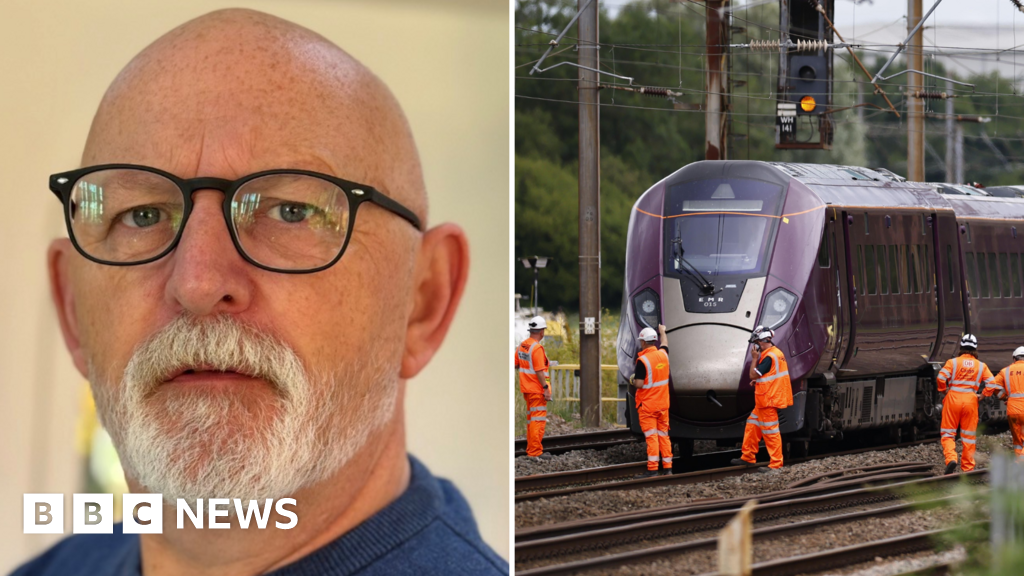
The driver killed in the Bedford train crash has been named as Shaun Burton and his family have said they are devastated.
British Transport Police (BTP) confirmed the 60-year-old died following Friday's collision, in which 100 people were injured.
In a tribute, his family said: "We are devastated by his loss. Our thoughts are also with those affected by this incident."
BTP added its thoughts remained with the man's family and his colleagues at East Midlands Railway (EMR).
A major incident was declared when two EMR services to London St Pancras collided at 17:15 BST, just south of Elstow, near the road interchange of the A421 and A6.
Eleven people were very seriously injured, a further 32 were described as injured and 57 had minor injuries, East of England Ambulance Service confirmed.
Police said 28 people remained in hospital, including nine in a critical condition.
 www.bbc.com
Route(s) affected
East Midlands Railway between London St Pancras International and Corby / Leicester / Nottingham / Sheffield
Thameslink between Brighton / Rainham (Kent) and Bedford
Description
Following the emergency services responding to an incident involving a collision between two East Midlands Railway trains in the Bedford area on Friday 19 June, the railway is expected to remain closed between Luton and Bedford until at least the end of the day on Friday 26 June.
A complex recovery operation has begun to remove the damaged trains from the railway before Network Rail engineers assess any damage and complete necessary repairs.
East Midlands Railway and Thameslink are advising that you only travel on this route if it is essential, and to work from home where possible.
If your travel is essential, you can check your journey for today and Tuesday 23 June using the National Rail Enquiries real-time Journey Planner.
If you are wishing to travel on Wednesday 24 June and beyond, the National Rail Enquiries real-time Journey Planner does not reflect any changes. Please check back later.
Travelling between Monday 22 and Friday 26 June?
Advice for East Midlands Railway customers:
East Midlands Railway will operate 1 train per hour on the following routes:
- Sheffield - Bedford
- Nottingham - Bedford
- Kettering - Corby
There will be no East Midlands Railway train service south of Bedford.
Rail replacement buses will be provided in each direction as follows (these will be departing on the hour):
- 1 bus per hour running direct between Luton and Kettering
- 1 bus per hour running between Luton Airport Parkway and Kettering, calling at Luton, Bedford and Wellingborough
East Midlands Railway and Thameslink customers may use the rail replacement bus service that best supports their journey. For Thameslink rail replacement bus information please see details further down this page.
How do I get where I need to be?
Your ticket will be accepted for travel on the following alternative routes and train operators until the line reopens. This is at no extra cost to yourself, and also includes tickets dated for travel on Friday 19 June.
Sheffield
You may travel to Doncaster from London Kings Cross with LNER, where you should change for a train to Sheffield with CrossCountry, TransPennine Express or Northern. It is likely to take between 2 and 2.5 hours to complete this journey. LNER recommend booking a seat reservation, which can be done up to 5 minutes before the train departs via the LNER website. Visit the East Midlands Railway website for lots of useful information about what to expect when travelling from London Kings Cross.
Derby / Chesterfield
You may travel to Birmingham New Street from London Euston with London Northwestern Railway or Avanti West Coast, where you should change for a train to Derby or Chesterfield with CrossCountry. It is likely to take between 2.5 and 3 hours to complete this journey. Visit the East Midlands Railway website for lots of useful information about what to expect when travelling from London Euston.
Nottingham
You may travel to Grantham from London Kings Cross with LNER, where you should change for a train to Nottingham with East Midlands Railway (EMR). It is likely to take between 2 and 2.5 hours to complete this journey. LNER recommend booking a seat reservation, which can be done up to 5 minutes before the train departs via the LNER website. Visit the East Midlands Railway website for lots of useful information about what to expect when travelling from London Kings Cross.
Leicester
You may travel to Nuneaton from London Euston with Avanti West Coast or London Northwestern Railway, where you should change for a train to Leicester with CrossCountry. It is likely to take around 2 hours to complete this journey. Visit the East Midlands Railway website for lots of useful information about what to expect when travelling from London Euston.
All of these alternative route options are available in the opposite direction too. A reminder that you don’t need to worry about your ticket, other train operators know about the disruption to your journey and your ticket can be used at no extra cost on their trains.
East Midlands Railway promise that if you need to start your outward journey from a different operator's station due to this disruption, then you will also be able to travel back to that station when you return, regardless of if the disruption has ended or your ticket type. Rail industry colleagues will welcome you on board with your original ticket.
Refund and reimbursement details
If you were unable to complete your journey by rail on Friday 19 June and were told to claim money back for a taxi from East Midlands Railway, please send across your taxi receipt and your ticket details to the East Midlands Railway customer relations team.
If you are unable or do not wish to complete your journey, you may claim a refund on your ticket. You can check your journey on East Midlands Railway's service updates page.
You can also see the East Midlands Railway travel information page.
Advice for Thameslink customers:
Until at least Friday 26 June, Thameslink services will not run between Luton and Bedford.
If your journey is on the Midland Main Line between Luton and Bedford, please only travel if your journey is essential. If you do need to travel, please check before you set off and allow at least 60 minutes additional time.
Disruption is expected throughout this period, and services that are able to run as far as Luton (from London) will be reduced.
The following stations will have no Thameslink service:
- Leagrave
- Harlington
- Flitwick
- Bedford
If you are travelling to or from any of these stations, you will need to use an alternative route or the limited rail replacement bus service where available.
East Midlands Railway customers can travel with Thameslink and Great Northern services during this time.
Journey Planners are showing the amended service for Tuesday 23 June. Journey Planners will be updated for Wednesday 24 June and beyond as soon as possible.
What does this mean for my journey?
A reduced Thameslink service will run, with the following changes:
- Three Bridges to Bedford services will not run
- Please use alternative Thameslink services where available, or allow extra time to change trains. You can also use Southern services towards London Victoria
- East Grinstead to Bedford peak-time services will not run
- Please use Southern services to and from London Victoria instead. You can change at East Croydon for a limited Thameslink service to Luton
- Brighton to Bedford services will run to and from Luton only
- If you are travelling beyond Luton, you will need to use the limited rail replacement bus service
- Rainham to Luton services will run between Rainham and Dartford only
- Please use alternative Southeastern services from Dartford to London. You can also use the Elizabeth line if you're travelling to or from Abbey Wood
All other Thameslink services are planned to run normally. Earlswood and Salfords will be served by different Thameslink services than usual.
Rail replacement buses between Luton and Bedford:
A very limited rail replacement bus service will run between Luton and Bedford. This is as follows:
Space on board these buses will be extremely limited. At busier times, you may not be able to board the first bus that arrives. Please note that buses will pick up and drop off at the Luton DART.
- A stopping bus service between Luton and Bedford, calling at Leagrave, Harlington and Flitwick
- A semi-fast bus service between Luton Airport Parkway and Bedford, calling at Luton only
A limited bus service, operated by EMR will operate between Luton Airport Parkway and Kettering, Bedford and Wellingborough.
Thameslink and East Midlands Railway customers may use the rail replacement bus service that best supports their journey.
Please note there are no rail replacement buses from any other location. Please use Journey Planners for the latest information, if essential travel is required.
Other ways to travel:
If you are travelling between Gatwick Airport and London, you can use alternative Southern services. You can also use London Underground services around central London, including the Elizabeth line.
Your ticket is also valid with London Northwestern Railway between London Euston and Milton Keynes Central.
Travelling on Saturday 27 and Sunday 28 June?
Please be aware that there is planned engineering work taking place between London St Pancras International and Bedford on the weekend of Saturday 27 and Sunday 28 June. Regardless of the progress of the recovery and subsequent repair work, all lines between these stations will be closed on these dates.
You can read more information on the engineering works via the Bedford and London St Pancras International engineering page. Trains that usually start and terminate at London St Pancras International will start and terminate at Bedford instead.
Additional information:
East Midlands Railway have established a dedicated call line for customers and their families who were directly involved in the incident. The line is staffed by trained colleagues who will be able to help with queries including the return of personal possessions and refer customers and families to the British Red Cross should further support be helpful. The telephone number is 0333 212 59 34 and is open to receive calls at the following times:
- Monday - Friday: 07:00 - 20:00
- Saturday: 08:00 - 20:00
- Sunday: 10:00 - 20:00
Check before you travel:
For helpful advice if you need to travel on a rail replacement service, including accessibility and bicycle information, please use our Rail Replacement Services page.
You can find the pick-up and drop-off location of rail replacement services by checking station signage or by searching for your station on our Find a Station page.
Please be advised that replacement vehicles may be busier than usual, and you should allow extra time for your journey.
 www.railforums.co.uk
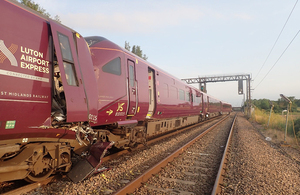
View of the accident site – train 1H46 is to the left and train 1B67 to the right of the image.
At around 17:15 on Friday 19 June 2026, train 1H46, the 16:40 East Midlands Railway service from Corby to London St Pancras, collided with train 1B67, the 15:50 service from Nottingham to London St Pancras, also operated by East Midlands Railway. The collision took place on Network Rail’s Midland Main Line approximately 2.5 miles (4 km) south of Bedford station.
The driver of train 1H46 died as a result of the accident. 162 people were injured, 102 of whom required hospital treatment. At the time of writing, 53 people remain in hospital, 8 in a critical condition. Significant damage was caused to both trains, which also partially derailed.
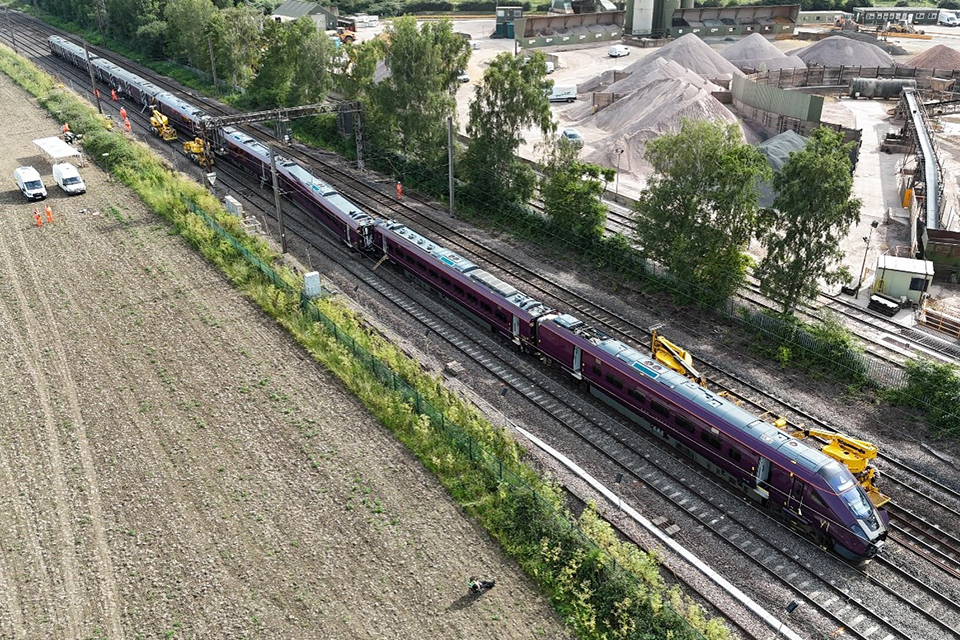
Aerial view of the accident site – train 1H46 is to the left and train 1B67 to the right of the image.
RAIB was notified of the accident at 17:27 and immediately deployed a team to the site, with the first inspector arriving at 18:26. RAIB continues to work alongside the British Transport Police, the Office of Rail and Road, and the railway companies involved to secure the necessary evidence to support our independent safety investigation.
The on-train data recorders (OTDR, sometimes called ‘black boxes’) from the trains have been recovered. Some of these recorders were located within damaged parts of the trains and could only be extracted during recovery operations. CCTV recordings, signalling data and recordings of radio communications have also been obtained. The vehicles involved have been surveyed for internal and external damage including using laser scanning, and an aerial survey. RAIB inspectors are also overseeing the testing of signalling equipment in the area.
The recovery of the trains involves vehicles being lifted by crane and moved by road to secure storage. RAIB inspectors are liaising with rail industry recovery teams to ensure access is available to them to undertake this work, which is expected to take several days. RAIB is also liaising with Network Rail to facilitate the repair work needed to restore railway operations.
The accident took place on the Midland Main Line between Bedford and Flitwick stations. The railway here has four tracks consisting of the Up and Down Fast lines (which direct trains towards London, and away from London, respectively) and the Up and Down Slow lines. The collision took place on the Up Fast line on approach to WH152 signal, which is located at 47 miles and 29 chains. The maximum permissible speed for trains at this location is between 125 mph (201 km/h) and 100 mph (161 km/h) depending on the type of train.
Train 1H46 was a four-car class 360 electric multiple unit. Train 1B67 was a five-car class 810 bi-mode multiple unit.
RAIB’s preliminary examination has found that train 1B67 was standing next to WH152 signal when the accident occurred. The train had come to a stop unexpectedly because a fault had developed with the Automatic Warning System (AWS) equipment fitted to it, which caused the brakes to apply.
Data from railway systems recorded that the track circuit for the section of track on which train 1B67 was standing was shown as occupied. The signal interlocking would have therefore changed the signal behind the train, WH154, to display a red (danger) aspect, with the intention of protecting train 1B67 from other train movements.
WH154 is a four-aspect automatic signal. This means that the aspect it displays changes automatically depending on the occupation of track circuits by trains, without the intervention of the signaller. WH154 signal is fitted with AWS track equipment which provides an audible and visual warning to train drivers on the approach to infrastructure features, including signals. AWS uses track-mounted magnets which trigger receivers fitted on trains. The system on board the train sounds a bell or chime when approaching a signal displaying a green aspect, and a horn when approaching a signal displaying any other aspect. This warning is intended to alert the driver to the upcoming signal or speed change. When receiving a horn warning, a driver must acknowledge this by pressing a button in the cab. After an AWS warning is acknowledged, a visual indicator will appear in the cab as a reminder of the warning. If the warning is not responded to within a short timeframe, the train’s emergency brake is applied.
Data from railway systems records train 1H46 leaving platform 1 at Bedford station at 17:10 on the Up Slow line. As it left the platform, forward-facing CCTV (FFCCTV) images show that the train passed a yellow (caution) signal (which signifies that the driver can pass the signal but should be prepared to stop at a red signal ahead).
Train 1H46 continued on the Up Slow line until it reached Bedford South Junction where it crossed onto the Up Fast line. The signal protecting the junction was also displaying a yellow aspect as the train passed it.
Having entered the Up Fast line, train 1H46 then approached signal WH154. FFCCTV shows that this signal was displaying a red aspect as the train approached and then passed it. The data downloaded from the OTDR on the front vehicle of this train is still being analysed, as the recorder could not be accessed until the vehicle was recovered. This means that it is not yet possible to say what indication the driver received from the AWS equipment on the train or how they responded to this.
The OTDR from the rear vehicle of train 1H46 has been recovered and downloaded. While this OTDR does not record AWS activity, it does record the train’s speed and braking commands. Preliminary analysis of data from this OTDR shows that there was a brake activation around 9 seconds before the collision, while the train was travelling at approximately 76 mph (122 km/h). Preliminary analysis of OTDR data also indicates that the train was travelling at around 49 mph (79 km/h) at the point of collision.
Some of this information may be refined as RAIB’s investigation progresses. RAIB continues to analyse evidence relating to the sequence of events, the performance of the signalling system and the speed at which the collision occurred, all of which remain under investigation.
Our investigation will seek to identify the sequence of events which led to the accident. It will include consideration of:
- the actions of those involved and any factors that may have influenced them
- the status and performance of the braking, AWS and other safety systems on train 1H46
- the reason train 1B67 stopped
- the status of signal WH154 and its AWS equipment, as well as its positioning, visibility, and conspicuity
- the crashworthiness performance of both trains during the collision
- the emergency response to the accident
- the processes used to assess the risk of overrun at this location, and the effectiveness of any control measures intended to address this
- any relevant underlying factors, including any actions taken in response to previous relevant safety recommendations.

I do not know haw far the Hitachi unit was into the section either.
RAIB’s preliminary examination has found that train 1B67 was standing next to WH152 signal when the accident occurred. The train had come to a stop unexpectedly because a fault had developed with the Automatic Warning System (AWS) equipment fitted to it, which caused the brakes to apply.
Train 1H46 was a four-car class 360 electric multiple unit. Train 1B67 was a five-car class 810 bi-mode multiple unit.
This is why factors like signal sighting will form part of the investigationI'd ask people to keep in mind there are many reasons why a spad can occur, beyond just driver error.
Preliminary analysis of data from this OTDR shows that there was a brake activation around 9 seconds before the collision, while the train was travelling at approximately 76 mph (122 km/h). Preliminary analysis of OTDR data also indicates that the train was travelling at around 49 mph (79 km/h) at the point of collision.
