What stations? I thought they were mostly straightThey have on Crossrail...

-
Our new ticketing site is now live! Using either this or the original site (both powered by TrainSplit) helps support the running of the forum with every ticket purchase! Find out more and ask any questions/give us feedback in this thread!
You are using an out of date browser. It may not display this or other websites correctly.
You should upgrade or use an alternative browser.
You should upgrade or use an alternative browser.
Extremely loud train noise at St Pancras Thameslink
- Thread starter Malcolmffc
- Start date
Sponsor Post - registered members do not see these adverts; click here to register, or click here to log in
R
RailUK Forums
zwk500
Veteran Member
Tottenham Court Road:What stations? I thought they were mostly straight
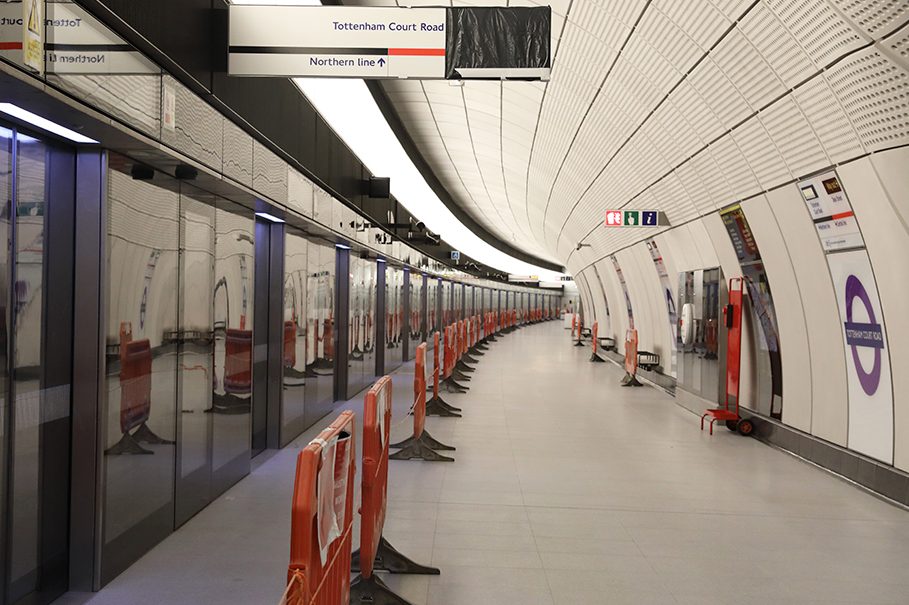
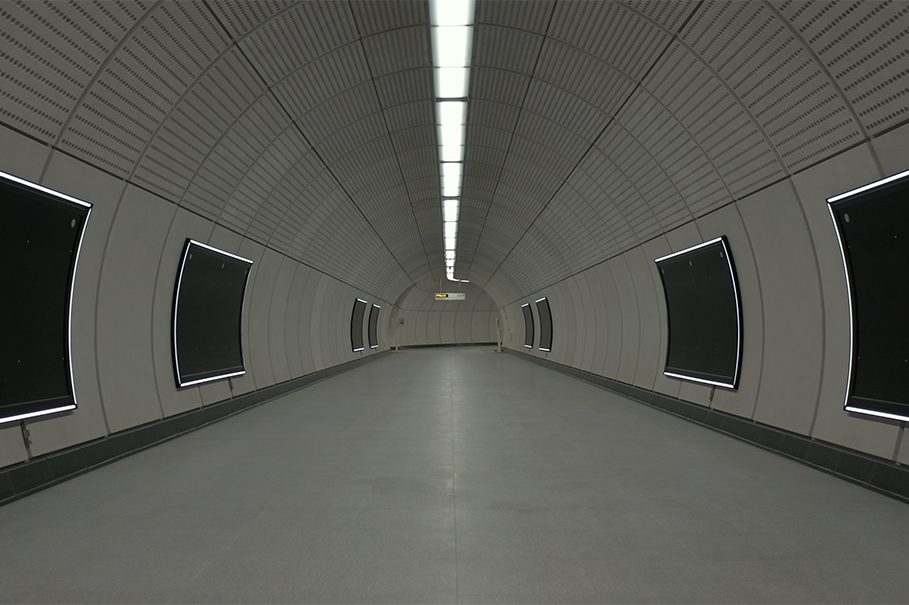
Crossrail’s Tottenham Court Road station construction ‘sufficiently finished’ | New Civil Engineer
Crossrail Ltd has confirmed that construction works has “sufficiently finished” and final commissioning activities can begin. It means the station is now
 www.newcivilengineer.com
St Pancras curvature is a challenge, although Farringdon would be another level entirely.
Platform doors on the Paris Metro at Bastille Line 1, the sharpest curve on the whole system, shown here :St Pancras curvature is a challenge, although Farringdon would be another level entirely.

Illustration of Bastille station, taken from inside an automated...
Illustration of Bastille station, taken from inside an automated train on line 1 in Paris, France, on September 27, 2024.
zwk500
Veteran Member
Fundamentally, it should be technically possible to fit Platform Edge doors anywhere, because if they don't foul the loading gauge, the train should fit through.Platform doors on the Paris Metro at Bastille Line 1, the sharpest curve on the whole system, shown here :
Illustration of Bastille station, taken from inside an automated...
Illustration of Bastille station, taken from inside an automated train on line 1 in Paris, France, on September 27, 2024.www.gettyimages.co.uk
Curvature and vertical gradients make things harder because it makes securing accurate alignment harder (again, still possible), and you increase the gap between train and platform, increasing the risk of somebody slipping between the platform and train doors and being injured or even trapped.
These things can be designed for, the question is whether the cost of overcoming the challenges is worth it.
Farringdon platforms also get very narrow at certain points, so you may also potentially need to design a specially thin profile PED to ensure all doors are still usable. Another challenge to overcome, with it's price tag.
You'd also need to include the facility for the rear platform doors not to open if an 8-car is coming through, and allow for bi-di operation, although given Thameslink already has automatic door opening in the core, and presumably that's integrated in to the ETCS Balise groups, one would hope this is reasonably straightforward.
Deepgreen
Established Member
No-one has addressed/answered the earlier question about flange lubricators/greasers. Are these installed there, and, if not, why not - is there a technical reason why they can't be used?
edwin_m
Veteran Member
Only one platform I think (TCR?) and only a gentle curve. If it was tighter the gap between the screen doors and the train doors would be wider with a risk of someone getting trapped.They have on Crossrail...
Deepgreen
Established Member
I wonder how they managed in Paris. albeit with shorter coaches, but on a very tight curve.Only one platform I think (TCR?) and only a gentle curve. If it was tighter the gap between the screen doors and the train doors would be wider with a risk of someone getting trapped.
zwk500
Veteran Member
From the look of this picture: https://files.structurae.net/files/photos/2546/m01-bastille-cimg6054.jpgI wonder how they managed in Paris. albeit with shorter coaches, but on a very tight curve.
By not putting doors too far round the tight bit of the curve. It's difficult to get a really good view of it but the images I've see so far suggest that the metro trains are mostly or completely on straight track when actually opening their doors.

Peter Mugridge
Veteran Member
The trains don't go to the very end of the platform there, you are correct. From memory I'm not sure the really curvy bit even has any doors in it.From the look of this picture: https://files.structurae.net/files/photos/2546/m01-bastille-cimg6054.jpg
By not putting doors too far round the tight bit of the curve. It's difficult to get a really good view of it but the images I've see so far suggest that the metro trains are mostly or completely on straight track when actually opening their doors.
zwk500
Veteran Member
You can see in both the pictures on Wikipedia and here: https://structurae.net/en/structures/bastille-metro-station that the section of the platform edge screen around the curve doesn't have opening sections in it. The last set of doors is about level with the bridge girders.The trains don't go to the very end of the platform there, you are correct. From memory I'm not sure the really curvy bit even has any doors in it.
It'd be interesting to know what the maximum permissible gap between the Platform and train doors is in the UK. City Thameslink is straight but with noticeable upwards gradients at either end so might be easier than Farringdon, with it's reverse curves and very narrow sections. However, this has got away from the topic of the noise at St Pancras somewhat, and Farringdon being open-air with a much higher roof suffers a lot less from that issue, so would be a lower priority for edge doors on the basis of noise reduction than St Pancras.
45669
Member
I usually wait at the northern end of the platform (the back of Brighton-bound train where the declassified 1st class section is), the squeal is a lot less painful there. Of course these are all usually FLU's - not sure where the best place for 700/0 would be?
I'm not familiar with the term FLU's - can someone tell me what it means?
zwk500
Veteran Member
Full Length Unit - the 12-car Class 700s. 8-Cars are known as Restricted Length Unit (RLU). Class 700 stopping positions are marked FLU/RLU rather than the normal '12' or '8' stop boards.I'm not familiar with the term FLU's - can someone tell me what it means?
45669
Member
Full Length Unit - the 12-car Class 700s. 8-Cars are known as Restricted Length Unit (RLU). Class 700 stopping positions are marked FLU/RLU rather than the normal '12' or '8' stop boards.
Thanks; I would never have thought of that.

Islineclear3_1
Established Member
I asked this question in post #8No-one has addressed/answered the earlier question about flange lubricators/greasers. Are these installed there, and, if not, why not - is there a technical reason why they can't be used?

45669
Member
Thanks; I would never have thought of that.
I did a bit of filming there myself last month and, although I didn't notice at the time, there are FLU signs in my footage:

boiledbeans2
Member
Platform doors on the Paris Metro at Bastille Line 1, the sharpest curve on the whole system, shown here :
Illustration of Bastille station, taken from inside an automated...
Illustration of Bastille station, taken from inside an automated train on line 1 in Paris, France, on September 27, 2024.
Also University station in Hong Kong, known for its curves and wide gaps.
Photo on page 3 of this platform gate installation press release PDF:
Quote from wiki:
The platform is built along a curve, causing gaps of a range of different sizes to exist while the trains are lined up to the platform. The KCRC responded to these complaints by assuring passengers that they will install plates on the side of platforms to reduce the gap, though this has not been done.
After two incidents of children falling onto the tracks at University station in 1985, the issue was discussed in the Legislative Council. The Secretary for Transport asserted that the gaps were within "international safety limits", and that the gap could not be narrowed due to the curvature of the station as well as the "rather wider bodies" of the Chinese through trains which run through the station daily. A man who fractured his leg boarding a train at the station in 2008 asserted that he fell into a gap of about 35 cm, while the MTR claimed it was only 22 cm at the relevant section of platform.
Pre-platform gate installation photo, showing curve:


Jim the Jim
Member
Might platform edge doors give some passengers a false sense of security, and make them less likely to mind the gap?
edwin_m
Veteran Member
These wouldn't help with suppressing wheel-rail noise though. Nor would the half-height ones seen in the pictures of Bastille.The best slim barriers I've seen have been on the Sofia Metro in Bulgaria. The barriers simply raise up as the train arrives and lowers down as they leave.View attachment 205074
View attachment 205075
(Images show a lowered and raised platform screen)
In effect the issue of wheel noise is naturally filed in the too difficult drawer at locations like St Pancras platforms A & B. Carrying simple ear defenders would seem a wise precaution for a genuine sufferer. Personally I find flange squeal more irritating than wheel howl, and flange squeal is far more common, especially where check rails are fitted.These wouldn't help with suppressing wheel-rail noise though. Nor would the half-height ones seen in the pictures of Bastille.
Sorry, I posted in the wrong threadThese wouldn't help with suppressing wheel-rail noise though. Nor would the half-height ones seen in the pictures of Bastille.
Anecodtally I feel like it's gotten worse, but you're absolutely right that unless someone has actually been recording the noise levels, we can't rely on memory. What we can say though regardless is that it is very loud at the moment.I was shocked the last time I was there - seemed a lot worse than it was several years ago when I had last visited, but I'd probably just forgotten what it was like.
But I'm assuming there's no easy way to add some form of sound baffling/deadening anywhere in the platforms? (my noise cancelling headphones certainly earn their keep!)
Given that the squeal sound is form the wheel/track flange interface, the likelihood is that the 700s are quieter than the 319s as their bogies have shorter wheelbases.I was shocked the last time I was there - seemed a lot worse than it was several years ago when I had last visited, but I'd probably just forgotten what it was like.
I don't think I've ever seen a 319, the train 'several years ago' was a 700 also, was probably just about pre-COVIDGiven that the squeal sound is form the wheel/track flange interface, the likelihood is that the 700s are quieter than the 319s as their bogies have shorter wheelbases.
I've not seen a 319 there either, but in my experience, the 700 can be extremely loud some days.I don't think I've ever seen a 319, the train 'several years ago' was a 700 also, was probably just about pre-COVID
I was shocked the last time I was there - seemed a lot worse than it was several years ago when I had last visited, but I'd probably just forgotten what it was like.
The noise changes due to the variation in the metal on metal interface, ie the state of the wear on the rail (which changes gradually over time) the state of wear on the wheels using it (which varies by train).
The noise will see a large change when the rails are periodically subject to grinding back to the correct profile, or renewal.

Stratford to Leyton eastbound on the Central line is so bad that there has to be a speed restriction.I travelled recently on the Northern line extension to Battersea power station, the noisest section of the underground l have encountered. Not sure if it was wheel howl or whatever.
As for Battersea, the noise levels are quite surprising considering it only opened a few years ago. You'd think a brand-new extension would be a bit better.