• Our new ticketing site is now live! Using either this or the original site (both powered by TrainSplit) helps support the running of the forum with every ticket purchase! Find out more and ask any questions/give us feedback in this thread!

Trivia: Oldest intercity trains by country

StephenHunter

Established Member
Joined
22 Jul 2017
Messages
2,895
Location
London
Don't DB Class 218s work IC services to Westerland? The main batch is 1971-1979.

Also, Corails in France are still in use on a number of services, such as couchettes and Ouigo.
 
Sponsor Post - registered members do not see these adverts; click here to register, or click here to log in
R

RailUK Forums

MarcVD

Established Member
Joined
23 Aug 2016
Messages
1,241
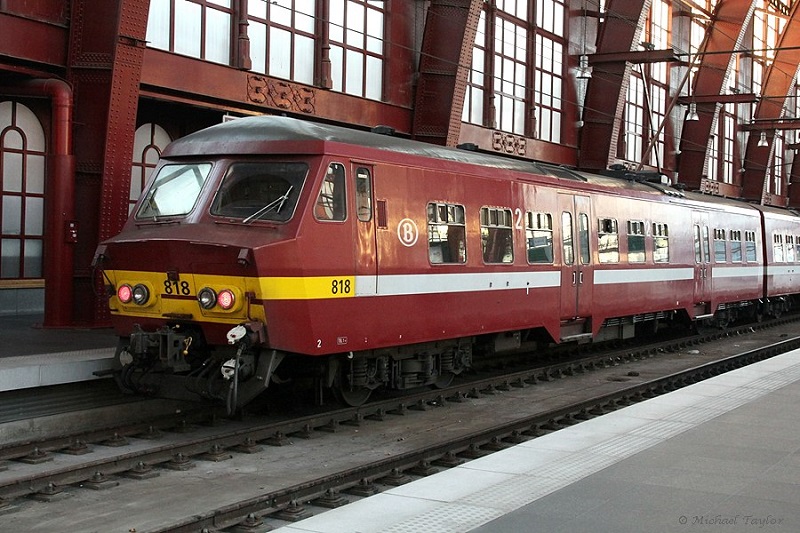
The oldest belgian stock in use today is a series of 40 (originally 44, but there have been a few casualties, mainly from fires) 4- car EMUs built in 1975-77. Today they work mostly locals, including one going hourly to Rosendaal in the Netherlands. Most of their services are around Antwerp, but they are maintained in Charleroi, so occasionally they work an IC service Charleroi - Antwerp to reach their maintenance facility without needing a dead move. They have been refurbished quite extensively and are expected to stay till 2030 or so, when the new AM30 stock will enter revenue service. Their age is showing : serial DC motors, thyristor controls, bench seating in second class, no air conditioning, manual couplers. But they make quite an impression when they run in 3 units formations. And 55 years of service, not so bad...
 

Richard Scott

Established Member
Associate Staff
International Transport
Railtours & Preservation
Joined
13 Dec 2018
Messages
4,575
Also, Corails in France are still in use on a number of services, such as couchettes and Ouigo.
Corails still on some IC work, fairly sure still a number work out of Paris Austerlitz. Also the BB7200 locos are still at work, oldest one on IC work is 7230 dating from April 1977 although older ones still on TER (regional) work; sure 7203, dating from November 1976, still going.
 

eldomtom2

On Moderation
Joined
6 Oct 2018
Messages
2,361
Having done some research, as far as I can tell the oldest intercity rolling stock in South Korea are a small number of 1996-built loco-hauled coaches.
 

mountainpixel

Member
Joined
25 Jan 2024
Messages
73
Location
Switzerland
Thanks. What's the coach type they use that would be 1960-vintage? I'm not familiar with all the names of the Scandinavian coaches.
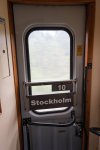
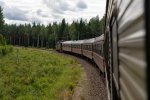
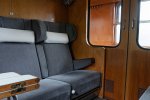
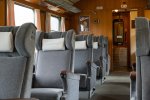
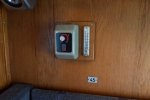
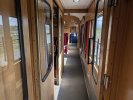
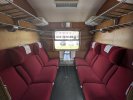
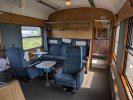
Here are some pictures of an A2 carriage on a Tågab service. They are from the 60s and feel like a time capsule. All wooden inside, the most comfortable seats I've ever sat on, amazingly smooth ride and no central door looking. If you ever wondered what luxurious travel in the past must have been like, book a seat on these amazing trains. This 3-hour trip costs around 30 pound.

While there are older coaches, I would argue that these one "feel" among the oldest as they have been refurbished to retain their old character and are not just old or run down because of a lack of investment.
 

Attachments

  • DSC02338.jpg
    DSC02338.jpg
    261.3 KB · Views: 58
  • DSC02342.jpg
    DSC02342.jpg
    512.3 KB · Views: 62
  • DSC02335.jpg
    DSC02335.jpg
    487.9 KB · Views: 65
  • DSC02325.jpg
    DSC02325.jpg
    493.5 KB · Views: 62
  • DSC02337.jpg
    DSC02337.jpg
    438.1 KB · Views: 62

AndrewE

Established Member
Joined
9 Nov 2015
Messages
7,302
That's actually from the period between German reunification in 1990 and the DB/DR merger in 1994. Very interesting!
and even more remarkable is that they seem to have plated over the doors on one side of each coach. (see https://www.vagonweb.cz/fotogalerie/RO/CFR/WLABmee-7131?f=2026est) I've never seen this arrangement (apart from maybe on the Glasgow Underground!)
I guess the logic is that sleeping cars have few occupants and make fewer stops, and you can marshal the coaches so the doors are on alternate sides so an attendant then has just 1 door to supervise for 2 coaches. I couldn't see HMRI approving of it...
 

Watershed

Veteran Member
Associate Staff
Senior Fares Advisor
Joined
26 Sep 2020
Messages
16,581
Location
UK
Thanks again all.

Having done some research, as far as I can tell the oldest intercity rolling stock in South Korea are a small number of 1996-built loco-hauled coaches.
Do you have any details on these? I can't find much online.

Here are some pictures of an A2 carriage on a Tågab service. They are from the 60s and feel like a time capsule. All wooden inside, the most comfortable seats I've ever sat on, amazingly smooth ride and no central door looking. If you ever wondered what luxurious travel in the past must have been like, book a seat on these amazing trains. This 3-hour trip costs around 30 pound.

While there are older coaches, I would argue that these one "feel" among the oldest as they have been refurbished to retain their old character and are not just old or run down because of a lack of investment.
Wow, that looks incredible! I shall have to check it out the next time I'm in Sweden.
 

Farang

Member
Joined
17 May 2018
Messages
144
Here are some pictures of an A2 carriage on a Tågab service. They are from the 60s and feel like a time capsule. All wooden inside, the most comfortable seats I've ever sat on, amazingly smooth ride and no central door looking. If you ever wondered what luxurious travel in the past must have been like, book a seat on these amazing trains. This 3-hour trip costs around 30 pound.

While there are older coaches, I would argue that these one "feel" among the oldest as they have been refurbished to retain their old character and are not just old or run down because of a lack of investment.
Those interiors are gorgeous.
 

StephenHunter

Established Member
Joined
22 Jul 2017
Messages
2,895
Location
London
and even more remarkable is that they seem to have plated over the doors on one side of each coach. (see https://www.vagonweb.cz/fotogalerie/RO/CFR/WLABmee-7131?f=2026est) I've never seen this arrangement (apart from maybe on the Glasgow Underground!)
I guess the logic is that sleeping cars have few occupants and make fewer stops, and you can marshal the coaches so the doors are on alternate sides so an attendant then has just 1 door to supervise for 2 coaches. I couldn't see HMRI approving of it...
That's standard for sleepers in general in Europe. The Type Fs that operated in the UK also had doors at one end, with the other containing the attendant's office and a small stove for heating.
 

Jealgu

Member
Joined
4 Sep 2017
Messages
70
I am personally a big fanof the ab3 carriages. They have a very interesting setup. The middle chairs of the first class saloon part cab turn. I added pictures of both the Tagab amd Snalltaget version.

Both first and srcond class types also run in Bosnia. Their maintsnence is a bit lacking.

For anyone interested in the various carriages types I recommend jafnvag.net. It is in Swedish, but with translate it is easy to figure out.
 

Attachments

  • PXL_20250626_130337284.jpg
    PXL_20250626_130337284.jpg
    1.9 MB · Views: 51
  • PXL_20250626_130042477.jpg
    PXL_20250626_130042477.jpg
    2.9 MB · Views: 53
  • PXL_20250626_130034197.jpg
    PXL_20250626_130034197.jpg
    2.1 MB · Views: 53
  • PXL_20250618_095822017.jpg
    PXL_20250618_095822017.jpg
    2.2 MB · Views: 52
  • PXL_20250618_100903592.jpg
    PXL_20250618_100903592.jpg
    2.6 MB · Views: 52

AndrewE

Established Member
Joined
9 Nov 2015
Messages
7,302
That's standard for sleepers in general in Europe. The Type Fs that operated in the UK also had doors at one end, with the other containing the attendant's office and a small stove for heating.
Thanks, I hadn't realised that. Back in the day when we used overnight trains we were focussed on the couchette cars - or even finding empty seated compartments!
 
Last edited:

jamesontheroad

Established Member
Joined
24 Jan 2009
Messages
2,233
Location
Umeå, Sweden
Late last year, the Swedish railway news site järnvägar.nu published an article about the renovation of SJ's WL1 sleeping carriages, from 1964-65. This is a project that was announced in 2017, but dragged on due to issues with the procurement, the bids, the finances of one of the tendering companies, the pandemic, etc etc. According to another forum, there are now five in traffic, and they should be around for another 10-15 years.

From the article (my translation and emphasis):

“It is much more difficult to plan a conversion of older carriages than to build new trains,” says Lars Lindeby, technical project manager for the night carriage refurbishment at SJ. "Old carriages can look very different after all sorts of renovations over the years, and you don't know how extensive the rust is until you start dismantling them."

The oldest sleeping cars to be refreshed, the WL1s, were built in 1964-1965 and the drawings were incomplete.

“In some cases, we have had to go to the National Archives to find all the original drawings,” says Lars Lindeby.

SJ decided in June 2021 to have Euromaint refurbish the badly worn sleeping and couchette cars. The cost is estimated at 250-300 million SEK [€23-27.5 million].

...

“We have found rust damage around the windows in many carriages, mainly in the sleeping carriages from the 1960s,” says Lars Lindeby. “The workshops need to spend 400-500 working hours on rust removal per carriage.”

Only the 22 sleeping cars from the 1960s, which are still blue-black unlike the other all-black night train cars, will be repainted externally. Other improvements will only be painted on smaller areas.

“We had a really long wish list with everything we wanted to do with the night train carriages, and we had a bag of money,” says Lars Lindeby. “We checked off the wish list from the top with the most important measures, and when the money ran out, we had to draw a line. There was much more we would have liked to do with the money; there simply isn't enough for more than what we are doing now."

With the comprehensive renovation, it is estimated that the night train carriages will be able to remain in service for another 10-15 years.

At the time of the procurement, Euromaint were going to refurbish the following. Click for links to another great Swedish website (järnväg.net) for detailed info on carriage types:
  • 12 of 22 WL1 2nd class sleeping cars built 1964-1965, last refurbished in 1996-1997;
  • 21 WL4 1st class sleeping cars (with en-suite bathrooms) built 1990-1992;
  • 3 WL6 2nd class sleeping cars built 1993-1994;
  • 11 BC4 couchette cars built in 1985-1986.
 

railfan99

Established Member
Joined
14 Jun 2020
Messages
1,959
Location
Victoria, Australia
Presumably Australia’s XPT warrants a mention?

'The Overland' - twice a week in each direction between Adelaide and Melbourne, and once an overnight sleeping and sitting car train but now a daytime run - has carriages that are older than the XPTs.
 

A S Leib

Established Member
Joined
9 Sep 2018
Messages
3,254
'The Overland' - twice a week in each direction between Adelaide and Melbourne, and once an overnight sleeping and sitting car train but now a daytime run - has carriages that are older than the XPTs.
Ruled out as a (primarily) tourist service in post 1.
 
Last edited:

Watershed

Veteran Member
Associate Staff
Senior Fares Advisor
Joined
26 Sep 2020
Messages
16,581
Location
UK
Having been on it, I would say the Overland is probably mostly aimed at the tourist market, but like the Canadian it does provide a service to 'normal' passengers too and AFAIK it accepts regional subsidised fares too, which is probably the hallmark of a 'real' passenger service as opposed to a land cruise/luxury charter.
 

bahnause

Member
Joined
30 Dec 2016
Messages
1,010
Location
bülach (switzerland)
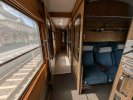
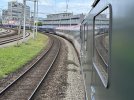
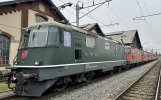
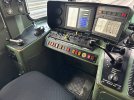
I had a combination of some of the newest stock (Nightjet, built 2025), mixed with some slightly tired looking ÖBB IC carriages from the 90s and the good
old (well, only old to be honest) SBB Re420
161 built in 1969. But equipped with ETCS.
 

Attachments

  • IMG_9344.jpeg
    IMG_9344.jpeg
    3.2 MB · Views: 41
  • IMG_6782.jpeg
    IMG_6782.jpeg
    2.6 MB · Views: 42
  • IMG_9349.jpeg
    IMG_9349.jpeg
    210.7 KB · Views: 38
Joined
4 Sep 2015
Messages
236
Location
Lehigh Valley PA USA
In the US, none of the "heritage" cars from the original passenger services that preceded Amtrak are left in service on Amtrak. The oldest equipment in normal Amtrak service are the former Metroliner cars now used as Cab control cars which were built around 1967.

The Piedmont service operated by Amtrak for the state of North Carolina does have its own state owned equipment that was originally built for the Kansas City Southern in the 1960s.
 

Beebman

Member
Joined
17 Feb 2011
Messages
962
Location
Twyford
How old are the OBB IC coaches?
I've been wondering that too but as it happens I'll be doing some bashing in Austria next week and a little project I have planned is to attempt to investigate the ages of the two-tone grey OBB IC stock - are they all 1980s/90s build or are there any 1970s Eurofima examples still around? I'll note vehicle numbers and maybe try and find builders plates if time permits. All being well my findings will be reported here early next week. :)
 

Beebman

Member
Joined
17 Feb 2011
Messages
962
Location
Twyford
The ones that are still in service with ÖBB are from the later 1980s and 1990s. The older ones have been sold.
Is there a website anywhere which lists individual ÖBB coaching stock vehicles? I've tried searching (in German) but I can't find anything.
 

riceuten

Member
Joined
23 May 2018
Messages
938
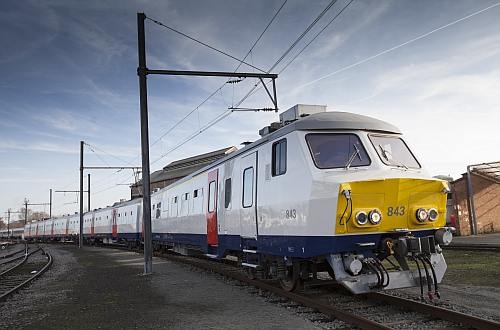
The oldest belgian stock in use today is a series of 40 (originally 44, but there have been a few casualties, mainly from fires) 4- car EMUs built in 1975-77. Today they work mostly locals, including one going hourly to Rosendaal in the Netherlands. Most of their services are around Antwerp, but they are maintained in Charleroi, so occasionally they work an IC service Charleroi - Antwerp to reach their maintenance facility without needing a dead move. They have been refurbished quite extensively and are expected to stay till 2030 or so, when the new AM30 stock will enter revenue service. Their age is showing : serial DC motors, thyristor controls, bench seating in second class, no air conditioning, manual couplers. But they make quite an impression when they run in 3 units formations. And 55 years of service, not so bad...
These ? They probably looked quite swish in the 1970s

818-sncb-mt.jpg


That were transformed into these

de483abb74dc43de4ecf23f24c330030.jpg
 
Last edited:

AY1975

Established Member
Joined
14 Dec 2016
Messages
2,175
Germany (domestic) - 1971-1979, DB, class 218 locos. Also 1977-1980, DB, IC1 coaches (first-gen)
I suppose once the few remaining IC1 coaches finish (which I think is fairly soon) the oldest Intercity passenger-carrying stock left in Germany, at least as far as DB (as opposed to private operators such as Flixtrain) is concerned, will be the ICE1 sets.
 

MarcVD

Established Member
Joined
23 Aug 2016
Messages
1,241
These ? They probably looked quite swish in the 1970s

818-sncb-mt.jpg


That were transformed into these

de483abb74dc43de4ecf23f24c330030.jpg
the-sncb-nmbs-am-75-8320.jpg
The red livery was their second one. Before that, as built, they were orange and grey. No other belgian train was painted like this.
 

Richard Scott

Established Member
Associate Staff
International Transport
Railtours & Preservation
Joined
13 Dec 2018
Messages
4,575
These ? They probably looked quite swish in the 1970s

818-sncb-mt.jpg


That were transformed into these

de483abb74dc43de4ecf23f24c330030.jpg
Despite Belgian Railways classifying almost everything that doesn't stop at every blade of grass as an IC train, I'm not sure I would say these were IC trains.
 

43096

On Moderation
Joined
23 Nov 2015
Messages
18,732
Despite Belgian Railways classifying almost everything that doesn't stop at every blade of grass as an IC train, I'm not sure I would say these were IC trains.
In Belgium IC is a stopping pattern, not a quality indicator.
 

Richard Scott

Established Member
Associate Staff
International Transport
Railtours & Preservation
Joined
13 Dec 2018
Messages
4,575
In Belgium IC is a stopping pattern, not a quality indicator.
That's what I was implying hence it doesn't really fit with my usual interpretation of an IC service and so stock not necessarily of what would be expected in many other countries on an IC service.
 

Top