• Our new ticketing site is now live! Using either this or the original site (both powered by TrainSplit) helps support the running of the forum with every ticket purchase! Find out more and ask any questions/give us feedback in this thread!

Help requested. I'm esearching a journey made in 1895 by the British Ladies Football Club

James Dutton

Member
Joined
13 Nov 2025
Messages
17
Location
Battersea, London
I'm not sure if you will remember, but I was writing a book about my grandfather, footballer Jimmy Seed, who played for Spurs and England in the 1920s. I received some valuable help a year or so back (possibly more?) about a journey Jimmy made to attend his sister's wedding in 1923 (Boxing Day). Thanks once again for your help on that. The help given by the members of this forum will be recognised in the Acknowledgements section of the book. :lol:

Well, the book was also about this little sister, Minnie, who was a 'munitionette' footballer during WW1. Munitionettes were the factory workers who formed their own works teams, and ended up playing for regional teams in front of huge crowds.

I've found a publisher for the book, but they want me to focus the book more on Minnie, and have asked me to add another 6,000 words on the history of women's football.
I've been writing in particular about a tour of the UK undertaken by the British Ladies Football Club in 1895. It would really have tested the efficiency of the rail network, as they played over 100 matches in two years. Between March to September 1895 alone, the club managed a grueling schedule of 34 games across England, Scotland, and Northern Ireland.

There's one particular part of the tour that was particularly frantic. They played five matches in eight days, requiring a great deal of travel up-and-down the country. Two of those matches were played on the same day.

Saturday, 13 April – Bury (Gigg Lane)
Monday, 15 April (Morning) – Reading (Caversham Cricket Ground)
Monday, 15 April (Afternoon) – Maidenhead (York Road)
Wednesday, 17 April – Bristol (Bedminster Cricket Ground)
Saturday, 20 April – Newcastle (St James' Park)

I've written that 'the journey from Bristol to Newcastle alone was a gruelling prospect. The most direct route was traveling up the spine of the country via the Midland Railway and the North Eastern Railway (NER), a journey of eight to nine hours by steam train.'

Is eight to nine hours about right? Is 'Gruelling' overstating it? I don't want to make assumptions. Of course I don't know which class of carriages they would have travelled in, but they were reputedly well heeled girls from the middle and upper classes. The tour still had to make money, so anything is possible. However, as the tour was considered scandalous by many in Victorian society, I would imagine they would have wanted to avoid 3rd class.

Thanks for reading this, I really appreciate the help that you'veprovided in the past.
 
Sponsor Post - registered members do not see these adverts; click here to register, or click here to log in
R

RailUK Forums

Rescars

Established Member
Joined
25 May 2021
Messages
2,610
Location
Surrey
You really need access to an 1895 Bradshaws to attempt to calculate timings. For what they are worth, here are a few observations.
  • Reading and Maidenhead are only 12 miles apart on the main line, so the travelling between the two for matches on the same day shouldn't have been too problematic.
  • There is a rest day before Bristol. Plenty of time to get there from Maidenhead. All this is conveniently all Great Western.
  • Others will have better ideas about route options between Bristol and Newcastle, but MR/NER seems reasonable. There is a gap of three days between fixtures though. Do you know if the team stayed and travelled together at this point?
  • The journey north may have tedious, but possibly not gruelling. Train catering had become more commonplace by the 1890s, especially on principal routes. I am unclear when such services started on the in question. The Midland in particular was a leader in providing passenger comforts and certainly operated some fine refreshment rooms. Bradshaw would perhaps reveal if a dining car was on offer for any part of the trip.
  • If the team did not go first class, they would have to have travelled third on the Midland, as it abolished second class in 1875.
 

Sir Felix Pole

Established Member
Joined
21 Oct 2012
Messages
2,230
Location
Wilmslow
The 1895 Bradshaw (Dec) is available on Timetable World.

1895 Bradshaw

About 8 hours Bristol to Newcastle - morning express Bristol TM 0905 Newcastle Central 1718.

By 1895 it would have been all been very civilised with dining car and bogie carriages.
 

Mcr Warrior

Veteran Member
Joined
8 Jan 2009
Messages
17,331
5,000 at the North vs South (British Ladies Football Club) match played at Gigg Lane, Bury on Saturday 13th April 1895 with co-founder Nettie J. Honeyball credited as one of the goalscorers.
 

Rescars

Established Member
Joined
25 May 2021
Messages
2,610
Location
Surrey
The 1895 Bradshaw (Dec) is available on Timetable World.

1895 Bradshaw

About 8 hours Bristol to Newcastle - morning express Bristol TM 0905 Newcastle Central 1718.

By 1895 it would have been all been very civilised with dining car and bogie carriages.
So time for breakfast, morning coffee, luncheon and afternoon tea. All very civilised. Doesn't sound too gruelling to me!
 

norbitonflyer

Established Member
Joined
24 Mar 2020
Messages
5,857
Location
SW London
Given there were two clear days between the Bristol and Newcastle games the ladies may not have travelled direct, but travelled home (whether that was their own homes or their team's home base) on Thursday and then on to Newcastle on the Friday.

Similarly, if the Bury game was in the morning.
 

The exile

Established Member
Joined
31 Mar 2010
Messages
9,522
Location
Somerset
Since the team was apparently trained by a Spurs player, they were presumably London-based (and therefore resident) with the “North” and “South” teams being either arbitrary or based on origin. That particular schedule would surely have been perfectly possible via London- even allowing some nights at home.
 

WesternLancer

Veteran Member
Joined
12 Apr 2019
Messages
15,447
I'm not sure if you will remember, but I was writing a book about my grandfather, footballer Jimmy Seed, who played for Spurs and England in the 1920s. I received some valuable help a year or so back (possibly more?) about a journey Jimmy made to attend his sister's wedding in 1923 (Boxing Day). Thanks once again for your help on that. The help given by the members of this forum will be recognised in the Acknowledgements section of the book. :lol:

Well, the book was also about this little sister, Minnie, who was a 'munitionette' footballer during WW1. Munitionettes were the factory workers who formed their own works teams, and ended up playing for regional teams in front of huge crowds.

I've found a publisher for the book, but they want me to focus the book more on Minnie, and have asked me to add another 6,000 words on the history of women's football.
I've been writing in particular about a tour of the UK undertaken by the British Ladies Football Club in 1895. It would really have tested the efficiency of the rail network, as they played over 100 matches in two years. Between March to September 1895 alone, the club managed a grueling schedule of 34 games across England, Scotland, and Northern Ireland.

There's one particular part of the tour that was particularly frantic. They played five matches in eight days, requiring a great deal of travel up-and-down the country. Two of those matches were played on the same day.

Saturday, 13 April – Bury (Gigg Lane)
Monday, 15 April (Morning) – Reading (Caversham Cricket Ground)
Monday, 15 April (Afternoon) – Maidenhead (York Road)
Wednesday, 17 April – Bristol (Bedminster Cricket Ground)
Saturday, 20 April – Newcastle (St James' Park)

I've written that 'the journey from Bristol to Newcastle alone was a gruelling prospect. The most direct route was traveling up the spine of the country via the Midland Railway and the North Eastern Railway (NER), a journey of eight to nine hours by steam train.'

Is eight to nine hours about right? Is 'Gruelling' overstating it? I don't want to make assumptions. Of course I don't know which class of carriages they would have travelled in, but they were reputedly well heeled girls from the middle and upper classes. The tour still had to make money, so anything is possible. However, as the tour was considered scandalous by many in Victorian society, I would imagine they would have wanted to avoid 3rd class.

Thanks for reading this, I really appreciate the help that you'veprovided in the past.
Certainly remember your previous posts about your grandfather Jimmy - thanks for heading back for more info and well done for securing a publisher for this work!

Ref the Midland Railway for the Bristol - Newcastle journey

to add to what has been mentioned I saw a Midland Railway carriage displayed at the National Railway Museum not so long ago and was thinking how much more comfortable the seating looked compared with most modern day UK train carriages :lol:

It was this one here from 1885 with both 1st and 3rd class compartments - which has a good description but also some good interior images to get a sense of what a 3rd class compartment would look like


This is a 6 wheel compartment carriage with no 'gangways' - ie no ability to walk through the train from one carriage to another eg to a dining car - so it may well be that on a longer distance service like Bristol to Newcastle these carriages would not have been used, but the pictures should give a sense of the standard of comfort that might have been expected.

As the caption explains, the Midland led the field in driving up comfort levels by abolishing 3rd class and essentially re-branding 2nd class as 3rd class (in due course pretty much all 2nd class across all the railway companies followed suit but it was only in the 1950s that 3rd class was all re-branded as 2nd class, and then in due course as a 'Standard' Class in the 1980s - tho I'm at risk of going off topic!)

In 1875 the Midland Railway had abolished the second class of carriage, with their third class coaches being scrapped and the second class coaches becoming the ‘new’ third class. Furthermore, the company reduced first class fares to the former second class levels. The company also began to build some of the most comfortable new carriages for the ordinary travellers. Compartments were large, seats were better sprung and neatly upholstered. The effect of these moves was to provide upholstered accommodation for all travellers and to attract passengers from rival lines.

I've no real idea if the economic and social status of women football players would have meant that would have expected to use a dining car (it's probably not too tricky to find a priced menu from around that era tho to see what dining in one would cost - and they may have had separate 1st and 2nd class dining cars perhaps with differently priced menu items) , but even if not what the players would have used I suspect it was possible to buy a pre packed meal in a hamper that would have been supplied by the refreshment rooms at the start of the journey, or perhaps from a station refreshment room at a stop en route.

So although the journey would have been lengthy I don't think it would have been uncomfortable.

I suspect therefore that 'gruelling' might be overstating it and not convey quite the right impression to the modern day reader (especially one used to the cramped standard class interior of an overcrowded Voyager Train on Cross Country trains Bristol - Newcastle service today - current journey time c5 hours)

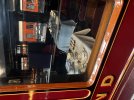
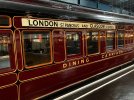
Some images I took of a Midland Railway Dining car at the National Railway Museum - tho this was built in 1914 so a while later than the date concerned, and for the London to Scotland route which might have been considered more prestigious than the route north from Bristol.

And as I say, one should not automatically presume Minnie and fellow team members would have used a dining car at all.
 

Attachments

  • IMG_6312.jpeg
    IMG_6312.jpeg
    2.5 MB · Views: 15
  • IMG_6311.jpeg
    IMG_6311.jpeg
    2.5 MB · Views: 15
  • IMG_6310.jpeg
    IMG_6310.jpeg
    2.5 MB · Views: 15
Last edited:

Gloster

Veteran Member
Joined
4 Sep 2020
Messages
13,062
Location
Up the creek
I would say that the difficult bit was Bury to Reading, which probably had to made on a Sunday. There were three alternatives south from Manchester: London & North Western, Midland or Great Northern Railway; the Great Central hadn’t yet opened. All of these seem to have only a single day train leaving at lunch time and arriving late afternoon: L&NWR Manchester 11.45-Euston 16.33, Midland 11.50-St Pancras 16.55, GNR 12.30-Kings Cross 17.30. Thereafter a relatively easy trip from Paddington to wherever they were staying; I would presume that they stayed in one place for two days. All had a later train from Manchester but that gave a very late arrival: 20.00+ in London.

There aren’t that many trains from Bury to Manchester, if they stayed there, on a Sunday morning: 08.15 and 08.35, arriving 09.20 and 09.05. The 10.16 might be a bit risky as it arrives at 10.45.

There was a weekday through carriage from Bristol to Newcastle: Bristol 12.20-Newcastle 20.02.

All from the reprint of the December 1895 Bradshaw, so very much E.&O.E.
 

Rescars

Established Member
Joined
25 May 2021
Messages
2,610
Location
Surrey
To give some idea of what might have been on offer at the time to make the Ladies journey less gruelling, Neil Wooler's "Dinner in the Diner" contains a facsimile of the menu for a West Coast Dining Saloon (probably operated by the Caledonian) third class dinner dated 18th June 1897. For 2/6 you got green pea soup, roast sirloin of beef with cabbage and new potatoes, followed by cabinet pudding and maraschino ice (this latter a brave choice on a hot day in mid June before the invention of effective on-train refrigeration). There was cheese and butter, etc too. A cup of tea or coffee was 3d extra. There was an a la carte menu also, including such delights as macaroni soup as well as grills and salads. And this is third class - I wonder what extravagant delights were tempting those travelling at the posh end in first?
 

WesternLancer

Veteran Member
Joined
12 Apr 2019
Messages
15,447
Interesting info
To give some idea of what might have been on offer at the time to make the Ladies journey less gruelling, Neil Wooler's "Dinner in the Diner" contains a facsimile of the menu for a West Coast Dining Saloon (probably operated by the Caledonian) third class dinner dated 18th June 1897. For 2/6 you got green pea soup, roast sirloin of beef with cabbage and new potatoes, followed by cabinet pudding and maraschino ice (this latter a brave choice on a hot day in mid June before the invention of effective on-train refrigeration). There was cheese and butter, etc too. A cup of tea or coffee was 3d extra. There was an a la carte menu also, including such delights as macaroni soup as well as grills and salads. And this is third class - I wonder what extravagant delights were tempting those travelling at the posh end in first?
Interesting info. If I’ve done my pre decimal conversion calculations correctly the Bank of England inflation calculator says that’s £14.75 today.
Though I wonder what team members income would have been then.
 

James Dutton

Member
Joined
13 Nov 2025
Messages
17
Location
Battersea, London
Thanks so much for your replies. The photos and menus were particularly helpful, so 'gruelling' it wasn't. I've modified my text accordingly!

On the formation of the BLFC one of the founder proudly claimed that the 30 newly recruited playing members were all from 'good upper-middle-class families' and were of independent means. This proved to be false when it was uncovered that a few of the girls were working class (heaven forbid) and were 'theatricals'. The President, Lady Florence Dixie resigned, as she felt she had been let down.

I thought finishing the book was going to be easy, but it's proving to be anything but. It's such a multi layered story and historians have contradicted themselves over the years as to who did what to whom. My deadline is the end of December. But I'm getting there. Now who was "little Tommy"?

By the way, to celebrate getting a book deal - no advance, but don't tell my wife - I was thinking of booking The Railway Touring Company's Bath and Bristol Express out of London Paddington. Almost always steam-hauled, vintage carriages and you're served a full English breakfast on the way out, followed by a four-course dinner on the return journey, with a few hours to explore Bath in between. Has anyone tried it?
 

Gloster

Veteran Member
Joined
4 Sep 2020
Messages
13,062
Location
Up the creek
One thought regarding the dining arrangements, although this is dependent on various factors such as the tour’s financing, personal finances, managerial and promoter opinions, etc. Would the ladies have dared to visit the Dining Car, either on cost grounds or because it was not appropriate for such ’persons’ to eat without a chaperone, or because they might attract unwelcome hostility from some of the other diners (or even because of the trainer’s opinions on diet)? It might be a case of eating sandwiches supplied by the hotel that they had spent the night before at.
 

Sir Felix Pole

Established Member
Joined
21 Oct 2012
Messages
2,230
Location
Wilmslow
Just looking at the 1895 Bradshaw again in detail, it seems that dining cars had not quite been introduced on the NE / SW route, but only on the MML services from St. Pancras to Bradford / Scotland and Manchester. You could, however, order a 'Luncheon Box' which could be delivered to any MR station - quite how that worked with perishable items who knows? The sumptuous MR 1st and 3rd class dining cars were built 1893-6 so I guess the MML had first dibs. By 1906 (the next available Bradshaw on Timetable World) the NE / SW route was fully equipped with catering and Bristol to Newcastle was down to 7 hours and with more services to choose from.

As an aside in 1895 the 1220 Bristol to Newcastle etc. was an interesting train - it had a Bournemouth portion (via the S & D) attached at Cheltenham.
 

Mcr Warrior

Veteran Member
Joined
8 Jan 2009
Messages
17,331
Now who was "little Tommy"?
Reported in several contemporary newspapers as being one of the players, a Miss Daisy Allen (the North team's outside left), and nicknamed "Tommy" by spectators on account of being so small and boy-like in appearance. Said to have been aged only 14 in 1895 & was actually possibly even younger than that (maybe 11).
 

WesternLancer

Veteran Member
Joined
12 Apr 2019
Messages
15,447
By the way, to celebrate getting a book deal - no advance, but don't tell my wife - I was thinking of booking The Railway Touring Company's Bath and Bristol Express out of London Paddington. Almost always steam-hauled, vintage carriages and you're served a full English breakfast on the way out, followed by a four-course dinner on the return journey, with a few hours to explore Bath in between. Has anyone tried it?
Sounds like a good way to celebrate!

There will be threads on Railway Touring Company steam hauled trips on the ‘Railtours and Preservation’ section of the forum as well as people who have used that route or have other expert knowledge on them.

I’ve done two or three such trips in other parts of the uk and enjoyed them. A while since I did one.
 

Mcr Warrior

Veteran Member
Joined
8 Jan 2009
Messages
17,331
Reported in several contemporary newspapers as being one of the players, a Miss Daisy Allen (the North team's outside left), and nicknamed "Tommy" by spectators on account of being so small and boy-like in appearance. Said to have been aged only 14 in 1895 & was actually possibly even younger than that (maybe 11).
Seems that 'Daisy Allen' was merely a touring name and that the diminutive individual in question was actually Edith Richardson, and was possibly even younger than aged 11. Daughter of another of the British Ladies Football Club players, Ellen Richardson, who was also known as Nellie Gilbert. The fairly widespread use of pseudonyms by many of the players is all rather confusing!
 
Last edited:

Gloster

Veteran Member
Joined
4 Sep 2020
Messages
13,062
Location
Up the creek
Just looking at the 1895 Bradshaw again in detail, it seems that dining cars had not quite been introduced on the NE / SW route, but only on the MML services from St. Pancras to Bradford / Scotland and Manchester. You could, however, order a 'Luncheon Box' which could be delivered to any MR station - quite how that worked with perishable items who knows? The sumptuous MR 1st and 3rd class dining cars were built 1893-6 so I guess the MML had first dibs. By 1906 (the next available Bradshaw on Timetable World) the NE / SW route was fully equipped with catering and Bristol to Newcastle was down to 7 hours and with more services to choose from.

As an aside in 1895 the 1220 Bristol to Newcastle etc. was an interesting train - it had a Bournemouth portion (via the S & D) attached at Cheltenham.

My reading of the side note in the 1895 timetable is that Luncheon Baskets were only supplied at certain stations, but a free telegram ordering one could be sent from any Midland station. The only ones relevant to the 12.20 were Burton, Derby, Sheffield, Normanton (I think) and Leeds.
 
Joined
25 Aug 2019
Messages
509
Location
Lancaster
There should have been a game played at the Royal Ordnance Football Club's ground at Maze Hill, Greenwich, on Thursday evening, 18th April. 3000 to 4000 people turned up to watch, but just after the scheduled time of the kick-off a telegram was received cancelling the fixture. The telegram read "Crouch End, 5.13 p.m. Storm raging here; must scratch. - Honeyball." [N. J. Honeyball or Honeybell was captain of one of the two sides put out by the British Ladies]

Sheppey United asked the Football Association for permission to let their ground to the British Ladies' F.C. on May 2nd, but the F.A. declined to grant permission.

Further matches played on the tour were at Newark, Thursday evening, 25th April, and the following evening (26/4) at the Harlaxton Road ground, Grantham, almost 2000 spectators being present at the latter match. The Grantham Journal (27/4) gives a nice write-up, and also the colours of the two elevens. The match lasted thirty minutes each half.

Saturday 27th April they played at Turf Moor, Burnley. A lengthy match report is in the Burnley Express, Wednesday 1st May 1895. The president of the club was Lady Florence Dixon. They had travelled on "a long railway journey" to get to Burnley from Grantham.

Tuesday 30th April they were at the St Mirren F.C. ground in Paisley, 6000 attending. (Dundee Evening Telegraph, 1st May)
 

Sir Felix Pole

Established Member
Joined
21 Oct 2012
Messages
2,230
Location
Wilmslow
There should have been a game played at the Royal Ordnance Football Club's ground at Maze Hill, Greenwich, on Thursday evening, 18th April. 3000 to 4000 people turned up to watch, but just after the scheduled time of the kick-off a telegram was received cancelling the fixture. The telegram read "Crouch End, 5.13 p.m. Storm raging here; must scratch. - Honeyball." [N. J. Honeyball or Honeybell was captain of one of the two sides put out by the British Ladies]

Sheppey United asked the Football Association for permission to let their ground to the British Ladies' F.C. on May 2nd, but the F.A. declined to grant permission.

Further matches played on the tour were at Newark, Thursday evening, 25th April, and the following evening (26/4) at the Harlaxton Road ground, Grantham, almost 2000 spectators being present at the latter match. The Grantham Journal (27/4) gives a nice write-up, and also the colours of the two elevens. The match lasted thirty minutes each half.

Saturday 27th April they played at Turf Moor, Burnley. A lengthy match report is in the Burnley Express, Wednesday 1st May 1895. The president of the club was Lady Florence Dixon. They had travelled on "a long railway journey" to get to Burnley from Grantham.

Tuesday 30th April they were at the St Mirren F.C. ground in Paisley, 6000 attending. (Dundee Evening Telegraph, 1st May)
Grantham to Burnley wouldn't have been *that* difficult - Bradford portion of a Leeds express from Grantham to start with. There were then a couple of through services Bradford Exchange to Burnley Manchester Road, otherwise change at Todmorden.
 

Acathater

Member
Joined
11 Dec 2025
Messages
779
Location
NorthWest
Interesting comment on the relevant wiki page at

The strain of playing so often took its toll, and by September 1896 the ladies could only field a few players. They were also broke, and arriving in Exeter found they had insufficient funds to either leave or pay their hotel bill. Appeals to the mayor of Exeter fell on deaf ears and he refused to pay. The ladies had to be rescued by friends, and the activities of the club came to an end.
Looks like they weren't well off financially so may well have been forced to do the traveling on the cheap, which maybe suggests no dining cars.
It also looks like the rationale behind club was more of a political statement over equality / emancipation rather than a serious sporting event - it certainly seems to have created a fair degree of hostility at games
 

Bevan Price

Established Member
Joined
22 Apr 2010
Messages
8,355
My guess is that they were based in/near London, and travelled to/from the match on the day of the match where that was possible by train.
Remember that 1895 was long before the days of universal floodlights at football grounds, so all natches had to be completed in daylight. Kickoff times were typicallly 15:00 (3.00 pm) for much of the year - an hour earlier in midwinter. Later kickoffs would only possible in late spring and summer.

For London to Newcastle, the only possible departure would be 05:15 from Kings Cross, arriving 12:00; later departures would be too late for a 15:00 kickoff. So, they might alternatively have travelled overnight, or on the previous day. Returning from Newcastle, 17:05 was the last daytime return to London - a bit tight, but maybe just feasible after a 15:00 kickoff. Otherwise, a partly overnight journey, or Sunday travel was the only alternative.

LONDON AND manchester for Bury, would have been slightly easier, with a 07:20 Euston to Manchester (arr. 12:45), nut the return might have been a bit tight (Manchester London Road dep. 18:00)

There was also a 05:15 St. Pancras to Manchester Central, but
The last daytime departure from Manchester Centrak to London St. Pancras was 17:20)
 

Acathater

Member
Joined
11 Dec 2025
Messages
779
Location
NorthWest
Just found this page which details some of the club history

What is immediately apparent is that - especially initially - the teams were often short numbered so clearly not always traveling as a group.
Also there are some comments which may make it possible to put some detail into where they stayed overnight between some games while on tour
 

Rescars

Established Member
Joined
25 May 2021
Messages
2,610
Location
Surrey
My reading of the side note in the 1895 timetable is that Luncheon Baskets were only supplied at certain stations, but a free telegram ordering one could be sent from any Midland station. The only ones relevant to the 12.20 were Burton, Derby, Sheffield, Normanton (I think) and Leeds.
Luncheon baskets would have been assembled and dspatched from refreshment rooms. Wooler tells of the Midland's "very superior dining rooms" at Normanton. In the pre-dining car era, the Scotch expresses stopped here for a 30 minute refreshment break, during which time passengers were served a six course meal - a Victorian interpretation of "fast food"! Perhaps it goes some way to explain the many enamel adversing signs seen across the network in period photographs promoting patent indigestion remedies and liver pills!
 

James Dutton

Member
Joined
13 Nov 2025
Messages
17
Location
Battersea, London
Just found this page which details some of the club history

What is immediately apparent is that - especially initially - the teams were often short numbered so clearly not always traveling as a group.
Also there are some comments which may make it possible to put some detail into where they stayed overnight between some games while on tour
Getting 22 women together in time for kick-offs was problematic at times, although not especially, as far as I know, at the beginning of 'the tour'. They did stay in hotels quite regularly, but by around Septemeber 1896 they sometimes struggled to pay their bills, one of the reasons that the tour ended.

The Donmouth website that you linked to has played a huge part in the recent interest in the history of women's football. Patrick Brennan who runs the site is a legend, and without him I wouldn't be writing this book. In fact without him I may never have discovered that my great aunty played football in the first place.
 

Top