
• Our new ticketing site is now live! Using either this or the original site (both powered by TrainSplit) helps support the running of the forum with every ticket purchase! Find out more and ask any questions/give us feedback in this thread!

HS2 and the APT: The Scottish case for tilt!

HighlandStorm

Member
Joined
27 Sep 2024
Messages
169
Location
Inverness
There’s already been plenty of discussion about the use of Pendolinos on HS2 vs the non tilt journey time penalty north of Handsacre Journey!

But how would the more aggressive tilting and higher top speed of the BR Advanced Passenger Train fair - not just against the Pendolino but the actual proposed HS2 Trains. Some googling and several AI models later - this was the answer:

3rd Place: 4hr 18min - HS2 train.

2nd Place: 3hr 38min - Class 390.
(Chris Gibb’s proposal)

1st Place: 3hr 29min - The APT

HS2 should be bringing the journey time and capacity to basically end the internal domestic air market.

Instead, where HS2 is heading promises West central Scotland slower journeys with less capacity.

That’s a completely unacceptable outcome and the case for tilt at this end of the West Coast Mainline is unanswerable!

Is it time for the APT II?
 
Sponsor Post - registered members do not see these adverts; click here to register, or click here to log in
R

RailUK Forums

Bletchleyite

Veteran Member
Joined
20 Oct 2014
Messages
113,566
Location
"Marston Vale mafia"
No, it's time to build more of HS2. The APT was a bodge to avoid the UK investing in proper high speed rail when the French and Germans were well down that road.

Tilt has no real future.

Ideally there should be an agreement between England and Scotland to fund HS2 all the way to the Central Belt, let alone Manchester.
 
Last edited:

Sorcerer

Established Member
Joined
20 May 2022
Messages
2,117
Location
Liverpool
New tilting trains would mean a need to update TASS or to invest in a new tilt control technology, both of which Alstom and Network Rail have no interest in supporting. The Pendolino has been a very successful train but what has to be understood is that it, along with the Advanced Passenger Train, was part of a wider investment plan drawn up to avoid building new lines and trying to squeeze the most out of the existing infrastructure which has lead us to where we are now. The answer as @Bletchleyite pointed out is to build more of HS2, and preferably in full.
 

NCT

Established Member
Joined
18 Apr 2025
Messages
2,292
Location
London
You'll need to do a bit better than 'Some Googling and Several AI models'. The 3 numbers you've presented are not anything I recognise. Are they based on the same HS2 infrastructure and same stopping patterns? State the sources behind the Google or AI results.
 

JamesT

Established Member
Joined
25 Feb 2015
Messages
4,886
There’s already been plenty of discussion about the use of Pendolinos on HS2 vs the non tilt journey time penalty north of Handsacre Journey!

But how would the more aggressive tilting and higher top speed of the BR Advanced Passenger Train fair - not just against the Pendolino but the actual proposed HS2 Trains. Some googling and several AI models later - this was the answer:

3rd Place: 4hr 18min - HS2 train.

2nd Place: 3hr 38min - Class 390.
(Chris Gibb’s proposal)

1st Place: 3hr 29min - The APT

HS2 should be bringing the journey time and capacity to basically end the internal domestic air market.

Instead, where HS2 is heading promises West central Scotland slower journeys with less capacity.

That’s a completely unacceptable outcome and the case for tilt at this end of the West Coast Mainline is unanswerable!

Is it time for the APT II?
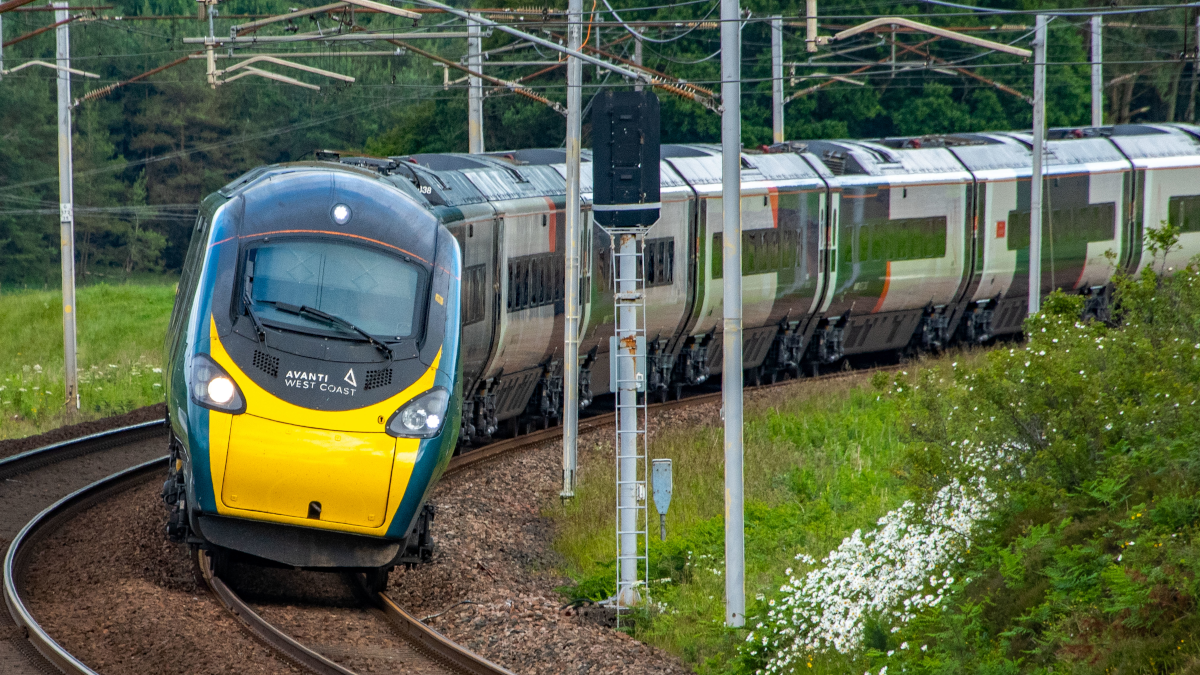
What are these numbers? London to Glasgow?
You've missed out probably the most important number, which is the current journey time. That's the starting point for comparisons, rather than imaginary rolling stock.
 

Zomboid

Established Member
Joined
2 Apr 2025
Messages
2,307
Location
Oxford
The 1640 from Glasgow (today) is due in to Euston at 2120, so that sample of one gives 4h40. And unusually for the Glasgow-London trains it calls at MK.

If the 4h18 is accurate then even the limited HS2 which is being built will be 20 minutes faster.
 

HighlandStorm

Member
Joined
27 Sep 2024
Messages
169
Location
Inverness
If the 4h18 is accurate then even the limited HS2 which is being built will be 20 minutes faster.
My original query was for a hypothetical non stop express.

To lose more time through lack of tilt than HS2 Trains gain on HS2 - is sub optimal!

When set against a 17% capacity loss to Scotland (from Rail Engineer articles about Chris Gibbs proposals) and a notable journey improvement and capacity increase of 150% on London Birmingham, the outcome is likely to be economically benefit Southern England while providing negative economic impacts for Scotland and Northern England.

I don’t disagree with the build more HS2 posts - but that looks decades away. We need a solution for the medium term. The reduction in HS2 line speed amplifies this, while making the pathing of lower top speed tilting trains less impactful on total HS2 capacity.

There isn’t scope to run more Scotland trains north of Handsacre so the only option is different trains from the HS2 train plan.
 
Last edited:

Zomboid

Established Member
Joined
2 Apr 2025
Messages
2,307
Location
Oxford
In terms of capacity, I would hope that sense prevails and they get some 10 or 11 car 895s, as 400m long trains aren't likely to be practical on the classic network.

More tilt seems unlikely though.
 

Sorcerer

Established Member
Joined
20 May 2022
Messages
2,117
Location
Liverpool
I don’t disagree with the build more HS2 posts - but that looks decades away. We need a solution for the medium term.
Longer trains would be a more appropriate medium term solution to make up for the capacity shortcomings than developing an APT Mk2. Journey times unfortunately won't be made much faster unless we increase the non-EPS limits north of Preston. Even if there was the will to develop a new tilting train alongside supporting the infrastructure requirements to enable it's operation it would still lose time due to being speed-limited on HS2.

The only existing high-speed train offering at least 300km/h with APT/Pendolino level tilt is the Avelia Liberty (coaches only), and while the N700 Shinkansen can tilt it's only by about 1-2 degrees which definitely wouldn't be worth all the infrastructure upgrades required to support it. It's unfortunate, but the fact is without HS2 going up to Golborne the London-Scotland journey times on the west coast axis won't be getting any faster once the 390s are life expired.
 

3RDGEN

Member
Joined
6 Mar 2023
Messages
634
Location
Hull
My original query was for a hypothetical non stop express.

To lose more time through lack of tilt than HS2 Trains gain on HS2 - is sub optimal!

When set against a 17% capacity loss to Scotland (from Rail Engineer articles about Chris Gibbs proposals) and a notable journey improvement and capacity increase of 150% on London Birmingham, the outcome is likely to be economically benefit Southern England while providing negative economic impacts for Scotland and Northern England.

I don’t disagree with the build more HS2 posts - but that looks decades away. We need a solution for the medium term. The reduction in HS2 line speed amplifies this, while making the pathing of lower top speed tilting trains less impactful on total HS2 capacity.

There isn’t scope to run more Scotland trains north of Handsacre so the only option is different trains from the HS2 train plan.
If the reports of changing the HS2 stock configuration is correct then the London Euston - Glasgow services will be 250m trains so there's a capacity increase on the 390's for a start since it will be near impossible to build new stock with less seats than a 390 has.

The introduction of LUMO has just increased capacity to the Scottish central belt, if they get a track access extension beyond 2030 then they will likely increase capacity further with new trains, possible 10 car services and reduced journey times. There is also the planned platform extensions at Manchester Airport which will allow longer trains on the North West - Glasgow / Edinburgh route.
 

Palmerston

Member
Joined
4 Oct 2024
Messages
220
Location
Hampshire
There’s already been plenty of discussion about the use of Pendolinos on HS2 vs the non tilt journey time penalty north of Handsacre Journey!

But how would the more aggressive tilting and higher top speed of the BR Advanced Passenger Train fair - not just against the Pendolino but the actual proposed HS2 Trains. Some googling and several AI models later - this was the answer:

3rd Place: 4hr 18min - HS2 train.

2nd Place: 3hr 38min - Class 390.
(Chris Gibb’s proposal)

1st Place: 3hr 29min - The APT

The current record London to Glasgow is 3h 52 on a non-stop APT. The times above look similar to those in the railengineer article, which assumed 390s run on the HS2 track at 155 mph, and possibly continue at this speed on a new track to Crewe and then upgraded 140 mph track to Glasgow, stopping only at Preston and Birmingham Interchange.

HS2 proposed 4 hours to Glasgow including stops, which would have been a big upgrade on current times. If you build a new line to Crewe, adding something to Golborne seems more likely than upgrading Crewe to Glasgow for 140 mph.
 

HSTEd

Veteran Member
Joined
14 Jul 2011
Messages
20,342
We do appear in rather a quandry, given the rather large cost inflation seen in high speed infrastructure construction.

We also have a big chunk of semi wilderness splitting Scotland from England.
Even on the East Coast its about 90 miles between the last big habitation in England (Tyneside) and the first big one in Scotland (Edinburgh).

On the west coast there is only one substantial settlement in the ~130 miles between Lancaster and the Glasgow/Motherwell conurbation, Carlisle, and even that isn't that large.

I can't see a high speed line ever getting above Manchester on the West Coast, there just don't seem to be enough passengers to justify that length of track through politically charged terrain.
 

TheWierdOne

Member
Joined
30 Oct 2020
Messages
407
Location
Yorkshire
I can't see a high speed line ever getting above Manchester on the West Coast, there just don't seem to be enough passengers to justify that length of track through politically charged terrain.
It would need a good chunk of political will but I can’t see it being impossible. Certainly I can see it happening as a sweetener to keep Scotland in the union. The wilderness land is both a blessing and a curse.

On the one hand you have much less of an problem acquiring land, on the other hand you would almost certainly have environmentalist banging on about how the high speed electric railway, which scientists generally agree is excellent for helping meet climate goals, is going to be bad for a bird that is apparently too thick to fly away from the construction.

The lack of population isn’t an issue I think, because high speed rail after all doesn’t stop much for obvious reasons. A line from Manchester with stations at Preston, Lancaster and Carlisle before splitting around Carstairs for Edinburgh and Glasgow would provide a good balance of few stops, and space for express services running very limited stop, while also having decent connections onto conventional local and regional services.
 

HSTEd

Veteran Member
Joined
14 Jul 2011
Messages
20,342
On the one hand you have much less of an problem acquiring land, on the other hand you would almost certainly have environmentalist banging on about how the high speed electric railway, which scientists generally agree is excellent for helping meet climate goals, is going to be bad for a bird that is apparently too thick to fly away from the construction.

The lack of population isn’t an issue I think, because high speed rail after all doesn’t stop much for obvious reasons. A line from Manchester with stations at Preston, Lancaster and Carlisle before splitting around Carstairs for Edinburgh and Glasgow would provide a good balance of few stops, and space for express services running very limited stop, while also having decent connections onto conventional local and regional services.
Comparatively few people being around might make land acquisition somewhat easier, although it may just be a siren call that lures the railway into surface construction and another unwinnable political fight, analogously to the Chilterns.
However the real problem with building a railway with no people around is that no people are around to actually use it.

Scotland has a population of around 5.55 million which is expected to be south of 5.50 million and falling by 2050. Combined with a hundred thousand people in Carlisle there just isn't anyone around to actually use this railway.
The air market is absolutely tiny as it is, because the total travel market just isn't very large. Railways are only good for the climate if they are intensively used.

The business case for a 130 mile railway that might stretch to four trains per hour on an optimistic estimate of demand probably isn't going to be great. If we are building a high speed railway to keep scotland in the union for political reasons (although I am not sure you could get Scottish government cooperation for such a project in any case), you'd probably want to build a railway from Newcastle (or just south of it) to Edinburgh and then a section from Edinburgh to Glasgow.

The latter section is likely to get Support from the Scottish government and would likely be heavily used, and the Edinburgh Newcastle section is shorter and thus less expensive.

The railway south of Newcastle is already relatively fast and any future line or improvements has many more people to serve.
 

Grimsby town

Member
Joined
4 Apr 2011
Messages
867
Scotland has a population of around 5.55 million which is expected to be south of 5.50 million and falling by 2050. Combined with a hundred thousand people in Carlisle there just isn't anyone around to actually use this railway.
The air market is absolutely tiny as it is, because the total travel market just isn't very large. Railways are only good for the climate if they are intensively used.
I'm not saying it's necessarily viable to build a HS line all the way to Scotland but I'd dispute that the travel market is tiny. There's around 3 million journeys from Edinburgh to London airports alone. There's already over 2 million passengers per year on trains from London to Edinburgh. That's more than currently take the train from Manchester to London currently (~3.6 million). Add Glasgow and journeys to other English cities and its a pretty significant market.

The big advantage for Central Belt to London rail services is the lack of competion with the car. Its far easier to get modal shift from planes to trains than it is from car to trains. A plane is another form of public transport which a lot of people would consider worse than a train.

I also think its a growing market. Edinburgh is one of the most successful economies in the UK and is growing quickly. Scotland's population may shrink but its unlikely the major cities will and most areas in the Central Belt are projected to grow over the next decade.
 

TheWierdOne

Member
Joined
30 Oct 2020
Messages
407
Location
Yorkshire
I'm not saying it's necessarily viable to build a HS line all the way to Scotland but I'd dispute that the travel market is tiny. There's around 3 million journeys from Edinburgh to London airports alone. There's already over 2 million passengers per year on trains from London to Edinburgh. That's more than currently take the train from Manchester to London currently (~3.6 million). Add Glasgow and journeys to other English cities and its a pretty significant market.

The big advantage for Central Belt to London rail services is the lack of competion with the car. Its far easier to get modal shift from planes to trains than it is from car to trains. A plane is another form of public transport which a lot of people would consider worse than a train.

I also think its a growing market. Edinburgh is one of the most successful economies in the UK and is growing quickly. Scotland's population may shrink but its unlikely the major cities will and most areas in the Central Belt are projected to grow over the next decade.
I’d also add in addition to this, that building a line most or all of the way to Scotland would allow you to ban internal flights on that route. In fact why we still permit a lot of internal English flights is beyond me. To be clear I understand the UK, being an archipelago nation and all, needs internal flights to serve places such as the far north, outlying islands and Northern Ireland, but aside from a vocal minority I don’t think many would sniff at axing most flight corridors between our bigger cities such as London to Manchester even with the present state of rail.
 

JamesT

Established Member
Joined
25 Feb 2015
Messages
4,886
I’d also add in addition to this, that building a line most or all of the way to Scotland would allow you to ban internal flights on that route. In fact why we still permit a lot of internal English flights is beyond me. To be clear I understand the UK, being an archipelago nation and all, needs internal flights to serve places such as the far north, outlying islands and Northern Ireland, but aside from a vocal minority I don’t think many would sniff at axing most flight corridors between our bigger cities such as London to Manchester even with the present state of rail.
If you’re thinking of a French style ban, it would likely have little effect. That put a cut off of 2.5 hours on the train journey for a flight to be banned. Even extending HS all the way would only get it under 3 hours for London to Glasgow/Edinburgh, so those wouldn’t meet the limit.
My understanding from previous posts is that London to Manchester naturally died off after the WCML upgrade and the Pendolino introduction. Most passengers taking that route are connecting to international flights, which is still allowed.
 

Noddy

Established Member
Joined
11 Oct 2014
Messages
1,653
Location
UK
I don’t get the obsession with tilt. The 390s are nice trains but their profile makes them cramped and even if you sorted out the other layout issues that would still remain a big problem. Making the tilt profile even more aggressive to help higher speed running isn’t going to help…

The only option on the table is to keep pushing for extensions to HS2, and while it is more expensive in the long term, the big bang approach of HS2 clearly hasn’t worked, so going down the European model of building incremental shorter sections will probably have to be the way forward.

We also have a big chunk of semi wilderness splitting Scotland from England.
Even on the East Coast its about 90 miles between the last big habitation in England (Tyneside) and the first big one in Scotland (Edinburgh).

On the west coast there is only one substantial settlement in the ~130 miles between Lancaster and the Glasgow/Motherwell conurbation, Carlisle, and even that isn't that large.
Scotland has a population of around 5.55 million which is expected to be south of 5.50 million and falling by 2050. Combined with a hundred thousand people in Carlisle there just isn't anyone around to actually use this railway.

This is nonsense, we live in a tiny country. This situation is typical of many other European countries with high speed lines. Big conurbations separated by many many miles of sparsely populated land. What is the population and distance to Lyon and exactly how many major cities does the line from Paris line pass through? 3.5 million people live within a sub 1 hour journey of Edinburgh and Glasgow. While Scotland’s population may or may not decline it’s very unlikely the population of these cities and their commuter towns will.
 
Last edited:

TheWierdOne

Member
Joined
30 Oct 2020
Messages
407
Location
Yorkshire
If you’re thinking of a French style ban, it would likely have little effect. That put a cut off of 2.5 hours on the train journey for a flight to be banned. Even extending HS all the way would only get it under 3 hours for London to Glasgow/Edinburgh, so those wouldn’t meet the limit.
My understanding from previous posts is that London to Manchester naturally died off after the WCML upgrade and the Pendolino introduction. Most passengers taking that route are connecting to international flights, which is still allowed.
The French ban was a political gesture that had so many exemptions as to be virtually meaningless. I would absolutely ban even connecting flights, and move to a “whitelist” model where there is an assumption against internal flights outside specific circumstances.

For example, permitted routes could be in cases such as:
- connecting Northern Ireland and Crown Dependencies with Great Britain
- journeys where the equivalent train journey is six hours or more
- outlying islands such as the Hebrides, Scilly, Orkney and Shetland.
- temporary routes if strategic rail links are disrupted for extended periods (say three days or more), due to weather, accident or maintenance.

And all that is probably the reason I’ll never be elected (not that I have the gumption to spend weeks telling people how fabulous I am) let alone made His Majesty’s Secretary of State for Transport.
 

NCT

Established Member
Joined
18 Apr 2025
Messages
2,292
Location
London
We are still none the wiser about the derivation of the OP's numbers and their basis of comparison.
 

Grimsby town

Member
Joined
4 Apr 2011
Messages
867
I don’t get the obsession with tilt. The 390s are nice trains but their profile makes them cramped and even if you sorted out the other layout issues that would still remain a big problem. Making the tilt profile even more aggressive to help higher speed running isn’t going to help…
I agree. When Chris Gibb presented his proposals I think it assumed that the WCML would be significantly upgraded to allow 140mph for a lot of Stafford Scotland. If the WCML is being upgraded then why not just upgrade it so tilt is not needed. It saves a pendolino a few minutes between Preston and Scotland compared to a class 397.
The only option on the table is to keep pushing for extensions to HS2, and while it is more expensive in the long term, the big bang approach of HS2 clearly hasn’t worked, so going down the European model of building incremental shorter sections will probably have to be the way forward.
That would be a sensible approach now. I don't think that was ever really an option for Phase 1 given the amount of capacity constraints on the south WCML. It's definitely possible to split into more simple extensions now e.g to Crewe, Crewe to Manchester, Crewe to Warrington, Warrington to Preston, Preston to Tebay etc.
 

Palmerston

Member
Joined
4 Oct 2024
Messages
220
Location
Hampshire
We are still none the wiser about the derivation of the OP's numbers and their basis of comparison.
The Pendolino time is very similar to a railengineer article which assumed:

• they're upgraded to run at 155 mph
• they run on HS2 track
• a line is built from Handsacre to Crewe with a 155 mph speed. They use that
• the WCML from Crewe to Scotland is upgraded to 140 mph
• they stop at Preston and Birmingham Interchange only.
 

CW2

Established Member
Joined
7 May 2020
Messages
2,225
Location
Crewe
While there's an historic and sentimental case for prioritising London to Glasgow and v.v. journey times on the WCML, there is no logic in doing so. Passenger numbers from London to Glasgow are far lower than London to Birmingham, Manchester, or Liverpool.
The notion that the HS2 fleet should be designed around the least popular destination is the economics of the madhouse.
 

HSTEd

Veteran Member
Joined
14 Jul 2011
Messages
20,342
This is nonsense, we live in a tiny country. This situation is typical of many other European countries with high speed lines. Big conurbations separated by many many miles of sparsely populated land. What is the population and distance to Lyon and exactly how many major cities does the line from Paris line pass through? 3.5 million people live within a sub 1 hour journey of Edinburgh and Glasgow. While Scotland’s population may or may not decline it’s very unlikely the population of these cities and their commuter towns will.
LGV Sud Est passes through a low population density area but serves far more than Lyon. It has from the beginning served traffic to the cities around Dijon, Lyon and the entire south east of France.
That amounts to a population far greater than Scotland!

Once you reach the Scottish central belt you are essentially at the end of Great Britain in population terms - just look at a population density map!
A direct comparison to the population of Lyon would imply the Mediterranean has advances 300km into southern france.
 

tbtc

Veteran Member
Joined
16 Dec 2008
Messages
18,058
Location
Reston City Centre
I enjoy the way this place flips between "we shouldn't be spending money just so businessmen can get from Birmingham to London ten percent faster" and "we should spend billions just so people can get from Glasgow to London ten percent faster"

The "envelope" for British trains is tight enough as it is, thinning trains further to permit tilting is going to make them even less attractive
 

Bletchleyite

Veteran Member
Joined
20 Oct 2014
Messages
113,566
Location
"Marston Vale mafia"
I enjoy the way this place flips between "we shouldn't be spending money just so businessmen can get from Birmingham to London ten percent faster" and "we should spend billions just so people can get from Glasgow to London ten percent faster"

That would be because 10% of 90 minutes is 9 minutes, and 10% of 4.5 hours is 27 minutes.

The economic value of saving someone 9 minutes is much lower than the economic value of saving someone half an hour. Get above an hour and it's even greater.
 

swt_passenger

Veteran Member
Joined
7 Apr 2010
Messages
34,284
We do appear in rather a quandry, given the rather large cost inflation seen in high speed infrastructure construction.

We also have a big chunk of semi wilderness splitting Scotland from England.
Even on the East Coast its about 90 miles between the last big habitation in England (Tyneside) and the first big one in Scotland (Edinburgh).
125 miles between the stations, although only 90 ish as the crow flies? About 85 minutes running time?
 

HSTEd

Veteran Member
Joined
14 Jul 2011
Messages
20,342
125 miles between the stations, although only 90 ish as the crow flies? About 85 minutes running time?
The existing railway is longer due to taking the dog leg along the coast, yes.
But the point is that if you wanted to build a high speed railway to Scotland for political reasons, the East Coast is more attractive because you need less track dedicated just to Scotland to do the job. Tyne and Wear and the wider North East of England will lead to much greater traffic on sections south of Newcastle.

A high speed line in the A68 'corridor' could probably do it in half an hour
 

Noddy

Established Member
Joined
11 Oct 2014
Messages
1,653
Location
UK
LGV Sud Est passes through a low population density area but serves far more than Lyon. It has from the beginning served traffic to the cities around Dijon, Lyon and the entire south east of France.
That amounts to a population far greater than Scotland!

Once you reach the Scottish central belt you are essentially at the end of Great Britain in population terms - just look at a population density map!
A direct comparison to the population of Lyon would imply the Mediterranean has advances 300km into southern france.

Dijon, population 160k, is 50 miles off LGV Sud Est and is only slightly larger than Dundee (148k) (and also significantly smaller than Aberdeen (230k)). Which rather illustrates the point that the LGV travels through miles and miles of incredibly sparsely populated land to serve some relatively modest (by British standards) cites that are, wait for it, miles off the actual route. Could you imagine if HS2 served every British city with a population of 160k within 50 miles of the route?

It’s not just the Sud-Est line. LGV Bretagne-Pay de la Loire goes as far as Rennes (pop 230k, greater metropolitan area 800k). Compare that with the central belt. Beyond Rennes there is Brest (pop 140k, metropolitan area 380k), Lorient (population 60k, metropolitan area 250k if you really stretch it) and Saint-Malo, pop 47k… And I have no idea what major conurbations LGV Rhin-Rhone serves that are comparable to the central belt… This is just France. How about the Madrid-Galicia High Speed line. Galicia is 5 times larger than the central belt but has an entire population of 2.7million.
 
Last edited:

Bald Rick

Veteran Member
Joined
28 Sep 2010
Messages
35,842
I’d also add in addition to this, that building a line most or all of the way to Scotland would allow you to ban internal flights on that route. In fact why we still permit a lot of internal English flights is beyond me. To be clear I understand the UK, being an archipelago nation and all, needs internal flights to serve places such as the far north, outlying islands and Northern Ireland, but aside from a vocal minority I don’t think many would sniff at axing most flight corridors between our bigger cities such as London to Manchester even with the present state of rail.

If you’re thinking of a French style ban, it would likely have little effect. That put a cut off of 2.5 hours on the train journey for a flight to be banned. Even extending HS all the way would only get it under 3 hours for London to Glasgow/Edinburgh, so those wouldn’t meet the limit.

Indeed, the French ‘ban on internal flights’* has been so effective, that tomrrow there are 8 return flights between Paris and Bordeaux (rail journey time around 2hours).

There’s only 5 retrun flights between London and Manchester tomorrow.

*It is, of course, not a ban on flights. It is a ban on selling tickets for journeys between cities that are served by rail in under 2.5hrs. So a Bordeaux - Paris - New York passenger can (and usually does) fly two legs via Paris.

Were such a ban introduced here, it would reduce internal UK domestic flights by precisely none.
 

Top