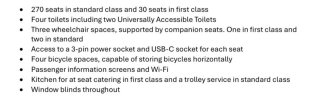
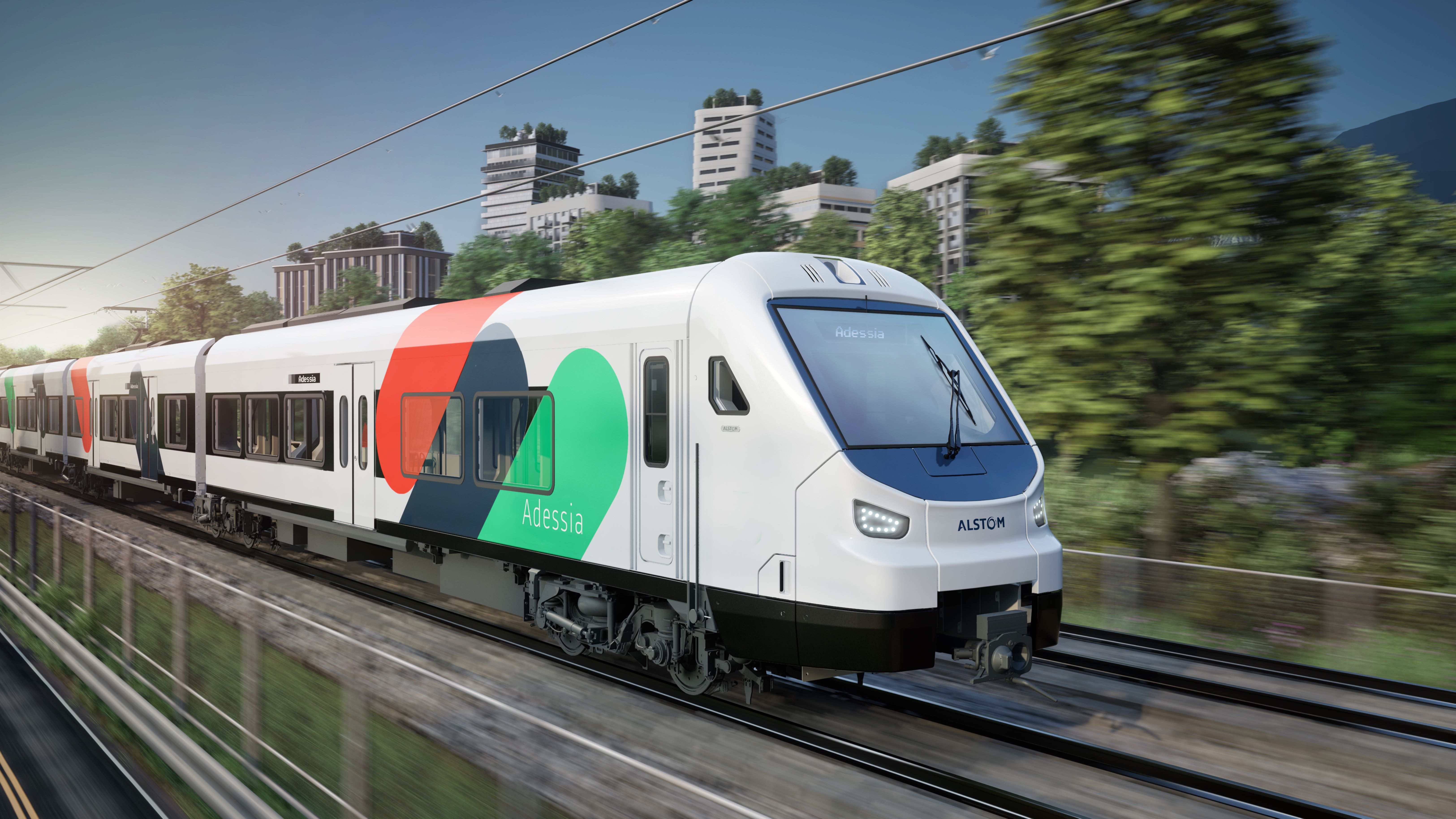
- Max speed 110mph, when it will be used on routes where 125mph is possible. Not suitable for TRU routes let alone NPR if it ever happens
The only section of route where they could run at 125mph would be between Colton (or Church Fenton?) and York, and between York and Northallerton if they use the fast lines. ICBW but I thought the design speed for TRU was max 110mph, so it's only a very small proportion of the overall route mileage where they won't be able to keep up with the linespeed. And the cost of building them for 125mph rather than 110mph – including the opportunity cost within the physical constraints of the vehicle, the compromise between top speed, acceleration and efficiency, and the actual cost of building and maintaining them – would be out of all proportion with the benefits of maybe saving a minute or two on some of their journeys.
And no, if NPR/HS3 ever goes ahead, these trains won't be running on it
because they'll still be running on these routes.
- Focus on BEMUs and charging stations means that wiring to Hull, Scarborough or Redcar/Saltburn will most likely never happen. Particularly bad for Saltburn as this means that any hope of commuter rail expansion in Teesside is dead.
Given the state of the electrification rollout across England, these trains will have to be bi-mode because there's no way that the lines to Hull, Scarborough and Saltburn will be electrified in time.
The economics of electrifying to Scarborough were always poor, while to Hull they remain good – especially if battery performance does degrade over time, and it starts to look shaky if they can reliably complete the journey on a charge!
I don't know why you think that a lack of electrification kills off expansion of commuter rail in Teesside – those services could be expanded with new BEMUs, and it potentially makes any new lines
easier to build if they don't have to be wired up to accommodate a wholly EMU local fleet.