Peter Mugridge
Veteran Member
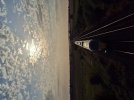
Here's some of mine - the actual images are better than this, but these are mobile phone images of the back of my camera as a temporary measure...



Wife and I watched it from west park in Long Eaton, loverly clear sky unlike 1999 (from Devon!) , agree the light was just strange/weird and the birds were circling the trees looking rather confused.I agree perfect clear sky in Notts. Very strange here as the light level began to drop. About 15 minutes before max eclipse dozens of seagulls started to fly around in circles over the fields and above the village. We only usually see the occasional seagull here but the sky was full of them. No noise, they were just silently flying around.


Next best thing in most people's lifetimes? No total eclipse in any part of the U.K. until September 2090? (Channel Islands in 2081).Having seen the totality from Mallorca on the TV I am not sure why we were all getting excited about a partial.

 Thanks, both, for sharing.
That’s really annoying. Here on the west coast of the Isle of Man we had some very high cirrus clouds which actually were more of a help, they diffused the light so you could look at it.Can I have my money back please?
All we had here on the east coast of Ireland was cloud.
Those early eclipses shortly after the moon formed would have been mega - including the ground buckling from its gravity as well with it being so close (not to mentione being swept away by the huge tides once the earth had cooled and oceans reformed).Stupid Sky reporting “an event as old as the planet itself”. No it isn’t. Notwithstanding that the Moon was formed after the Earth in all likelihood, it’s only been possible to have a total eclipse when it’s a particular distance away from the Earth as it is now, and it’s slowly getting further and further away (1.5 inches per year currently). So although the first recorded total eclipse would have been in something like 2134 BC, there will have been earlier ones, but not as early as “the planet itself” because originally the Moon was too close to the Earth to act in the way it does now. Where do they get these reporters? Oh yes, from people who aren’t scientists!
In due course the Moon will appear to be too small to completely block the Sun. Without anything else, the Earth and the Moon will be tidally locked (the Moon already is), but before that happens they’ll both be incinerated by the Sun turning into a Red Giant.
Rough estimates are that the drifting moon will be too small to cover the sun’s disk in 600 million years time. After that only annular (ring of fire) solar eclipses will be visible from Earth, for another 3.5 billion years, until the sun reaches its red giant phase.In due course the Moon will appear to be too small to completely block the Sun. Without anything else, the Earth and the Moon will be tidally locked (the Moon already is), but before that happens they’ll both be incinerated by the Sun turning into a Red Giant.
I did get a half decent view of this, watching through an open window from the comfort of my armchair!There is a deep partial lunar eclipse on Friday morning with the full moon hanging low in the western sky. Maximum eclipse is at 05:12 hrs when the umbra will cover 93% of the moon’s disk.

On a related note, anyone here using a Seestar smart telescope? I'm pondering an S50 Pro after an upcoming house move and the some of the results from the older S30 Pro and S50 already look amazing.
Unfortunately cloud prevented views of the eclipse here in Notts. I almost forgot about the event before posting on Thursday, suddenly remembering that solar and lunar eclipses usually happened in pairs!I did get a half decent view of this, watching through an open window from the comfort of my armchair!
I woke up at about 0315 just as the moon was starting to move into the earth's umbra. For the next half hour there was intermittent cloud cover, plus the moon passing behind a tree. But from then on I had an uninterrupted view, until the moon disappeared behind a building on my western horizon at about 0530, apart from a thin haze.
I got a good view of the sunlit part of the moon shrinking gradually, but the haze meant that the part in the shade was a grubby brown not a nice deep red.


*groan* I thought I had proof read the post before sending it...How is this member causing the light pollution? It must be bad if someone has written an article about it!
Amended...