• Our new ticketing site is now live! Using either this or the original site (both powered by TrainSplit) helps support the running of the forum with every ticket purchase! Find out more and ask any questions/give us feedback in this thread!

Lewes derailment - speculation regarding potential causes, exact temperature, ground conditions etc

railfan99

Established Member
Joined
14 Jun 2020
Messages
1,959
Location
Victoria, Australia
Moderator note: Split from

I've not read every page of this thread - apologies - but what was the temperature in Celsius at the closest measuring point to Lewes at the time of the derailment, and what maximum temperature was recorded on the previous day?
 
Last edited by a moderator:
Sponsor Post - registered members do not see these adverts; click here to register, or click here to log in
R

RailUK Forums

Haywain

Veteran Member
Joined
3 Feb 2013
Messages
24,480
I've not read every page of this thread - apologies - but what was the temperature in Celsius at the closest measuring point to Lwewes at the time of the derailment, and what maximum temperature was recorded on the previous day?
Google says that the temperature in Lewes peaked at 32° on Thursday and 'only' 28° on Wednesday.
 

AlterEgo

Verified Rep - Wingin' It! Paul Lucas
Joined
30 Dec 2008
Messages
29,182
Location
LBK
Naturally rail buckling will be the forefront of everyone's minds but there are many other potential causes, some heat related and some not. If soil dried out and made the ballast shift this could also be a cause, for example.
 

coral reef

Member
Joined
11 Mar 2009
Messages
26
Google says that the temperature in Lewes peaked at 32° on Thursday and 'only' 28° on Wednesday.

My car reported outside temp of 33C as I drove past Lewes on the A27 at around 1730 on Wednesday, which dropped to 28C as I approached Seaford. With all the hills in the area dramatically affecting the breeze I can imagine that the site of the derailment could have been much higher than the meteorologically modelled number would suggest.
 

Haywain

Veteran Member
Joined
3 Feb 2013
Messages
24,480
My car reported outside temp of 33C as I drove past Lewes on the A27 at around 1730 on Wednesday, which dropped to 28C as I approached Seaford. With all the hills in the area dramatically affecting the breeze I can imagine that the site of the derailment could have been much higher than the meteorologically modelled number would suggest.
So, should the RAIB investigation “imagine” what the temperatures might have been or should it deal in known and provable facts?
 

railfan99

Established Member
Joined
14 Jun 2020
Messages
1,959
Location
Victoria, Australia
Google says that the temperature in Lewes peaked at 32° on Thursday and 'only' 28° on Wednesday.

32 degrees may be considered 'hot' in England but even in so-called 'temperate' Melbourne, Australia where I reside a long way from England, rural rail operator V/Line only restricts trains to 90kmh maximum speed (compared to some sections normally authorised for 160kmh) on days between 1200 and 2000 hours when the maximum is forecast at 36 degrees or above.
 

CalderRail

Member
Joined
21 Aug 2013
Messages
281
It's worth remembering that the rails in full sunshine will have been much hotter than the surrounding air. Steel exposed to direct solar radiation can reach 75 degrees C.
 

Haywain

Veteran Member
Joined
3 Feb 2013
Messages
24,480
32 degrees may be considered 'hot' in England but even in so-called 'temperate' Melbourne, Australia where I reside a long way from England, rural rail operator V/Line only restricts trains to 90kmh maximum speed (compared to some sections normally authorised for 160kmh) on days between 1200 and 2000 hours when the maximum is forecast at 36 degrees or above.
I’m not sure that’s helpful. In the UK we deal with different temperature ranges than in Victoria.
 

35B

Established Member
Joined
19 Dec 2011
Messages
5,362
My car reported outside temp of 33C as I drove past Lewes on the A27 at around 1730 on Wednesday, which dropped to 28C as I approached Seaford. With all the hills in the area dramatically affecting the breeze I can imagine that the site of the derailment could have been much higher than the meteorologically modelled number would suggest.
Or lower. And that's before we think about rail temperature rather than air temperature. If the correlation with heat is so sure, surely we'd need to ask why there haven't been derailments all over the place rather than explain this one?

More seriously, if this derailment was caused by a rail buckle, what will be interesting will be why that rail buckled at that time on that day. Because a lot of heavier trains travelled a lot faster in that heat in perfect safety, so something had to be amiss somewhere with the rails to create the circumstances for the derailment to happen.
 

zwk500

Veteran Member
Joined
20 Jan 2020
Messages
18,401
Location
Northampton
Or lower. And that's before we think about rail temperature rather than air temperature. If the correlation with heat is so sure, surely we'd need to ask why there haven't been derailments all over the place rather than explain this one?

More seriously, if this derailment was caused by a rail buckle, what will be interesting will be why that rail buckled at that time on that day. Because a lot of heavier trains travelled a lot faster in that heat in perfect safety, so something had to be amiss somewhere with the rails to create the circumstances for the derailment to happen.
Could it be, perhaps, a combination of multiple factors?
 

zwk500

Veteran Member
Joined
20 Jan 2020
Messages
18,401
Location
Northampton
What exactly is 'soil moisture deficit',
with soil moisture at their lowest levels since our records began in 2009.

Lots of very hot and dry weather can dry out the clay soil that much of our railway is built on, causing it to shrink. This is because trees and vegetation try to suck up any water left in the ground.

and might this have been a factor here? (Perhaps causing the soil in the embankment to have shrunk?)
It may have been yes - the area is floodplain, and regularly resembles a lake in winter. (the area name 'Landport' giving an indication of it previously being much wetter!). SMD may impact the embankment itself or the underlying ground.

I'm not sure exactly what this embankment is made of - the local area has both chalk downs and Weald clay. Given the proximity of Lewes Tunnel, local chalk and Clay pits the embankment could easily have been chalk, clay, or a mix of both.
 

marshlinker

Member
Joined
18 May 2026
Messages
143
Location
Romney Marsh
What exactly is 'soil moisture deficit', and might this have been a factor here, causing the soil in the embankment to have shrunk?
I live about 40 miles East of Lewes. My Garden is quite thin topsoil on top of Wadhurst Clay. My back garden has dropped about 2 1/2 inches this year against the back of the house. All the streams around the village are dry, down on the Marshes and levels many of the unmanaged drains are absolutely bone dry with huge cracks in the beds. Ive never seen this before.
 

35B

Established Member
Joined
19 Dec 2011
Messages
5,362
Could it be, perhaps, a combination of multiple factors?
I'd be surprised if it wasn't - I'm trying to remember when I last read an RAIB report that was totally mono-causal. The comment you reply to was more my slight bemusement that anyone should expect that a heat reading would, in and of itself, tell us what caused this incident. And, as important, if by some miracle it did, it would imply that any rail might buckle at any time - which is belied by the evidence of the railway network operating more or less normally despite the heat.

For what it's worth, my own hunch is that the cause will be in the earthworks rather than the rails, for the reasons discussed immediately above. That has some potentially significant implications over how the railways respond to weather (not just heat), across a wide range of lines
 

bangor-toad

Member
Joined
20 Feb 2009
Messages
671
Pure speculation on my part here...

I suspect that SMD has caused the embankment to sag / drop a little. By itself that would probably just be a rough ride. However immediately before the derailment site there are two small bridges, one over Chalkpit Cut and the other over a path. Perhaps ironically that was the access under the embankment for the emergency services to access the site.

If the embankment has sagged or dropped down but the bridge parapets haven't then that could give a fairly abrupt vertical change over the transition. Some of eye witness reports talk about a vertical motion just before the carriages fell to the side. Could they be describing the bump felt as the bogies moved onto the track above the parapets that hadn't moved (as much)?

I'm sitting hundreds of miles from the location so I have no knowledge other than what I can see from online maps and read in online articles.


The RAIB report will make interesting reading when it's completed. If the cause is along the lines I'm pondering it could have significant operation impacts in long spells of hot, dry weather.
Mr Toad
 

AlterEgo

Verified Rep - Wingin' It! Paul Lucas
Joined
30 Dec 2008
Messages
29,182
Location
LBK
The RAIB report will be interesting for sure. This incident may well be far more consequential for the future operation of the railway than the Bedford crash despite being far less eye catching.
 

wiferiley123

New Member
Joined
17 Aug 2026
Messages
2
Location
Deeping St James
When continuous welded rail (CWR) is installed, it is physically stretched to a point where it would not be in compression or tension at an equivalent air temperature of 27 degrees centigrade. This is known as the stress-free temperature. Obviously, when the air temperature reaches 27 the rail starts to go into compression.

Modern track is designed to withstand compressive stresses that will occur in the hottest weather in this country. However, if the track ballast profile is not maintained correctly this can weaken the integrity of the track. The investigation will conclude that a heat related buckle caused the derailment, exactly why it buckled remains to be revealed. The soil suggestion is interesting but unlikely.

What I find beyond comprehension is what happened next. In British Rail days, as soon as all the casualties had been dealt with, which in this case were fortunately light the operators would have instigated single-line working.

The other line was totally clear and quite capable of taking trains and SLW was a completely safe way of running trains in both directions and continuing to provide a limited service, and on that day too. For reasons not clear SLW is not, apparently, considered with the present disjointed organisation where lines of responsibility are so blurred. Now we are told another ten days; it would be two days or three at the very most if it were BR!
 

Bald Rick

Veteran Member
Joined
28 Sep 2010
Messages
35,583
When continuous welded rail (CWR) is installed, it is physically stretched to a point where it would not be in compression or tension at an equivalent air temperature of 27 degrees centigrade. This is known as the stress free temperature. Obviously, when the air temperature reaches 27 the rail starts to go into compression.

Rail temperature, not air temperatur.


The investigation will conclude that a heat related buckle caused the derailment, exactly why it buckled remains to be revealed. The soil suggestion is interesting but unlikely

Will it? Let’s wait for the investigations shall we before definitively jumping to conclusions.


What I find beyond comprehension is what happened next.

You must have missed the past 30 years of rail accident investigations.
 

35B

Established Member
Joined
19 Dec 2011
Messages
5,362
The investigation will conclude that a heat related buckle caused the derailment, exactly why it buckled remains to be revealed.
That is akin to "the patient died because of heart failure" beloved of medical students - the existence of a buckle, even if you suspect the earthworks (as I do), is a symptom of something else rather than a cause in its own right
The soil suggestion is interesting but unlikely
I admire your certainty, and would be interested to know your reasoning. Firstly because of what @bangor-toad mentions about underline structures nearby, second as there is evidence elsewhere (notably the former LSWR route to Exeter) of train safety being compromised by the drying out of earthworks
In British Rail days, as soon as all the casualties had been dealt with, which in this case were fortunately light the operators would have instigated single-line working.
Ignoring any minor questions about the last 30 years of accident investigation and recovery, you would be putting huge pressure on your hypothesis of a track buckle being accurate.
 

Magdalia

Established Member
Joined
1 Jan 2022
Messages
7,299
Location
The Fens
Moderator note: Split from

I've not read every page of this thread - apologies - but what was the temperature in Celsius at the closest measuring point to Lewes at the time of the derailment, and what maximum temperature was recorded on the previous day?
13 August 2026, the day of the Lewes derailment, was the hottest day in England in 2026, with 38.1C recorded at Kew Gardens.

Lewes was a bit less hot because of its proximity to the coast.

What exactly is 'soil moisture deficit', and might this have been a factor here, causing the soil in the embankment to have shrunk?

See this from Network Rail:


Extreme heat and dry weather – like the conditions we’ve had in many parts of Britain this summer – can cause real problems for your rail journeys.

Soil moisture deficit is one of them, with soil moisture at their lowest levels since our records began in 2009.

Lots of very hot and dry weather can dry out the clay soil that much of our railway is built on, causing it to shrink. This is because trees and vegetation try to suck up any water left in the ground.

When this happens, the track becomes uneven so we need to slow trains down to keep you safe. It isn’t safe to run trains at full speed if the track moves.

In some cases, we need to introduce a reduced timetable so we can give you more certainty about rail services – and trains can run more reliably. In other cases, we may need to close sections of track.


Here in the Fens it has been an issue for a long time, though with peat not clay soil. I remember 20mph most of the way from March to Peterborough in the 1976 drought. Littleport-Downham Market has had speed restrictions in many recent summers, and is currently operating an emergency timetable.
 

wiferiley123

New Member
Joined
17 Aug 2026
Messages
2
Location
Deeping St James
13 August 2026, the day of the Lewes derailment, was the hottest day in England in 2026, with 38.1C recorded at Kew Gardens.

Lewes was a bit less hot because of its proximity to the coast.


See this from Network Rail:


Here in the Fens it has been an issue for a long time, though with peat not clay soil. I remember 20mph most of the way from March to Peterborough in the 1976 drought. Littleport-Downham Market has had speed restrictions in many recent summers, and is currently operating an emergency timetable.
I remember it well as March-Peterborough was on our 'patch'. We were also responsible for the ECML Holme-Yaxley (Stiltin Fen) where there have always been problems with the peat drying out and subsequently fattening up after periods of wet weather. I am sure if such problems existed on the Lewes site the engineers would be aware of it. These things are historical and do not suddenly happen.

== Doublepost prevention - post automatically merged: ==

Rail temperature, not air temperatur.


Will it? Let’s wait for the investigations shall we before definitively jumping to conclusions.


You must have missed the past 30 years of rail accident investigations.
I doubt that as I have been involved in some rail accident investigations.

== Doublepost prevention - post automatically merged: ==

I remember it well as March-Peterborough was on our 'patch'. We were also responsible for the ECML Holme-Yaxley (Stiltin Fen) where there have always been problems with the peat drying out and subsequently fattening up after periods of wet weather. I am sure if such problems existed on the Lewes site the engineers would be aware of it. These things are historical and do not suddenly happen.

== Doublepost prevention - post automatically merged: ==


I doubt that as I have been involved in some rail accident investigations.
Air temperatures of 27 can often result in rail temperatures in excess of 50 C, particularly in cuttings and other sheltered locations.
 
Last edited:

Bald Rick

Veteran Member
Joined
28 Sep 2010
Messages
35,583
Air temperatures of 27 can often result in rail temperatures in excess of 50 C,

No, they can’t. If that has been recorded, it is measurement error (not unknown).

+18C is the most expected in this country, in direct sunlight. I have heard of examples of +19C, but it is very unusual..
 

bangor-toad

Member
Joined
20 Feb 2009
Messages
671
The RAIB have published some initial comments and findings: Link to RAIB News story

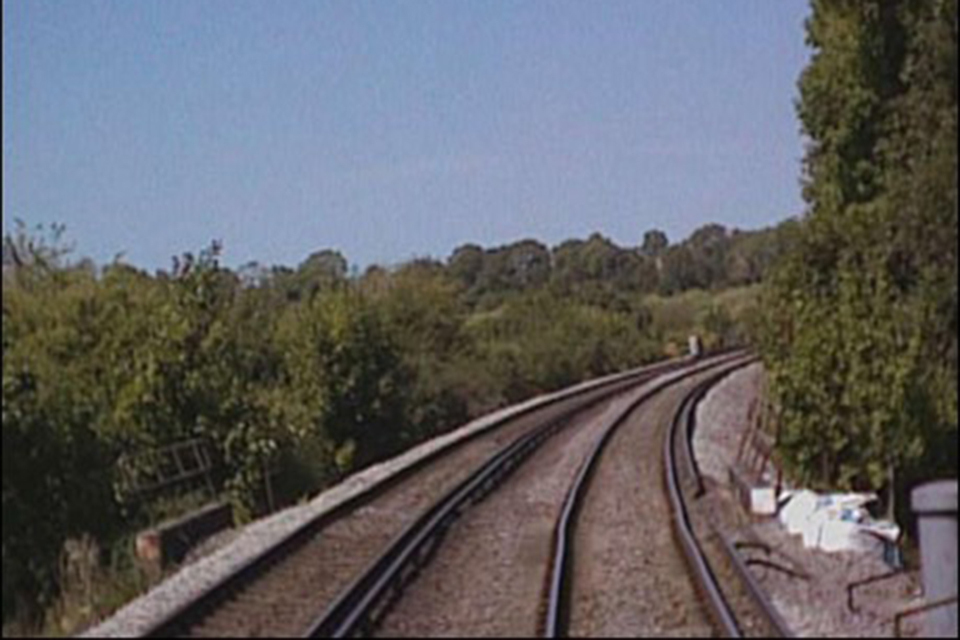
In it is this image:


s960_Lewes3.jpg

Caption: Rear-facing CCTV image from a train which passed the location of the accident at about 14:04 on the afternoon of 13 August 2026 (the irregularity is visible adjacent to the white ballast bags) (courtesy of Greater Thameslink Railway).

The kink in the track is exactly at the transition point from the bridge onto the embankment.
Jolts, bumps or rough riding in such locations are far from unusual - I wonder why this one caused the effects it did?

Mr Toad
 

RUK

Member
Joined
5 Aug 2009
Messages
404
Location
East of England
Hopefully greater computing power/AI, whether with the analysis done directly on the train, or with the video live-streamed to a server, will one day get to a point where video like this can be analysed very quickly before the next scheduled train passes such a point, so that the next train due on the line can hopefully be stopped before a similar incident can happen.
 

RUK

Member
Joined
5 Aug 2009
Messages
404
Location
East of England
Kinks in both tracks in a similar place rather than in just 1 track might suggest the ground beneath the tracks moving, rather than the rail buckling due to heat?
 

edwin_m

Veteran Member
Joined
21 Apr 2013
Messages
28,590
Location
Nottingham
Hard to tell from this angle but the kink may coincide with the underbridge, suggesting perhaps that the embankment has slid to the right and the bridge has stayed in position. The ballast bags suggest an expectation of having to add more ballast here, which could also be a symptom of the embankment moving.
 

30907

Veteran Member
Joined
30 Sep 2012
Messages
21,922
Location
Airedale
Kinks in both tracks in a similar place rather than in just 1 track might suggest the ground beneath the tracks moving, rather than the rail buckling due to heat?
Can't see evidence of a kink in the up line - but there appears to be new-ish ballast shoulders on both tracks, suggesting recent remedial work.
 

Brightonboy

Member
Joined
20 Jan 2025
Messages
126
Location
Suffolk
Not sure if it would be relevant or not, but the track their is fairly close to the River Ouse - is that tidal up to that point? If it is then the twice daily fluctuations in local soil moisture could also exacerbate matters.
 

Bald Rick

Veteran Member
Joined
28 Sep 2010
Messages
35,583
Not sure if it would be relevant or not, but the track their is fairly close to the River Ouse - is that tidal up to that point? If it is then the twice daily fluctuations in local soil moisture could also exacerbate matters.

It is tidal at that point.
 

Top